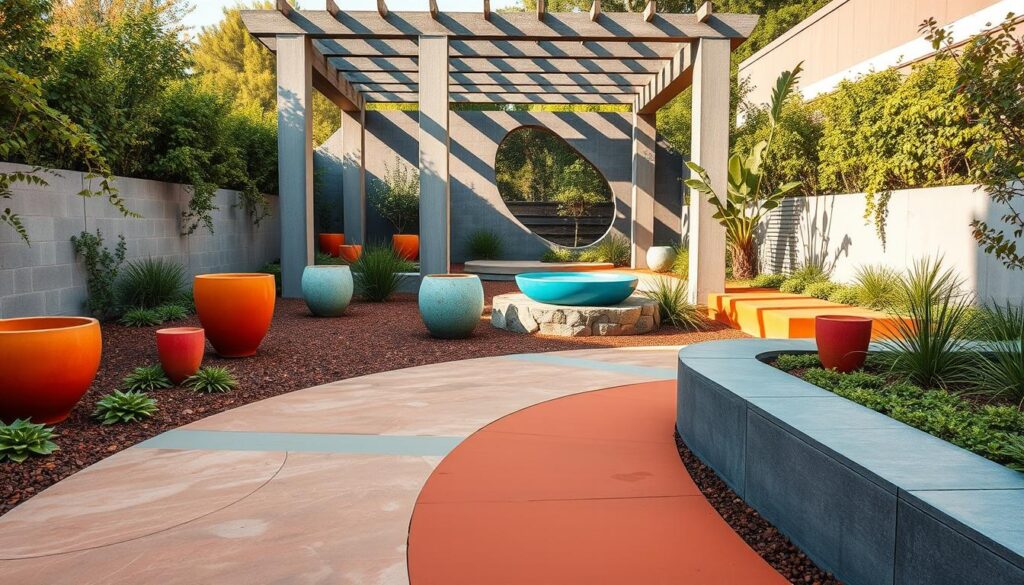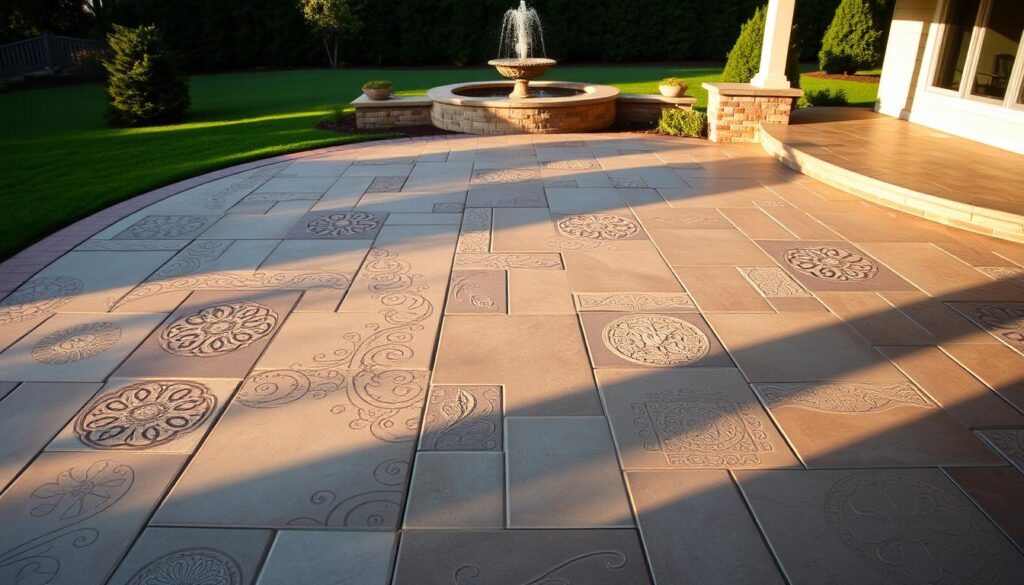
Tired of fighting to keep a traditional lawn green through a scorching South Texas summer? It's a constant, costly battle against our climate. Imagine, instead, a vibrant landscape that doesn't just survive but actually thrives in the heat and unpredictable rains of Corpus Christi, San Antonio, and the Rio Grande Valley. This is the power of landscaping with native Texas plants.
This guide isn't about sacrificing beauty for practicality; it's about creating a stunning, resilient, and water-smart landscape that works with our unique environment, not against it. For homeowners and property managers, this is the key to a low-maintenance, high-impact property.
Why Native Plant Landscaping Is the Smartest Choice for South Texas
For anyone managing a property in South Texas, from Corpus Christi to Brownsville, the struggle against intense heat and fluctuating rainfall is a familiar challenge. Traditional landscaping, with its thirsty turfgrass and non-native ornamentals, often feels like forcing a square peg into a round hole. Choosing native plants offers a practical, sustainable solution that is perfectly adapted to our local conditions.
Think of native plants as a team of experts who have spent thousands of years adapting to our specific soils and weather patterns. They are genetically programmed to succeed here, which means less work for you and a healthier, more beautiful landscape.
The Power of Local Adaptation
Instead of constantly watering, fertilizing, and protecting delicate, imported plants, you're choosing species that are built for South Texas. This fundamental shift leads to a far more self-sufficient and vibrant landscape.
Choosing native plants is less about gardening and more about an ecological partnership. You provide the space, and these plants bring generations of built-in resilience, demanding far less from you in return. This is the secret to a sustainable, low-maintenance, and cost-effective landscape.
This approach translates directly to lower water bills, less time spent on yard work, and an authentic Texas landscape that can handle our seasons with grace.
Tapping into a Rich Botanical Heritage
The benefits extend far beyond your property line. Texas boasts an incredible botanical diversity, home to over 5,000 native plant species. This variety is the backbone of our local ecosystems, supporting pollinators and wildlife. As more property owners recognize their toughness and beauty, interest has skyrocketed. You can learn more about their importance to our regional ecology.
Working with a professional team like Fischer Landscaping helps you leverage this natural advantage correctly. We know which plants will flourish in the specific conditions of San Antonio, Harlingen, and the surrounding areas. We design landscapes that are:
- Visually Stunning: Our designs provide color, texture, and visual interest throughout the year, not just for a few weeks in the spring.
- Ecologically Functional: Your property can become a vital habitat, supporting local pollinators like bees, butterflies, and hummingbirds.
- Financially Smart: Drastically reducing the need for supplemental water, pesticides, and fertilizers adds up to significant long-term savings for homeowners and businesses.
Ready to create a landscape that truly belongs in South Texas? Contact Fischer Landscaping today for a professional consultation and quote.
The Real Payoff of a Native Texas Garden
Let's be clear: choosing to landscape with native Texas plants is a strategic business decision for your property. For homeowners and property managers from Harlingen to San Antonio, it's a smart move that pays dividends in your wallet, your free time, and your property’s curb appeal and overall health. This isn't just gardening; it's an investment in a resilient, high-performance landscape.
The first and most significant benefit you'll notice is drastic water conservation. In a climate known for long, hot summers, this is a massive operational win. Native plants have deep root systems engineered to find moisture and thrive on natural rainfall, meaning you can significantly reduce irrigation once they're established. Put simply, your water bills will drop.
Less Work, More Savings
Imagine your weekends—or your maintenance team's schedule—without the constant demand of a traditional lawn. A native Texas landscape frees you from the endless cycle of mowing, fertilizing, and spraying.
- Slash Mowing Time: By replacing large areas of turf with native grasses, perennials, and shrubs, you cut back on the time, fuel, and labor spent mowing.
- Ditch the Chemicals: Native plants have natural defenses against local pests and diseases, eliminating the need for expensive and ecologically damaging pesticides and synthetic fertilizers.
- Enjoy More, Work Less: This low-maintenance reality translates directly into lower operational costs and frees up time to focus on other priorities.
It’s a shift toward a landscape that largely takes care of itself—smarter for your budget and healthier for the local environment.
Creating a Backyard Habitat
When you install a native garden, you are restoring a small piece of authentic Texas habitat. Your property quickly becomes a critical resource for local wildlife, attracting pollinators and birds. Native plants and local wildlife co-evolved, and they depend on each other for survival. Your yard can become a sanctuary for:
- Bees and Butterflies: These crucial pollinators are the foundation of a healthy ecosystem.
- Hummingbirds and Songbirds: They'll be drawn to the nectar-rich flowers and seeds your native plants provide.
- Beneficial Insects: These "good bugs" help control pests naturally, creating a balanced, thriving garden.
A professionally designed native landscape is not an overgrown, messy patch of weeds. It’s a structured, intentional design that uses nature’s own toolkit to create a beautiful, low-effort garden that adds value to your property.
The collective impact of these choices is significant. In Texas, residential yards can account for up to 60% of a city's water use during summer. If just a fraction of homes switched to native or xeriscaped yards, the water savings would be immense. While focused on your outdoor space, homeowners can also learn how to make your home energy efficient for a comprehensive approach to sustainability.
Ready to see these benefits at your Corpus Christi or San Antonio property? A great starting point is exploring our guide to the 8 best drought-tolerant plants for Texas. Or, let our expert team at Fischer Landscaping design and install a native garden that delivers maximum beauty with minimum work.
Choosing the Right Native Plants for Your Landscape
This is where expert knowledge creates exceptional results—selecting the perfect combination of plants for your South Texas landscape. For a property in Corpus Christi or San Antonio, this isn't just about picking what looks pretty at the nursery. It’s about choosing proven survivors that are hard-wired to handle our unique climate. A thoughtfully curated palette of native trees, shrubs, perennials, and grasses creates a multi-layered, visually stunning garden that works with the environment, not against it.
Our goal is to build a cohesive, functional ecosystem in your yard. We focus on selecting species that don’t just survive but truly thrive, offering everything from deep shade and privacy screening to vital food sources for local wildlife. This careful selection is the foundation of a successful native Texas landscape.
Essential Trees for Shade and Structure
Trees are the backbone of your landscape design, providing critical shade, vertical interest, and habitat for birds. In South Texas, the right tree is one that can handle our intense sun, potential drought, and diverse soil conditions.
- Texas Live Oak (Quercus fusiformis): This iconic, sprawling oak is a superstar for good reason. It offers incredibly dense shade, is exceptionally drought-tolerant once established, and gives any property a majestic, timeless structure.
- Cedar Elm (Ulmus crassifolia): A tough, adaptable, and relatively fast-growing native, the Cedar Elm is a fantastic choice for establishing shade quickly. Its smaller leaves cast a lovely dappled light that allows other plants to grow beneath it.
- Mexican Sycamore (Platanus mexicana): Known for its gorgeous white bark and massive leaves, this tree adds a dramatic visual punch. It’s a great option for areas that may hold a bit more moisture.
Choosing the right tree is a long-term investment. Our team ensures your tree is sourced from a quality grower and planted with proper technique to guarantee a long, healthy life.
Hardy Shrubs for Color and Definition
Shrubs are the versatile workhorses of a native garden. They are perfect for creating natural borders, adding mid-level structure, and providing seasonal color and berries that attract local wildlife.
A well-placed shrub does more than fill a space—it connects taller trees to lower-growing perennials, creating a seamless, natural-looking transition. Think of them as the essential connective tissue of your garden design.
Top performers for areas like Brownsville and Harlingen include:
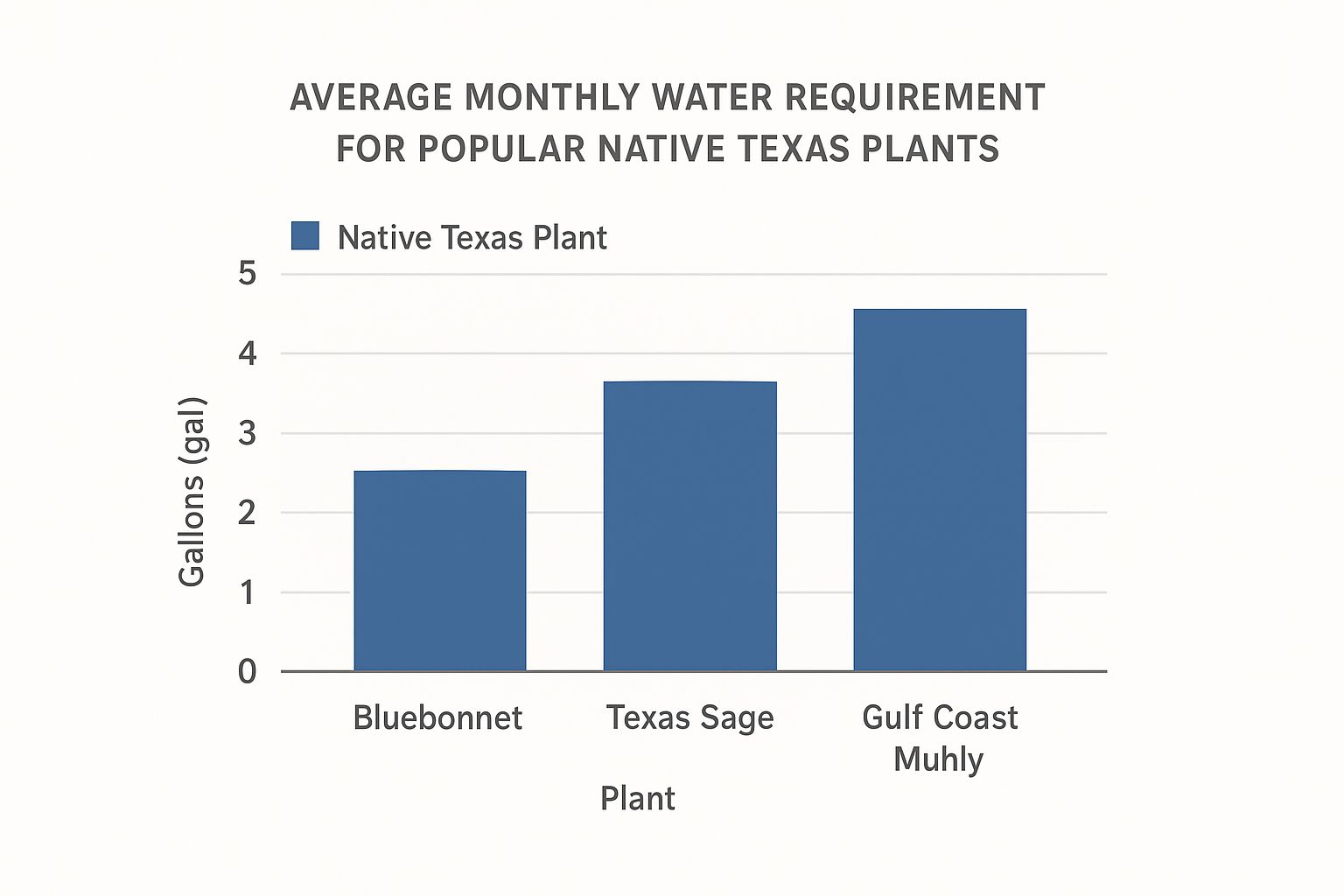
- Texas Sage (Leucophyllum frutescens): This tough-as-nails shrub is famous for its silvery foliage and explosive bursts of purple flowers after a rain. It’s the classic low-water, high-impact plant for any sunny spot.
- Turk’s Cap (Malvaviscus arboreus var. drummondii): A favorite of hummingbirds, this resilient shrub produces bright red flowers from summer through fall and thrives in both sun and partial shade.
- Cenizo (Leucophyllum frutescens): Often called the "barometer bush," Cenizo erupts with purple blooms in response to humidity. It’s incredibly drought-tolerant and perfect for creating informal hedges.
To see more options for your property, explore our detailed guide on native Texas landscaping plants.
Perennials and Grasses for Texture and Life
Perennials and ornamental grasses are the finishing touches that bring a native landscape to life with texture, movement, and waves of seasonal color. These plants are essential for attracting pollinators and adding a soft, natural feel to your garden beds.
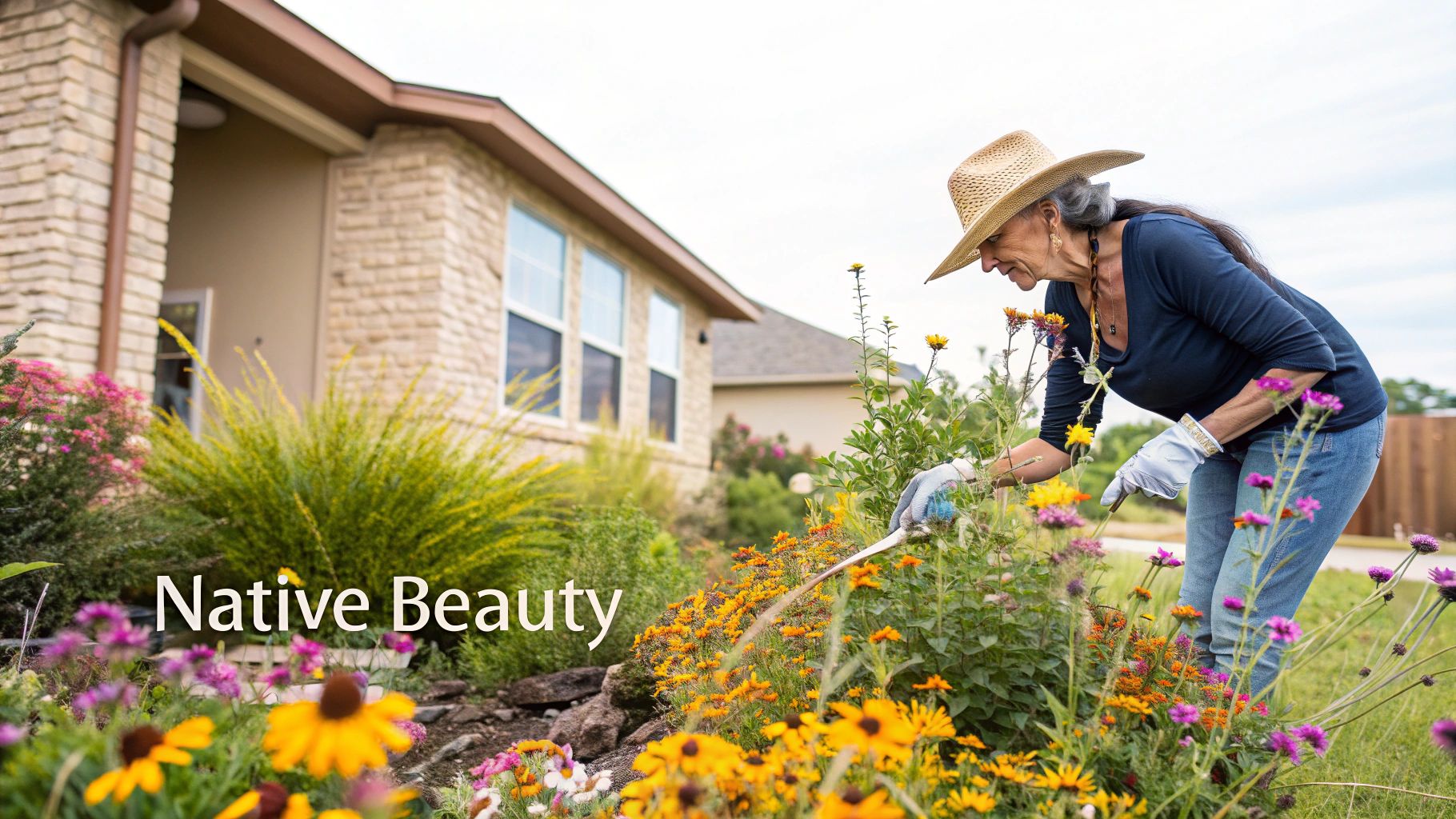
The image above demonstrates how beautiful these plants can be with minimal supplemental water once established.
Here are a few fantastic choices:
- Blackfoot Daisy (Melampodium leucanthum): This low-growing perennial is a workhorse, covered in cheerful white, honey-scented flowers for months. It loves full sun and well-drained soil.
- Gulf Coast Muhly (Muhlenbergia capillaris): In the fall, this ornamental grass creates breathtaking clouds of airy pinkish-purple plumes, adding incredible texture and movement.
- Bluebonnet (Lupinus texensis): The iconic state flower provides classic Texas beauty in the spring and improves soil health by fixing nitrogen.
To help you visualize how these elements come together, we’ve created a quick-reference table with some of our go-to choices for the region.
Ideal Native Plants for South Texas Landscapes
| Plant Type | Recommended Species | Key Features | Primary Benefit |
|---|---|---|---|
| Shade Tree | Texas Live Oak (Quercus fusiformis) | Evergreen, wide canopy, extremely drought-tolerant | Provides substantial cooling and property value |
| Accent Tree | Mexican Sycamore (Platanus mexicana) | Fast-growing, striking white bark, large leaves | Creates a strong visual focal point |
| Screening Shrub | Texas Sage (Leucophyllum frutescens) | Silvery foliage, purple blooms after rain, loves full sun | Offers a dense, low-water privacy screen |
| Flowering Shrub | Turk’s Cap (Malvaviscus arboreus var. drummondii) | Bright red flowers, attracts hummingbirds, shade tolerant | Provides reliable color in shady spots |
| Perennial | Blackfoot Daisy (Melampodium leucanthum) | Long-blooming, low-growing, honey-scented white flowers | Adds season-long color to borders and beds |
| Ornamental Grass | Gulf Coast Muhly (Muhlenbergia capillaris) | Airy pink plumes in fall, fine texture, very low maintenance | Delivers stunning fall texture and movement |
| Groundcover | Frogfruit (Phyla nodiflora) | Low-growing, spreads to form a mat, small white flowers for pollinators | Acts as a living mulch and lawn alternative |
This table is just a starting point, but it shows how layering different native plants can build a landscape that is both beautiful and resilient.
Designing a Cohesive Native Landscape Layout
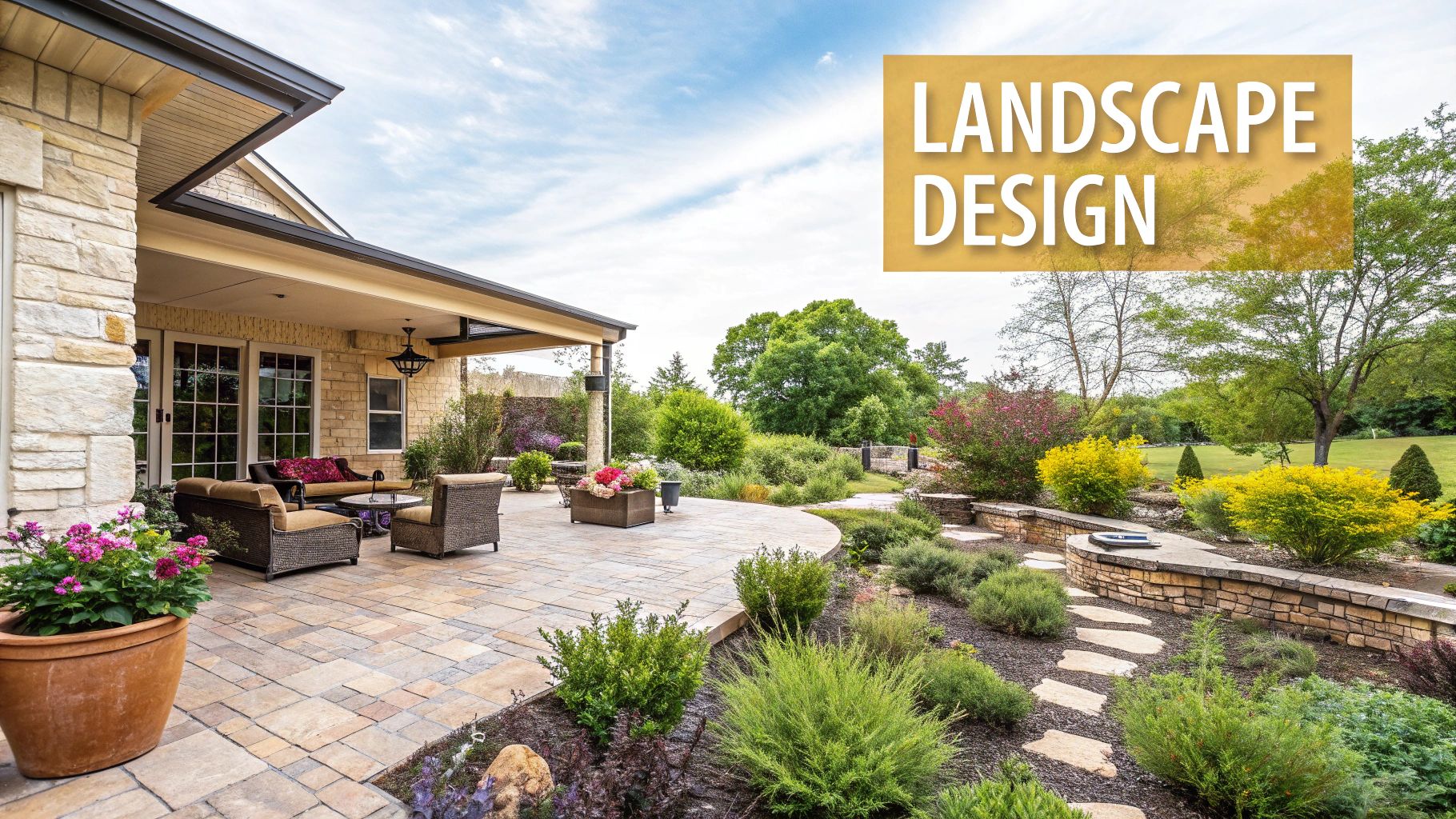
A truly stunning native Texas landscape is the result of a thoughtful design that elevates a collection of plants into a harmonious outdoor space. Great design is more than just picking pretty flowers; it’s about arranging them to create powerful visual impact, ecological value, and effortless function.
The core principle is simple: “right plant, right place.” This philosophy means understanding each plant’s mature size, sun preference, and water needs before installation. This foresight ensures your landscape not only looks great on day one but matures into a healthy, resilient ecosystem.
The Art of Layering for Depth and Interest
A flat, one-dimensional yard lacks engagement. The secret to a professional look is layering, which creates depth and guides the eye through the space.
- Canopy Layer: This foundation consists of taller shade trees like Texas Live Oak or Cedar Elm, which provide structure and cooling shade.
- Understory Layer: Beneath the canopy are smaller trees and large shrubs, such as Texas Persimmon or Cenizo, which add privacy and mid-level interest.
- Shrub and Perennial Layer: Here, plants like Turk’s Cap and Blackfoot Daisy add the color and texture that make a garden feel vibrant.
- Groundcover Layer: Low-growing plants like Frogfruit act as a living mulch, suppressing weeds and conserving soil moisture.
A professional landscape design service masters this technique, creating a multi-layered plan that perfectly complements your home or business.
Grouping Plants for Smart Water Use
For anyone in Corpus Christi or San Antonio, smart water use is essential. Hydrozoning is an effective strategy that involves grouping plants with similar water needs together. This common-sense approach prevents overwatering drought-tolerant plants to satisfy thirsty neighbors.
Hydrozoning is the ultimate work-smarter-not-harder strategy for irrigation. By creating dedicated zones, you can deliver precisely what each plant group needs, dramatically reducing water waste and simplifying maintenance.
For example, a low-water zone in a hot, sunny spot would be perfect for Texas Sage and Gulf Muhly. In a shadier area, you could group Turk’s Cap and native ferns. This organization makes your irrigation system far more efficient and is a cornerstone of sustainable South Texas landscaping.
Designing with a Purpose in Mind
A great native landscape solves problems and achieves specific goals for your property. Before planting, consider what you want your landscape to do.
- Create a Pollinator Paradise: We can design garden beds with a rich mix of nectar-producing flowers that bloom in succession, attracting bees, butterflies, and hummingbirds.
- Establish a Natural Privacy Screen: A layered arrangement of evergreen native shrubs and small trees creates a beautiful screen that provides privacy, muffles noise, and offers habitat.
- Build a Sun-Baked Rock Garden: For tough, sun-drenched spots, a rock garden featuring rugged succulents like Agave and tough perennials like Blackfoot Daisy can become a stunning, low-maintenance focal point.
A well-designed layout considers both beauty and function. The expert team at Fischer Landscaping can help you translate your vision into a practical plan that integrates seamlessly with your existing hardscaping.
Ready to create a native landscape that’s as smart as it is beautiful? Contact Fischer Landscaping today for a professional design consultation and let’s build a garden that truly thrives.
Planting and Establishing Your Native Garden
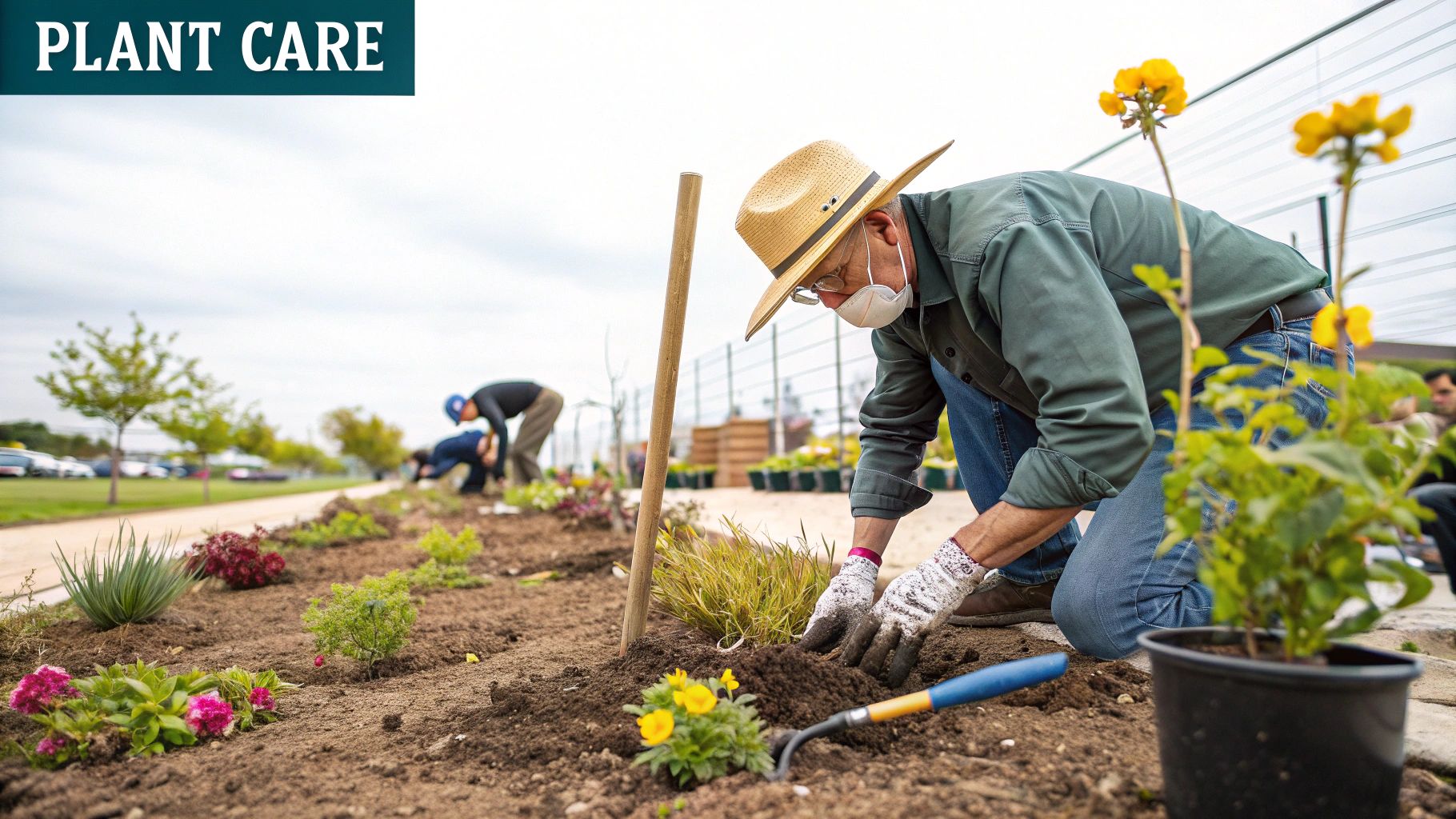
With a professional design in hand, it’s time to bring your native Texas landscape to life. This installation phase is where proper technique makes all the difference, setting the stage for a resilient, low-maintenance garden that will flourish for years.
The secret to success with Texas natives is to forget traditional gardening rules. These plants have adapted to our local soils and climate, so the goal is to mimic their natural environment, not fight it.
Preparing the Soil The Right Way
One of the biggest mistakes homeowners make is over-preparing the soil. Most of our native plants thrive in the lean, often rocky or sandy soils common across South Texas. They don’t need heavily amended garden soil.
Adding too much compost or fertilizer can lead to weak, leggy growth that is more vulnerable to pests and requires more water—the exact opposite of our goal. For most properties in Corpus Christi and San Antonio, simply loosening the existing soil and removing competing weeds is all that's needed. For more details, check our guide on how to prepare soil for planting.
Best Practices for Planting Natives
When putting plants in the ground, timing and technique are critical.
- Optimal Planting Seasons: In South Texas, the best times to plant are fall and early spring. Fall is ideal, as it gives roots all winter to establish before the summer heat arrives.
- Dig the Right Hole: Dig a hole that is "twice as wide, but no deeper" than the root ball. This encourages roots to spread out into the native soil, creating a strong, drought-tolerant plant.
- Check the Depth: Place the plant so the top of its root ball is level with or slightly above the surrounding ground. Planting too deep is a common and fatal mistake that can lead to root rot.
- Backfill and Water Thoroughly: Use the original soil to backfill around the plant. Then, water deeply to settle the soil and eliminate air pockets.
The initial establishment period is a short-term investment for a long-term payoff. Consistent watering for the first few weeks encourages deep root growth, building the foundation for future self-sufficiency.
The Professional Advantage for Installation
While planting a garden can be a rewarding DIY project, professional installation provides peace of mind. It’s easy to make small mistakes that can jeopardize your entire investment.
The Fischer Landscaping team understands native Texas plants. We source them from quality local growers and install them correctly at the right time of year. We handle the hard work, ensuring every plant gets the precise care it needs to establish strong roots and flourish from day one.
Ready to see your native landscape design become a reality? Request a quote today and let our experts ensure a flawless installation.
Long-Term Care for a Thriving Native Landscape
Let's clarify a common misconception: "native" does not mean "zero maintenance." It means low-maintenance. A beautiful native garden requires a "less is more" philosophy, providing simple, strategic care that allows these resilient plants to thrive.
This hands-off approach is a significant time-saver, which is ideal for busy homeowners and property managers from Corpus Christi to San Antonio. It means more time enjoying your landscape and less time working in it.
Smart Watering for Established Plants
Once your native plants are established (typically after the first year), their water needs change dramatically. The goal is to water deeply but infrequently, mimicking a natural Texas downpour. This encourages roots to push deeper into the soil, building incredible drought resistance.
For most established native gardens, a thorough watering once or twice a month during the peak of summer is often sufficient. Always check the soil first; if it's moist a few inches down, hold off. It's far easier to kill a native plant with too much water than with too little.
The Power of Mulching
Mulch is the secret weapon for a low-maintenance garden. A simple two- to three-inch layer of organic mulch, like shredded hardwood or cedar, works wonders:
- Moisture Retention: It slows evaporation, keeping the soil cooler and damper for longer.
- Weed Suppression: It blocks sunlight, preventing most weed seeds from germinating.
- Soil Health: As it decomposes, it enriches the soil, creating a healthier environment for your plants.
Think of mulch as a protective blanket for your garden's soil. It insulates roots from extreme South Texas heat, conserves precious water, and reduces the need for constant weeding, creating a healthier, more self-sustaining environment.
Selective Pruning and Pest Resistance
Most native plants look their best when allowed to grow in their natural shape. Pruning should be limited to removing dead or damaged branches and light shaping, typically in late winter before new growth begins.
A healthy native garden has built-in pest control. These plants have natural defenses against local insects. With proper watering and maintenance, you’ll find that pest and disease problems are rare, eliminating the need for chemical sprays.
Managing a native landscape is straightforward, but it requires the right touch at the right time. For those who want a flawless yard without the guesswork, Fischer Landscaping provides expert landscape maintenance services. We handle the smart watering, seasonal pruning, and mulching to ensure your investment continues to flourish. Request a quote today and let us keep your native garden looking its best.
Common Questions About Native Plant Landscaping
Switching to a native Texas landscape is an exciting prospect, but it's natural to have questions. For property owners in Corpus Christi and the surrounding areas, understanding the practical implications is key. Here are answers to some of the most common concerns.
Does a Native Landscape Cost More Than a Traditional Lawn?
The initial investment to install a professionally designed native landscape can be comparable to laying a traditional turf lawn. Upfront costs for design, soil preparation, and high-quality plants are often similar.
The real difference is in the long-term savings. This is where a native garden delivers exceptional value.
A native landscape dramatically slashes your recurring operational costs. You will see significantly lower water bills, eliminate the need for weekly mowing services, and stop purchasing chemical fertilizers and pesticides year after year.
Over time, this makes a native Texas garden an incredibly smart financial decision for any South Texas property owner.
Will My Yard Look Like an Overgrown, Weedy Mess?
This is a common myth. A professionally designed native landscape is the opposite of a neglected, weedy field. At Fischer Landscaping, every design is intentional and structured.
We apply proven landscape design principles to create a look that is both beautiful and orderly. We achieve this by:
- Creating clean, defined edges for all garden beds.
- Using deliberate plant groupings and layers to establish visual rhythm.
- Incorporating hardscaping—like stone pathways or patios—to add structure.
The goal is to create a landscape that feels lush and alive but is clearly well-cared-for, enhancing your property's curb appeal.
How Long Will It Take for My Garden to Look Full?
Patience is key. Native plants follow a growth pattern known as "sleep, creep, leap."
- Year One (Sleep): The first year is focused on establishing deep, strong root systems underground. Above-ground growth will be minimal.
- Year Two (Creep): In the second year, plants will begin to spread and fill in the space as they become more established.
- Year Three (Leap): By the third year, with their roots firmly in place, the plants will surge in growth, reaching their mature size and producing abundant blooms.
Understanding this timeline helps set realistic expectations as your beautiful, low-maintenance landscape comes to life.
Ready to bring the beauty and benefits of a water-wise, native Texas landscape to your property? The team at Fischer Landscaping has the local expertise to design and install a garden that will flourish in our unique South Texas climate.