Installing artificial grass is a process, and it’s about much more than just rolling out a green carpet. The real magic happens long before the turf even appears. Success hinges on meticulous site preparation, building a solid base, laying the turf correctly, and applying the right infill.
Why Artificial Grass Thrives in South Texas
If you live anywhere from Corpus Christi to San Antonio, you know the struggle. The dream of a lush, green lawn often feels impossible under the brutal South Texas sun. Between the intense heat, constant water restrictions, and our heavy clay soil, keeping a natural lawn alive is a full-time, expensive job.
This is exactly where artificial grass comes in as a game-changer. It’s a practical, long-term solution to these all-too-common frustrations. You can finally stop the endless cycle of watering, mowing, and fertilizing, which saves you a surprising amount of time and money while also conserving a vital resource. Today's synthetic turf is built tough—it can handle high temperatures and heavy foot traffic without turning into a patchy, brown mess. That's why it's become such a go-to choice for homeowners and businesses alike.
A Smart Investment in Your Property
Opting for artificial turf isn't just about looks; it's a strategic move that enhances your property's value and your quality of life. The payoff goes well beyond simple curb appeal.
- Significant Water Savings: With drought being a constant concern from Brownsville to Harlingen, cutting back on water is non-negotiable. Artificial turf can slash your landscape water usage by up to 70%, a difference you'll definitely see on your monthly bills.
- Reduced Long-Term Maintenance: Imagine reclaiming your weekends. No more lawnmowers, fertilizers, or pesticides. This frees up your time and your budget for things you actually enjoy.
- Consistent Year-Round Beauty: Your lawn will look immaculate every single day of the year. It becomes a reliable, beautiful backdrop for family get-togethers, a safe place for pets, or a polished first impression for clients.
Artificial grass is also a fantastic component of sustainable landscaping, aligning with the growing use of eco-friendly construction materials that help conserve water and eliminate chemical runoff.
While the installation process is detailed, the end result is a flawless, durable lawn built to last. For a finish that’s guaranteed to be perfect, partnering with the experts at Fischer Landscaping ensures every step is handled with professional precision.
Laying the Foundation for a Flawless Lawn
The success of any artificial grass installation hinges on what's underneath. Getting the groundwork right is absolutely critical, especially here in South Texas where the ground has to stand up to everything from blistering heat to torrential downpours. A poor foundation is a shortcut to a lumpy, unstable disaster.
First, you must remove every last bit of the existing grass, weeds, and sod. This gives you a completely clean slate to build upon and prevents old organic matter from rotting underneath and creating dips and bumps.
Digging Out for Stability and Proper Drainage
With the area cleared, it’s time to start digging. For most projects we handle, whether it's a backyard in Corpus Christi or a commercial space in San Antonio, we excavate down about 3 to 4 inches. This depth gives us the room we need to build a solid base that won’t shift or compact unevenly over time.
This is also where many DIY projects go wrong: grading. Proper drainage is non-negotiable in our climate. We shape the excavated area with a slight, almost unnoticeable slope—usually a 1-2% grade—that guides rainwater away from your foundation and towards a runoff point. This simple step is what keeps water from pooling on your beautiful new lawn. Getting this foundation perfect is a lot like what the pros do in roadwork, and this guide to paving and grading shares some similar principles.
Putting Down a Professional Weed Barrier
Once the ground is excavated and properly graded, we roll out a commercial-grade weed barrier. This isn’t the flimsy stuff you find at a big-box store. A high-quality geotextile fabric laid across the entire area is your best defense against stubborn Texas weeds trying to poke through from below.
We make sure to overlap the seams by at least six inches and pin it all down securely with landscaping staples. This leaves no gaps for weeds to find their way through. It might seem like an extra step, but it saves a world of headaches later. The principles are surprisingly similar to getting a garden ready; for more on that, you can see our guide on how to prepare soil for planting.
Framing the Project with Bender Board Edging
The final piece of the foundation puzzle is installing a solid edging, typically a composite bender board. This gives the installation a sharp, professional look and serves two very important functions.
- It creates a clean, defined border. The bender board makes a crisp visual separation between your turf and surrounding garden beds, patios, or driveways.
- It holds everything together. Even more critically, the edging acts like a frame, containing the sub-base material and giving us a solid perimeter to secure the turf to. This is crucial for preventing the edges from lifting under the intense Harlingen and Brownsville sun.
With the ground cleared, graded, and framed, your foundation is set. This solid base is what ensures your new lawn will look great and perform beautifully for years. While it's possible to do this yourself, the precision needed for proper grading and compaction is where having a professional team from Fischer Landscaping really pays off.
Building a Stable and Long-Lasting Base
Once the groundwork is done, it's time to build the base. This is the unsung hero of your entire project—the foundation that keeps your lawn smooth, ensures it drains correctly, and holds up to everything from kids' soccer games to the unpredictable South Texas weather.
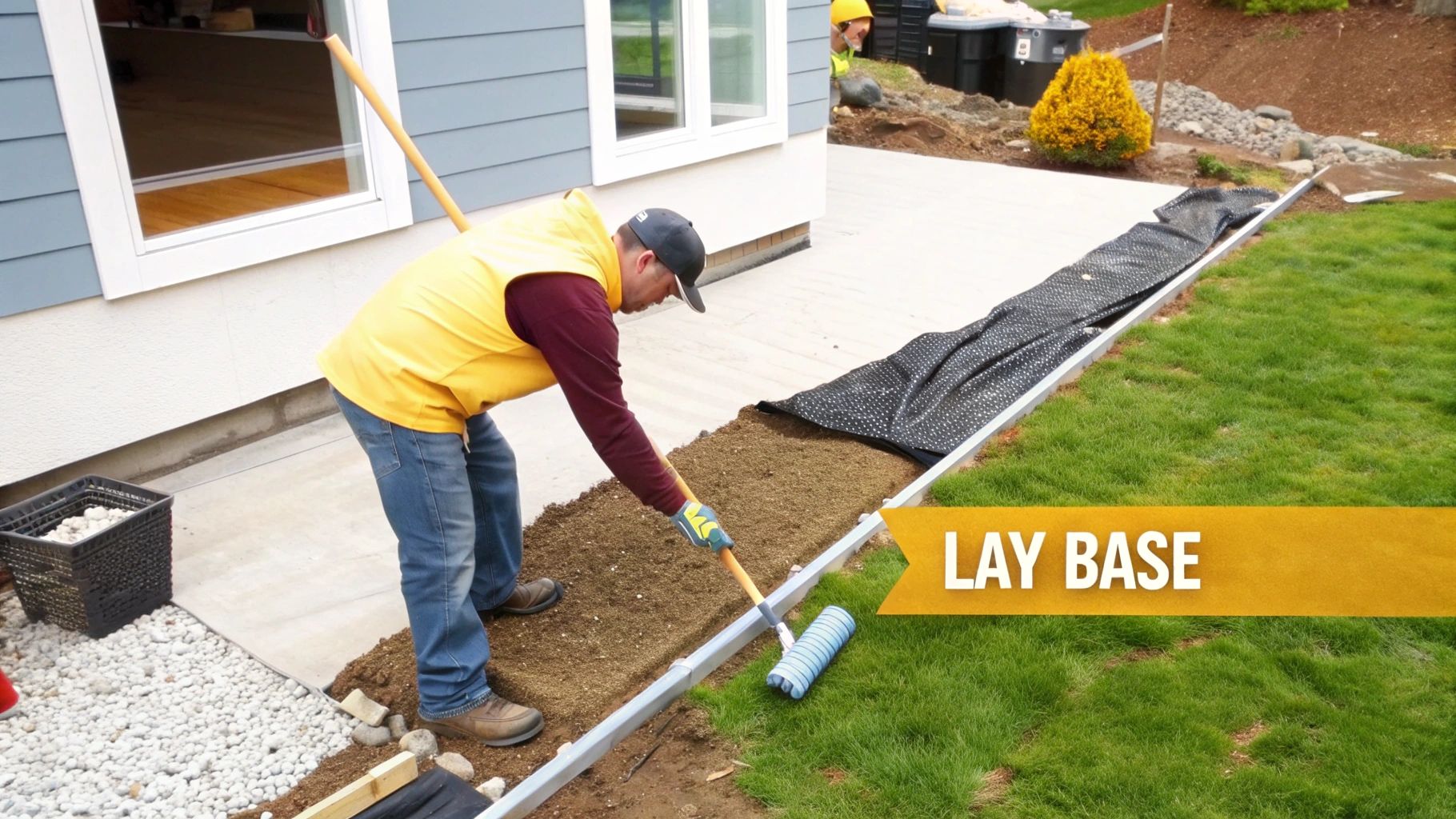
If there's one place you absolutely cannot cut corners, it's here. A poorly built base is the number one reason DIY projects fail. It leads to lumps, dips, and drainage nightmares that completely ruin the look and feel of your investment. This is what separates a professional lawn from one that just looks… off.
Selecting the Right Base Material for South Texas Soil
In areas like Corpus Christi and San Antonio, we're almost always working with clay-heavy soils. Clay expands when wet and shrinks when dry, making for a very unstable foundation. To counteract that movement, you have to choose the right aggregate base.
For our South Texas projects, we almost always land on one of two materials:
- Decomposed Granite (DG): This is a fantastic option made of fine granite particles. When compacted, it creates a firm and smooth surface that's perfect for a pristine look.
- Crushed Rock Aggregate: A mix of small, angular rocks (usually 3/8" minus) locks together when compacted, giving you superior drainage and a rock-solid foundation. It’s our go-to for areas that get a lot of rain.
The best choice depends on your specific yard. At Fischer Landscaping, we assess the native soil and how you plan to use the lawn before recommending the perfect material.
The Professional Process for Spreading and Compacting
Getting the material on-site is just the start. The real work is in the meticulous spreading and compacting needed to create a solid, even surface. Industry research from sources like Arizton consistently shows that a properly installed crushed rock or decomposed granite base, compacted to a depth of 3 to 4 inches, is crucial for both stability and drainage.
This isn't just about dumping and raking; it’s a process that requires precision.
We start by spreading the aggregate evenly, making sure the depth is consistent everywhere. Then, using a landscape rake, we level the material out, carefully following the grade we established to keep the drainage slopes perfect. Finally, we fire up a heavy-duty plate compactor and systematically go over the entire base, forcing the aggregate particles to lock together and creating a foundation as solid as concrete.
Achieving a Perfectly Smooth Surface
After the first round of compaction, the base will be firm, but it won't be perfect. The final touch is "screeding." We take a long, straight board and drag it across the surface, shaving off any high spots and filling in the low ones. The goal is a perfectly smooth, glass-like finish.
This detail is absolutely critical. Any tiny bump or dip in the base will be magnified ten times over once the turf is laid on top. It’s a tedious step, but it’s non-negotiable for a flawless result. This level of precision is tough to pull off without the right equipment and experience. That’s why bringing in Fischer Landscaping is such a smart move. We ensure your base is built to last, giving you the perfect foundation for a beautiful lawn that will serve your home or business in Brownsville or Harlingen for years to come.
Laying and Seaming Your Artificial Turf
With a rock-solid base in place, you’ve reached the most visually rewarding part of the process: laying out your new lawn. Precision here is absolutely essential. Rushing this stage is a surefire way to get visible seams, misaligned patterns, and edges that just don’t look right—the classic tells of a DIY job versus a professional installation.
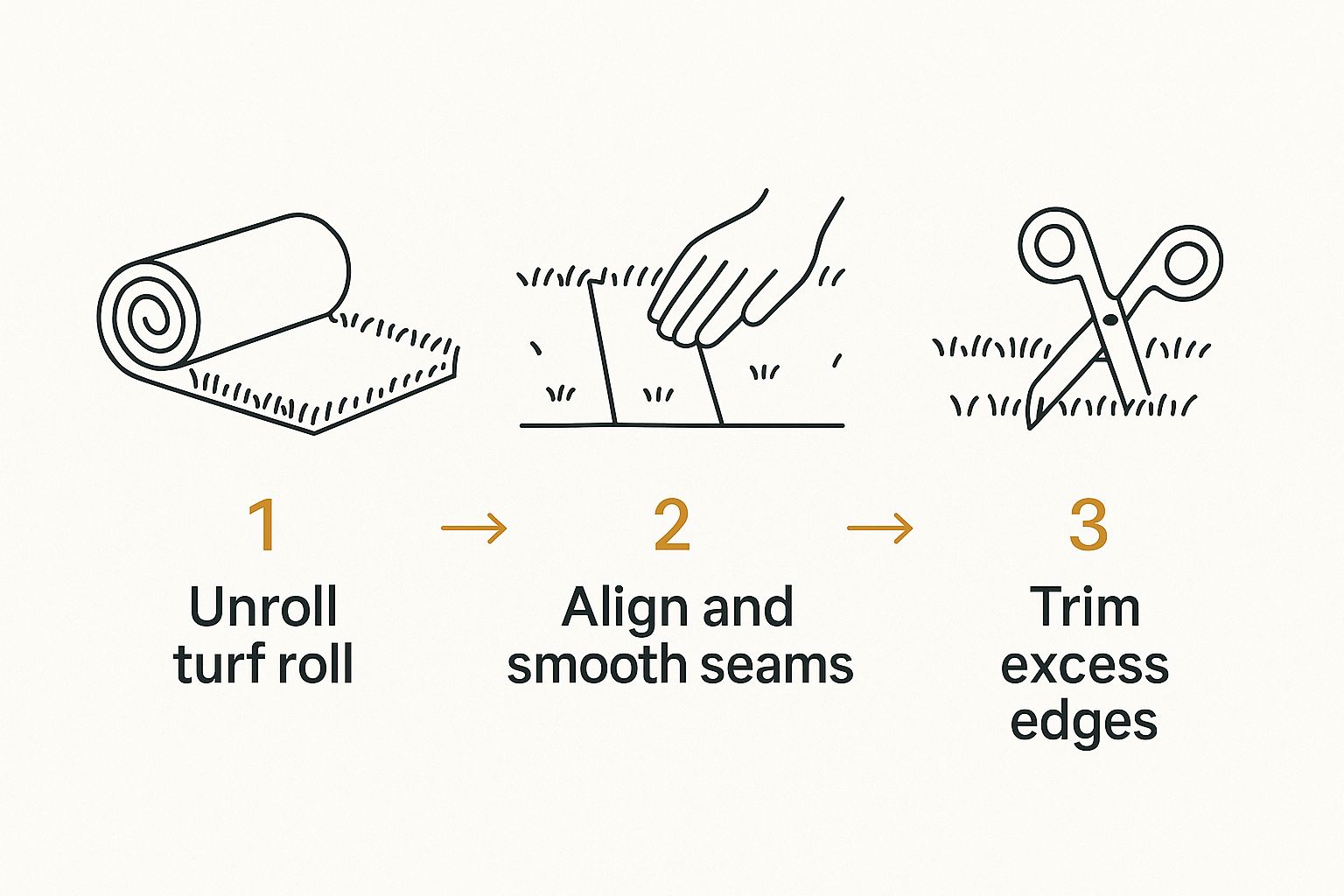
First, carefully unroll the artificial turf over your prepared base. This stuff is often heavier than people expect, so having an extra set of hands helps. Let the turf relax under the Texas sun for at least an hour or two. This helps the backing flatten out completely and makes the material much easier to work with.
Maintaining a Consistent Grain Direction
One of the most critical details—and one that many people miss—is the grain direction. Just like a real lawn, the synthetic blades have a natural lean. For a seamless, uniform appearance, every single piece of turf you lay must have its blades pointing in the same direction. No exceptions.
If you get the grain direction wrong, the way the light hits the turf will be different from one section to the next, creating a noticeable checkerboard effect. We always recommend positioning the grain so the blades point toward the primary viewing area, like your patio or back door, for the most natural and appealing look.
The Art of Cutting and Fitting Your Turf
Once your turf is positioned, it’s time to custom fit. Armed with a sharp utility knife, you’ll need to trim the turf to fit the exact contours of your lawn. Always cut from the back side of the turf for a cleaner, more accurate line. From our experience on jobs in Corpus Christi and San Antonio, it's best to make your initial cuts a little generous. You can always trim more off, but you can't add material back. This patient trimming creates the crisp, clean edges that define a professional job.
Creating Invisible Seams
Seaming is, without a doubt, the most challenging part of any artificial grass installation. This is where a professional's touch truly shines. The goal is to join two pieces of turf so perfectly that the seam is completely invisible.
The process involves a few key components:
- Proper Alignment: Lay the two pieces of turf next to each other with a tiny, consistent gap—no more than 1/8th of an inch. The black backing of the turf rolls should never touch.
- Seaming Tape and Adhesive: Roll out specialized seaming tape directly under the gap. Then, apply a high-quality turf adhesive in a serpentine (S-shaped) pattern along the tape.
- Careful Placement: Gently press the edges of both turf pieces down onto the adhesive-covered tape, being careful that no grass blades get trapped in the glue.
An invisible seam isn't just about looks; it's about durability. A properly glued seam is incredibly strong and can withstand heavy foot traffic. A weak seam will eventually pull apart, creating a tripping hazard and ruining the entire look of your lawn.
Securing the Perimeter for a Lasting Finish
With the seams set, the final step is to lock down the entire perimeter. This prevents the edges from lifting up over time, which can happen with ground movement or exposure to that intense Harlingen sun. We use 6-inch galvanized landscaping spikes, driving them every 6 to 8 inches along the entire outside edge of the turf.
The trick here is to drive the spikes deep enough to be secure but not so deep that they create a divot. We carefully separate the grass blades before hammering in each spike, allowing the head to disappear beneath the fibers so it's completely hidden. This meticulous work is what sets a Fischer Landscaping installation apart. If you’re figuring out how to install artificial grass and want a flawless, durable result, contact us for a quote and see how our experts can help.
Applying Infill for a Professional Finish
You've done the heavy lifting—the ground is prepped, and the turf is perfectly laid out. Now comes the step that separates a decent DIY job from a truly professional installation: applying the infill. This is more than just a finishing touch; it’s what gives your new lawn its resilience, feel, and flawless look.
Infill is the granular material brushed deep into the fibers of the artificial grass. Its job is threefold: it weighs the turf down, helps the synthetic blades stand up straight and look natural, and provides that cushioned feel underfoot. Skimping on this step is a mistake that leads to a flat, lifeless-looking lawn that won't stand the test of time.
Choosing the Right Infill for Your South Texas Lawn
The type of infill you choose depends on your lifestyle. A family with two large dogs in Corpus Christi will need something different than a decorative courtyard in a San Antonio business park. Picking the right one is key to long-term satisfaction.
| Infill Type | Key Benefit | Best For | Consideration |
|---|---|---|---|
| Silica Sand | Budget-friendly and easy to source. | General use, low-traffic areas, and projects where budget is the main factor. | Can compact over time and may hold more heat than premium options. |
| Envirofill | Antimicrobial, non-absorbent, and helps cool the turf. | Homes with pets and kids, high-traffic zones, and anyone wanting a top-tier, clean finish. | It's a premium product with a price tag to match. |
| Zeolite | Exceptional at neutralizing ammonia odors from pet urine. | Pet-focused installations, especially in dedicated dog runs or smaller yards. | Works best when combined with another infill for proper weight and stability. |
For the vast majority of our residential clients, especially those with pets in places like Harlingen and Brownsville, Envirofill is our top recommendation. Its antimicrobial coating is a game-changer for preventing the bacteria and odors that can build up from pet waste. Standard silica sand can trap moisture and unpleasant smells, but Envirofill is engineered specifically to fight them off.
The Process for Even Infill Distribution
Once you have your infill, the goal is uniform application. The absolute best way to achieve this is with a broadcast or drop spreader—the same tool you'd use for spreading fertilizer. Just fill the hopper and walk across the lawn in straight, slightly overlapping passes. A spreader is the only way to guarantee a consistent layer, which sets you up for success in the next phase. Pay close attention to the turf manufacturer's specifications for infill. They'll tell you exactly how many pounds per square foot are required. Using the right amount is non-negotiable for performance, longevity, and your turf's warranty.
Working the Infill into the Turf Fibers
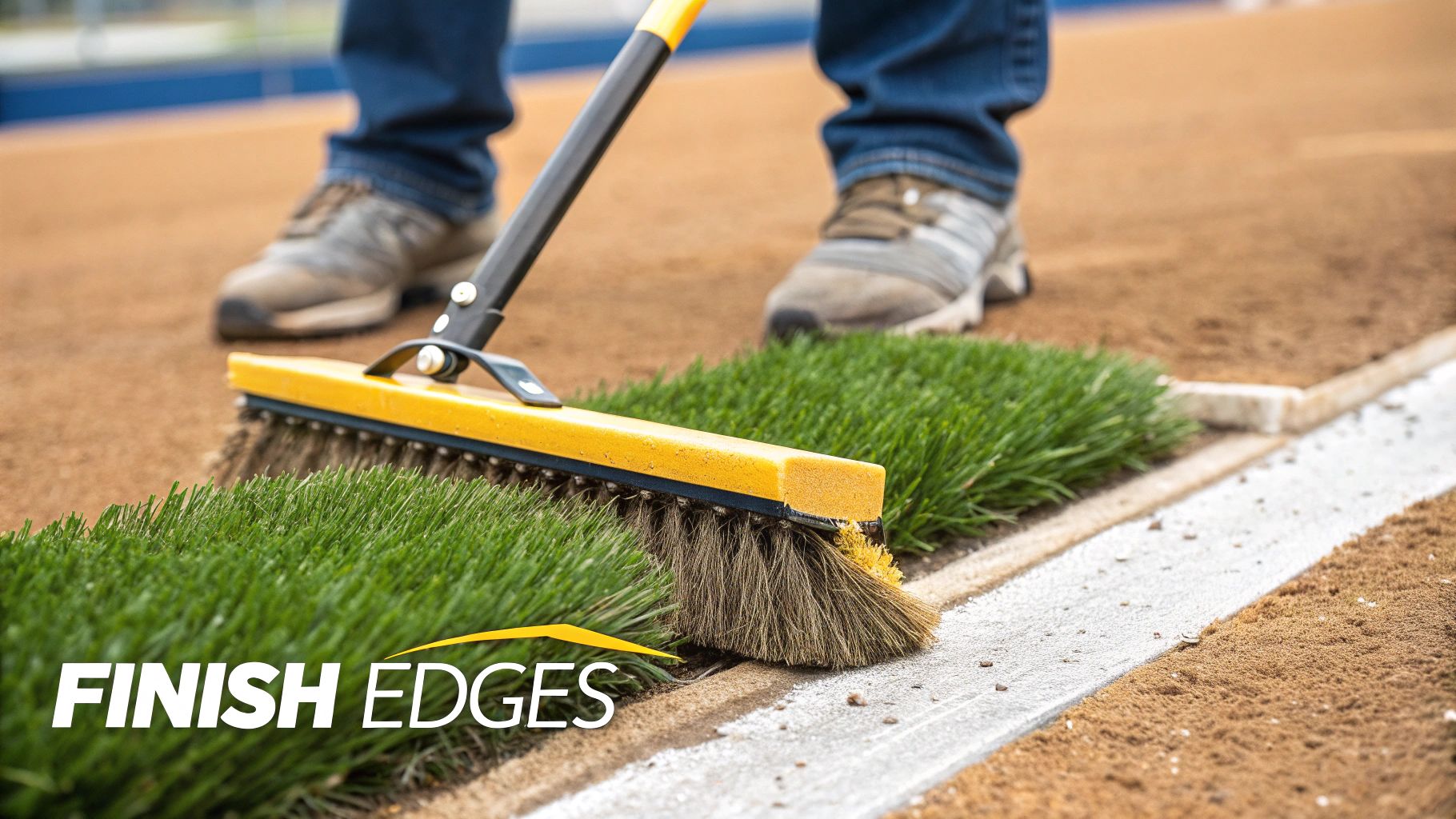
With the granules spread evenly, it's time to get them down into the base of the turf. This is where a power broom is your best friend. A power broom's rotating, stiff-bristled brush does the hard work for you, vigorously pushing the infill deep into the thatch while simultaneously pulling the grass blades upright.
You can use a stiff push broom, but be prepared for a serious workout. The objective is to make the infill disappear from view, settling it down near the turf’s backing. We call this "blooming" the turf, and it’s what creates that lush, full, and perfectly manicured appearance.
This is the final step that produces that truly pristine, professional result. It ensures every blade is supported and your lawn is weighted down, ready for anything. It’s the finishing touch that defines a Fischer Landscaping installation.
If you’re ready for a perfect lawn without the hassle, request a quote from our team today.
Common Questions About Turf Installation
Even with a step-by-step guide, it's normal to have a few lingering questions about installing artificial grass. Here are some of the most common questions we get from homeowners and business owners around Corpus Christi and San Antonio.
How Long Does a Professional Turf Installation Take?
This depends on the size of the job. For a standard residential backyard in places like Harlingen or Brownsville, a seasoned crew from Fischer Landscaping can typically complete the entire installation in just 2 to 4 days. That timeline covers everything from digging out the old lawn and prepping the base to laying the turf and applying the final infill. Project size, site access, and unexpected weather can extend this timeline.
Can Artificial Grass Be Installed Over a Concrete Patio?
Absolutely. Laying turf over an old, cracked, or boring concrete patio is a brilliant way to transform an outdoor space. The installation method is different, however. We first put down a specialized drainage pad that also acts as a shock absorber. This creates a soft feel underfoot and gives water a path to escape. The turf is then secured around the edges with a high-strength adhesive, not stakes. This is a job where bringing in a pro really pays off to ensure proper drainage and prevent mold growth.
Is Artificial Grass Safe and Durable Enough for Pets?
Yes, modern turf is tougher and safer for pets than ever before. The secret to a great pet-friendly installation isn't just the turf itself, but the entire system from the ground up. The turf backing has plenty of drainage holes, and the crushed rock base underneath is designed to let liquids pass right through. When you add a high-quality, pet-friendly infill like Envirofill, you get a system that actively fights odors. This keeps your yard fresh and clean. For more ideas on maintaining your landscape, check out our top 10 lawn care and maintenance tips.
What Is the Biggest Mistake in a DIY Turf Installation?
Without a doubt, the number one mistake we see is a poorly prepared base. People often underestimate the skill it takes to properly grade, level, and compact the sub-base material. A bad base is a ticking time bomb. Sooner or later, you'll start seeing seams, wrinkles will appear, and low spots will collect water. The worst part? Fixing a faulty base almost always means tearing the entire lawn out and starting over from scratch. That "money-saving" DIY project just became a massive, costly headache.
A beautiful, long-lasting artificial lawn is a true investment in your property. While you can certainly try it yourself, the experience, tools, and know-how of a professional crew guarantee a flawless result. At Fischer Landscaping, we sweat the details so you don't have to.
Ready to see what your South Texas yard could be? Contact Fischer Landscaping today for a professional quote!