Installing an astroturf lawn is a game-changing upgrade for your property, providing a lush, green space year-round without the constant upkeep. It’s a multi-step process that starts with proper ground preparation, moves to building a rock-solid base, and finishes with the turf installation itself. The key to a flawless result is to clear out the old grass, grade the soil for proper drainage, and compact a durable sub-base of aggregate. After that, it's about carefully rolling out the turf, seaming it invisibly, and adding the right amount of infill. While it requires attention to detail, the payoff is a tough, low-maintenance lawn that can handle the demanding South Texas climate.
Why Astroturf Is the Smart Choice for South Texas
Anyone in South Texas knows that keeping a natural lawn green is a constant battle. The blistering sun, relentless heat, and water restrictions in cities like Corpus Christi and Brownsville can leave you with a brown, patchy mess, no matter how much you invest in it. It's this exact struggle that makes astroturf less of an alternative and more of a practical, long-term solution.
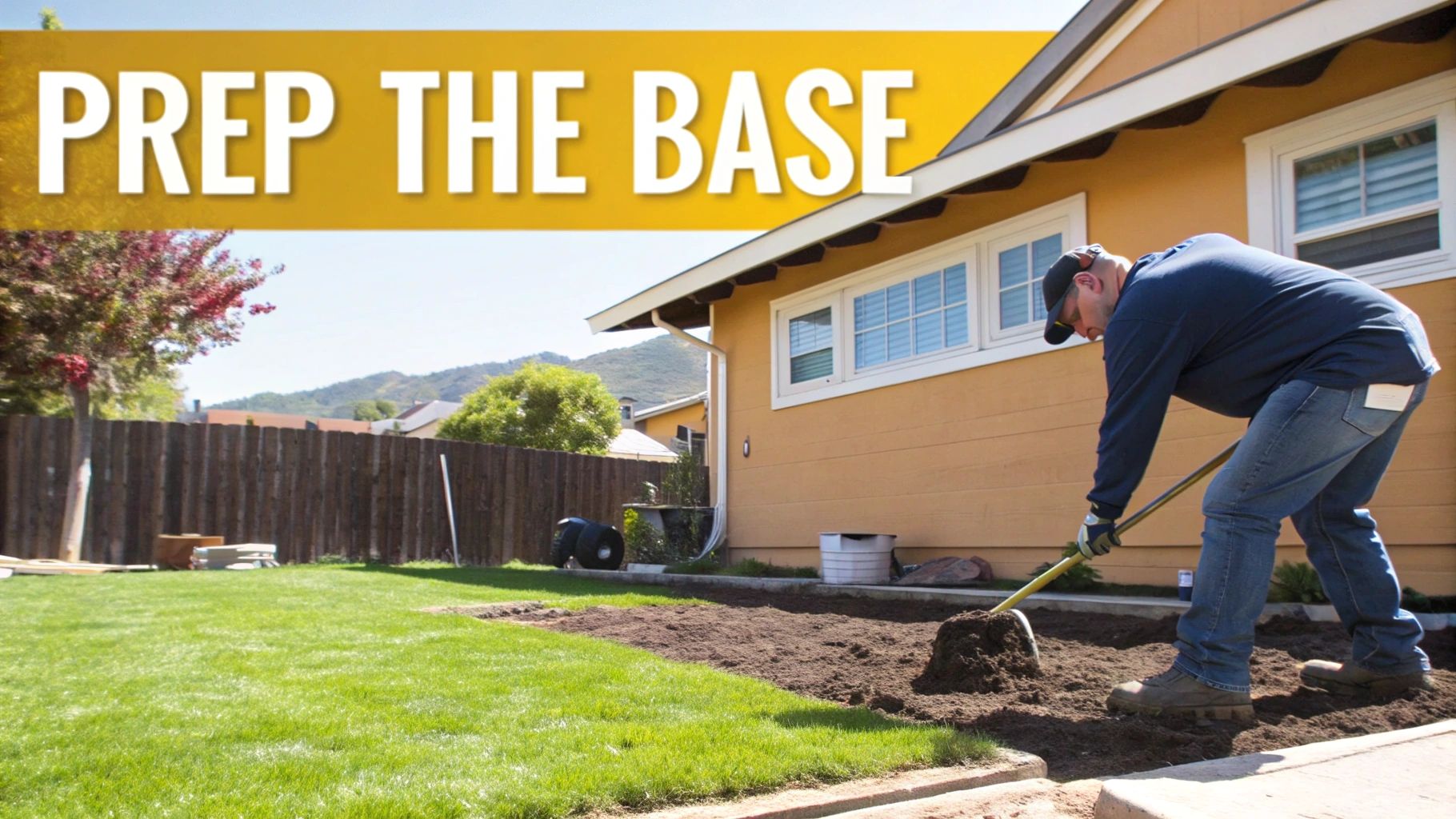
Today's synthetic turf is a world away from the old, plastic-looking carpets you might remember. Modern turf is engineered to solve the real-world landscaping challenges we face here. It's incredibly realistic, with different blade heights, thatch layers, and color variations that mimic the look of a healthy lawn but without the constant headache. It stays perfectly green all year, whether we're in a drought or the middle of a scorching August.
The Financial and Practical Advantages
One of the biggest wins with artificial grass is how much it cuts down on maintenance costs and chores. Just think about the money and effort that goes into a natural lawn in San Antonio or Harlingen:
- Sky-High Water Bills: Keeping grass alive through a Texas summer uses a staggering amount of water, which is reflected on your utility bill every month. Astroturf completely eliminates this cost.
- Never-Ending Chores: Mowing, weeding, fertilizing, and dealing with pests eat up your weekends and your wallet. A synthetic lawn gives you that time and money back.
- Built to Last: Quality turf can handle kids, pets, and intense sun without getting thin or developing dead spots.
When you choose astroturf, you're essentially front-loading the cost for years of a perfect lawn, minus the constant expenses and hard work. It's a smart investment that boosts your property's value and curb appeal.
If you're still on the fence, it helps to see a direct comparison. We've put together a detailed guide on synthetic turf vs natural grass that lays out all the long-term benefits. Learning how to lay an astroturf lawn is your first step toward reclaiming your weekends and enjoying a beautiful outdoor space built for the South Texas environment. Contact Fischer Landscaping for a quote and let our experts design the perfect low-maintenance lawn for you.
Gathering Your Tools and Materials
A perfect astroturf lawn isn’t something you just roll out. The real work—the work that guarantees a flawless, long-lasting result—starts long before the first strip of turf touches the ground. Cutting corners on tools and materials is the fastest way to get a lumpy, uneven lawn that looks old before its time.
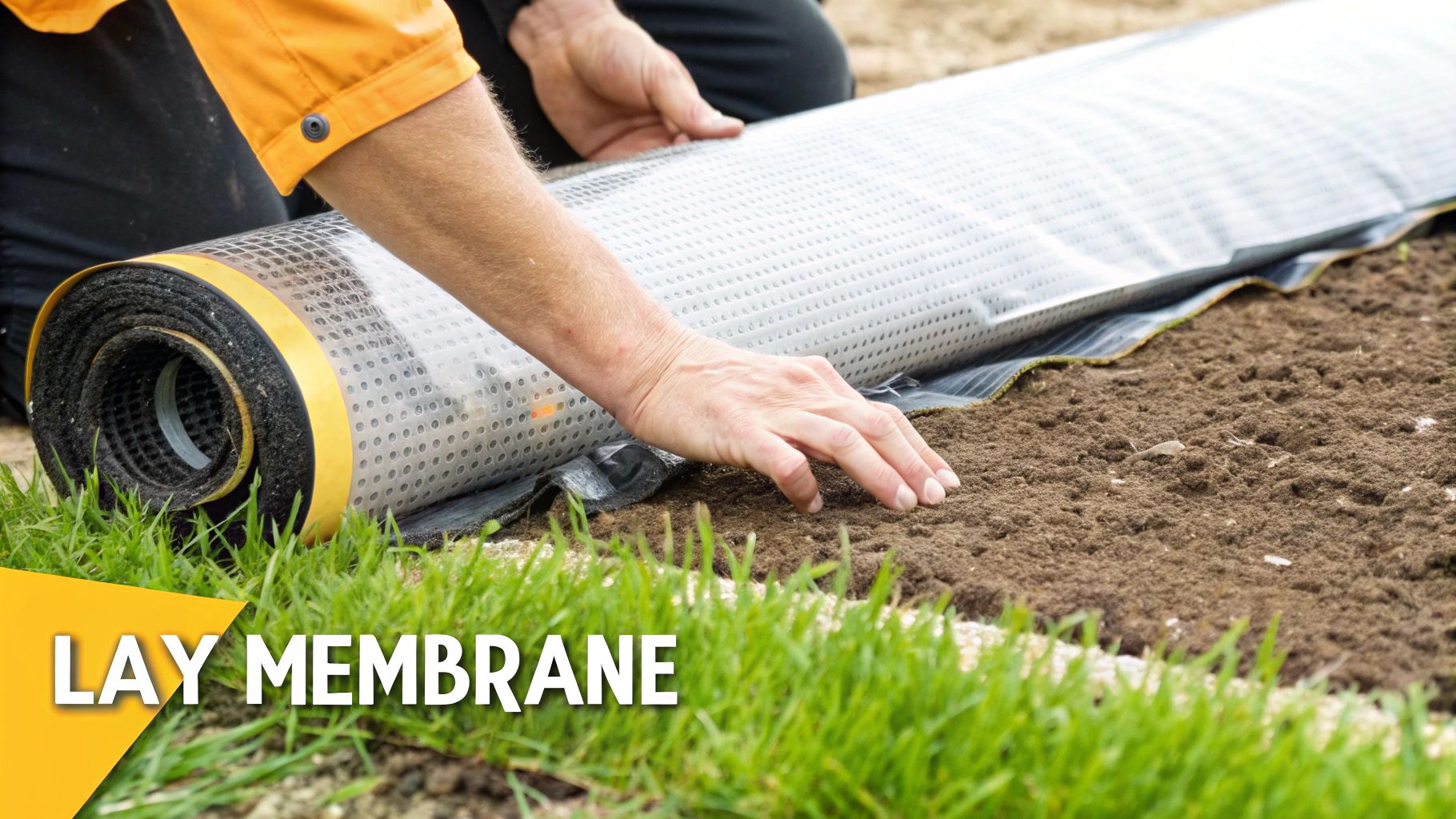
This isn't about just grabbing a shovel from the garage. We're talking about specialized equipment that makes the difference between a project that looks "good enough" and one that looks professionally installed. For homeowners in Corpus Christi or San Antonio considering a DIY job, understanding this gap is critical to achieving a high-quality outcome.
The Right Tools for a Professional Finish
Let's get into what you'll actually need. The first part of the job is all about heavy lifting and creating a perfectly graded foundation.
- Sod Cutter: Forget digging by hand. A sod cutter will slice through existing grass and roots, giving you a clean slate to work with in a fraction of the time.
- Plate Compactor: This is the one tool you absolutely can't skip. It ensures your aggregate base is packed down solid, which prevents those dreaded sinkholes and lumps from appearing later.
- Wheelbarrow and Shovels: The classics. You’ll be moving a lot of soil, gravel, and infill, so you need reliable tools to get it from point A to point B.
- Landscape Rake: Essential for getting that sub-base material perfectly smooth and level before you bring in the compactor.
Once the groundwork is solid, you shift to the turf itself. Using the wrong kind of knife will give you frayed edges and seams that stick out like a sore thumb.
- Carpet or Turf Knife: You need a sharp, heavy-duty knife designed to slice cleanly through the turf's thick backing.
- Seaming Tools: This combo of seaming tape and a tough, weather-resistant adhesive is what creates those invisible bonds between turf sections.
- Drop Spreader: This is the only way to get a perfectly even layer of infill across the entire lawn.
- Power Brush: A real game-changer. A professional power brush works the infill deep into the fibers and makes the blades stand up straight, giving the lawn that lush, full look.
DIY vs Professional Grade Installation Tools
There's a significant difference between the tools a homeowner might have on hand and the specialized equipment professional installers use to guarantee a flawless finish. Here’s a quick comparison:
| Tool/Material | DIY Approach | Professional Standard |
|---|---|---|
| Ground Compaction | Hand tamper or rental compactor | Heavy-duty, high-frequency plate compactor for maximum base density and stability. |
| Turf Cutting | Utility knife | Specialized turf cutters and professional-grade carpet knives for precise, non-fraying cuts. |
| Infill Application | Shovel and rake | Calibrated drop spreader for perfectly even distribution; a power brush to work it in. |
| Seaming | Basic adhesive, may result in visible lines | Industrial-grade adhesive and specialized seaming tools for strong, invisible bonds. |
While you can certainly rent some of this equipment, the learning curve and sheer physical effort involved are often more than homeowners bargain for.
Choosing Materials Built for South Texas
The intense sun in Brownsville and the downpours in Harlingen mean your materials have to be up to the challenge. The right components are just as crucial as the installation method.
The longevity and appearance of your artificial lawn are directly tied to the quality of the materials used. From the turf backing to the type of infill, every element plays a role in creating a durable, beautiful, and functional outdoor space.
Here’s what you need for a project that will stand up to our unique climate:
- Quality Artificial Turf: Look for a turf with a high face weight, a durable backing, and robust UV protection to prevent fading. Good turf drainage solutions are also built right into the turf's backing—a must-have feature for our region.
- Sub-Base Aggregate: Crushed granite or a similar aggregate is ideal. It compacts into a rock-solid, permeable base that drains beautifully.
- Weed Barrier Fabric: Don't skimp here. A high-grade, non-woven geotextile fabric is your best defense against stubborn Texas weeds trying to push through.
- Landscape Edging: You’ll need a durable bender board or similar edging to frame the entire area and keep the sub-base securely contained.
- Infill Material: Infill does a lot—it weighs down the turf, supports the blades, and can even help keep the surface cool. Options range from basic silica sand to specialized products like ZeoFill, which is fantastic for pet owners because it helps neutralize odors. We have more details on our pet-friendly turf solutions.
Ultimately, having the right gear and materials is the foundation of a successful astroturf lawn. While a DIY project is certainly tempting, sourcing all the right equipment and materials can be a real challenge. At Fischer Landscaping, we have the experience and professional-grade tools to build you a beautiful, resilient lawn you’ll enjoy for years to come.
Building a Bulletproof Base for Your Turf
The secret to an astroturf lawn that stays perfectly smooth and level for years isn't the turf itself—it’s the foundation built beneath it. This is easily the most labor-intensive part of the job, and it’s where a professional touch truly makes a difference. An unstable base will quickly lead to lumps, dips, and drainage headaches, no matter how great the turf on top looks.
This whole phase is about precision and power. From the initial dig to the final compaction, every single step builds on the last. Skipping steps or using the wrong tools here is the number one DIY mistake, resulting in a lawn that fails within just a few years. Let's walk through how to build a base that’s truly bulletproof.
Mastering Excavation and Grading
First, you must get rid of the old lawn. This means digging out all the existing grass, weeds, and organic topsoil. For a standard residential project here in Corpus Christi or San Antonio, plan on excavating down about 3 to 4 inches. This depth provides enough room for a solid aggregate base and the new turf. A sod cutter is your best friend for this part; it makes quick work of what would be a back-breaking task with a shovel.
Once the area is cleared, your focus shifts to grading. You need to create a slight, almost imperceptible slope—usually a 1% to 2% grade—that directs water away from your home’s foundation and any patios or walkways. This is non-negotiable, especially in South Texas where we can get those sudden, heavy downpours.
Proper grading ensures water flows off the surface and into designated drainage areas, preventing it from pooling. If you have any concerns about water management, it's a good idea to understand the principles of effective artificial turf drainage before you start digging.
Installing a Secure Perimeter
With the site excavated and graded, the next job is to frame out your new lawn. This means installing a secure perimeter using a durable bender board or even concrete curbing. This edging acts as a retainer, holding all your base material firmly in place and preventing it from spilling out into garden beds or onto pathways.
You’ll want to install the edging so that the top edge sits just below where the final height of the grass blades will be. This creates a clean, professional-looking border that is both functional and aesthetically sharp. Make sure you secure the edging properly with stakes so it won’t shift or bulge under the pressure of the compacted base.
A well-installed perimeter is the skeleton of your astroturf system. It contains the base, defines the lawn’s shape, and provides a clean edge for a manicured look that lasts.
Laying and Compacting the Sub-Base
Now we get to the most critical step in the entire process: building the sub-base. This is typically a layer of crushed granite or a similar aggregate, spread evenly across the whole excavated area. This layer serves two crucial functions: it provides a stable, porous foundation for the turf and it facilitates excellent drainage.
Use a wheelbarrow and a landscape rake to spread the aggregate to a consistent depth of about 3 to 4 inches. Take your time leveling it out, making sure it follows the grade you just established. Once it's spread, it's time to compact it.
This is where a plate compactor is absolutely essential. Trying to compact the base by hand with a tamper simply won't achieve the necessary density. A plate compactor uses powerful vibrations and weight to settle the aggregate into a dense, interlocking layer that won't shift or sink. You'll need to make several passes over the entire area, slightly overlapping each pass, until the base feels rock-solid under your feet. This process squeezes out all the air pockets and creates the firm foundation that is the key to a long-lasting, smooth lawn.
This infographic gives you a look ahead at the final steps, once the base is complete.
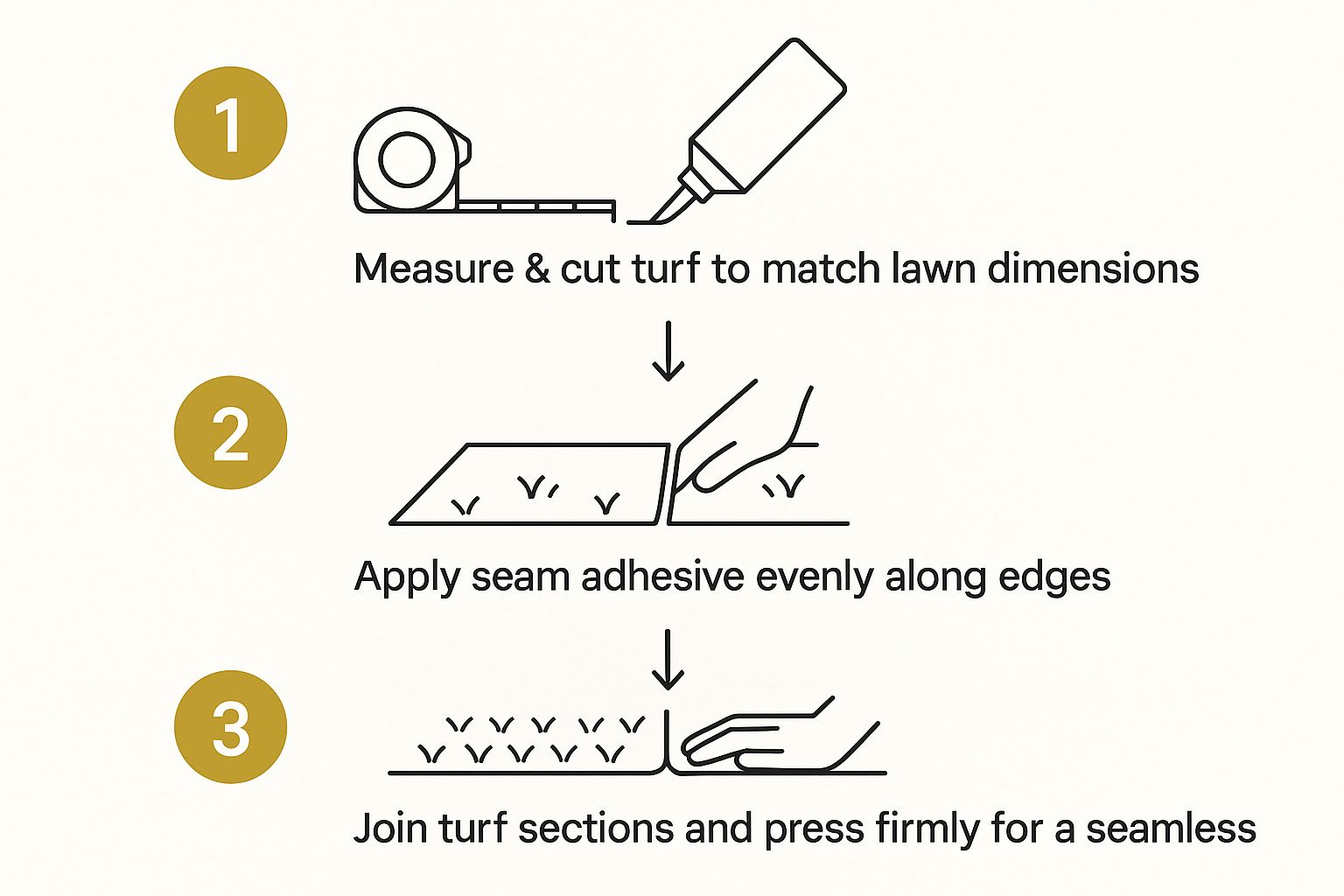
It highlights how precision in cutting, applying adhesive, and joining the pieces is vital for achieving those invisible seams and a truly professional finish.
Finalizing with a Weed Barrier
The last thing to do before the turf goes down is to install the weed barrier. After all that hard work building a perfect base, the last thing you want is stubborn Texas weeds poking through your beautiful new lawn. Roll out a high-quality, non-woven geotextile fabric over the entire compacted base.
Make sure you overlap the seams by at least 6 inches to ensure there are no gaps for weeds to sneak through. Secure the fabric with landscape staples, especially around the perimeter and along the seams, to keep it from shifting while you're laying the turf. This barrier is breathable, so water can pass through freely, but it forms an impenetrable shield against any unwanted growth from below.
At Fischer Landscaping, we know that a flawless lawn starts from the ground up. The meticulous work of building a proper base is what sets a professional installation apart. If you’re in the Harlingen or Brownsville areas and want to ensure your new astroturf lawn is built on a foundation that will last, contact us for a professional consultation and quote.
Laying and Seaming the Astroturf Flawlessly
Once you have a rock-solid base, you’ve reached the part where the project really starts to look like a lawn. This phase is all about precision and patience. How you lay and seam the turf is what separates a professional job from a DIY headache, turning individual rolls of grass into one seamless, green expanse.
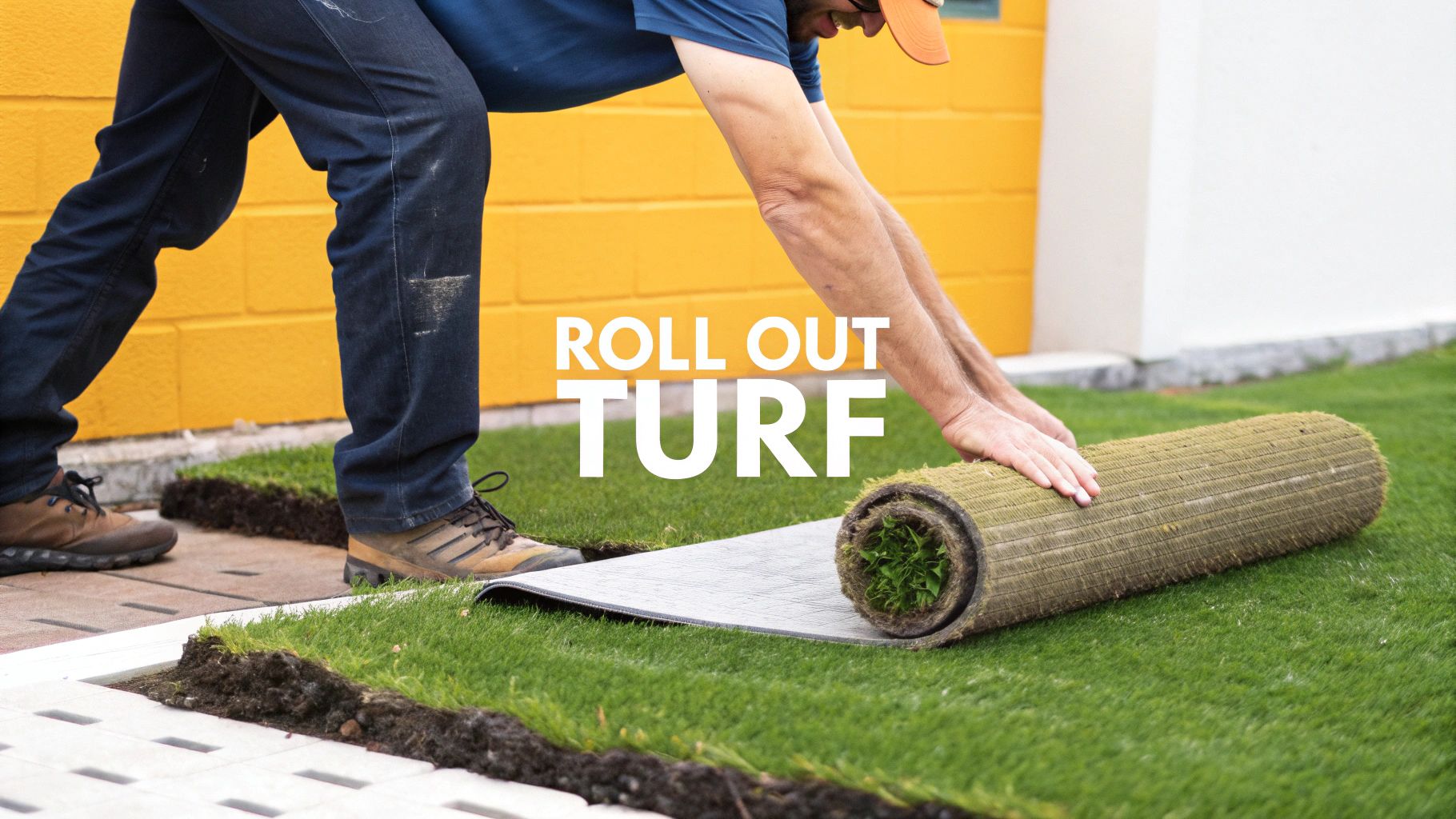
This is where many projects go wrong. Rushing the seams, getting the grain direction mixed up, or making sloppy cuts can leave you with a lawn that looks obviously fake. Taking your time here is the single most important thing you can do to get a result you'll be proud of for years.
Acclimation and Alignment: The First Steps to Success
Before you even think about cutting, you need to let your astroturf relax. Roll out each piece over your prepared base and let it sit in the South Texas sun for at least an hour, maybe two. This is called acclimation, and it allows the turf’s backing to soften and expand, making it far more pliable and easier to work with.
While it's acclimating, pay close attention to the grain direction. The individual blades of grass lean in one direction, and for a realistic look, every single piece you lay must have its grain running the same way. If you mix it up, the light will reflect differently, creating a distracting checkerboard pattern that screams "fake grass."
A pro tip: Always point the grain of the turf toward your main viewing area—like your back porch or kitchen window. This orientation provides the most lush and natural appearance from the vantage point where you'll see it most often.
Creating Invisible Seams
This is without a doubt the trickiest part of learning how to lay an astroturf lawn. The goal is to make the lines where two pieces meet completely vanish. It requires serious attention to detail.
- Trim the Factory Edges: Never try to seam the raw edges that come from the factory. There's a non-tufted selvage edge that must be removed. Grab a sharp turf knife and carefully trim off about 1-2 stitch rows from the edge of each piece you plan to join.
- Dry Fit the Pieces: Lay the freshly trimmed edges next to each other on the base. You want them to butt up against each other perfectly—no overlapping and no gaps. The space between the stitch rows should look just like the rest of the turf.
- Apply Seaming Tape and Adhesive: Once you're happy with the fit, fold both edges back. Lay a strip of seaming tape on the base, right down the middle of the gap. Apply a quality turf adhesive in a zigzag pattern on the tape, then gently press both pieces of turf back down, making sure they meet perfectly.
This process requires a steady hand. If you use too much adhesive, it can ooze up through the turf fibers and create hard, noticeable lines. This is where an experienced crew really shines, creating strong, invisible bonds that can handle years of foot traffic and weather in places like Brownsville and Harlingen.
Making Precision Cuts Around Obstacles
Your lawn in Corpus Christi probably isn't a perfect rectangle. You’ll need to make clean cuts around trees, sprinkler heads, or the curved edge of a patio. The trick is to make small, careful relief cuts instead of trying to cut out the entire shape at once.
For a tree, for instance, lay the turf over the base and make one straight cut from the outer edge of the turf to the tree trunk. From there, you can make a series of smaller cuts around the base of the trunk, trimming away the excess little by little until you have a perfect fit. And always cut from the backing side of the turf—it gives you the cleanest result.
The demand for these beautiful, low-maintenance lawns is only growing. The global synthetic turf market size was estimated at USD 6.87 billion in 2024 and is projected to climb to nearly USD 10 billion by 2030. This boom is driven by high-quality materials like polyethylene, which is loved for its durability and realistic feel. You can dive deeper into the industry's growth in this Grand View Research analysis.
Laying and seaming turf is an art form that takes practice to master. At Fischer Landscaping, our installers have the specialized tools and experience to give your San Antonio property a flawless, seamless finish. Reach out today for a quote on a professional synthetic turf installation that will look perfect for years.
Applying Infill and Power Brushing for a Perfect Finish
You’ve done the heavy lifting—the base is solid, and the turf is seamed perfectly. Now for the finishing touches that bring the project to life, transforming what looks like a flat green carpet into a lawn that feels and looks incredibly real. These final details make all the difference.
Applying the infill is more than just a finishing step; it’s essential for the lawn’s long-term health and appearance. The infill acts as a ballast, weighing the turf down so it doesn't shift or wrinkle. It also protects the backing from our harsh South Texas sun and, most importantly, helps the individual grass blades stand upright, giving them the resilience to bounce back after being walked on.
Choosing the Right Infill for Your Lawn
What you put in your turf is just as important as the turf itself. The type of infill you choose will directly affect how your lawn performs, feels underfoot, and how much maintenance it needs. Especially here in places like Corpus Christi and San Antonio, you need a material that can handle our unique climate.
Here’s a quick rundown of the most common options:
- Silica Sand: This is the go-to for many projects, and for good reason. It's affordable, and its rounded granules do a great job weighing down the turf and propping up the fibers. It's a solid, reliable choice for most general-use lawns.
- ZeoFill or Pet-Friendly Infill: If you have dogs, this is a must-have. ZeoFill is a fantastic organic infill designed to trap ammonia from pet urine, which is what causes those nasty smells. We almost always recommend this for our pet-friendly turf installations.
- Cooling Infill: In Brownsville, we all know how hot it can get. Newer infills on the market are specifically designed to reduce the surface temperature of the turf. This is a game-changer that can make the lawn much more comfortable for bare feet and paws during those scorching summer afternoons.
Think of infill as the unseen hero of your artificial lawn. It keeps the blades standing tall, shields the turf’s backing from UV damage, and can add specialized features like odor control for pets or a cooler surface for the family.
Once you’ve picked your infill, you need to apply it evenly. The only way to do this right is with a broadcast or drop spreader. Trying to use a shovel will just create a clumpy, uneven mess. You're aiming for about 1-2 pounds of infill per square foot, but always double-check the turf manufacturer’s guidelines.
The Importance of Power Brushing
With the infill down, it's time for the final, most satisfying step: power brushing. This isn't just a quick sweep with a broom. A professional power brush has a heavy-duty rotating drum that vigorously works the infill granules down between the grass blades, settling them deep into the base.
This process does two critical things at once. First, it gets the infill out of sight and down where it can do its job supporting the fibers. Second, it fluffs up all the turf blades, forcing them to stand tall and straight. This is what gives your new lawn that lush, vibrant, and incredibly realistic look. It’s the final grooming that makes the whole project pop.
A thorough power brushing is the true signature of a professional installation. It’s what separates an okay job from a flawless one. If you want that perfect finish that will last for years, the team at Fischer Landscaping has the specialized tools and hands-on experience to get it done right. Give us a call for a quote on a professional synthetic turf installation.
Long-Term Care for Your South Texas Turf
Your new astroturf lawn is built to be tough, but a little bit of care will go a long way in keeping it looking its best for years to come. Think of it as protecting your investment. A simple maintenance routine, especially with the South Texas heat and dust, is all it takes to keep that vibrant green looking brand new.
It’s really just light housekeeping for your yard. A quick rinse with the hose, particularly after a dry, dusty spell here in Corpus Christi, washes away accumulated grime. You'll also want to clear off any leaves, twigs, or other debris with a leaf blower or a stiff broom before they break down and clog your drainage.
Routine Upkeep and Spot Cleaning
Life happens, and that means spills and pet messes are inevitable. The good news is, they're no big deal if you get to them quickly.
- Spills: Just blot up any liquid with a towel right away. For most messes, a simple mix of mild soap and water will do the trick.
- Pet Waste: Pick up any solid waste first, then give the spot a good rinse with the hose. This washes away any residue and keeps odors from setting in.
- Sticky Stuff: If you end up with gum on the turf, you can freeze it with a few ice cubes or a can of refrigerant spray. It'll get brittle and chip right off the fibers.
Reviving High-Traffic Areas
You might eventually notice that the path from the patio to the gate, or other spots that get a lot of foot traffic, start to look a bit flat. That’s perfectly normal. The fix is incredibly simple: cross-brushing.
Grab a stiff, synthetic-bristle broom and just brush the turf fibers against the grain. This one simple move fluffs them right back up, restoring that full, lush look to your lawn.
Pro Tip: Make cross-brushing a seasonal habit. A quick brush-up every few months in the most-used spots keeps the whole lawn looking uniform and prevents any areas from getting permanently matted down.
The secret is out on how great these lawns are, and the market shows it. The artificial turf installation industry was valued at roughly USD 3.8 billion in 2023 and is on track to more than double by 2033. It’s a testament to how many people are looking for beautiful, low-maintenance landscaping solutions. You can dig into more industry insights from DataHorizzon Research.
Of course, if you're still weighing your options, exploring some natural lawn revival tips can highlight the challenges that turf helps you avoid. And while your new lawn won't need watering, your flower beds still will. Our guide shows you how to install an irrigation system to handle them without the hassle.
A stunning astroturf lawn is a smart, lasting solution for any property here in South Texas. If you're ready to swap your lawnmower for more free time and a consistently beautiful yard, get in touch with Fischer Landscaping for a free, no-obligation quote. Our Corpus Christi team can show you just how easy it is to get a perfect lawn, year-round. https://fischerlandscapingusa.com