
When we talk about organic lawn products, we're referring to treatments made from natural, living sources—think plant-based or animal-based materials. The core idea is simple but powerful: instead of force-feeding your grass with synthetic chemicals, organic solutions focus on nourishing the soil first. This professional approach creates a healthy, self-sufficient ecosystem that naturally supports strong, vibrant turf for your South Texas property.
Why South Texas Lawns Thrive with Organic Products
For homeowners from Corpus Christi to San Antonio, switching to an organic approach isn't just a trend; it's a smart, strategic move to build a tougher, more resilient lawn from the ground up. The punishing heat and unpredictable rainfall in South Texas demand a lawn that can handle stress, and that strength begins in the soil.
Conventional lawn care often feels like a quick fix, delivering a fast but temporary green-up. The problem is that these synthetic treatments can degrade soil quality over time, creating weak roots and a lawn that becomes dependent on the next chemical application. A professional organic lawn care strategy flips that script entirely by nurturing a thriving soil ecosystem for long-term health.
Building a Foundation for Lasting Health
Think of your soil as a bustling underground city full of beneficial microorganisms. Organic fertilizers and amendments are the food that allows this community to flourish. In turn, these microbes get to work breaking down nutrients, making them readily available for your grass roots to absorb. This natural, slow-and-steady process offers serious advantages for lawns in places like Brownsville and Harlingen.
- Improved Drought Resistance: Healthy, living soil acts like a natural sponge, holding onto moisture far more effectively. This means you won't have to water as often, saving time and money.
- Stronger Root Systems: Organic matter encourages roots to grow deep and strong, making your turf much better at finding water and nutrients during dry spells.
- Natural Pest and Disease Suppression: A truly healthy lawn is its own best defense. Organically-managed turf is naturally less vulnerable to common pests and fungal diseases.
- Safer for Families and Pets: You gain priceless peace of mind knowing your yard is a safe space for kids and pets to play, without worrying about harsh chemical residues.
This shift isn't just a local trend. It's a global movement. The Organic Lawn Care Market was valued at roughly USD 2.0 billion and is on track to hit USD 4.5 billion by 2030. That incredible growth shows just how many property managers and homeowners are looking for greener, safer, and more sustainable lawn care solutions.
Organic vs. Conventional Lawn Care At a Glance
| Aspect | Organic Lawn Care | Conventional Lawn Care |
|---|---|---|
| Primary Goal | Build healthy, living soil to support strong turf | Feed the grass directly for rapid greening |
| Nutrient Source | Natural materials (compost, bone meal, etc.) | Synthetic, man-made chemical compounds |
| Nutrient Release | Slow and steady, as microbes break down material | Fast-acting, but often leads to nutrient runoff |
| Long-Term Effect | Improves soil structure and water retention | Can deplete soil microbes and lead to compaction |
| Pest/Weed Control | Fosters a healthy lawn that naturally resists pests | Relies on chemical pesticides and herbicides |
| Environmental Impact | Supports biodiversity and protects waterways | Can contribute to water pollution and harm pollinators |
Ultimately, choosing organic means investing in the long-term health and resilience of your property.
Embracing organic lawn care is part of a bigger picture of sustainable living, where property owners also explore eco-friendly practices for their homes and businesses. When you focus on soil health, you're not just growing grass—you're cultivating a robust landscape that thrives in our local climate. This approach is even more powerful when combined with regionally adapted plants. You can find out more in our guide to the native plants of South Texas.
Choosing the Right Organic Fertilizers and Soil Amendments
Stepping into the world of organic lawn products can feel daunting, but the core idea is simple. Instead of giving your grass a quick chemical fix, we focus on feeding the soil. The goal is to build a healthy, resilient ecosystem from the ground up—the kind that supports the lush, green turf every South Texas property owner is after.
Organic fertilizers work on a different principle. They aren't just a shot of nutrients for the grass; they're a full-course meal for the billions of beneficial microbes in your soil. These tiny organisms are the real workhorses, breaking down organic matter into nutrients your grass can actually use. It’s a slow, steady process that encourages deep, strong root systems—absolutely critical for thirsty grasses like St. Augustine and Zoysia to survive our local climate.
Decoding Organic Fertilizer Ingredients
When you grab a bag of organic fertilizer, the ingredient list reads like a recipe from nature. Each component brings something unique to the table, and knowing what they do helps you select the perfect blend for your lawn's specific needs.
- Compost: This is the heart and soul of organic care. Good compost is packed with microbial life and delivers a balanced diet of essential nutrients while physically improving your soil's structure.
- Feather Meal: A byproduct of the poultry industry, this is an incredible source of slow-release nitrogen—the nutrient responsible for vibrant green color and leafy growth.
- Bone Meal: Just what it sounds like: ground animal bones. It’s an excellent source of phosphorus, which is the key to developing strong, deep roots and overall plant resilience.
- Seaweed Extract: Usually applied as a liquid, seaweed is full of trace minerals and natural growth hormones. It acts like a tonic for your turf, helping it power through the stress of drought and heat—a huge plus for anyone in Harlingen or Brownsville.
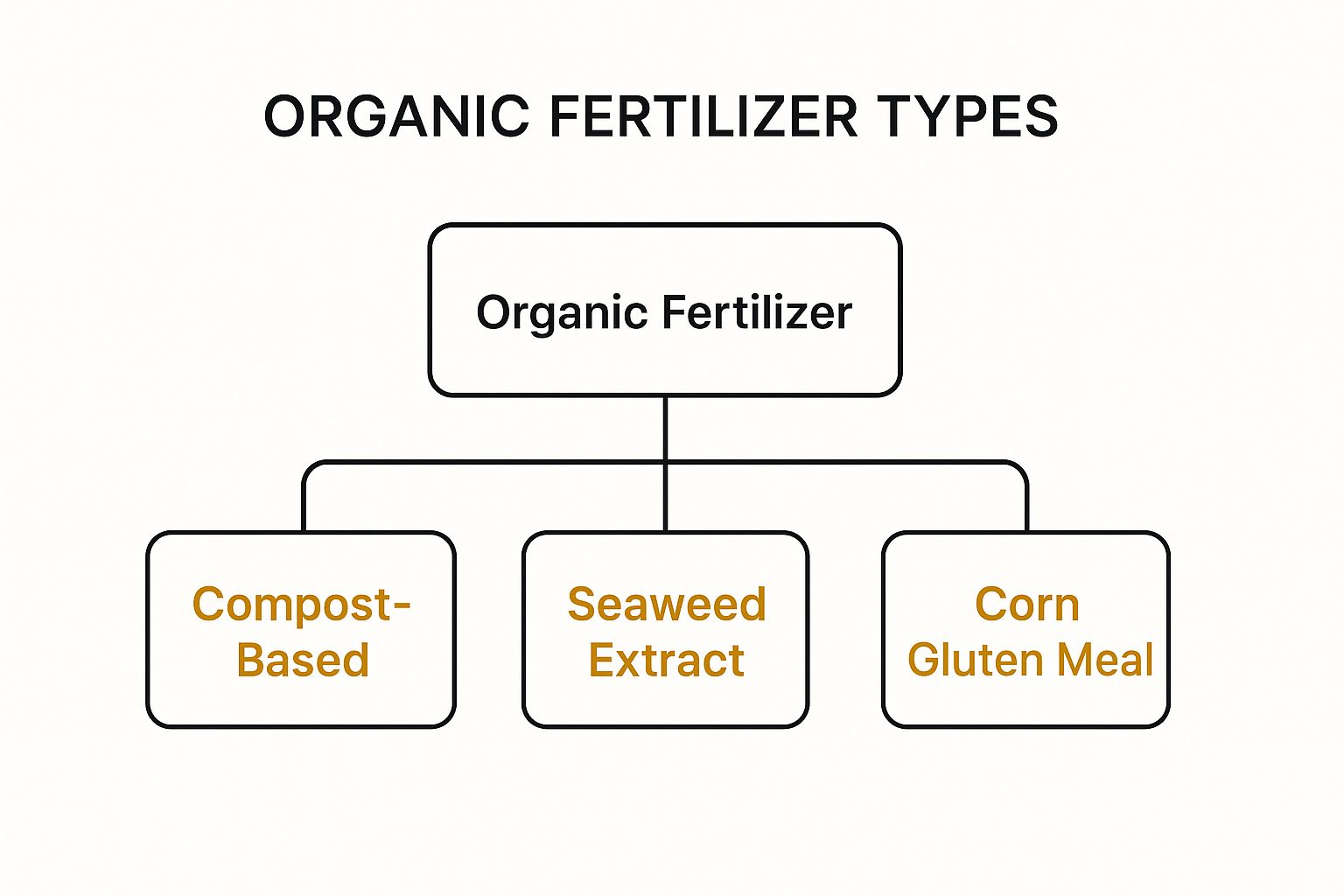
As you can see, products from compost to corn gluten meal offer different ways to nourish your soil and, in turn, your turf.
The Critical Role of Soil Amendments
While fertilizers are the "food," soil amendments are the "personal trainers" for your soil. They condition it, improving the very foundation your grass lives in. For the heavy clay or loose sandy soils we often see in South Texas, this step isn't just helpful—it's a complete game-changer.
Soil amendments are not fertilizers; they are soil conditioners. Their primary purpose is to improve the physical properties of the soil, such as water retention, permeability, aeration, and structure.
Take humic acid, for example. It's a powerhouse amendment that works wonders on compacted clay soil, breaking it up so roots can stretch out and grow deeper. It also makes the soil act like a sponge, improving its ability to hold onto water and nutrients. This means your fertilizer goes further, and your lawn becomes much more resistant to drought. We dive deeper into these fundamentals in our guide on how to prepare soil for planting.
Making the Right Choice for Your Property
So, how do you figure out exactly what your lawn is hungry for? You could guess, but that often leads to wasted time, money, and a lawn that still looks mediocre. There's a much better way.
The single most effective tool in our arsenal is a professional soil analysis.
A soil test gives you a detailed blueprint of your soil's current health. It lays out any nutrient deficiencies, pinpoints pH imbalances, and measures the organic matter content. Armed with that data, we can craft a targeted treatment plan that gives your lawn exactly what it needs.
At Fischer Landscaping, our experts rely on soil analysis to create customized plans for every property, from sprawling commercial landscapes in San Antonio to backyard oases in Corpus Christi. We remove the guesswork from organic care, ensuring we select and apply the precise fertilizers and amendments needed to build a vibrant, healthy lawn from the soil up.
Effective Organic Pest Control Solutions for Your Lawn

A lush, green lawn is a source of pride, but pests like grubs and chinch bugs can undo all your hard work. The common reaction might be to grab a harsh chemical spray, but organic lawn products offer a much smarter, more sustainable way to defend your turf. This professional approach is about working with nature, not waging war against it.
This philosophy is called Integrated Pest Management (IPM). Instead of just reacting to a problem, IPM focuses on building a lawn that's so strong and healthy it can naturally ward off invaders. Your first and best line of defense is always a resilient, thriving lawn.
Building Natural Defenses First
Before treating a pest problem, you have to ask if your lawn is strong enough to fight back on its own. A lawn stressed from poor soil, compacted earth, or improper watering is a welcome mat for pests. This is where a consistent, professional organic care program proves its worth.
When your turf gets a steady supply of organic matter, it develops deeper roots and grows thicker. This creates a dense canopy that's physically difficult for pests like chinch bugs to penetrate. Proper mowing and watering habits reinforce these defenses, creating a landscape where pests simply can't get a foothold.
Targeted Organic Treatments for Common Pests
Sometimes, despite your best efforts, pest populations can get out of hand. When that happens, organic solutions provide targeted control without the collateral damage of broad-spectrum chemical pesticides. These products solve a specific issue while protecting beneficial insects, local wildlife, and your family.
Here are a few of the most effective organic options we rely on:
- Beneficial Nematodes: Think of these as microscopic mercenaries. These tiny, soil-dwelling worms are natural predators of lawn grubs and other soil-based pests, actively hunting them down without harming earthworms, people, or plants.
- Neem Oil: This powerful oil, derived from the neem tree, is a fantastic tool against a wide range of insects, including chinch bugs and aphids. It disrupts their feeding and reproductive cycles, stopping an infestation from growing.
- Milky Spore: This is a naturally occurring bacterium that is incredibly effective against Japanese beetle grubs. Once in the soil, it can remain active for years, providing long-term, targeted protection against one of the most destructive lawn pests.
The secret to making any organic pest control work is knowing exactly what you're fighting. You can't treat a chinch bug problem with a grub solution. An expert diagnosis is absolutely critical for getting the results you want without wasting time or money.
The Growing Demand for Safer Solutions
It's not just a niche trend; homeowners and property managers everywhere are looking for safer, more responsible lawn care alternatives. The global lawn care market, currently valued at around USD 53.7 billion, is expected to soar to nearly USD 91.7 billion by 2034.
Within that massive market, pest control products account for a significant 25% share. The real story, however, is the rapid growth in demand for organic pesticides and biocontrols. You can dive deeper into these trends in the full lawn care product market growth report from Global Insight Services.
Professional Expertise Makes the Difference
Choosing the right organic lawn products and applying them correctly isn't just guesswork. It requires a solid understanding of pest life cycles and the unique environmental conditions here in South Texas. The team at Fischer Landscaping has the hands-on experience to accurately identify the specific pest threatening your lawn in Corpus Christi, San Antonio, or Harlingen.
We build custom IPM strategies that blend smart cultural practices with the precise application of the most effective organic treatments. This approach ensures we solve the problem at its root, protecting your investment and the local environment for the long haul.
Winning the Battle with Organic Weed Control
Weeds are a constant headache for any property owner, but the answer doesn’t have to come from a chemical spray bottle. Organic lawn products offer a smarter, more sustainable strategy that’s all about prevention. The core idea is simple: the best defense against weeds is a lawn so thick and healthy that weeds literally have no room to get started.
This proactive approach flips the script entirely. Instead of constantly reacting to weed flare-ups, you're building a lawn that naturally keeps them at bay. By focusing on the health of your soil and the density of your grass, you create an environment where your turf thrives and unwelcome invaders are crowded out before they can even get established. It’s about winning the war by making the battlefield inhospitable to the enemy.
Building Your Best Defense Proactively
The most effective organic weed control doesn't start when you spot a dandelion. It begins with a consistent commitment to organic feeding and smart lawn care practices.
A well-fed lawn, nourished by the slow-release nutrients in organic fertilizers, develops a deep, robust root system and a thick canopy of blades. This dense turf acts like a living mulch, blocking sunlight from reaching the soil and stopping weed seeds from ever germinating.
Proper mowing is another critical piece of the puzzle. Keeping your grass at the right height—typically a little higher for turf like St. Augustine—allows the blades to cast a shadow on the soil below. This one simple habit keeps the soil cooler and darker, creating conditions that many common South Texas weeds just can't tolerate.
Pre-Emergent Solutions: Stopping Weeds Early
For an extra layer of proactive defense, organic pre-emergent products are a game-changer. As the name suggests, you apply these before weed seeds start to sprout, usually in early spring and again in the fall.
The most popular organic pre-emergent by far is corn gluten meal. It works by stopping newly germinating seeds from forming roots. Timing is critical, as it stops all seeds from rooting, including new grass seed. When applied correctly by a professional, it provides a powerful, natural barrier against crabgrass and other annual weeds without harming your existing turf, your pets, or the local Corpus Christi ecosystem.
Post-Emergent Options for Targeted Control
Of course, even in the healthiest lawns, a few stubborn weeds might still push through. When that happens, organic post-emergent herbicides give you an effective way to spot-treat without dousing your yard in broad-spectrum chemicals.
One of the best options is an iron-based herbicide. These products use a concentrated form of iron that selectively targets broadleaf weeds like dandelions and clover. The iron essentially overloads these specific plants, causing them to blacken and die off quickly. Meanwhile, your grass simply absorbs the iron as a nutrient and turns a deeper, richer shade of green. It’s a precise, effective fix that solves the problem without causing collateral damage.
For help with your ongoing lawn maintenance needs, feel free to explore our comprehensive landscaping maintenance services.
Comparing Organic Weed Control Methods
Deciding on the right product comes down to your goals—are you preventing future problems or knocking down existing ones? This table breaks down the most common organic methods for properties in San Antonio, Harlingen, and the surrounding areas.
| Product Type | How It Works | Best For | Considerations |
|---|---|---|---|
| Corn Gluten Meal | Stops seed germination by inhibiting root growth. | Proactive control of annual weeds like crabgrass. | Must be applied before seeds sprout; will also prevent new grass seed from growing. |
| Iron-Based Herbicides | Overloads broadleaf weeds with iron, causing them to die. | Spot-treating existing dandelions, clover, and plantain. | Most effective on broadleaf weeds; may not control grassy weeds. |
| Horticultural Vinegar | Uses acetic acid to burn down the top growth of plants. | Quick knockdown of weeds in cracks, paths, or beds. | It's non-selective and will damage grass and other desired plants if not applied carefully. |
| Healthy Turf | Dense grass shades soil, preventing weed seed germination. | The ultimate long-term, sustainable weed control. | Requires consistent organic fertilization, proper mowing, and good watering practices. |
At the end of the day, a weed-free lawn is the natural result of a healthy lawn. Partnering with Fischer Landscaping means you have an expert team focused on building that strong foundation. We create customized organic programs that make your turf the star, naturally choking out weeds and leaving you with a beautiful, resilient landscape.
Your Seasonal Guide to Applying Organic Products
Knowing which organic lawn products to use is a great first step, but real success hinges on knowing when and how to apply them. South Texas has its own unique rhythm, dictated by intense summer heat and mild winters. The secret to a resilient, beautiful lawn is to work with this natural cycle, not against it.
Unlike synthetic treatments that follow a rigid calendar, professional organic care is about responding to what the soil needs as the seasons change. Think of it as giving your lawn the right support at the right time. This proactive approach ensures your grass has the resources to thrive, whether it's battling the summer sun in Corpus Christi or a cool front rolling through San Antonio.
Calibrating for Organic Success
One of the first things you'll notice is that organic granular products can be less uniform than their synthetic counterparts. Materials like compost or feather meal naturally vary in size and density, which can make getting an even spread tricky.
This is why proper spreader calibration is so important—it’s the key to avoiding patchy, inconsistent growth. A great trick is to start with a lower spreader setting than recommended and do a test run on a driveway or tarp. You'll get a clear look at the coverage pattern and can dial in the setting before you touch the actual lawn.
Proper application is just as important as the product itself. Under-applying can leave your lawn hungry, while over-applying is wasteful and can even stress the turf. Taking a few minutes to calibrate your equipment ensures every square foot of your lawn gets the consistent nourishment it needs.
Early Spring Kickstart (Late February to Early April)
As your lawn wakes up from its winter slumber, it's hungry. This is the perfect window for the first major feeding of the year to fuel that initial green-up and build strength for the heat that's just around the corner.
- Primary Task: Apply a balanced, slow-release granular organic fertilizer. Look for one with a good source of nitrogen, like feather meal, to encourage vigorous blade growth.
- Pro Tip: This is the ideal time to apply an organic pre-emergent like corn gluten meal to head off summer weeds. Professional application ensures the timing is perfect so it doesn't interfere with any overseeding plans.
Summer Resilience (May to August)
The South Texas summer is all about survival. Intense heat and potential drought put a tremendous amount of stress on your turf. The goal now shifts from promoting growth to helping your lawn conserve energy and hold onto every drop of water.
- Primary Task: This is the season for liquid amendments like seaweed extract or fish emulsion. They act as a health tonic, delivering vital micronutrients that help the grass manage heat stress without forcing new growth.
- Watering Wisely: Water deeply but infrequently, always in the early morning hours. This simple practice encourages deep root growth and minimizes evaporation—a critical strategy for lawns from Harlingen to Brownsville.
Fall Recovery and Foundation Building (September to November)
Fall is arguably the most important lawn care season in our region. As temperatures cool, the grass shifts its energy from top growth to root development, storing up resources for the winter. What you do now lays the groundwork for a healthier lawn next spring.
- Primary Task: Put down a granular organic fertilizer that's rich in phosphorus and potassium. Bone meal is an excellent natural source that directly supports strong, deep root growth.
- Core Aeration: This is the absolute best time to aerate your lawn. Aeration breaks up compacted soil, allowing water, air, and organic nutrients to reach the root zone where they're needed most.
Getting this seasonal timing right is crucial, and you can dive deeper into the best windows in our guide on when to fertilize grass in Texas.
The market is clearly responding to this growing desire for safer, better products. We're seeing a sharp increase in demand for organic and eco-friendly lawn care, and major companies are launching natural soil enhancers and biological controls to meet this need. You can read more about how consumer choices are shaping the United States lawn care market on imarcgroup.com.
Winter Preparation (December to Early February)
While our lawns don't go fully dormant, growth slows way down. The goal for winter is simply to protect the root system and provide minimal nutrients to maintain health, without encouraging weak growth that’s vulnerable to frost.
- Primary Task: A very light topdressing of compost can help insulate the soil and provide a slow, gentle trickle of nutrients. You'll want to avoid any heavy nitrogen applications during this time.
While this guide gives you a solid framework, hitting the timing and application rates perfectly comes with experience. The team at Fischer Landscaping takes all the guesswork out of the process. We manage the entire seasonal schedule for you, ensuring your lawn gets exactly what it needs, right when it needs it—saving you time and preventing costly mistakes.
Ready for Your Best Lawn? Let the Pros Handle It.
This guide lays out the path to a lush, resilient, and safe lawn using an organic approach. But the journey from a struggling yard to a thriving one involves more than just picking up a bag of organic lawn products. It takes real expertise, consistency, and a deep understanding of our unique South Texas environment. That’s where partnering with Fischer Landscaping makes all the difference.
We take the guesswork completely out of the equation. Our work starts with a thorough analysis of your lawn's specific conditions, whether you're dealing with the heavy clay soils around San Antonio or the sandy loam near Corpus Christi. We handle the critical soil testing, select the perfect products, and apply them with precision, giving your lawn exactly what it needs to flourish.
The Long-Term Payoff of Expert Management
Hiring a professional team is about more than just convenience. It is an investment in the long-term health and value of your entire property.
- Builds Better Soil: Our programs are designed to systematically create rich, living soil—the true foundation of a self-sustaining lawn.
- Smarter Water Use: Healthy soil holds onto moisture far more effectively, which means you'll need to water less over time. That's a huge plus in our climate.
- Creates Lasting Resilience: We help your lawn build up its natural defenses to fend off pests, weeds, and the stress of a Texas summer, which means fewer emergency treatments down the road.
A professionally managed organic program isn't about chasing quick fixes. It’s about building a robust, self-sufficient ecosystem from the ground up. This approach delivers superior, sustainable results you can see and feel, season after season.
Your Partner in Sustainable Lawn Care
Getting a beautiful lawn shouldn't feel like a constant battle. The Fischer Landscaping team is ready to craft a custom organic treatment plan for your specific goals, whether you're in Brownsville, Harlingen, or anywhere in between. We bring the expertise and consistent care needed to cultivate a stunning, healthy, and safe outdoor space for your family or business.
Ready to see what a difference professional organic care can make? Contact us today to request a quote and schedule a comprehensive lawn analysis with our team of experts.
Got Questions About Organic Lawn Products? We’ve Got Answers.
Making the move to an organic lawn care program is one of the best decisions you can make for your property, but it's normal to have a few questions before you start. Here are some of the most common ones we hear from homeowners and property managers across South Texas.
How Long Until I See a Difference?
This is probably the number one question we get, and the honest answer is: patience is part of the process. Organic products work differently than their synthetic counterparts. Instead of force-feeding the grass for a quick, flashy green-up that doesn't last, we're focused on rebuilding the soil from the ground up.
You'll likely see subtle improvements in your lawn's color and the soil's texture within the first season. But the real "wow" moment usually comes after a full year of consistent care. By year two, you’ll have a lawn that’s not just green, but genuinely resilient, with a much stronger ability to handle drought and fend off pests on its own. It's a long-term investment in health, not a short-term chemical fix.
Are These Products Actually Safe for My Kids and Pets?
Absolutely. This is one of the biggest reasons people switch to organic in the first place. Because these products are made from natural sources—things like plants, minerals, and animal byproducts—they don't leave behind the harsh chemical residues you get with conventional treatments.
It’s simple: once a liquid spray has dried or a granular product has been watered into the soil, the yard is ready for your family and pets. That peace of mind is why so many families in places like Corpus Christi and San Antonio are making the change.
Is This Going to Cost Me More Than Traditional Lawn Care?
When you look at the initial price tag, some high-quality organic materials can seem more expensive than synthetics. But it's better to think of it as an upfront investment that pays you back over time.
As we improve your soil's health, your lawn will become more self-sufficient. It will need less water to stay green, require fewer treatments for pests, and generally demand less intervention to thrive. Over the long haul, this often makes organic care the more cost-effective choice. Plus, working with a pro like Fischer Landscaping helps you avoid costly application mistakes, saving you money and guaranteeing you get the results you're after.
Ready to build a healthier, more resilient, and safer lawn for your South Texas property? The expert team at Fischer Landscaping has the deep knowledge and local experience to design a custom organic care plan that delivers stunning, sustainable results. Request a quote today and let's get started.