
Achieving a deep green, healthy lawn in South Texas depends on a well-timed fertilization strategy. It’s not just about what you apply, but when you apply it. The two most critical windows are in the early spring (late February through April) to encourage recovery from dormancy, and again in the early fall (September to November) to prepare your turf for the cooler months. This schedule aligns perfectly with the growth cycles of warm-season grasses like St. Augustine and Bermuda, which are common across the region.
A proactive approach ensures your property looks its best, whether it's a home in Corpus Christi or a commercial space in San Antonio.
Your Essential Texas Lawn Fertilization Calendar
Understanding the why behind a fertilization schedule is the key to a resilient lawn that can withstand the demanding South Texas climate. Fertilizing is about delivering the right nutrients precisely when your grass needs them most. Applying fertilizer when your turf is dormant or stressed by extreme summer heat is not only a waste of money but can actively damage your lawn.
The goal is to sync applications with your lawn's natural rhythm. For our warm-season grasses, the ideal time to start is from late February into early April, as the grass begins to wake up and actively grow. For a deeper dive into these local growth cycles, you can explore more detailed insights on Texas lawn fertilization.
This chart breaks down the key environmental cues that signal the best time to fertilize in our area.
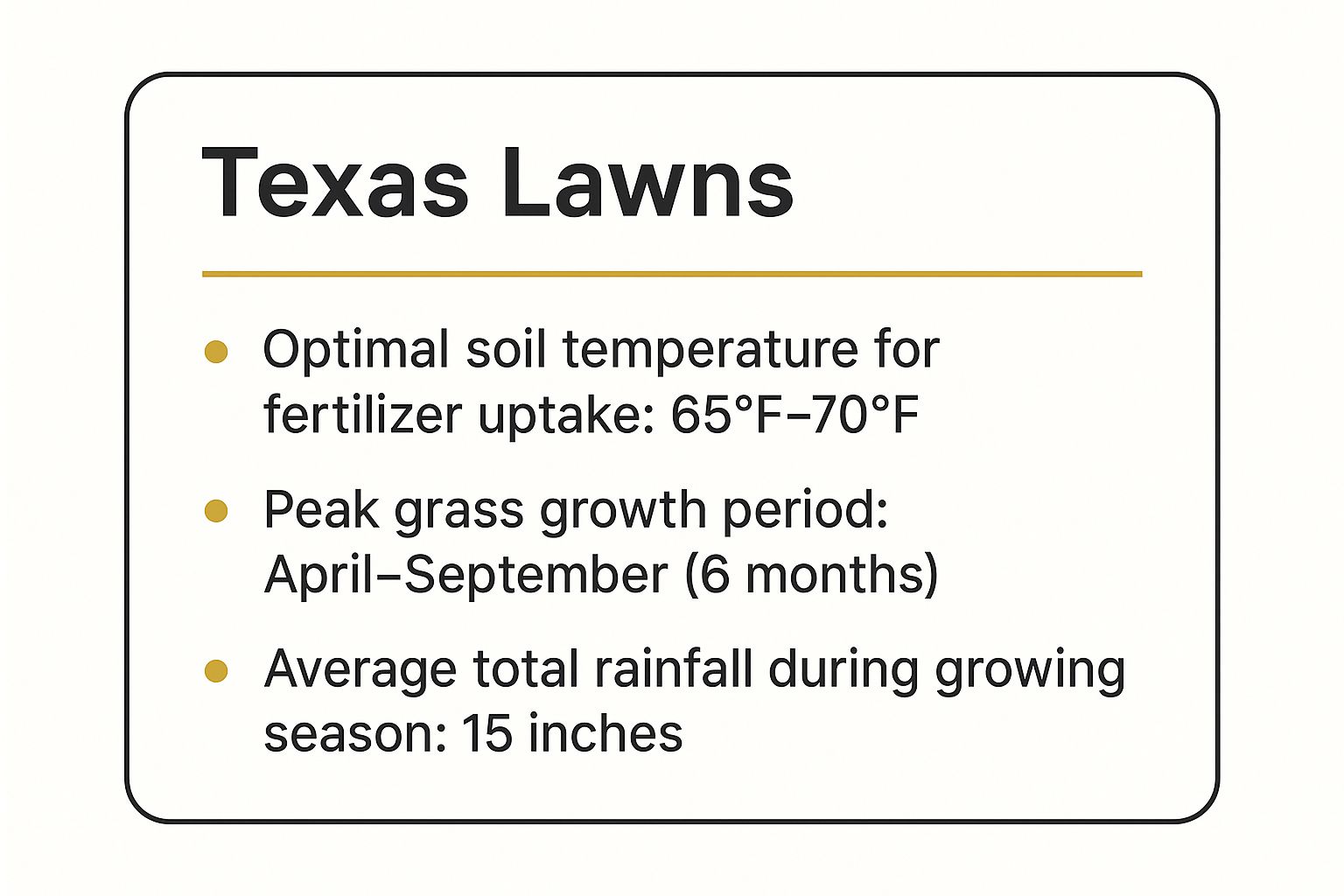
As you can see, fertilizing within the ideal soil temperature range during the peak growing season is crucial for success. A professional strategy from a team like Fischer Landscaping ensures lawns in Corpus Christi, Harlingen, or San Antonio receive nutrients exactly when it counts, preventing waste and promoting deep, strong root development.
To make things even simpler, here is a quick-reference guide for your lawn care calendar.
South Texas Lawn Fertilization Calendar
This table provides a quick look at the best times to fertilize throughout the year in South Texas and the primary goal of each application.
| Season | Optimal Timing (South Texas) | Primary Goal |
|---|---|---|
| Early Spring | Late February – April | Encourage green-up and recovery from winter dormancy. |
| Late Spring | May – June | Sustain vigorous growth and prepare for summer stress. |
| Early Fall | September – November | Promote root development and store energy for winter. |
Following this simple schedule removes the guesswork and sets your lawn on the path to becoming healthier and more resilient.
What Your South Texas Soil Actually Needs
Before you can determine when to fertilize your grass, you must know what it needs. A generic, one-size-fits-all approach rarely works in Texas, where soil can vary from the sandy loam near Corpus Christi to the heavy clays around San Antonio. Simply grabbing any bag of fertilizer is a shot in the dark that can lead to weak growth or even a damaged lawn.
The first step is identifying your grass type. Warm-season grasses like St. Augustine, Bermuda, and Zoysia are common here, but each has slightly different nutritional requirements. Knowing your turf type is the foundation of an effective fertilization plan.

Decoding Fertilizer and Soil Health
The secret to a lush, green lawn is hidden in the soil. The only way to truly understand its condition is with a professional soil test. This simple analysis reveals exactly which nutrients are lacking and whether your soil's pH is imbalanced, taking all guesswork out of your lawn care strategy.
When you look at a fertilizer bag, you'll see three numbers representing the N-P-K ratio: Nitrogen (N), Phosphorus (P), and Potassium (K). For most South Texas lawns, a fertilizer with a 3-1-2 ratio is an excellent starting point. However, a soil test will confirm if your lawn requires a more customized diet.
A targeted approach based on your soil’s specific needs not only builds a more resilient and beautiful lawn but also prevents wasteful nutrient runoff, which helps protect our local waterways. It’s a smarter, more sustainable strategy.
Texas's diverse climate also plays a significant role. The growing season can be as short as 5½ months in the Panhandle or last up to 10 months in the Rio Grande Valley. For most of us in South Texas, this means applying a nitrogen-based fertilizer anywhere from two to four times a year. Texas A&M offers valuable insights into how regional climates influence fertilization schedules.
At Fischer Landscaping, we use detailed soil analysis to create custom lawn care programs. To see how we prepare the foundation for a healthy lawn, check out our guide on how to prepare soil for planting. Our experts ensure your turf gets precisely what it needs to thrive.
A Practical Seasonal Fertilizing Strategy
A beautiful Texas lawn isn’t an accident; it’s the result of a smart, year-round strategy. Instead of a single application, think of it in three distinct phases: the early spring kickstart, summer sustainment, and fall recovery. Each phase addresses your lawn's specific needs as it battles the tough South Texas seasons.
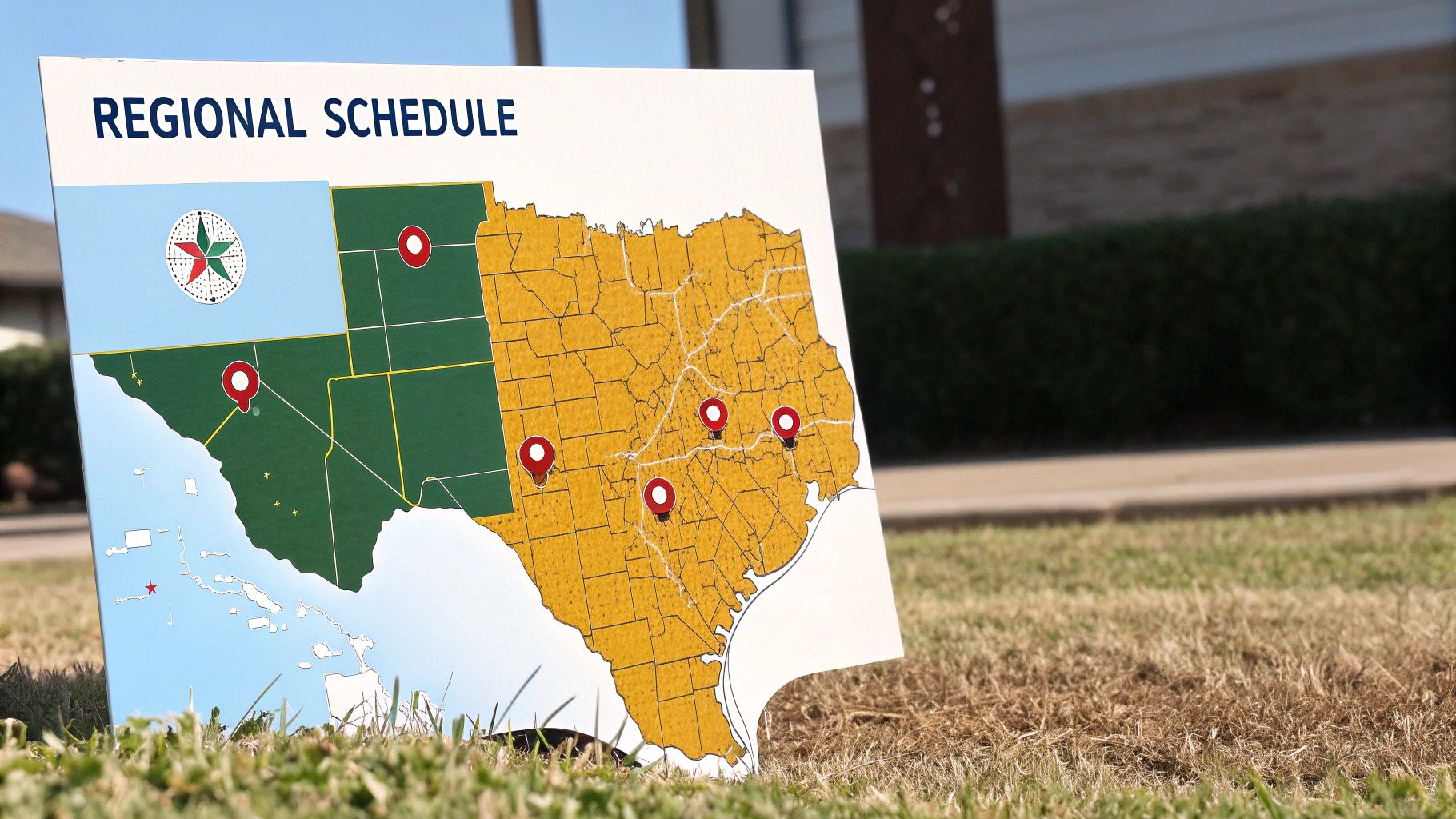
This approach ensures you’re not just feeding the grass but building resilience from the roots up. Matching nutrient delivery to the turf's natural growth cycle produces far better results and helps you avoid common mistakes.
Early Spring Kickstart
The first application of the year is about gently waking your lawn from its winter slumber. Many property owners make the mistake of fertilizing too early. A great rule of thumb is to wait until you’ve mowed at least two or three times. This proves the grass is actively growing and ready to absorb nutrients.
Fertilizing before this point primarily feeds early-season weeds. This initial application should replenish what the soil lost over winter, encouraging a vibrant green-up and preparing the grass for its spring growth spurt.
Summer Sustainment
Surviving the brutal summer heat in places like San Antonio or Brownsville is your lawn’s biggest challenge. Applying a heavy dose of fast-release nitrogen during this time can scorch your turf, causing more harm than good.
The goal here is sustainment. A slow-release nitrogen fertilizer is your best tool during these months, providing a steady, controlled diet of nutrients without forcing a stressful burst of growth. This helps the grass maintain its color and health when it's most vulnerable.
A well-timed, professional application gives your lawn the strength to push through drought and heat stress. This proactive care is far more effective than trying to revive a scorched, struggling lawn in late summer.
Fall Recovery
Your early fall application may be the most important one of the year. As temperatures cool, your lawn’s focus shifts from vertical growth to developing deep, strong roots. This feeding helps the grass recover from summer stress and store energy for winter.
A solid fall application strengthens the root system, which leads directly to a faster, healthier green-up next spring. Think of it as an investment in your lawn's future success.
For most Texas lawns, a good schedule involves fertilizing every 8 to 10 weeks during the active growing seasons. You can discover more insights about Texas fertilization schedules on TheGrassOutlet.com.
Nailing the timing and product selection is tricky. For more practical advice, check out our essential lawn care tips. Or, let the experts at Fischer Landscaping build a custom plan to guarantee your lawn gets exactly what it needs, precisely when it needs it.
Common Fertilizing Mistakes We See All Over Texas
Knowing when to fertilize your Texas lawn is half the battle; knowing what not to do is the other half. We’ve seen countless well-intentioned property owners accidentally sabotage their lawns, wasting time and money while leaving their grass in worse condition.
By sidestepping these common pitfalls, you can protect your landscape investment and achieve the lush, green results you’re looking for.
Getting Overeager in the Spring
One of the most frequent mistakes is fertilizing too early. When the first hint of spring hits Corpus Christi or Harlingen, the desire for a green lawn is strong. However, applying fertilizer before your grass is actively growing is a critical error.
Instead of feeding your turf, you’re serving a feast for aggressive weeds like crabgrass. This gives them a head start and sets you up for a season-long battle you could have easily avoided.
Fertilizing Stressed-Out Grass
Applying fertilizer during periods of extreme stress is another recipe for disaster. During the peak of a South Texas summer, with scorching heat and potential drought, your lawn is in survival mode.
Dumping a high-nitrogen fertilizer on stressed St. Augustine grass during a heatwave can cause unsightly fertilizer burn and create scorched, dead patches across your lawn.
The "More is Better" Myth
It’s easy to assume that if a little fertilizer is good, more must be better. Unfortunately, over-fertilizing is a major problem that can cause weak, shallow root growth and make your lawn less resilient over time.
Worse, excess nutrients don't disappear. They wash away with the next rain, contributing to runoff that pollutes our local waterways.
The goal isn't just to green up the grass blades; it's to build a tough, healthy ecosystem from the soil up. Avoiding these simple mistakes is your first step toward a beautiful lawn that can handle the demanding South Texas climate.
These costly errors are entirely preventable with the right timing and local expertise. A professional lawn care plan removes the guesswork, ensuring your lawn gets what it needs without the risk of accidental damage.
At Fischer Landscaping, our deep understanding of local soil and climate conditions means we help our clients sidestep these problems entirely. To protect your lawn and help it truly thrive, take a look at our comprehensive landscape maintenance services.
Why a Professional Touch Makes All the Difference
Determining the right time to fertilize your Texas lawn involves more than circling a date on the calendar. It requires an understanding of soil science, precise timing for our local microclimates, and selecting products that work without damaging your grass. For homeowners and property managers from Corpus Christi to Brownsville, it can feel like a second job.
That’s where professional expertise becomes a game-changer. A professional strategy not only saves you time but also prevents common and costly mistakes like fertilizer burn, protecting the investment you've made in your landscape.

Beyond the Bag: Custom Lawn Solutions
At Fischer Landscaping, we don’t believe in generic, one-size-fits-all fixes. Our approach is grounded in a deep understanding of South Texas's unique challenges, from the intense summer heat to our diverse soil types. We build custom fertilization plans designed to create a resilient, beautiful lawn that enhances your property's value.
A professional service is more than spreading fertilizer; it’s a complete health plan for your turf. This includes adjusting nutrient mixes, advising on watering schedules, and adapting to your lawn's needs from one season to the next. That's how you get superior, lasting results.
Looking into professional lawn care programs can provide a structured way to handle lawn maintenance, often bundling fertilization with other critical services.
For example, proper irrigation is essential for helping your lawn absorb nutrients effectively. You can learn more about setting up an efficient watering system in our guide on how to install an irrigation system.
Partnering with an experienced team gives you access to specialized treatments and a proactive plan that keeps your lawn healthy and vibrant, season after season.
Ready to see the difference professional care can make? The team at Fischer Landscaping is here to create a personalized fertilization plan that brings out the best in your property.
Request a free quote today, and let us handle the science of a stunning lawn.
Your Texas Lawn Fertilization Questions, Answered
Even with a solid plan, questions are bound to arise. Here are answers to some of the most common inquiries we receive from property owners across South Texas.
What's the Best Fertilizer Ratio for a Texas Lawn?
For most warm-season grasses like St. Augustine and Bermuda, a 3-1-2 or 4-1-2 N-P-K ratio is an excellent starting point. This blend provides ample nitrogen (N) for deep green color while also including phosphorus (P) for strong roots and potassium (K) for overall plant health.
However, this is a general guideline. A professional soil test is the only way to know exactly what your soil needs. You might discover your soil is already high in phosphorus, allowing us to adjust the blend to give your lawn precisely what it needs without waste.
Is It Safe to Fertilize in the Middle of a Texas Summer?
Applying fertilizer during the peak of summer heat is risky for a DIY approach. Your grass is already stressed from high temperatures and potential lack of rain. A large dose of nitrogen can easily cause fertilizer burn, leaving ugly, scorched patches.
If your lawn requires a mid-summer boost, it's a job best left to professionals. We use specialized slow-release formulas that feed the turf gradually. This gentle approach sustains the lawn without forcing new growth that it can't support in extreme heat.
How Soon After Fertilizing Should I Water?
You should water your lawn immediately after applying granular fertilizer. This is a critical step for two reasons:
- It washes the fertilizer granules off the grass blades and down to the soil.
- It activates the fertilizer, allowing the nutrients to dissolve and become available to the roots.
Aim for a light but thorough watering—just enough to dissolve the product and move it into the soil without causing runoff. This simple step is crucial for a successful application and helps prevent leaf burn.
Figuring out the perfect schedule for when to fertilize grass in Texas can feel like a moving target. You don't have to guess. The team at Fischer Landscaping builds custom lawn health programs based on what your specific property needs to thrive. Request a free quote today, and let us help you get that resilient, beautiful lawn you're after.