
Achieving a thick, green lawn that can withstand the South Texas climate is all about timing. To keep warm-season grasses like St. Augustine and Bermuda healthy, you must provide nutrients when they are actively growing. This means a critical feeding in the spring (March-May) to encourage vigorous growth and another in the fall (October) to prepare it for the cooler months ahead.
At Fischer Landscaping, we provide practical, solution-driven lawn care for homeowners and property managers across South Texas. This guide will walk you through the essential steps for a successful fertilization plan.
Your South Texas Lawn Fertilization Calendar
Knowing when to fertilize is the single biggest secret to a great-looking Texas lawn. Applying it at the wrong time—like in the dead of winter or during the peak of summer heat—is not just a waste of money. It can scorch your grass and give weeds a perfect opportunity to take over.
The goal is to provide your lawn with key nutrients right when it enters its most active growth phase. Our South Texas climate, from Corpus Christi to San Antonio, requires a specific schedule. We can often start fertilizing earlier than North Texas, sometimes beginning in March while they wait until mid-April.
To make it even clearer, this timeline shows you the best windows for fertilizing throughout the year.
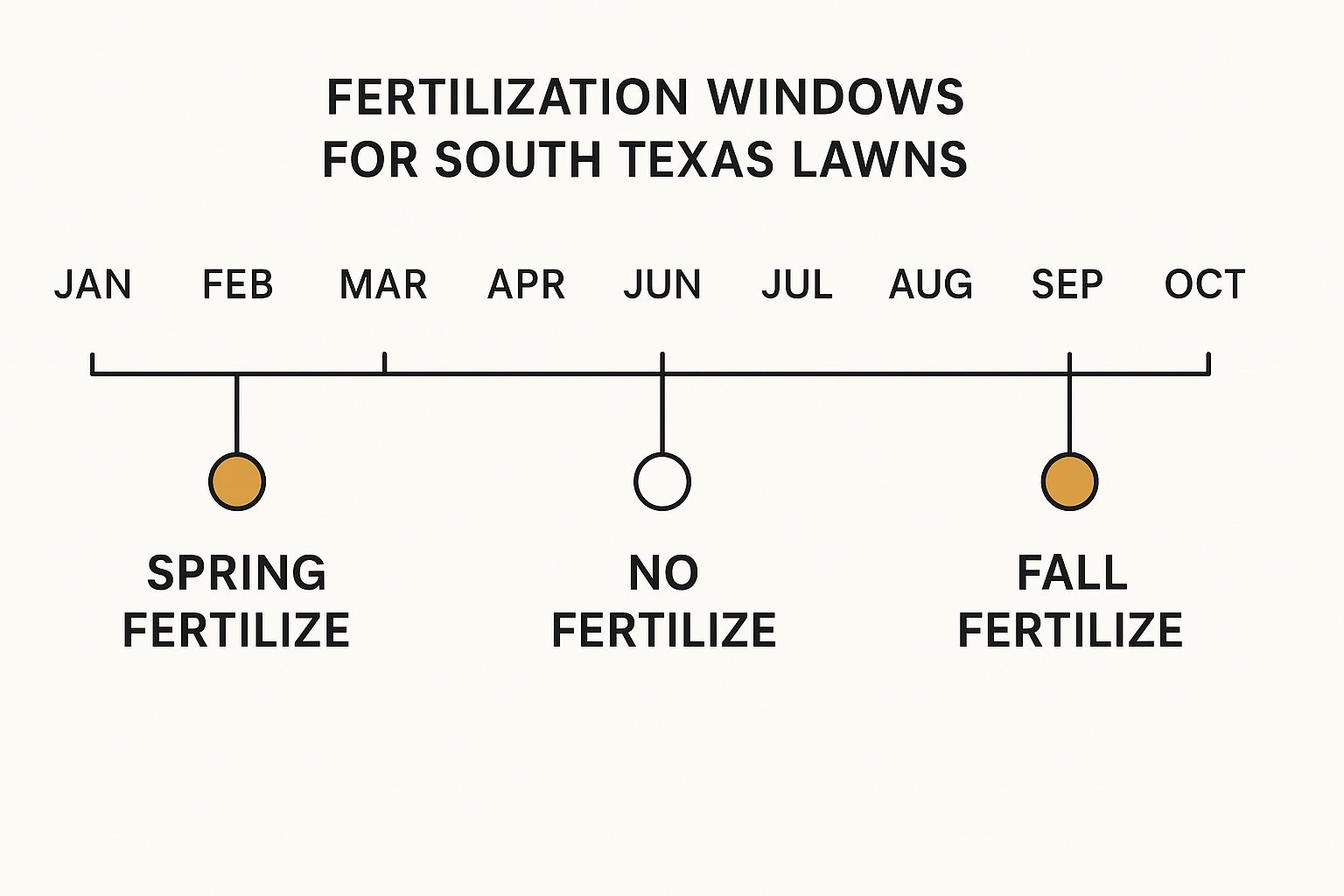
As you can see, there are two prime times to feed your lawn and, just as importantly, a "no-fly zone" during the hottest part of the summer to avoid burning the turf.
South Texas Lawn Fertilization Calendar At-a-Glance
For property managers and homeowners who need the key takeaways, this table breaks down the essentials for successful lawn care in our region.
| Season | Application Window | Primary Goal |
|---|---|---|
| Spring | March – May | Fuel vigorous green growth and strengthen roots for summer. |
| Summer | June – September | AVOID FERTILIZING. Focus on proper watering instead. |
| Fall | October | Help the lawn recover from summer stress and store nutrients for winter. |
| Winter | November – February | No application needed; the lawn is dormant. |
This schedule gives your lawn exactly what it needs, when it needs it, which is the cornerstone of effective, professional lawn care.
Why This Schedule Works for South Texas Lawns
This calendar is specifically designed for the climate challenges we face in cities like Brownsville and Harlingen. By feeding in the spring and fall, you target the two most important moments in your lawn's annual cycle.
-
The Spring Application provides a powerful boost to help your lawn recover from winter. It promotes deep, strong roots that are essential for surviving the intense summer heat.
-
The Fall Application acts as a recovery meal. It helps the grass bounce back from summer stress and store energy for winter, leading to a much quicker and healthier green-up the following spring.
A well-timed feeding plan does more than just make your grass green. It builds a tough, resilient lawn that can stand up to drought, fight off disease, and handle foot traffic. It’s the foundation of any solid lawn maintenance program, and our team at Fischer Landscaping can eliminate the guesswork for your property.
Nailing Your Spring Fertilization Strategy
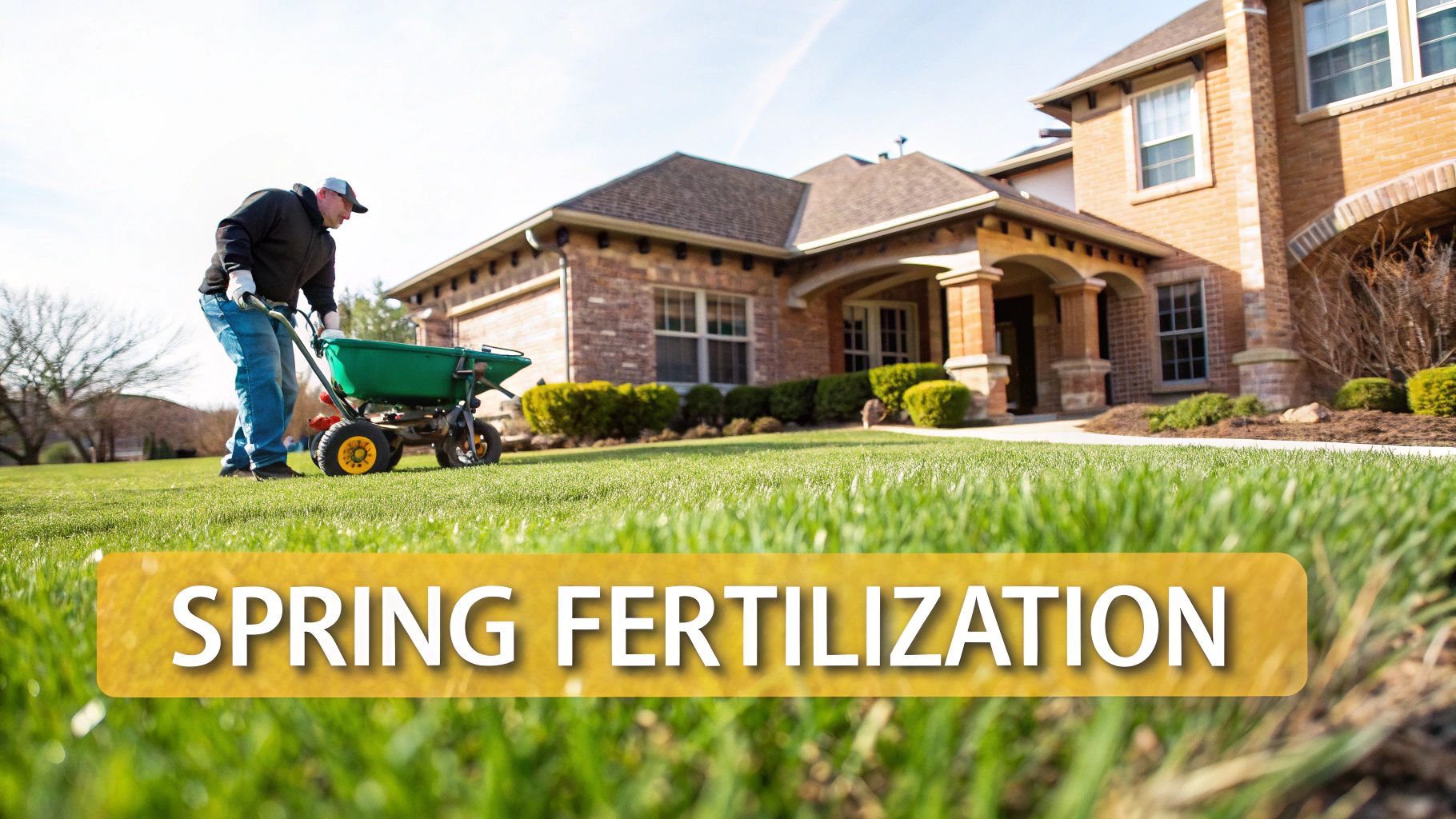
Think of spring fertilization as the jump-start your South Texas lawn needs after its winter dormancy. This first feeding is what kicks off a season of lush, healthy growth. But timing is everything. Apply it too early, and you're just feeding weeds. The best way to know when? Let your lawnmower be your guide.
For those of us in areas like Corpus Christi and San Antonio, we advise clients to hold off on fertilizing until after they've had to mow their lawn for the second or third time. This is a simple, field-tested rule that ensures your grass is awake and actively growing, ready to absorb the nutrients you provide.
Choosing the Right Fuel for Summer Resilience
To prepare your turf for the brutal summer ahead, you need the right kind of food. We recommend a quality slow-release fertilizer with a 3-1-2 or 4-1-2 N-P-K ratio (Nitrogen-Phosphorus-Potassium). This formula provides a steady, sustainable diet for your lawn, promoting deep, strong roots instead of a sudden, weak burst of top growth.
A robust root system is your lawn's best defense against heat and drought, allowing it to find moisture deep in the soil. This strategy is about building a lawn that doesn't just look green but is genuinely resilient.
Pro Tip: The goal of the first spring feeding isn't just a quick green-up. It's about building the deep, hardy root structure your lawn absolutely needs to survive the punishing heat of a South Texas summer.
Fine-Tuning Your Application Window
While the "wait for the third mow" rule is a great starting point, microclimates matter. The last frost date typically signals the start of the growing season. For instance, Central Texas often sees its last frost around March 1st, making mid-April the ideal time to fertilize there, long after the grass is actively growing. You can find more details on Central Texas fertilization schedules to see how much timing can vary. This highlights why a one-size-fits-all approach doesn't work in a state as large as Texas.
Getting the timing, product, and application rate perfect is part science, part experience. A small mistake can leave you with burned spots or weak grass. If you’d rather leave it to the pros, our expert lawn maintenance services are designed to give your lawn exactly what it needs, ensuring it's primed for the season.
Navigating Summer and Fall Applications
When the Texas summer heat arrives, your fertilization strategy must shift. Pushing for new, tender growth when your grass is already stressed from high temperatures and potential drought is a recipe for disaster. It can easily scorch the lawn you’ve worked so hard to maintain.
That’s why we advise our clients in Corpus Christi and San Antonio to hold off on fertilizing entirely from June through September.
However, there can be exceptions. If your lawn looks weak or you missed the spring feeding, a very light application of a slow-release formula can provide support. The goal is to sustain the lawn, not force new growth. It’s a delicate balance best left to a professional to avoid accidentally burning your turf.
The Critical Fall Feeding
As the weather cools, we arrive at what we consider the most important application of the year: the fall feeding, typically around October. This application isn't about promoting lush green blades; it's about recovery. After a harsh summer, this meal helps your turf repair damage, develop a robust root system, and store nutrients to survive the winter. A lawn that enters dormancy healthy is a lawn that greens up faster and stronger next spring.
For the property managers we work with in Harlingen and Brownsville, this fall application is non-negotiable for maintaining year-round curb appeal. Our commercial landscaping solutions are built around timing this step perfectly for maximum impact.
The fall application strengthens the roots and prepares the grass for winter. Think of it as investing in next year's lawn—it pays huge dividends in the spring.
The type of fertilizer used in the fall is also different. You'll want something with lower nitrogen and higher levels of potassium. This nutrient mix focuses on root health and cold tolerance instead of top growth. For a deeper dive into product selection, the Texas A&M AgriLife Extension offers an excellent guide for warm-season grasses.
By shifting the focus from the blades to the roots, you’re building a more resilient, tougher lawn. It’s this strategic approach that ensures your turf is ready to thrive when spring returns. At Fischer Landscaping, we create custom fertilization plans that account for these crucial seasonal shifts.
How to Choose the Right Lawn Fertilizer
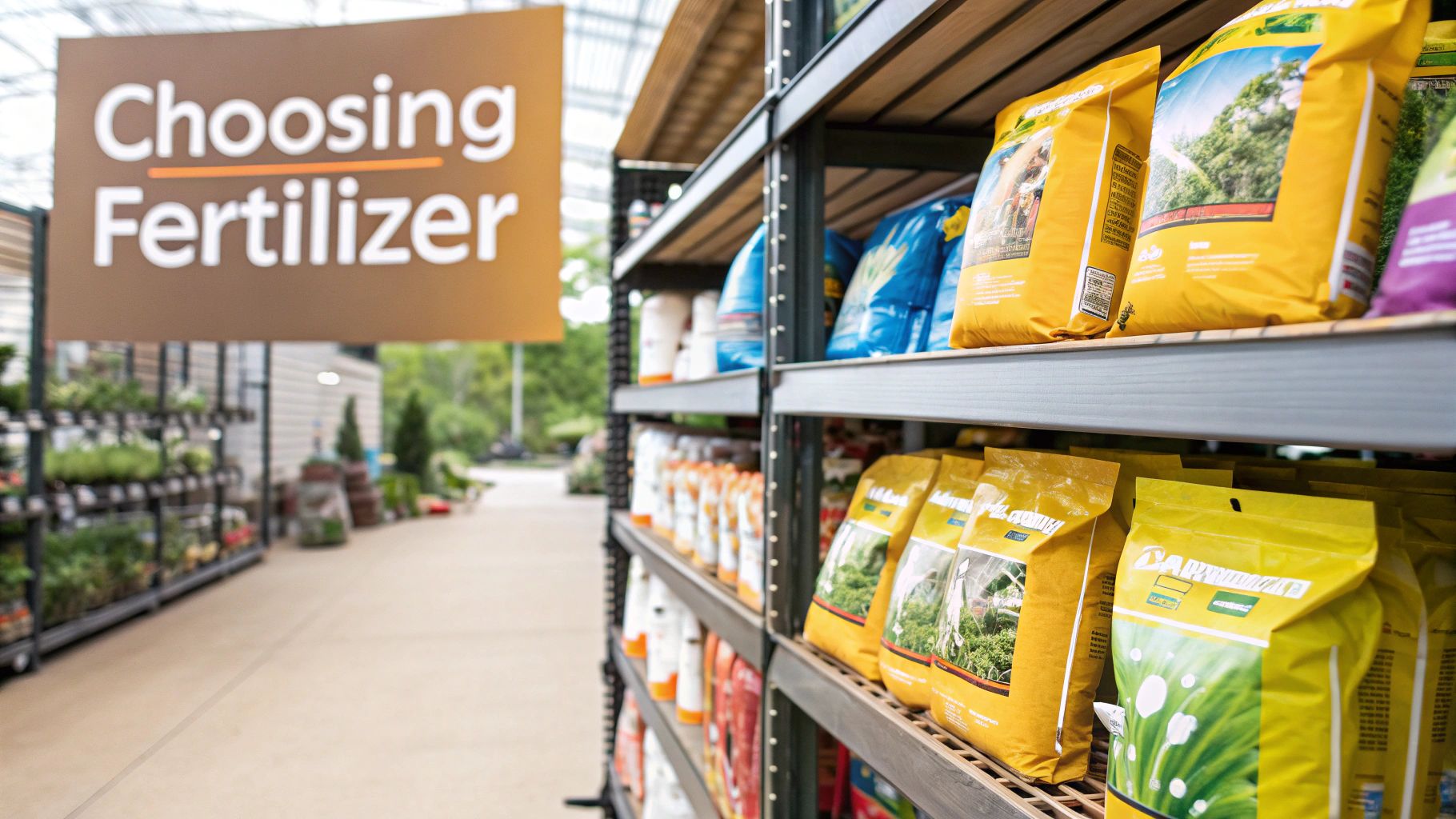
Walking into a garden center and facing an aisle of fertilizer bags can be overwhelming. Let's break it down so you know what to look for. The key is understanding the three numbers on the front of every bag—the N-P-K ratio.
These numbers represent Nitrogen (N), Phosphorus (P), and Potassium (K), the three essential macronutrients your turf needs to flourish.
For most Texas lawns, especially with the clay-heavy soils common around San Antonio, a fertilizer with a 3-1-2 or 4-1-2 ratio is the gold standard. This mix delivers plenty of nitrogen for deep green color, balanced with the right amount of phosphorus and potassium for robust roots and overall health.
Slow-Release vs. Quick-Release Formulas
Once you've identified the right ratio, your next choice is between slow-release and quick-release formulas. While quick-release products promise a fast green-up, they often cause weak, leggy growth and can burn your lawn if not applied carefully.
This is why professionals almost always use slow-release granular fertilizers. These products break down gradually over several weeks, feeding your lawn a steady, consistent diet. This approach encourages stronger roots, more even growth, and reduces the risk of nutrient runoff into our local waterways.
How often should you apply it? For most warm-season Texas lawns, a feeding schedule of 4 to 6 times per year is ideal to maintain vigor through our long growing season. A good rule of thumb is to apply 0.5 to 1 pound of actual nitrogen per 1,000 square feet. For more specifics, the AgriLife Extension offers excellent guidance on Texas warm-season grasses.
The only way to be 100% certain about your soil’s needs is with a professional soil test. It eliminates guesswork by pinpointing nutrient deficiencies. This allows for a truly customized plan that gives your lawn precisely what it’s missing, saving you money on unnecessary products and yielding far better results.
Getting the nutrients right is critical, whether you're maintaining an existing lawn or starting from scratch. Selecting the proper fertilizer is as foundational to long-term success as our professional turf installation.
Why Professional Fertilization Services Deliver Better Results
While DIY lawn fertilization may seem like a way to save money, achieving truly healthy, vibrant turf requires expertise. The science behind when to fertilize lawns in Texas is more involved than just spreading a bag of granules. Partnering with a professional service like Fischer Landscaping offers distinct advantages that DIY efforts can't match.
We use professional-grade, slow-release fertilizers that are not available in retail stores. These products deliver a steady, controlled supply of nutrients, encouraging deep, strong root growth instead of the sudden, weak top growth common with standard formulas.
Precision and Expertise Make the Difference
Beyond superior products, proper application is critical. Our teams use carefully calibrated equipment to ensure every square foot of your lawn receives the precise amount of fertilizer needed. This prevents the patchy color and burned spots that often result from using handheld or push spreaders.
A professional service removes the costly guesswork from lawn care. We help you avoid common mistakes like over-fertilizing, which can scorch your grass and lead to harmful nutrient runoff into local waterways.
What truly sets a professional service apart is local knowledge. We live and work here, constantly adjusting our fertilization schedules based on real-time weather patterns across South Texas, from Corpus Christi to San Antonio.
Our programs are also integrated, meaning we manage weed and pest control as part of a holistic lawn health strategy. This proactive care is a cornerstone of our residential landscaping philosophy. Ultimately, investing in professional care delivers superior, long-lasting results and—just as importantly—peace of mind. We handle the science so you can simply enjoy a beautiful, resilient lawn.
Common Lawn Fertilization Questions
Even with a solid plan, questions are bound to arise. Here are answers to some of the most common ones we hear from homeowners across South Texas.
Should I Water My Lawn After Fertilizing?
Yes, this is a critical step. Watering after spreading a granular fertilizer activates it, washing the pellets off the grass blades and down into the soil where the roots can absorb the nutrients.
A light watering for about 15-20 minutes is usually sufficient. The goal is to moisten the soil enough to dissolve the granules. Overwatering can wash the fertilizer past the root zone, wasting time and money.
Can I Fertilize a Lawn That Has Weeds?
Absolutely—in fact, you should. A well-fed lawn is your best defense against weeds. Thick, healthy turf naturally chokes out opportunistic weeds, leaving them no room to establish. Withholding fertilizer to "starve" weeds only weakens your grass, giving weeds an even bigger advantage.
Of course, if you're dealing with a serious weed problem in Corpus Christi or Brownsville, a multi-pronged attack is needed. As you build your lawn's nutrition, remember that smarter garden pest control for healthy plants is part of the bigger picture for a healthy yard.
What Is the Biggest Fertilizing Mistake in Texas?
The single biggest mistake we see is fertilizing too early in the spring. A few warm days in February or March can trick homeowners into thinking it's time, but the lawn is likely still dormant.
Feeding a dormant lawn doesn't help your grass. It only gives a head start to early-season weeds like crabgrass. The best rule of thumb is to wait until your lawn is green and growing enough that you’ve had to mow it two or three times. That’s the true signal it's awake and ready for nutrients.
How Soon Can I See Results After Fertilizing?
It depends on the type of fertilizer used.
- Quick-Release Fertilizers: You might see the grass green up in just a few days. The downside is that this burst of color is often shallow and short-lived.
- Slow-Release Fertilizers: This is what professionals use. Instead of a quick flash, you get a steady, gradual improvement in color and thickness over several weeks. The goal isn't a temporary color pop; it's long-term, resilient health.
Achieving a deep green, healthy lawn for your home or business requires expertise and consistent effort. At Fischer Landscaping, we eliminate the guesswork from fertilization, ensuring your property gets the right nutrients at precisely the right time. If you're ready for a lawn that enhances your property's curb appeal, contact us today for a personalized quote.