Are you eager to add shade, privacy, and value to your South Texas property without waiting a decade? Choosing the right tree is one of the most impactful decisions for any landscape in Corpus Christi, San Antonio, or the Rio Grande Valley. While many iconic Texas trees are slow growers, a select group of species can provide a lush canopy and mature beauty in a fraction of the time.
However, rapid growth can sometimes come with trade-offs, such as weaker wood or specific maintenance needs. This guide cuts through the confusion, offering a detailed roundup of the best trees that grow fast in Texas. We'll explore the pros and cons of each, helping you make an informed decision that balances speed with long-term health and suitability for your specific goals. Beyond the immediate aesthetic benefits, understanding the overall sustainability of timber is an important consideration when investing in trees that will define your landscape for years to come.
From native powerhouses that thrive in areas like Harlingen to dazzling ornamentals perfect for a suburban yard, we'll equip you with the knowledge to select and plant a tree that thrives in our unique climate. A professional landscaping partner can help you choose the ideal tree and ensure it's installed correctly, transforming your property from bare to beautiful, faster than you thought possible.
1. Desert Willow (Chilopsis linearis)
For property owners in South Texas seeking rapid growth without compromising beauty or resilience, the Desert Willow is an exceptional choice. Despite its name, this fast-growing native Texas tree is not a true willow but a member of the catalpa family, perfectly adapted to thrive in the state’s challenging climate. It is a fantastic, practical solution for adding quick, vibrant color and soft, filtered shade to landscapes from San Antonio to the Rio Grande Valley.
The Desert Willow is celebrated for its impressive growth rate, often shooting up 3 to 5 feet per year under optimal conditions. This rapid development makes it one of the premier trees that grow fast in Texas, allowing homeowners and commercial property managers to see a significant return on their landscaping investment in just a few seasons. Its mature form is typically a small, multi-trunked tree reaching 15 to 40 feet, featuring delicate, willow-like leaves and stunning, orchid-like flowers that bloom from spring through fall, attracting hummingbirds and other pollinators.
Key Characteristics and Planting Tips
This tree’s high adaptability makes it a cornerstone of xeriscaping projects and water-wise landscape initiatives. Its success hinges on a few key planting and care strategies:
- Sunlight: Plant in a location that receives full, direct sun for most of the day to encourage the most prolific flowering.
- Soil: It requires well-draining soil and struggles in heavy, compacted clay. Amending the soil at planting time can ensure strong root development.
- Watering: Once established, the Desert Willow is highly drought-tolerant. Water deeply but infrequently to encourage a robust root system.
- Pruning: The best time to prune is late winter or early spring to shape the canopy, remove any dead or crossing branches, and promote vigorous new growth.
The following data chart visualizes the Desert Willow's impressive annual growth rate alongside its potential mature height, offering a clear comparison for landscape planning.
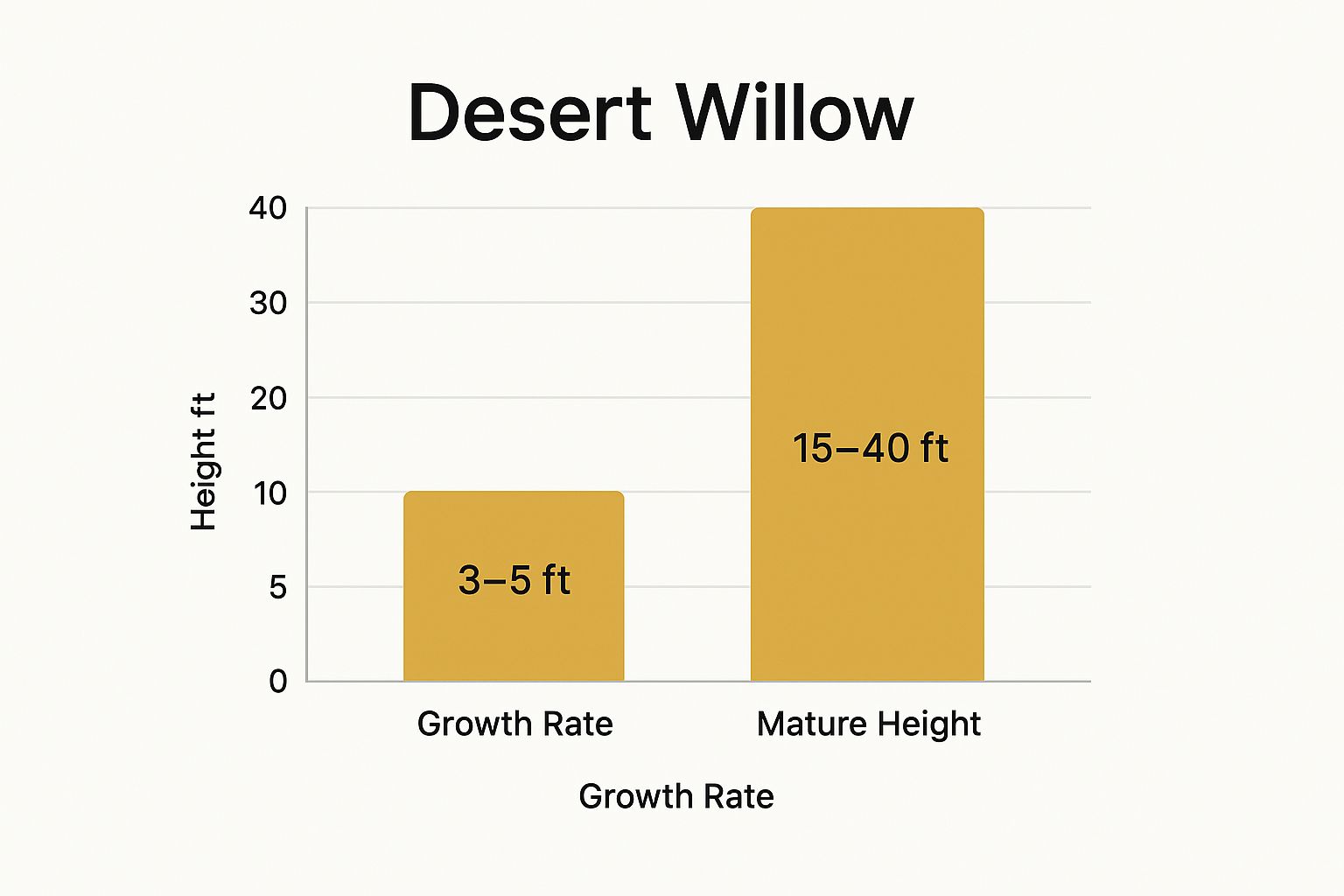
As the chart illustrates, the Desert Willow provides rapid vertical growth, quickly establishing its presence while maintaining a manageable size that won't overwhelm most residential or commercial spaces. Its combination of speed, beauty, and low-maintenance needs makes it a superior choice for enhancing curb appeal and creating sustainable landscapes across South Texas.
2. Bald Cypress (Taxodium distichum)
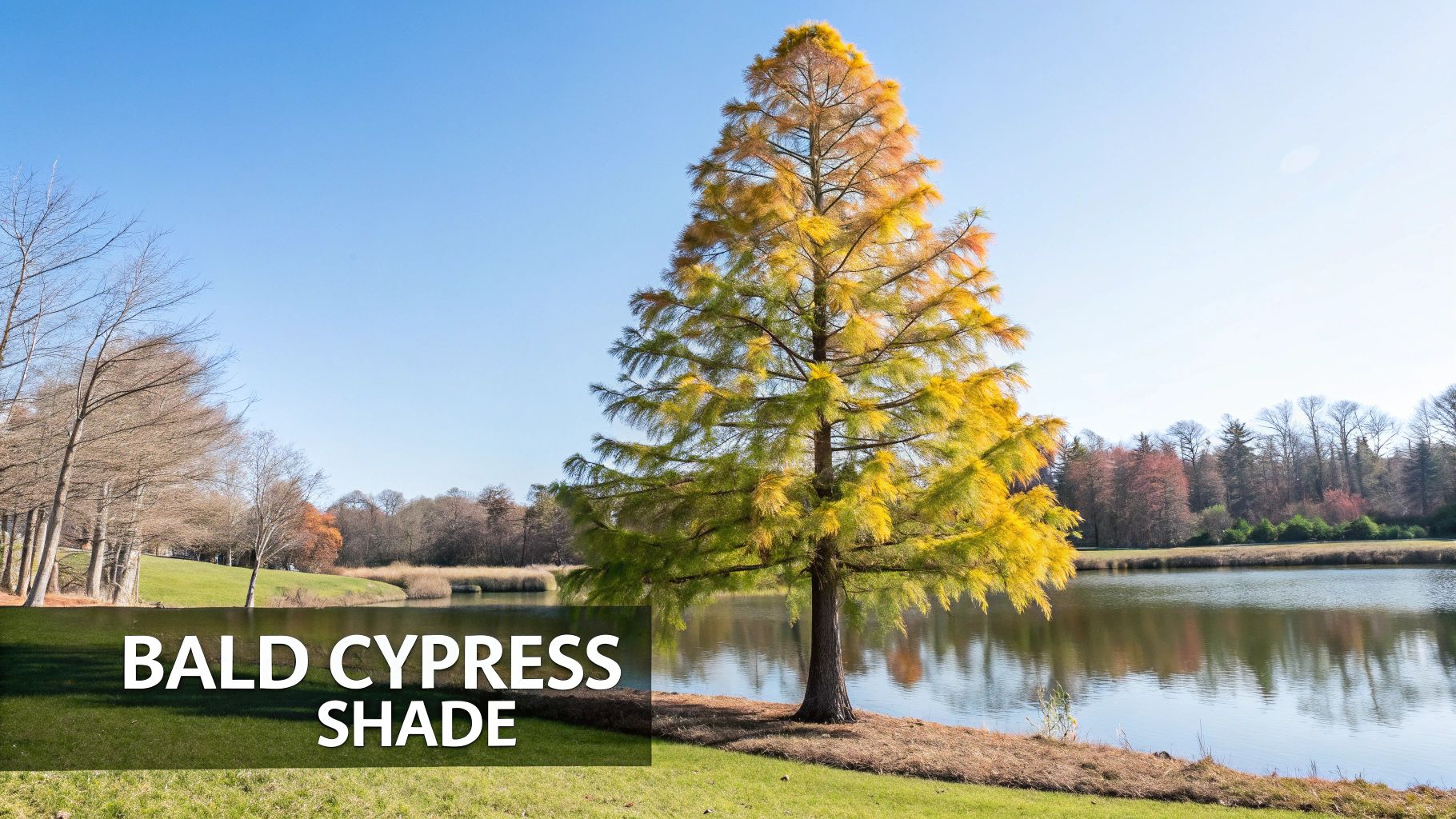
For a majestic and enduring presence in the South Texas landscape, the Bald Cypress is an unparalleled choice. This native deciduous conifer is a true powerhouse, offering remarkable adaptability and an impressive growth rate that quickly establishes a grand scale. While often associated with swampy regions, its resilience allows it to flourish in a variety of soil conditions, including the drier upland areas found across the state from San Antonio to Brownsville.
The Bald Cypress is celebrated for its rapid vertical development, typically growing 3 to 5 feet annually, making it one of the most effective trees that grow fast in Texas for creating a mature landscape in a shorter timeframe. It develops a distinctive pyramidal shape when young, maturing into a more stately, flat-topped form that can reach 50 to 70 feet tall. In autumn, its soft, needle-like leaves transform into a stunning russet-orange before dropping, providing beautiful seasonal interest—a unique trait for a conifer.
Key Characteristics and Planting Tips
This tree’s versatility makes it a valuable asset for diverse landscaping projects, from urban streetscapes to large-scale commercial properties. Proper planting and care are key to unlocking its potential. For expert guidance on getting this magnificent tree established, you can learn more about professional tree installation on fischerlandscapingusa.com.
- Sunlight: Plant in a location that provides full sun to partial shade for optimal growth and health.
- Soil: It demonstrates incredible tolerance for almost any soil type, from heavy clay to sandy loam, and both wet and moderately dry conditions.
- Watering: Provide regular, deep watering for the first two years to establish a strong root system. Once mature, it is surprisingly drought-tolerant.
- Pruning: The Bald Cypress requires minimal pruning. Simply remove any dead, damaged, or poorly placed branches in the dormant season to maintain its structure.
- Placement: This is an excellent choice for low-lying areas or rain gardens. If concerned about the formation of its characteristic "knees," plant it away from sidewalks and foundations.
3. Arizona Ash (Fraxinus velutina)
For those in Texas needing rapid shade cover, the Arizona Ash stands out as one of the most vigorous options available. This deciduous tree is renowned for its swift establishment, providing a broad, rounded canopy that offers quick relief from the intense Texas sun. It's a popular choice, particularly in West and Central Texas communities, for property owners looking to transform a bare lot into a shaded oasis in a remarkably short time.
The Arizona Ash is celebrated for its impressive growth rate, typically adding 3 to 4 feet of height per year. This makes it one of the classic trees that grow fast in Texas, historically used in new construction for immediate landscape impact. Reaching a mature height of 30 to 50 feet, its fine-textured foliage creates dense shade, but it's important to note this speed comes with considerations, including a shorter lifespan and susceptibility to certain pests.
Key Characteristics and Planting Tips
While its growth is a major benefit, the Arizona Ash requires thoughtful placement and care to thrive without becoming a problem. Its success depends on addressing its specific needs and potential drawbacks from the start:
- Cultivar Selection: Plant male cultivars like 'Fan-Tex' or 'Rio Grande' to avoid the constant mess produced by the female tree's seeds.
- Soil: It is highly tolerant of the alkaline soils common throughout Texas, making it an easy-to-establish choice for many locations.
- Spacing: Due to an aggressive root system, it is crucial to plant this tree at least 30 feet away from foundations, sidewalks, and utility lines to prevent damage.
- Watering: Provide deep, consistent watering during its first few years to establish a strong root system. Once mature, it has moderate drought tolerance.
- Health Monitoring: Be vigilant for signs of the emerald ash borer and ash decline. Regular pruning by a professional service can help develop a strong structure and maintain tree health.
4. Red Oak (Quercus texana/shumardii)
For those in Texas seeking a classic, majestic shade tree without the decades-long wait, the native Red Oak is an outstanding selection. Both the Texas Red Oak (Quercus texana) and its close relative, the Shumard Oak (Quercus shumardii), defy the slow-growing reputation of their species. These magnificent trees deliver impressive growth and long-term value, making them a cornerstone of landscapes from San Antonio to the communities around Corpus Christi.
The Red Oak is prized for its substantial growth rate, typically adding 2 to 3 feet of height annually in favorable conditions. This makes it one of the most rewarding trees that grow fast in Texas for property owners investing in a permanent, high-value shade tree. It matures into a stately tree, reaching 40 to 60 feet with a broad, spreading canopy that provides ample shade. Beyond its speed, the Red Oak is celebrated for its stunning, brilliant red fall foliage, strong wood, and remarkable adaptability to various Texas soils.
Key Characteristics and Planting Tips
The Red Oak’s resilience and grandeur make it a popular choice for everything from urban streetscapes to large residential properties. To ensure it thrives and reaches its full potential, follow these key planting strategies:
- Sunlight: Plant in a location that receives full sun. Abundant sunlight is crucial for vigorous growth and achieving the most vibrant fall color display.
- Soil: It requires well-draining soil but shows excellent tolerance for clay as long as the area does not become waterlogged. For alkaline soils, the Texas Red Oak is often the superior choice.
- Watering: Provide consistent, deep watering during the first three years after planting. This is critical for establishing a strong root system and accelerating early growth.
- Pruning: To prevent the spread of oak wilt disease, a serious concern in Texas, avoid pruning from February through June when the risk of infection is highest.
- Spacing: Account for its mature size by planting it at least 40 to 50 feet away from structures, power lines, and other large trees to allow its canopy to spread.
Investing in a large-stature tree like a Red Oak is a significant decision. For expert guidance on site selection and professional planting services that ensure long-term health, property owners can explore professional landscaping in Brownsville, Texas.
5. Mexican Sycamore (Platanus mexicana)
For those with ample space seeking a large, stately shade tree that establishes itself quickly, the Mexican Sycamore is a premier choice. Often considered a superior alternative to the American Sycamore for Texas landscapes, this magnificent native tree is celebrated for its vigorous growth and striking appearance. It is a fantastic option for adding dramatic scale, rapid shade, and year-round visual interest to large properties, from sprawling ranches near Corpus Christi to expansive commercial grounds in San Antonio.
The Mexican Sycamore boasts an impressive growth rate, typically adding 3 to 4 feet in height per year under favorable conditions. This rapid development firmly places it among the best trees that grow fast in Texas, allowing property owners to enjoy a mature canopy in a relatively short time frame. Reaching a majestic height of 40 to 80 feet, its most defining feature is the beautiful exfoliating bark that peels away to reveal a smooth, patchwork of white, gray, and tan. This, combined with its large, maple-like leaves, creates a commanding presence and provides dense, cooling shade.
Key Characteristics and Planting Tips
This tree’s resilience and adaptability make it a popular choice for municipal parks, riparian restoration projects, and grand residential estates. Achieving success with the Mexican Sycamore depends on proper placement and care:
- Sunlight: Plant in a location that receives full sun to maximize its growth potential and develop a strong, symmetrical canopy.
- Soil: While adaptable to various soil types, it performs best in moist, well-draining soils. It shows better tolerance for Texas' alkaline soils than its American counterpart.
- Watering: Young trees require regular, deep watering to establish a robust root system quickly. Once mature, it has good drought tolerance but will thrive with occasional deep irrigation.
- Spacing: This is a large tree. Provide ample room for it to grow, planting it at least 50 feet away from structures, power lines, and septic systems to avoid future issues.
- Pruning: It requires minimal pruning, primarily to remove any dead, damaged, or crossing branches during the dormant winter season.
6. Eastern Cottonwood (Populus deltoides)
For Texas property owners prioritizing sheer speed above all else, no tree matches the explosive growth of the Eastern Cottonwood. As the fastest-growing native tree in the state, it is an unparalleled choice for establishing massive shade trees, windbreaks, or privacy screens in a remarkably short time. Found naturally along rivers and streams across Texas, its vigor is legendary, making it a powerful tool for large-scale landscaping projects where rapid results are paramount.
The Eastern Cottonwood is celebrated for its almost unbelievable growth rate, capable of soaring 5 to 8 feet per year in ideal, moist conditions. This makes it the undisputed champion among trees that grow fast in Texas for landowners needing rapid results on acreage or rural properties. It quickly develops into a massive deciduous tree, reaching heights of 75 to 100 feet with a broad, spreading crown. While its cotton-like seeds can be a nuisance and its wood is somewhat weak, its ability to transform a landscape in just a few years is unmatched.
Key Characteristics and Planting Tips
This tree's success is entirely dependent on proper placement and understanding its specific needs and drawbacks. Its aggressive growth requires careful planning:
- Sunlight: Full sun is essential for the Eastern Cottonwood to achieve its maximum growth potential.
- Soil: It thrives in moist, well-drained soils and is particularly well-suited for low-lying areas or properties with a high water table.
- Watering: This is not a drought-tolerant tree. Provide generous and consistent water, especially during its establishment period, to fuel its rapid development.
- Placement: Due to its massive size and aggressive root system, plant it at least 50 to 100 feet away from any structures, septic systems, or utility lines. To avoid the cottony mess, choose male cultivars like 'Siouxland'. It is best suited for large, rural properties, not typical suburban lots.
7. Cedar Elm (Ulmus crassifolia)
For those in Texas seeking a classic, tough, and graceful shade tree, the Cedar Elm stands out as a superior choice. This native Texas elm combines rapid growth with remarkable resilience, making it a reliable and low-maintenance anchor for landscapes across the state. Unlike its relative, the American Elm, the Cedar Elm boasts a high resistance to Dutch Elm Disease, ensuring its longevity. Its adaptability makes it a perfect fit for a variety of settings, from historic San Antonio neighborhoods to new commercial developments in Harlingen.
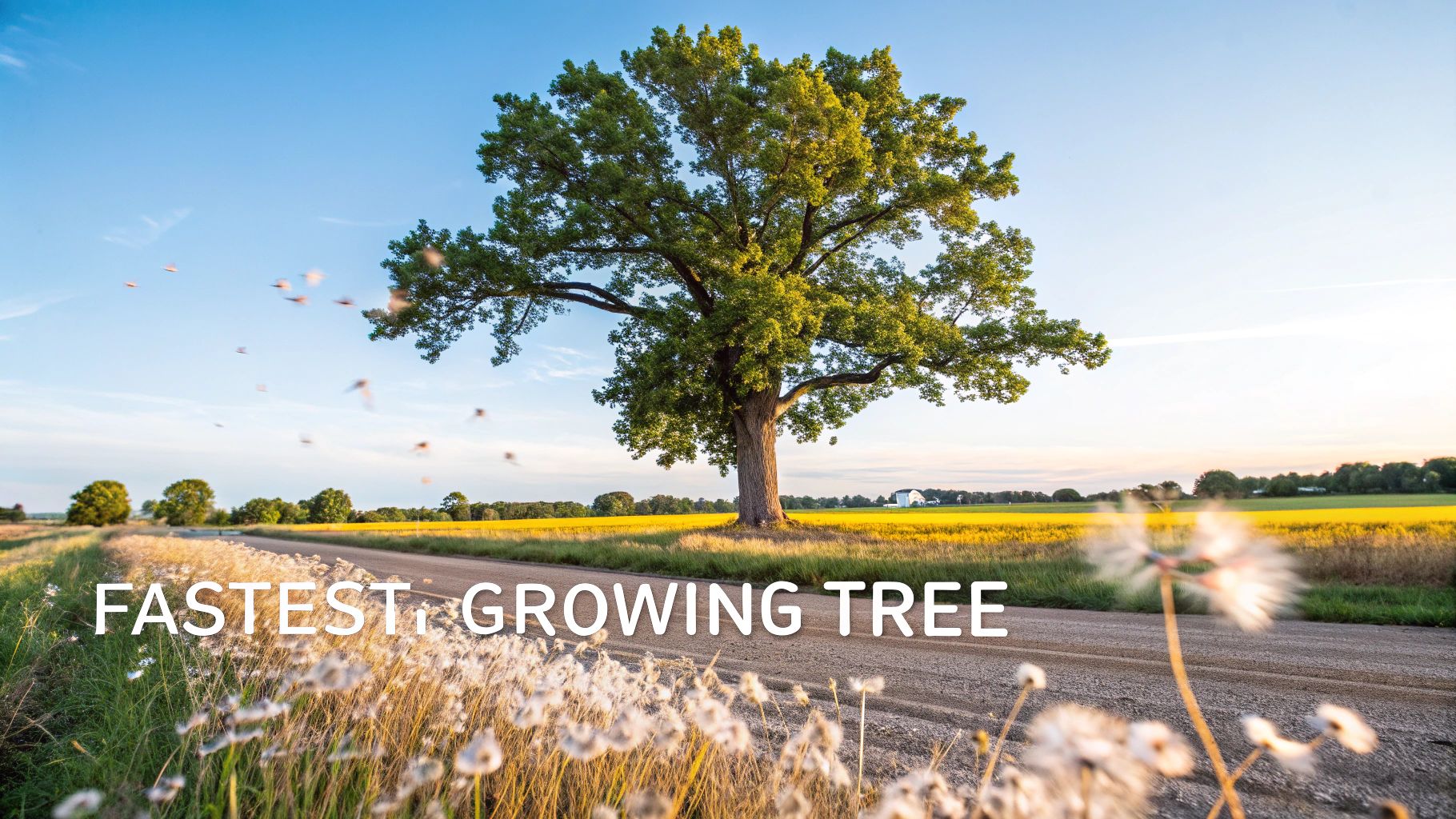
The Cedar Elm is celebrated for its steady growth rate of 2 to 3 feet per year, allowing it to quickly establish a significant canopy. This makes it one of the most dependable trees that grow fast in Texas for property owners wanting to create shade and scale without waiting decades. It matures into a stately tree, typically reaching 50 to 70 feet tall, with a graceful vase shape. Its tiny, rough-textured leaves create a fine, dappled shade that allows grass to thrive underneath. For expert advice on integrating such a foundational tree into your yard, exploring our professional residential landscaping services can provide tailored solutions.
Key Characteristics and Planting Tips
This tree’s exceptional adaptability makes it a go-to for challenging urban sites and diverse soil conditions throughout Texas. Success is straightforward with a few basic considerations:
- Sunlight: Plant in a location that receives full sun to partial shade for optimal growth and health.
- Soil: It is highly adaptable and will tolerate almost any soil type, from heavy clay to sandy loam, as long as it isn't constantly waterlogged.
- Watering: Water regularly during its establishment phase. Once mature, it is remarkably drought-tolerant, handling Texas heat with ease.
- Spacing: To allow its beautiful vase shape to develop fully, space trees at least 40 to 50 feet apart from each other and from structures.
- Pruning: The Cedar Elm requires minimal pruning. If needed, thin the canopy in late winter to enhance its structure and remove any dead or crossing branches.
8. Chinese Pistache (Pistacia chinensis)
For Texas property owners prioritizing spectacular autumn color combined with robust, rapid growth, the Chinese Pistache is an unparalleled choice. While not a native, this medium-sized ornamental has become a landscape staple from Corpus Christi to San Antonio for its exceptional toughness and brilliant fall display. It offers a classic, rounded shade tree form that adapts beautifully to urban and suburban environments, providing significant aesthetic value in a short amount of time.
The Chinese Pistache is celebrated for its vigorous growth rate, typically adding 2 to 3 feet of height per year. This makes it a standout among trees that grow fast in Texas, allowing property owners to establish a mature, shade-providing canopy far quicker than with slower-growing species. Reaching a mature height of 25 to 35 feet, it boasts a display of fiery orange, red, and crimson leaves that is arguably the most reliable and stunning fall color performance of any tree in the state.
Key Characteristics and Planting Tips
The Chinese Pistache's legendary hardiness makes it a low-maintenance superstar, but proper establishment is key to unlocking its full potential and long-term health.
- Sunlight: Full sun is non-negotiable. Maximum sun exposure is required to fuel its growth and trigger the most vibrant fall color transformation.
- Soil: This tree is remarkably tolerant of various soil types, excelling in the challenging alkaline soils common throughout Texas. Good drainage is beneficial but not as critical as for other species.
- Watering: Provide regular, deep watering for the first two years to establish a strong root system. Once mature, it is extremely drought-tolerant.
- Pruning & Structure: Young trees benefit from staking and careful pruning to develop a strong central leader and well-spaced branches. Plant male cultivars like 'Keith Davey' to avoid the mess from berries produced by female trees.
The Chinese Pistache’s ability to thrive where other trees fail, combined with its rapid growth and four-season appeal, solidifies its position as a top-tier selection. Its moderate size makes it an excellent fit for residential yards, commercial properties, and public spaces, providing decades of shade and beauty with minimal care required.
Growth Rate Comparison of 8 Fast-Growing Texas Trees
| Tree Name | Implementation Complexity | Resource Requirements | Expected Outcomes | Ideal Use Cases | Key Advantages |
|---|---|---|---|---|---|
| Desert Willow | Low; minimal pruning needed | Low water; well-draining soil | Moderate height (15-40 ft), fast growth (3-5 ft/yr), beautiful flowers | Xeriscaping, drought-prone areas | Extremely drought-tolerant, attracts pollinators, deer resistant |
| Bald Cypress | Moderate; minimal pruning | Moderate water initially; adapts to wet/dry soils | Tall (50-70 ft), long-lived (600+ yrs), striking fall color | Wetlands, rain gardens, large spaces | Highly adaptable, very long-lived, excellent shade |
| Arizona Ash | Moderate; regular pruning advised | Moderate water; needs maintenance | Medium height (30-50 ft), fast growth (3-4 ft/yr), dense shade | Quick shade in alkaline soils | Fast establishment, tolerates alkaline soils |
| Red Oak | Moderate; avoid pruning in spring | Moderate water; consistent irrigation early | Large size (40-60 ft), long-lived (100+ yrs), vivid fall color | Long-term shade, urban, wildlife support | Strong wood, excellent fall color, supports wildlife |
| Mexican Sycamore | Moderate; minimal pruning | Moderate water; space for growth | Very tall (40-80 ft), fast growth (3-4 ft/yr), large shade canopy | Large landscapes, tropical-style shade | Drought tolerant, attractive bark, massive shade |
| Eastern Cottonwood | High; frequent maintenance needed | High water initially, thrives near water | Very tall (75-100+ ft), fastest growth (5-8 ft/yr), massive shade | Windbreaks, privacy screens, rural areas | Fastest growth, excellent for windbreaks, stabilizes banks |
| Cedar Elm | Low; minimal pruning | Low to moderate water | Tall (50-70 ft), moderate growth (2-3 ft/yr), filtered shade | Urban sites, pollution-tolerant landscapes | Disease resistant, adaptable, low maintenance |
| Chinese Pistache | Moderate; young trees need training | Low to moderate water | Medium size (25-35 ft), moderate growth (2-3 ft/yr), reliable fall color | Residential landscapes, urban tough sites | Most reliable fall color in Texas, drought and alkaline soil tolerant |
Ensure Your Fast-Growing Tree's Success with Professional Installation
Choosing the right species from our list of trees that grow fast in Texas is the exciting first step toward transforming your landscape. From the water-loving Bald Cypress thriving near coastal areas to the drought-tolerant Desert Willow perfect for drier South Texas climates, you have a wealth of options. The key takeaway is that with the right selection, you can dramatically accelerate the maturity and beauty of your property's canopy.
However, selecting the perfect tree is only half the battle. The long-term success and rapid growth of your chosen tree depend entirely on what happens next: professional site preparation and installation. Simply digging a hole and placing a tree in it often leads to stunted growth, disease, and potential failure, wasting both your time and investment.
The Critical Role of Expert Installation
Proper installation is a science that accounts for the unique environmental challenges across South Texas. Our experienced crews at Fischer Landscaping understand that the soil composition in Corpus Christi is vastly different from that in San Antonio or Harlingen.
Key factors we address during professional installation include:
- Precise Site Selection: We analyze sun exposure, drainage patterns, and proximity to structures to find the optimal location where your tree will thrive without future conflicts.
- Soil Amendment: We test and amend the native soil, correcting for heavy clay or high alkalinity to create an ideal root environment that encourages vigorous growth from day one.
- Correct Planting Depth: Planting a tree too deep is one of the most common and fatal DIY mistakes. We ensure the root flare is perfectly positioned at or just above ground level to prevent root girdling and suffocation.
- Staking and Initial Pruning: We provide the necessary support for young trees to withstand strong winds and perform crucial initial structural pruning to encourage a strong, healthy growth habit.
Investing in a professional team ensures your new tree establishes a robust root system quickly, a critical factor for achieving the fast growth you desire. When vetting potential landscaping partners, using a detailed contractor hiring checklist can help you ask the right questions and ensure you're choosing a qualified team with proven local expertise. Don't leave the future of your landscape's most important feature to chance. A professional installation is the ultimate guarantee that your investment will flourish, providing decades of shade, beauty, and value to your home or commercial property.
Ready to bring the perfect fast-growing tree to your South Texas property? The experts at Fischer Landscaping provide comprehensive tree selection and professional installation services to ensure your investment thrives from the start. Contact us today for a consultation and let us help you build a beautiful, mature landscape in record time.