Sloped properties in South Texas, from the rolling hills near San Antonio to coastal landscapes in Corpus Christi, present unique challenges like soil erosion and water runoff. A professionally designed retaining wall is more than just a structural fix; it’s a powerful opportunity to unlock your property's full potential. These structures transform challenging grades into beautiful, usable spaces, adding significant value and aesthetic appeal. In this guide, we'll explore 8 professional retaining wall ideas for slopes, providing the practical insights you need to choose the perfect solution.
This article moves beyond basic concepts to provide specific, actionable designs that enhance both form and function. We will cover a range of materials and styles, from the rustic charm of natural stone to the modern efficiency of poured concrete, ensuring you find an option that fits your property's unique character and structural needs. To help you make an informed decision and understand your options, it's beneficial to explore the different types of retaining walls and their specific advantages.
Whether you're a homeowner in Harlingen envisioning a terraced garden or a commercial property manager in Brownsville needing a durable, large-scale solution, understanding these options is the first step. You'll gain clarity on which retaining wall will best protect your investment while elevating your landscape’s stability and beauty.
1. Tiered Garden Retaining Walls
Instead of a single, towering wall, a tiered retaining wall system breaks a steep slope into a series of shorter, stepped terraces. This classic approach transforms an unusable hillside into a functional and visually stunning landscape feature. Each tier creates a level platform, perfect for planting beds, seating areas, or decorative gardens.
This design is one of the most effective retaining wall ideas for slopes because it distributes earth pressure across multiple structures. By using several smaller walls, you reduce the immense force that a single tall wall must withstand, enhancing stability and longevity. This method also improves slope drainage and erosion control, making it an ideal solution for challenging South Texas terrains.
Key Implementation Tips
To ensure a successful tiered wall system, focus on structure and planning. Proper spacing and drainage are critical for both stability and usability.
- Proper Spacing: Keep at least 3 to 4 feet of level space between each tier. This provides adequate room for root systems to grow, allows for easy maintenance access, and creates a more stable, visually balanced structure.
- Drainage is Essential: Install a French drain or a gravel backfill system behind the base of each individual wall. This prevents hydrostatic pressure—the force of water buildup—which is a leading cause of retaining wall failure.
- Staggered Construction: For maximum stability, the upper walls should be set back from the walls below them, not stacked directly on top. This offset distributes the load more effectively into the hillside.
For a quick reference on the typical specifications for this design, the following infographic summarizes the key data points.
These specifications provide a solid starting point for planning your project's scope and budget. However, professional installation is key to transforming a difficult slope into a beautiful, multi-level outdoor living space. For expert guidance on designing and building a durable system for your property, discover more about our professional residential landscaping services.
2. Gabion Basket Retaining Walls
Gabion retaining walls offer a unique blend of industrial aesthetic and natural ruggedness. These structures consist of wire mesh cages, or "baskets," filled with rocks, stones, or even recycled concrete. Originally engineered for civil applications like highway erosion control, gabions have been adopted by landscape architects for their robust performance and striking visual appeal.
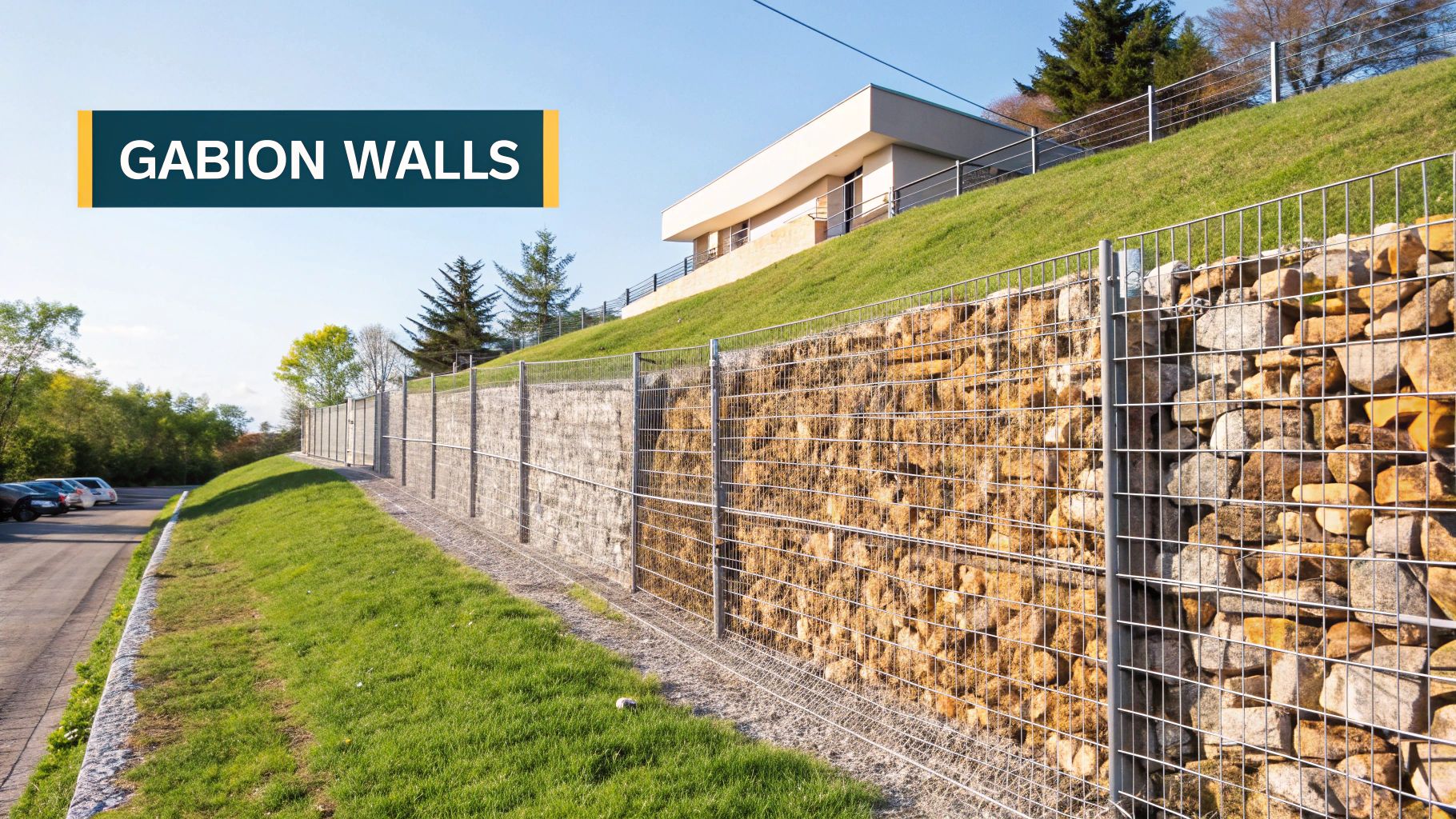
This method is one of the most effective retaining wall ideas for slopes because of its inherent permeability. Unlike solid concrete walls, the gaps between the rocks allow water to flow freely through the structure. This design naturally relieves hydrostatic pressure, a common cause of wall failure in the heavy clay soils of South Texas, making it a durable and low-maintenance solution.
Key Implementation Tips
Proper assembly and filling are crucial for creating a gabion wall that is both stable and visually appealing. Attention to the cage construction and fill material will ensure long-term structural integrity.
- Choose the Right Fill: Use larger, angular rocks (4 to 8 inches) that are bigger than the mesh openings. This prevents spillage and creates a more stable, interlocked mass.
- Ensure a Stable Foundation: Before placing the cages, compact the soil base thoroughly to prevent settling. Installing a layer of geotextile fabric behind the cages is also essential to stop soil from washing through the rocks.
- Proper Cage Assembly: Use heavy-gauge wire, especially for taller walls. For properties in coastal areas like Corpus Christi, consider PVC-coated wire to resist corrosion. Overfill the baskets slightly, as the rocks will settle over time.
Gabion walls provide a versatile and resilient solution for managing sloped terrain while adding a distinctive, modern character. For expert assistance in designing and installing a custom gabion wall, explore our professional hardscaping services.
3. Timber Retaining Walls
For a warm, natural aesthetic that seamlessly integrates with garden environments, timber retaining walls are a classic and versatile choice. This approach uses horizontal wooden beams, often pressure-treated lumber or railroad ties, to create a structure that holds back soil on sloped properties.
This design is one of the most cost-effective retaining wall ideas for slopes, especially for smaller-scale residential projects. The natural appearance of wood complements lush plantings and blends into the landscape. While timber may have a shorter lifespan than masonry, modern treatments and proper construction techniques can ensure years of reliable performance, even in the humid South Texas climate.
Key Implementation Tips
A successful timber wall depends entirely on selecting the right materials and using proper construction methods to prevent rot and structural failure.
- Choose Ground-Contact Lumber: Only use lumber rated for direct ground contact (UC4B) to resist moisture and decay.
- Install a Drainage System: A crucial step is to place a gravel backfill layer directly behind the wall. This creates a channel for water to escape, preventing prolonged contact with the timber and reducing hydrostatic pressure.
- Anchor for Stability: For walls over three feet tall, "deadmen" anchors should be embedded into the hillside every 4 to 8 feet. These T-shaped anchors tie the wall securely into the slope behind it. When building larger structures, it is often useful to compare the inherent properties of steel versus wood building materials to understand their long-term performance.
- Apply a Slight Batter: Construct the wall with a slight backward lean into the slope, about 1 inch for every foot of height. This "batter" uses gravity to improve the wall's strength.
The right materials and professional installation are key to maximizing the life and beauty of a timber retaining wall. A properly built wooden structure can effectively manage a slope while adding significant natural charm to your property. To ensure your project is built to last, contact Fischer Landscaping for a professional consultation.
4. Natural Stone Dry-Stacked Walls
Dry-stacked stone walls are an ancient technique where stones are fitted together without mortar, relying on gravity and friction for stability. This method creates rustic, elegant walls that blend seamlessly into the natural landscape. This approach is one of the most organic and durable retaining wall ideas for slopes, and the gaps between the stones provide excellent natural drainage.
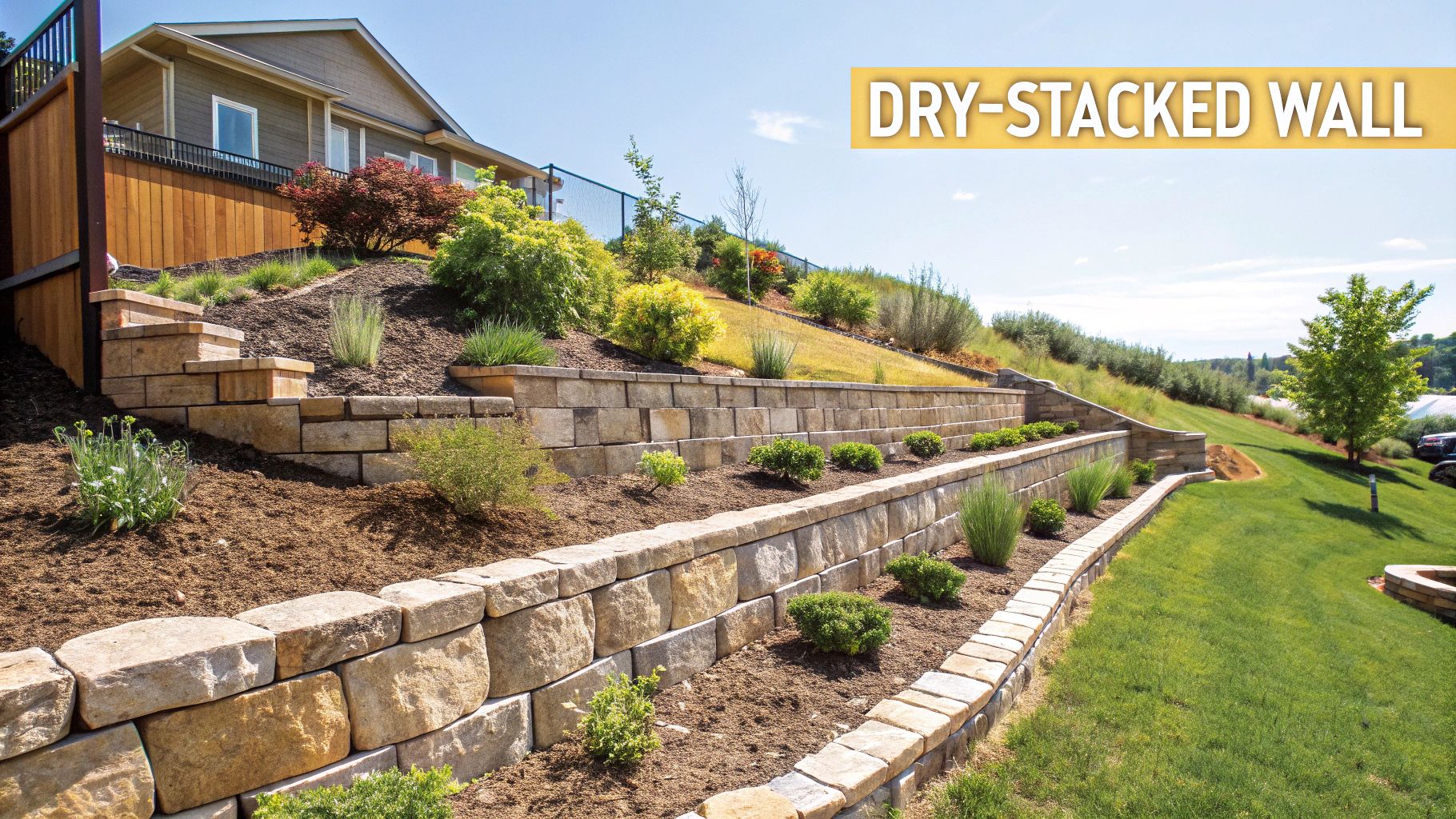
This design is particularly effective because of its inherent flexibility. A dry-stacked wall can adapt to minor ground shifts without cracking, making it a long-lasting solution for the variable soils found in South Texas. The crevices can also be planted with mosses or trailing plants, creating a beautiful living wall that further stabilizes the soil.
Key Implementation Tips
Achieving a stable and beautiful dry-stacked wall requires patience and adherence to time-tested principles. The art lies in the careful selection and placement of each stone.
- Build a Strong Foundation: Always start with the largest, flattest stones at the base to create a stable footing for the entire structure.
- Maintain a "Batter": Lean the wall slightly back into the hillside, about two to three inches for every foot of height. This "batter" uses the slope's own weight to enhance the wall's stability.
- Use Through-Stones: Integrate long "through-stones" that extend through the wall's entire depth every four to six feet. This ties the front and back of the wall together, preventing it from splitting.
- Pack As You Go: As you build each course, tightly pack soil and smaller stones behind the wall. This eliminates voids and ensures the wall is solidly integrated with the slope.
Dry-stacking is a specialized craft that combines artistry with engineering. For homeowners in areas from San Antonio to Corpus Christi, professional installation is crucial for building a stone wall that is not only beautiful but will last for generations. To explore how this classic technique can be applied to your property, learn more about our custom hardscaping services.
5. Concrete Block (CMU) Retaining Walls
For projects demanding exceptional strength and design versatility, concrete masonry unit (CMU) retaining walls offer a premier solution. These systems utilize high-density, interlocking concrete blocks engineered specifically for earth retention. Modern segmental retaining wall (SRW) systems feature a built-in setback lip on each block, ensuring a stable, uniform backward lean.
This engineered approach makes CMU one of the most reliable retaining wall ideas for slopes, commonly used in residential subdivisions and commercial properties across South Texas. The blocks come in a wide array of textures and colors, allowing for the construction of tall, durable walls that seamlessly integrate into any landscape design.
Key Implementation Tips
Proper installation is non-negotiable for the long-term performance of a CMU wall. From the foundation to the final capstone, every step must be executed with precision.
- Build a Solid Foundation: Excavate and compact a trench, then lay a 6 to 8-inch-deep level pad of crushed gravel. The first course of blocks must be perfectly level.
- Prioritize Water Management: Install a perforated drainage pipe behind the first course, surrounded by clean gravel backfill. This system alleviates hydrostatic pressure by channeling water away from the wall.
- Incorporate Geogrid Reinforcement: For any wall taller than three or four feet, geogrid soil reinforcement is essential. This flexible mesh is laid between block courses and extends back into the slope, dramatically increasing its strength.
- Finish with a Protective Cap: Secure cap blocks to the top course using a construction-grade adhesive. This provides a finished appearance and prevents water from infiltrating the blocks.
Building a robust CMU wall is a complex task that benefits from professional expertise. Explore our professional hardscaping services to ensure your project is engineered for lasting success.
6. Poured Concrete Cantilever Walls
For slopes requiring maximum structural integrity, a poured concrete cantilever wall is the premier engineering solution. This design uses a reinforced concrete "L" or inverted "T" shaped foundation. The vertical wall (stem) is connected to a horizontal base (footing) that extends under the retained soil. The weight of the earth on this footing anchors the wall and provides immense stability.
This engineered approach is one of the most robust retaining wall ideas for slopes, capable of supporting significant soil loads. It's the same principle used in demanding civil engineering projects. For large-scale residential or commercial projects in South Texas, where soil conditions can be challenging, a cantilever wall offers unparalleled strength and longevity.
Key Implementation Tips
A poured concrete cantilever wall is a complex structure where engineering precision is non-negotiable. Success depends on professional design, proper soil analysis, and meticulous execution.
- Engineering is Mandatory: Never attempt this type of wall without a certified structural engineer. The engineer will design the wall's dimensions, footing size, and steel reinforcement based on soil type, slope height, and load requirements.
- Prioritize Drainage: Install a perforated drain pipe at the base of the footing, encased in gravel. Supplement this with weep holes every 5 to 10 feet along the wall's base to alleviate hydrostatic pressure.
- Proper Curing and Waterproofing: Before backfilling, apply a professional-grade waterproofing membrane to the soil-facing side of the wall. Allow the concrete to cure for at least 28 days to reach its full design strength.
Due to the technical demands and heavy equipment required, this is not a DIY project. Professional installation ensures the structure is built to precise engineering specifications. For expert guidance on engineered retaining walls for your Corpus Christi or San Antonio property, explore our specialized concrete and demolition services.
7. Living Retaining Walls (Vegetated Geogrids)
A living retaining wall, also known as a vegetated geogrid system, offers a bioengineered solution that merges structural reinforcement with natural aesthetics. This approach stabilizes a slope by layering soil with a high-strength synthetic fabric called a geogrid. The plant life established on the wall's face creates a living structure where the root systems interlock with the soil and geogrid, forming a powerful support system.
This method is one of the most sustainable retaining wall ideas for slopes, transforming a potential eyesore into a vibrant, green landscape. As the vegetation matures, the wall grows stronger and blends seamlessly into its surroundings. This eco-friendly technique is an excellent choice for properties seeking a naturalistic and environmentally conscious design.
Key Implementation Tips
Success with a living wall hinges on selecting the right plants and providing proper structural support during its establishment phase. A well-designed system will become self-sustaining over time.
- Select Appropriate Plants: Choose deep-rooted, native plants adapted to the local South Texas climate and soil conditions. Drought-tolerant grasses, groundcovers, and small shrubs are ideal.
- Ensure Structural Integrity: The geogrid layers must be installed correctly, typically embedded every 18 to 24 inches vertically as the slope is built up. The soil mix must be compacted properly to prevent settling.
- Support Early Growth: A temporary irrigation system is crucial for the first one or two growing seasons to help plants establish a strong root network. An erosion control blanket can also protect seeds and young plants.
Given the technical requirements for soil compaction and geogrid placement, professional expertise is essential for long-term stability. For help designing a vegetated wall that thrives in the San Antonio or Corpus Christi area, explore our professional residential landscaping services.
8. Boulder Retaining Walls
Boulder retaining walls utilize large, natural stones to engineer a slope solution that is both dramatic and exceptionally durable. The immense weight and irregular shapes of the boulders interlock, using friction and gravity to create a stable structure capable of holding back significant earth pressure.
This method stands out among retaining wall ideas for slopes due to its sheer mass and natural stability. A boulder wall’s strength comes from the individual weight of each stone, making it incredibly effective on challenging inclines. This design is also highly permeable, allowing for natural water drainage. For properties in areas from San Antonio to Brownsville, this natural integration offers a timeless look that complements the regional landscape.
Key Implementation Tips
Success with boulder walls depends heavily on expert placement and a solid foundation. The size and weight of the materials require precision and heavy machinery for a safe, lasting installation.
- Build a Strong Base: The largest, most stable boulders must form the foundation. A good rule is to bury at least one-third of the height of these base boulders below grade to anchor the structure.
- Tilt for Stability: Each boulder should be set with a slight backward tilt, leaning into the slope. This "batter" uses gravity to enhance the wall's strength.
- Incorporate Planting Pockets: The natural gaps between boulders are perfect for creating planting pockets. Filling these with soil for native grasses, succulents, or cascading plants helps soften the wall's appearance and further stabilizes the soil.
The natural beauty of boulder walls makes them an excellent choice for pairing with other landscape elements, like custom water features. To explore how these powerful stone structures can enhance your property, find out more about our professional water feature installation services.
8-Method Retaining Wall Comparison
| Retaining Wall Type | Implementation Complexity | Resource Requirements | Expected Outcomes | Ideal Use Cases | Key Advantages |
|---|---|---|---|---|---|
| Tiered Garden Retaining Walls | Moderate – requires planning and multiple builds | More materials, moderate labor | Multiple usable planting terraces, good drainage | Steep slopes over 8 ft, garden spaces, multi-level use | Reduced pressure per wall, visual appeal, DIY-friendly |
| Gabion Basket Retaining Walls | Low to Moderate – modular assembly | Wire cages, local rocks, some labor | Permeable, flexible wall with good drainage | Slopes needing drainage, modern industrial look | Excellent drainage, cost-effective, quick installation |
| Timber Retaining Walls | Low – simpler DIY construction | Pressure-treated wood, fasteners | Warm, natural look, shorter lifespan | Residential gardens, slopes up to 4 ft | Affordable, easy to install, flexible design |
| Natural Stone Dry-Stacked Walls | High – labor intensive, skilled | Quality natural stone, skilled labor | Rustic, long-lasting, flexible and self-draining | Low to moderate height slopes, natural aesthetics | Timeless look, excellent drainage, habitat friendly |
| Concrete Block (CMU) Walls | Moderate – requires base prep | Manufactured blocks, aggregate, rebar | Strong, consistent, can build tall walls | Residential, commercial, infrastructure walls | Fast installation, variety of finishes, structural strength |
| Poured Concrete Cantilever Walls | High – professional engineering | Concrete, rebar, heavy equipment | Extremely strong, durable, suitable for tall walls | Tall slopes, commercial and critical applications | Strongest, long lifespan, supports heavy loads |
| Living Retaining Walls | Moderate – bioengineering approach | Geogrids, plants, irrigation setup | Environmentally friendly, natural appearance | Moderate slopes, sustainable and ecological projects | Sustainable, wildlife habitat, stormwater management |
| Boulder Retaining Walls | High – heavy equipment needed | Large boulders, skilled operators | Dramatic, durable, natural appearance | Rural, mountainous, high-end landscaping | Very durable, natural look, minimal maintenance |
Build a Lasting Solution with Fischer Landscaping
Transforming a challenging slope into a functional and beautiful part of your landscape is a significant investment. As we've explored, the right approach can turn an unusable incline into a stunning tiered garden, a solid, modern concrete feature, or a rustic natural stone masterpiece. The key takeaway from these diverse retaining wall ideas for slopes is that success lies in the synergy between design, material selection, and expert execution.
From Inspiration to Installation
We've covered a wide array of options, from the organic appeal of living walls to the formidable strength of poured concrete. Your final choice should be a thoughtful reflection of your property's needs, your personal style, and the unique environmental factors of South Texas, such as soil composition and heavy rainfall.
Remember these core principles for a successful project:
- Drainage is Non-Negotiable: Every structurally sound retaining wall must have a meticulously planned drainage system. Without it, hydrostatic pressure can lead to bowing, cracking, and eventual failure.
- Foundation is Everything: The stability of your wall depends entirely on the strength of its foundation. A proper footing, designed for your specific soil type, is essential for long-term performance.
- Materials Matter: Choosing materials suited for the local climate, from Corpus Christi to San Antonio, ensures your wall will withstand the test of time, resisting moisture, pests, and sun damage.
A retaining wall is more than a barrier; it's an engineered structure that protects your property and unlocks its full potential. The difference between a wall that lasts for decades and one that fails in a few years is almost always professional design and installation.
Ultimately, the best retaining wall ideas for slopes are those brought to life with precision and expertise. This is not a typical DIY project. The complexities of soil mechanics, proper reinforcement, and compliance with local building codes in cities like Brownsville and Harlingen demand a professional touch. Engaging an experienced team ensures your vision is realized safely and effectively, protecting your investment and enhancing your property's value for years to come.
Ready to turn your challenging slope into a beautiful, functional asset? The expert team at Fischer Landscaping specializes in designing and building custom hardscaping solutions that are engineered to last in the South Texas climate. Contact us today to schedule a consultation and receive a detailed quote for your project.