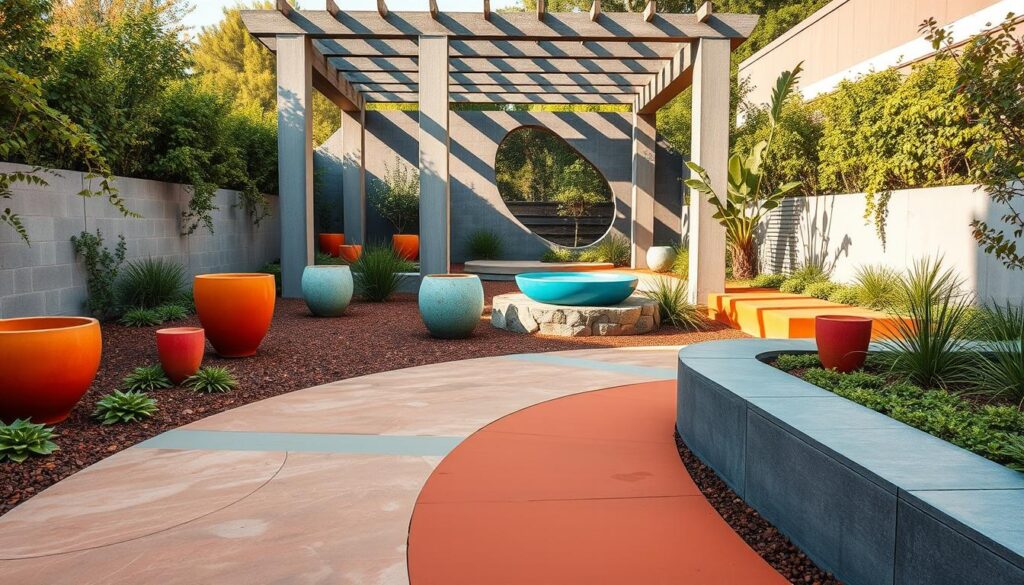
Imagine stepping into your Corpus Christi or San Antonio backyard to the dazzling sight of hummingbirds darting between vibrant flowers. Creating this spectacle is easier than you think. Choosing the right plants for hummingbirds in Texas is the key to transforming your property into a vital nectar station for these incredible birds, especially during their long migrations. A professionally designed landscape not only supports local wildlife but significantly boosts your property's curb appeal and value.
This guide focuses on the best native and adapted plants specifically selected for their resilience in the unique South Texas climate. We'll explore hardy, beautiful options that attract hummingbirds while enhancing your landscape's health and appeal, providing a sustainable solution that thrives from Harlingen to Brownsville. Since hummingbirds are famously drawn to red, a well-planned garden design often includes a variety of blooms. For a truly vibrant display that captures their attention, consider adding more easy-to-grow red-flowered plants to your Texas landscape.
Let's delve into the top selections that will bring consistent life and color to your garden, creating an inviting oasis for both you and these energetic pollinators.
1. Turk's Cap (Malvaviscus arboreus var. drummondii)
For property owners and managers seeking a quintessential Texas native that acts as a hummingbird magnet, Turk's Cap is a premier choice. This hardy, shade-tolerant perennial is one of the most reliable plants for hummingbirds in Texas, thriving across regions from San Antonio to Corpus Christi. Its most distinctive feature is the bright red, turban-like flower that never fully opens. This unique shape creates a perfect, protected nectar reservoir that hummingbirds can access, while deterring many other insects.
Turk's Cap offers a relentless blooming period from early summer through the first frost, providing a consistent and vital food source during peak hummingbird activity, including the critical fall migration. Beyond its value as a nectar source, its dense, mounding growth habit provides essential shelter for birds seeking refuge from the intense South Texas sun, making it a functional and beautiful solution for any property.
Practical Application and Care
This plant's adaptability makes it a low-maintenance cornerstone for any landscape design. It flourishes in a range of conditions, from partial shade to nearly full sun, although it performs best with some protection from the harshest afternoon rays.
- Planting: For optimal growth, space new plants approximately 4 to 5 feet apart to accommodate their mature spread. This ensures good air circulation and allows each plant to develop a full, lush form.
- Maintenance: In late winter, a hard pruning back to about 6 inches from the ground is recommended. This encourages vigorous new growth and a more prolific bloom display in the upcoming season.
- Establishment: While drought-tolerant once established, mulching around the base will help retain crucial moisture during its first year, especially in well-drained soils.
For a quick reference on its key characteristics, see the summary below.
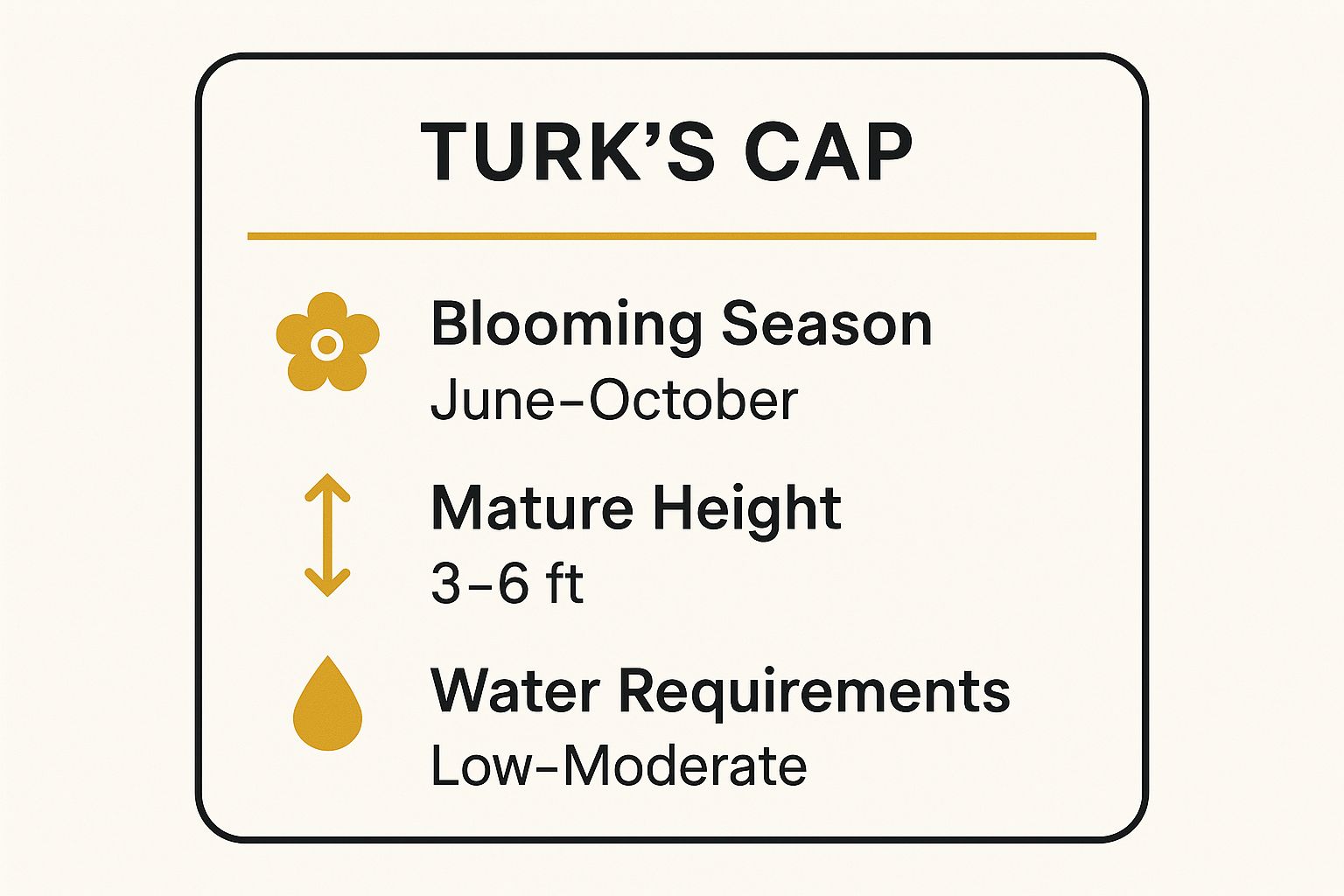
As the infographic highlights, its manageable height and modest water needs make it an ideal candidate for commercial properties and residential gardens alike. Integrating Turk's Cap into your landscape plan is a simple yet powerful way to support local wildlife and enhance your property's ecological value.
2. Flame Acanthus (Anisacanthus quadrifidus var. wrightii)
For those looking to add a fiery splash of color and a reliable hummingbird nectar source, Flame Acanthus is an exceptional choice. This tough Texas native shrub is renowned for its slender, tubular, brilliant orange-red flowers that are perfectly shaped for hummingbird feeding. As one of the most resilient plants for hummingbirds in Texas, it thrives in the heat and sun common to areas like Brownsville and Harlingen, making it a landscape workhorse.
The primary value of Flame Acanthus lies in its profuse blooming period, which typically starts in mid-summer and continues strong into the fall. This late-season flowering provides a critical high-energy food source for hummingbirds during their demanding autumn migration south. Its open, airy structure also offers perching spots for these tiny birds, allowing them to rest between feedings, enhancing the local ecosystem.
Practical Application and Care
Flame Acanthus is valued for its drought tolerance and minimal care requirements, making it a smart investment for both residential gardens and large-scale commercial properties. It excels in full sun, which maximizes its flower production, but will also perform well in partial shade.
- Planting: When adding to a landscape, space plants about 3 to 4 feet apart to allow for their natural, fountain-like growth habit. This spacing is crucial for promoting healthy air circulation.
- Maintenance: After the first hard freeze, it is best to prune the entire plant back to ground level or to about 4-6 inches. This hard pruning invigorates the plant, encouraging dense, new growth and a spectacular floral display the following season.
- Establishment: During its first year, provide regular water to develop a deep root system. Once established, it is remarkably drought-tolerant and will only require supplemental watering during prolonged periods of extreme drought.
By incorporating Flame Acanthus, property managers and homeowners can ensure their landscapes provide essential resources for migratory wildlife while demanding very little in return. Its vibrant color and ecological benefits make it a standout performer in any South Texas garden design.
3. Cardinal Flower (Lobelia cardinalis)
For property managers and homeowners aiming to create a dramatic visual impact while offering a specialized nectar source, the Cardinal Flower is an exceptional choice. This stunning native perennial produces tall, elegant spikes of brilliant red flowers that are uniquely adapted for hummingbird pollination. Its tubular blossoms are perfectly shaped to welcome a hummingbird's long beak, making it one of the most effective plants for hummingbirds in Texas.
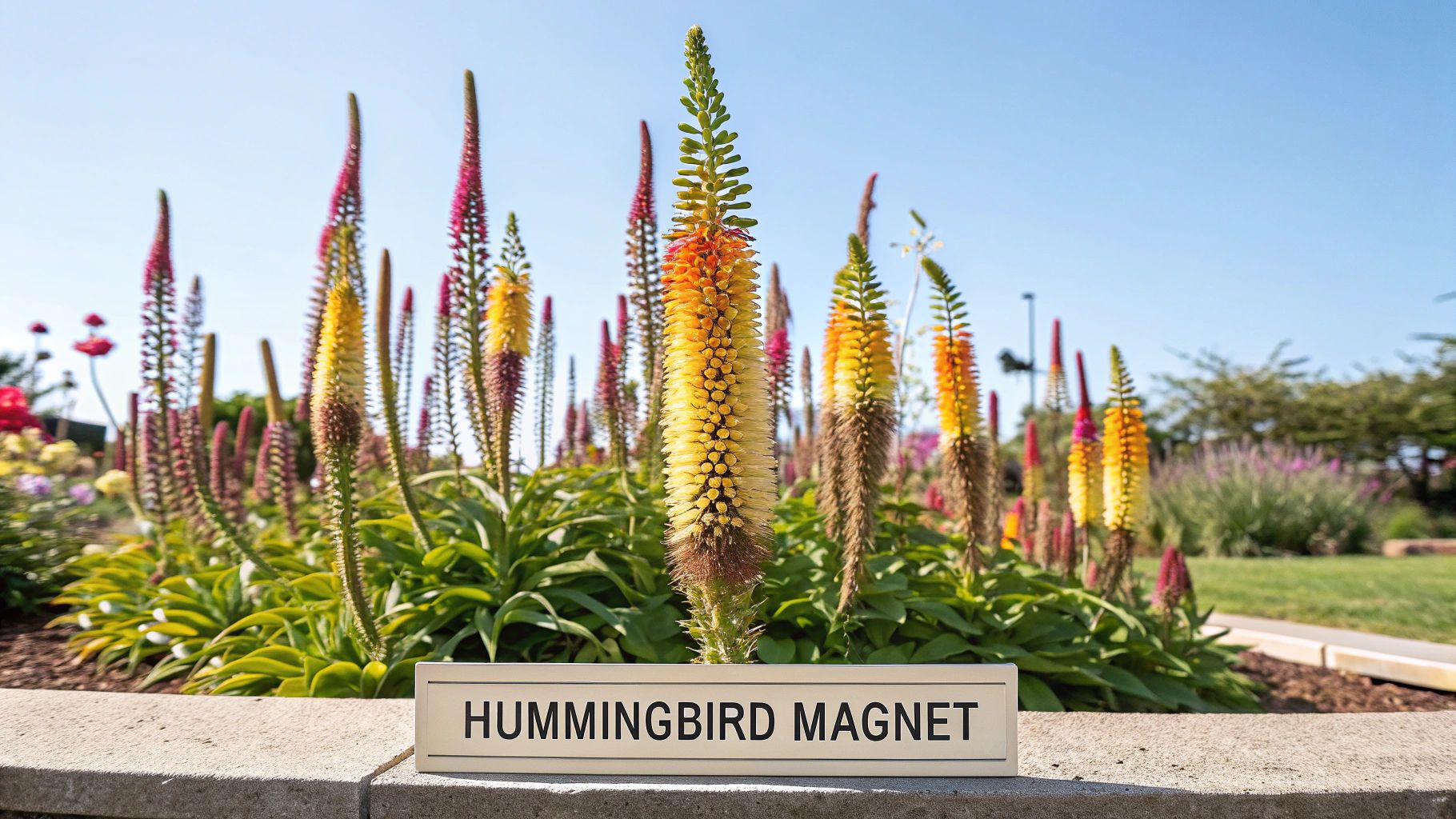
The Cardinal Flower typically blooms from mid-summer into early fall, providing a critical late-season food source that fuels hummingbirds for their strenuous southern migration. Its vibrant color and vertical form create a striking accent in garden beds, especially when planted in clusters. Its preference for moist soil makes it an ideal selection for properties with rain gardens, ponds, or irrigation systems, adding a professional touch to any landscape.
Practical Application and Care
While breathtakingly beautiful, this plant has specific needs that, when met, ensure its success. It is a fantastic addition to landscapes from East Texas to the wetter parts of the San Antonio region, provided its moisture requirements are addressed.
- Planting: Place Cardinal Flowers in areas that receive morning sun and afternoon shade, especially in the hottest parts of Texas. It thrives in rich, consistently moist soil and is an excellent candidate for planting near downspouts, water features, or in low-lying areas. Even smaller landscapes can benefit; learn more about incorporating vertical plants with our innovative small-space garden ideas.
- Maintenance: A heavy layer of mulch is crucial to help retain soil moisture and keep the roots cool. Unlike more drought-tolerant natives, this plant will not perform well in dry conditions.
- Establishment: Cardinal Flower is often a short-lived perennial, but it readily self-seeds in favorable conditions. Allowing some spent flower stalks to remain can help establish a recurring colony, ensuring its presence in your garden for years to come.
Properly siting this plant is key to its performance. Integrating it into an automatically irrigated garden bed or a dedicated rain garden is a strategic way to meet its needs while enhancing your property's ecological diversity and visual appeal.
4. Esperanza (Tecoma stans)
For a vibrant, fast-growing shrub that delivers a near-constant supply of nectar, Esperanza is an exceptional choice. Also known as Yellow Bells, this plant is a staple in Texas landscapes, particularly from San Antonio down to Brownsville, for its stunning display of bright yellow, trumpet-shaped flowers. While hummingbirds are often most attracted to red blooms, Esperanza's sheer volume of nectar-rich flowers makes it one of the most valuable plants for hummingbirds in Texas, serving as a reliable secondary food source.
The plant's prolific blooming season, which can last nearly year-round in the warmest parts of South Texas, ensures that a food supply is available even when other flowers are not in season. This makes it particularly important during late fall and even mild winters. Its upright, arching growth habit also provides vertical interest in a garden bed and can function as a fast-growing privacy screen.
Practical Application and Care
Esperanza's vigor and heat tolerance make it a low-maintenance addition that provides significant visual impact and ecological benefits. It thrives in full sun, which maximizes its flower production, and is well-adapted to the heat of a Texas summer.
- Planting: To ensure robust growth, plant Esperanza in a sunny location after the last frost in spring. Spacing plants 4 to 6 feet apart will allow them to reach their full, bushy potential without overcrowding.
- Maintenance: Regular pruning is key to maintaining a dense, attractive shape and encouraging continuous blooming. A hard prune in late winter will stimulate vigorous new growth for the upcoming season.
- Design: Use Esperanza as a brilliant yellow backdrop for red-flowering plants like Turk's Cap or Flame Acanthus to create a multi-layered hummingbird habitat.
Incorporating this plant is a key strategy in comprehensive landscaping in Texas, offering both stunning curb appeal and critical support for local wildlife. Its resilience and striking color make it a fantastic investment for any property.
5. Tropical Sage (Salvia greggii)
For those managing properties from Corpus Christi to Harlingen, Tropical Sage, also known as Autumn Sage, is an indispensable and high-impact choice. This compact native perennial is one of the most versatile and hardworking plants for hummingbirds in Texas, valued for its incredible heat tolerance and long blooming season. It produces an abundance of small, tubular flowers that are perfectly shaped for hummingbird beaks, attracting them consistently from spring through the first frost.
Tropical Sage offers an extended nectar supply that is critical for both resident hummingbirds and those passing through during migration. Its profusion of blooms, available in vibrant reds, pinks, purples, and whites, creates a striking visual display while serving as a reliable fuel station. The plant's bushy, fine-textured foliage also provides valuable cover for small birds and beneficial insects, adding another layer of ecological function to the landscape.
Practical Application and Care
This plant's resilience and minimal needs make it a favorite for both residential gardens and large-scale commercial landscapes. It thrives in the sun-drenched conditions common in South Texas and asks for very little in return once established, making it a cornerstone for water-wise and low-maintenance designs.
- Planting: Position Tropical Sage in a location that receives at least six hours of direct sunlight daily. Ensure the soil is well-draining, as this plant does not tolerate "wet feet." Space individual plants 2 to 3 feet apart to allow for mature growth.
- Maintenance: To encourage continuous blooming, lightly deadhead spent flowers throughout the growing season. A more significant pruning of about one-third of the plant's size in late winter will promote dense, vigorous new growth for the spring.
- Establishment: While extremely drought-tolerant, providing supplemental water during its first growing season will help it develop a robust root system. Choosing red or pink varieties will maximize its attractiveness to hummingbirds.
Tropical Sage's adaptability and vibrant color make it an excellent addition to any landscape plan aimed at supporting local wildlife. Its minimal upkeep requirements also align perfectly with modern landscaping goals. For more ideas on durable and beautiful plantings, explore these low-maintenance landscaping options.
6. Coral Honeysuckle (Lonicera sempervirens)
For property owners aiming to add vertical interest while attracting wildlife, Coral Honeysuckle is an exceptional choice. This native, well-behaved climbing vine is one of the most effective plants for hummingbirds in Texas. It produces abundant clusters of slender, trumpet-shaped red flowers with yellow interiors. These blooms are perfectly formed for hummingbirds to access the deep nectar wells, making it a reliable and preferred food source.
Unlike its aggressive, non-native cousins, Coral Honeysuckle offers vibrant color without becoming an invasive problem. It blooms prolifically from spring through summer, providing a long-lasting nectar supply that supports hummingbirds during migration. Its dense foliage also offers excellent cover and potential nesting sites for various bird species, enhancing the ecological function of any landscape from Corpus Christi to San Antonio.
Practical Application and Care
This versatile vine is relatively low-maintenance once established, making it ideal for both residential and commercial properties seeking high-impact, low-effort plantings. It thrives when given proper support and site conditions.
- Planting: Install a sturdy trellis, arbor, or fence for the vine to climb. Plant it in a location that receives morning sun and some afternoon shade to protect it from the most intense Texas heat, which promotes healthier foliage and more robust blooms.
- Maintenance: Pruning is minimal and should be done primarily to shape the plant or control its size. A light trim after its main blooming cycle can encourage a tidier appearance.
- Establishment: Water regularly during its first year to help the root system develop. Once established, it is quite drought-tolerant, although occasional deep watering during prolonged dry spells will ensure it remains vigorous and continues to flower.
7. Flame Acanthus (Anisacanthus quadrifidus var. wrightii)
For those looking to add a truly resilient and vibrant bloomer to their landscape, Flame Acanthus is a standout choice. This tough, native Texas shrub is renowned for its ability to withstand intense heat and drought, making it an ideal candidate for properties from the arid plains of Brownsville to the sun-drenched yards of San Antonio. Its slender, tubular, brilliant orange-to-red flowers are perfectly shaped for hummingbird beaks, offering a rich nectar source during the hottest parts of the year.
As one of the most dependable plants for hummingbirds in Texas, Flame Acanthus provides a critical late-summer and fall food supply, aligning perfectly with the southern migration of Ruby-throated and other hummingbird species. Its long blooming season, often from June until the first frost, ensures a sustained nectar flow when other plants may have ceased flowering due to heat stress. The plant's open, airy structure also provides perching spots for hummingbirds and other small birds.
Practical Application and Care
Flame Acanthus is exceptionally low-maintenance, making it a favorite for commercial properties and residential gardens seeking high impact with minimal effort. It thrives in full sun and adapts to a wide variety of soil types, as long as they are well-drained.
- Planting: Install plants about 3 to 4 feet apart to allow for their natural, vase-shaped growth. Full sun exposure is critical for maximizing flower production and attracting the most hummingbird visitors.
- Maintenance: To maintain a compact shape and encourage denser flowering, prune the plant back hard in late winter or early spring, cutting it down to about 6-12 inches. This prevents it from becoming leggy and promotes a flush of new, flower-bearing growth.
- Establishment: This plant is extremely drought-tolerant once it has established a deep root system. Water it regularly during its first growing season, but afterward, it will require very little supplemental irrigation, a key benefit for water-conscious landscaping plans.
Its combination of durability, long-lasting color, and unparalleled wildlife value makes Flame Acanthus a cornerstone for any Texas hummingbird garden. Integrating this powerhouse native into a professionally designed landscape ensures a vibrant, life-sustaining habitat that performs exceptionally well in the challenging South Texas climate.
7 Texas Hummingbird Plant Comparison
| Plant Name | Implementation Complexity | Resource Requirements | Expected Outcomes | Ideal Use Cases | Key Advantages |
|---|---|---|---|---|---|
| Turk's Cap (Malvaviscus arboreus var. drummondii) | Moderate (takes 2-3 years to mature) | Low to moderate water; partial shade/full sun | Continuous blooms Jun-Oct; attracts hummingbirds | Naturalistic, informal gardens; wildlife support | Drought tolerant, supports local ecosystem |
| Flame Acanthus (Anisacanthus quadrifidus var. wrightii) | Low to moderate (slow from seed) | Low water once established; full sun to partial shade | Heavy blooming Aug-Oct; nectar during fall migration | Fall nectar source; butterfly gardens | Heat and drought tolerant; deer resistant |
| Cardinal Flower (Lobelia cardinalis) | Moderate (needs consistent moisture and shade) | Consistent moisture; afternoon shade recommended | Blooms Aug-Oct; highly attractive to hummingbirds | Moist, shaded gardens; water-edge plantings | Striking flowers; excellent hummingbird attractor |
| Esperanza (Tecoma stans) | Low to moderate (fast growing, may need pruning) | Low water once established; full sun | Nearly year-round blooms in mild climates | Privacy screens; supplemental nectar source | Long bloom season; fast growth; drought tolerant |
| Tropical Sage (Salvia greggii) | Low (compact, minimal care) | Low water; full sun to partial shade | Long bloom Apr-Oct with deadheading | Small gardens; low maintenance landscapes | Multiple flower colors; deer resistant |
| Coral Honeysuckle (Lonicera sempervirens) | Moderate (needs support structure) | Moderate water during establishment; full/partial sun | Blooms Mar-May; vertical nectar source | Vertical spaces; natural areas | Non-invasive vine; supports wildlife; pest resistant |
Bring Your Hummingbird Garden to Life with Professional Landscaping
Creating a vibrant sanctuary for hummingbirds is a rewarding endeavor that enhances your property's value and supports local ecology. We have explored a curated selection of the best plants for hummingbirds in Texas, each chosen for its resilience and suitability for the climate of South Texas. From the shade-loving Turk's Cap to the sun-drenched brilliance of Esperanza, these native and adapted species form the foundation of a successful hummingbird haven.
A thriving hummingbird garden is more than just a collection of plants; it's a dynamic, layered ecosystem. Success hinges on strategic design that considers bloom times, plant heights, water needs, and sun exposure. By incorporating a diverse mix of perennials like Tropical Sage, flowering shrubs, and climbers such as Coral Honeysuckle, you create a continuous food source that will attract these dazzling birds from spring through fall. This thoughtful planning transforms a simple flower bed into a bustling, year-round habitat.
The Value of Professional Landscape Design
While selecting the right plants is a critical first step, professional execution can elevate your vision into a stunning and sustainable reality. A cohesive landscape design integrates these floral elements with your property's overall aesthetic and functional needs. This is where expert planning makes a significant impact, ensuring your garden is not only beautiful but also manageable and long-lasting.
Consider the benefits of a professional approach:
- Strategic Placement: An expert can position taller plants like Esperanza as a backdrop, use Flame Acanthus for mid-level structure, and place Cardinal Flower in moisture-rich zones, creating a visually appealing, multi-layered effect.
- Soil and Irrigation: Proper soil preparation and an efficient irrigation system are paramount in areas from Corpus Christi to San Antonio. Professional installation ensures each plant receives the precise amount of water it needs to flourish without waste.
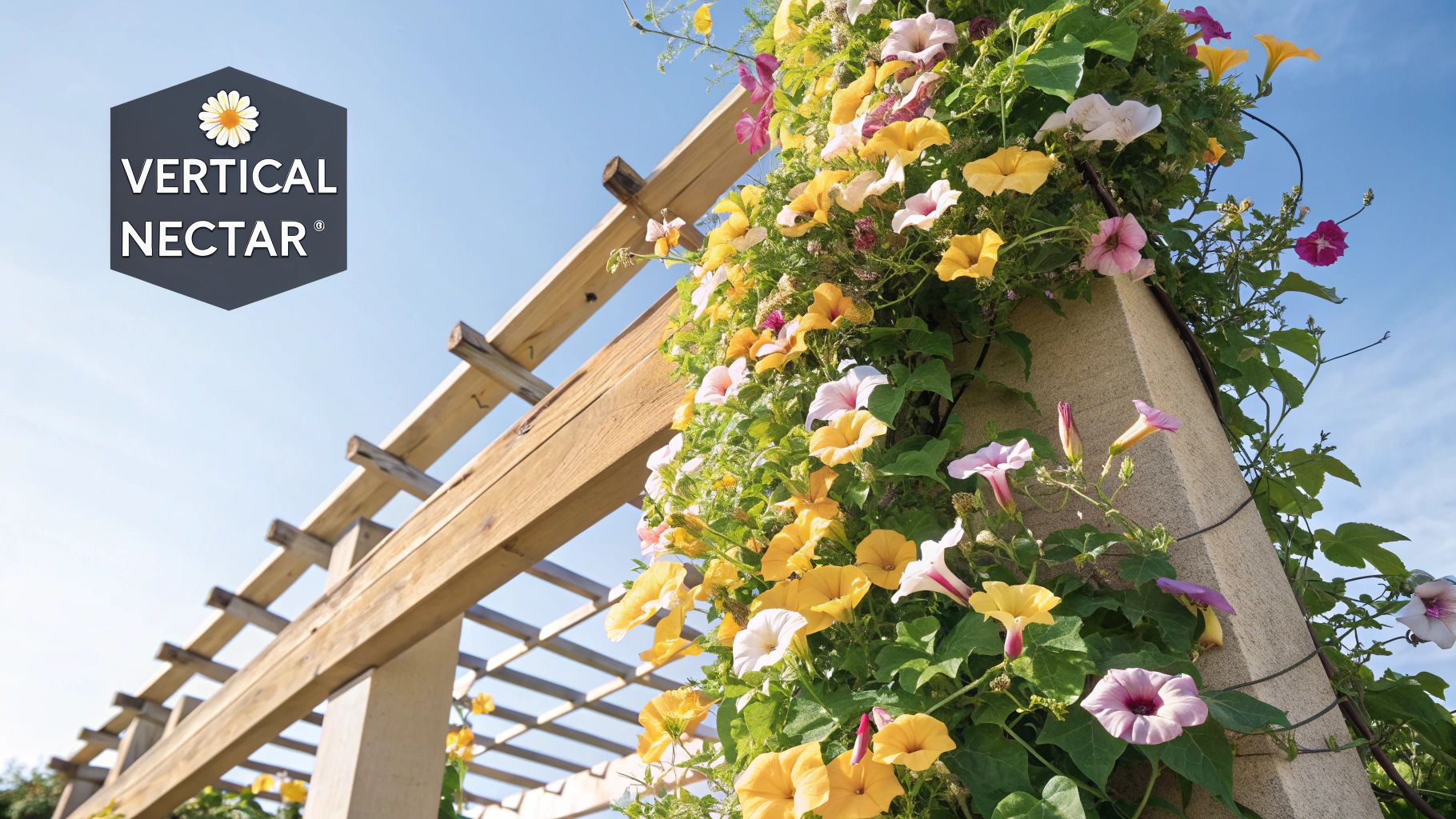
- Hardscaping Integration: Imagine your hummingbird garden framed by elegant stone pathways or a custom-built pergola draped in Coral Honeysuckle. Integrating hardscaping elements provides structure, defines spaces, and adds year-round interest to your landscape.
Investing in a professionally designed landscape ensures every element works in harmony. This holistic approach guarantees a breathtaking display for you, a feast for hummingbirds, and a sustainable outdoor space that increases your property's curb appeal for years to come.
Ready to transform your vision into a breathtaking reality? The experts at Fischer Landscaping specialize in creating custom, sustainable landscapes that thrive in the South Texas climate. Contact us today for a personalized quote and let us design and build the perfect hummingbird sanctuary for your home or commercial property.