Creating a vibrant, thriving landscape in South Texas, from San Antonio to the coastal conditions of Corpus Christi, demands plants that can handle our demanding environment. Generic big-box store options often struggle with the intense sun and specific soil types common in areas like Brownsville and Harlingen, leading to high water bills and disappointing results. The solution is rooted in our local ecology: choosing native Texas landscape plants.
These resilient species are genetically programmed to flourish here, offering exceptional drought resistance and a natural defense against local pests. By integrating them, you create a beautiful, low-maintenance garden that also supports essential pollinators. For those looking to create a beautiful yet low-maintenance outdoor space, considering elements like designing a drought-friendly rock garden can further enhance the resilience and appeal of your native landscape.
This guide details 10 exceptional native plants that provide year-round value for homeowners and commercial property managers. Let's explore the smart, sustainable choices that make a landscape authentically and beautifully Texan.
1. Texas Privet (Forestiera pubescens)
A champion among native Texas landscape plants, Texas Privet is a versatile and resilient semi-evergreen shrub. It thrives in the challenging local climate, making it a reliable choice for landscapes from San Antonio to the Rio Grande Valley.
Growth and Characteristics
Texas Privet typically grows 6 to 12 feet tall and can spread up to 8 feet wide. In early spring, it produces clusters of small, fragrant flowers that are a crucial early nectar source for bees. Following the flowers, female plants produce dark purple berries that are a favorite food for birds, adding ecological value to your property. Its dense growth habit makes it exceptionally well-suited for creating natural barriers and privacy screens.
Landscape Applications and Tips
Texas Privet's drought tolerance makes it a workhorse for both residential and commercial properties, excelling in xeriscaping projects.
- For Hedging: Plant individuals 4 to 6 feet apart to create a dense, living fence.
- Establishment: Water regularly for the first year. Once established, it requires minimal supplemental irrigation.
- Pruning: Shape the plant in late winter to maintain a desired size or form.
- Wildlife Attraction: Use it in naturalized garden areas to support local fauna.
For homeowners in Corpus Christi seeking a low-maintenance yet effective screening plant, Texas Privet is an outstanding choice that also supports local ecosystems.
2. Texas Red Oak (Quercus buckleyi)
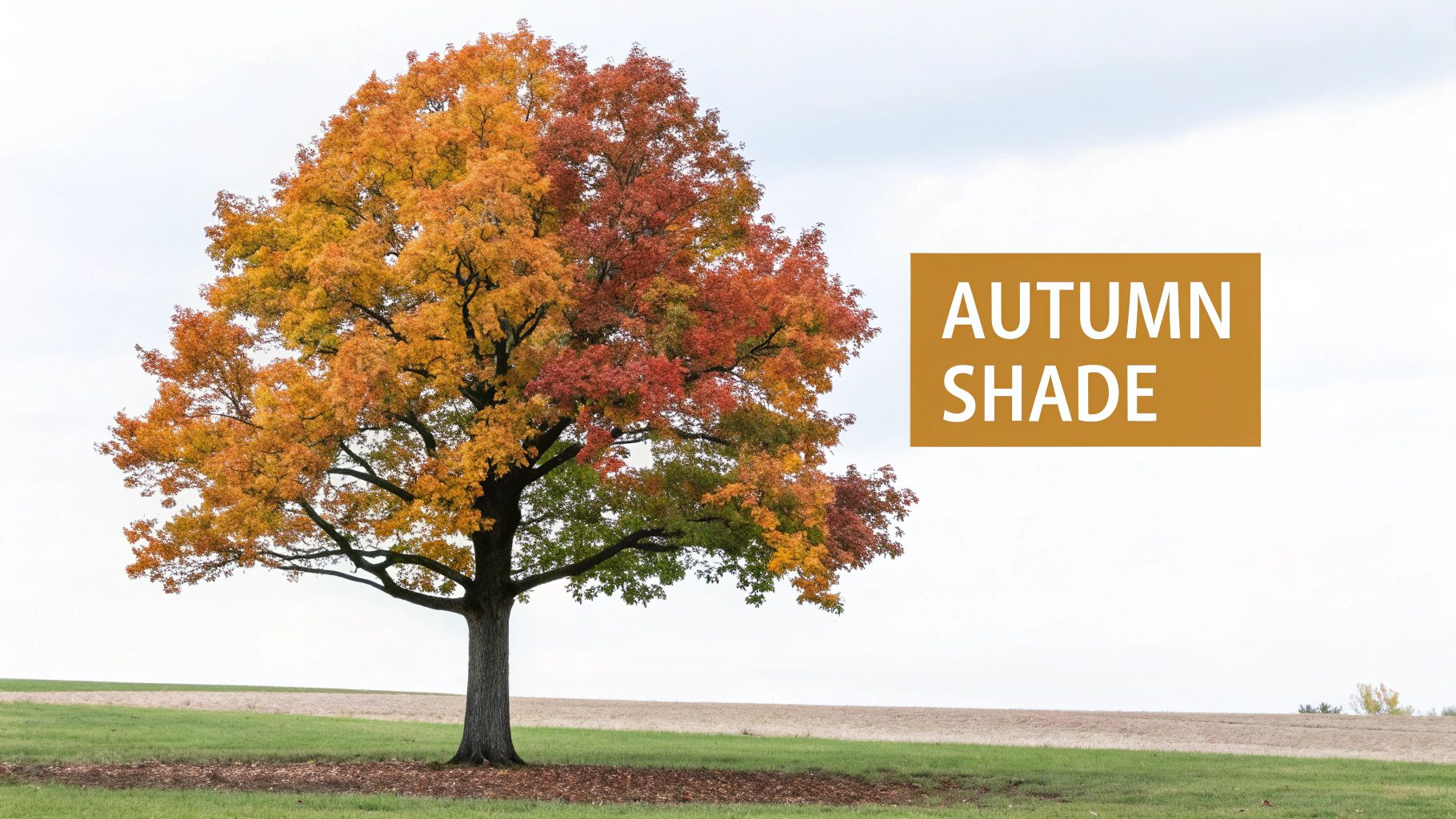
A true icon of the Texas landscape, the Texas Red Oak is a magnificent deciduous tree celebrated for its resilience and stunning seasonal beauty. As one of the most quintessential native Texas landscape plants, it offers substantial shade in the summer and a breathtaking display of brilliant red foliage in the fall, making it a stately addition to properties across South Texas.
Growth and Characteristics
The Texas Red Oak typically grows to a height of 40 to 50 feet with a similar spread, creating a broad, cooling canopy perfect for Texas summers. Its lobed leaves are a glossy green before transforming into their signature vibrant red hues. The acorns it produces are an important food source for wildlife, enhancing the ecological health of your landscape. Its strong structure makes it an ideal anchor for any large-scale landscape design.
Landscape Applications and Tips
Valued for its adaptability and drought tolerance, the Texas Red Oak is a cornerstone of enduring landscape designs. It thrives in the limestone-based soils common throughout Central and South Texas and performs best in full sun.
- For Shade: Plant it as a specimen tree in an open lawn to provide significant shade and a powerful visual focus.
- Establishment: Water deeply and regularly for the first two years, especially through the hot summers in areas like San Antonio.
- Pruning: Prune only dead or damaged limbs in late winter.
- Placement: Ensure it is planted a safe distance from foundations and driveways to accommodate its mature root system.
Adding a legacy tree to your property is a significant investment. Professional installation is key to its long-term health, which is why our expert tree installation and cleanup services ensure your Texas Red Oak gets the best possible start.
3. Esperanza (Tecoma stans)
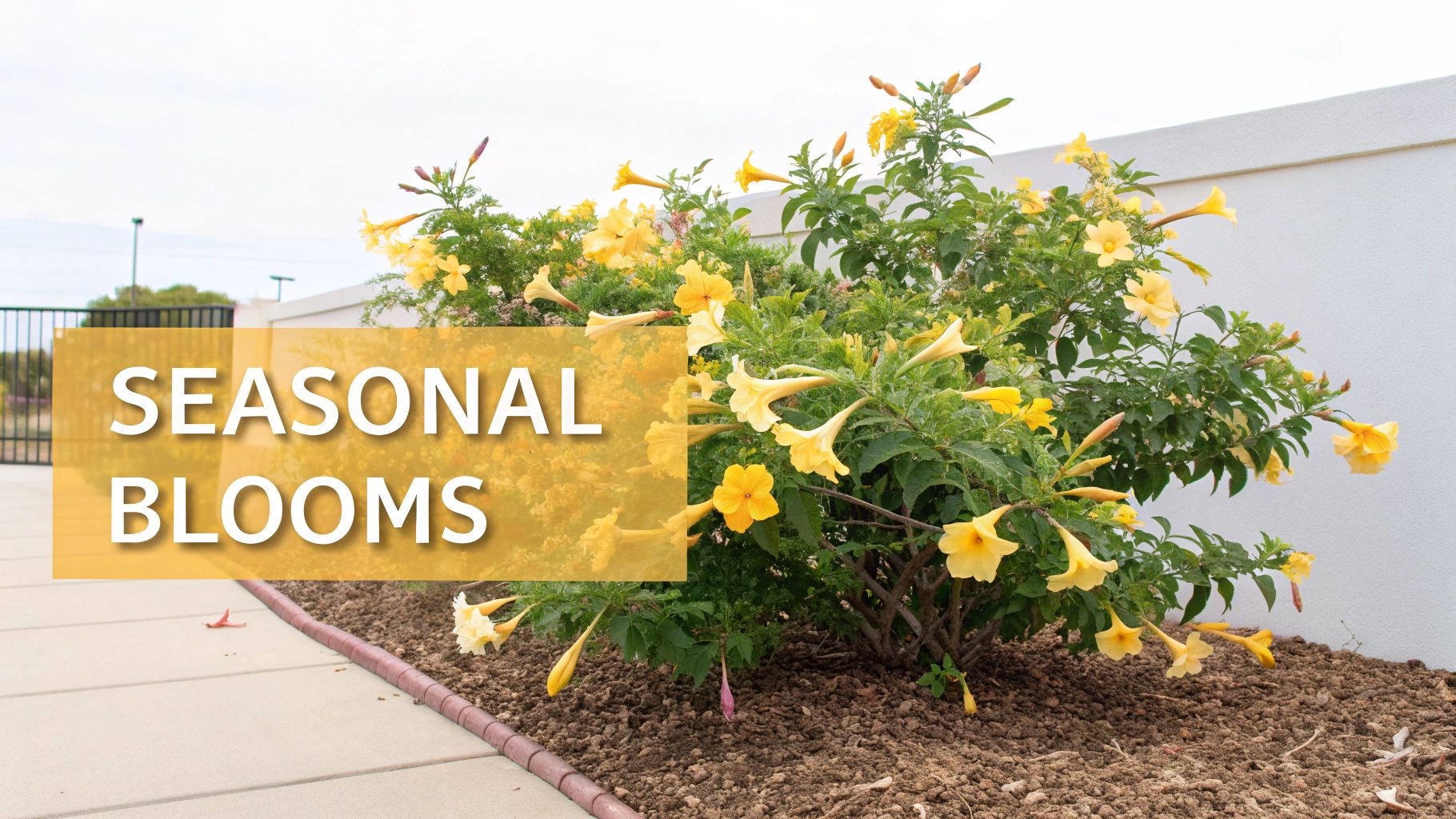
A true showstopper among native Texas landscape plants, Esperanza (Yellow Bells) brings a vibrant splash of color to any garden. This sun-loving shrub is celebrated for its stunning, trumpet-shaped golden-yellow flowers that bloom from spring until the first frost, making it a favorite for landscapes from Corpus Christi to the Rio Grande Valley.
Growth and Characteristics
Esperanza typically grows into a large shrub reaching 6 to 8 feet in height and width. Its bright green leaves provide a lush backdrop for the brilliant flower clusters, which are a powerful magnet for hummingbirds, bees, and butterflies. The plant’s rapid growth and extended blooming season provide continuous color and life to the landscape.
Landscape Applications and Tips
Esperanza’s exceptional heat and drought tolerance make it a perfect fit for xeriscaping and low-water-use gardens. It thrives in full sun and requires well-drained soil to prevent root rot.
- Planting: Plant in the spring after the last frost to allow roots to establish before summer heat.
- Drainage: Ensure the planting area has excellent drainage; amend soil if necessary.
- Watering: Water regularly during its first year. Once established, it requires minimal supplemental water.
- Pruning: Cut back hard in late winter to remove damaged stems and encourage vigorous new growth.
For property owners seeking vibrant, long-lasting color without the high maintenance, Esperanza is an excellent choice. Our professional installation ensures these native beauties thrive in your landscape from day one.
4. Agarito (Mahonia trifoliolata)
A true icon among native Texas landscape plants, Agarito is a ruggedly beautiful evergreen shrub celebrated for its unique texture and year-round appeal. It is an exceptionally tough plant that offers architectural interest, fragrant spring blooms, and valuable wildlife support, making it a cornerstone for sustainable landscapes from San Antonio to the coast.
Growth and Characteristics
Agarito typically grows to a height of 6 to 10 feet with a similar spread. Its most distinctive features are its stiff, holly-like leaflets that are prickly to the touch, providing a strong structural element. In early spring, it produces dense clusters of fragrant, bright yellow flowers that are a magnet for bees. Following the blooms, it develops tart, red berries prized by birds. Its dense and thorny nature makes it a superb choice for creating impenetrable, low-maintenance barriers.
Landscape Applications and Tips
Agarito's extreme drought and heat tolerance makes it a star performer in xeriscapes and naturalized garden designs. It thrives in full sun to partial shade and is highly adaptable to various soil types, particularly the rocky, alkaline soils common in South Texas.
- For Natural Screening: Space plants 6 to 8 feet apart to allow them to grow into a dense, informal hedge.
- Placement: Plant where its sharp spines will not interfere with high-traffic pathways.
- Establishment: Water occasionally for the first year. Once established, it requires no supplemental irrigation.
- Pruning: Minimal pruning is needed. Simply remove any dead or damaged wood as necessary.
For property managers in San Antonio or developers working on natural preservation corridors, Agarito offers a low-water, high-impact solution that provides excellent habitat and security.
5. Flame Acanthus (Anisacanthus quadrifidus var. wrightii)
A powerhouse of color for the Texas landscape, Flame Acanthus is a vibrant perennial shrub celebrated for its brilliant orange-red blooms. This heat-loving, drought-tolerant plant puts on a spectacular show from summer through fall, providing a continuous nectar source for pollinators and injecting fiery color into even the most sun-baked garden spots.
Growth and Characteristics
Flame Acanthus typically grows to a manageable 2 to 3 feet in height and width. Its defining feature is the profusion of slender, tubular flowers that emerge against its lush green foliage. These blooms are irresistible to hummingbirds and butterflies, making it a cornerstone of native pollinator gardens. As a deciduous shrub, it dies back to the ground after the first frost but reliably returns each spring.
Landscape Applications and Tips
Flame Acanthus is incredibly versatile, performing well in rock gardens, butterfly gardens, and xeriscape designs from Corpus Christi to San Antonio. Its resilience makes it ideal for low-maintenance commercial properties and residential yards, offering maximum visual impact for minimal effort.
- For Continuous Blooms: Lightly deadhead spent flowers throughout the summer to encourage a longer blooming season.
- Location: Plant in full sun with well-drained soil to ensure the best flower production.
- Watering: Water regularly during its first year. Once established, it is extremely drought-tolerant.
- Maintenance: Cut the entire plant back to a few inches from the ground in late winter to promote vigorous new growth.
For homeowners in Corpus Christi or Brownsville looking to create a vibrant, low-water garden that attracts wildlife, Flame Acanthus is an essential addition.
6. Turk's Cap (Malvaviscus arboreus var. drummondii)
A unique addition to any list of native Texas landscape plants, Turk's Cap is a striking perennial shrub celebrated for its vibrant, turban-shaped red flowers. This hardy plant provides a spectacular burst of color from summer through fall when many other plants have faded. Its resilience and appeal to wildlife make it a favorite for naturalistic gardens from the Hill Country to coastal plains.
Growth and Characteristics
Turk's Cap typically reaches a height of 3 to 4 feet, spreading to form a lush, mounding clump. Its most distinctive features are the bright red, unopened flowers that resemble a Turkish turban, which are a magnet for hummingbirds and butterflies. Following the bloom, it produces fleshy berries that provide a valuable food source for birds. Its ability to thrive in shady, moist areas where other flowers might struggle makes it a valuable problem-solver.
Landscape Applications and Tips
Turk's Cap is an excellent choice for adding reliable color and wildlife value with minimal effort. It performs well from full sun to deep shade and is highly adaptable to different soil conditions.
- For Visual Impact: Plant in groups of three or more for a stunning mass of color.
- Maintenance: Cut the plant back to the ground in late winter to encourage vigorous new growth.
- Establishment: It will establish faster and look fuller with occasional watering in its first year.
- Wildlife Gardens: It is a must-have for hummingbird gardens and wildlife corridors.
For property owners in San Antonio looking to create a low-maintenance, high-impact wildlife haven, Turk's Cap delivers season after season.
7. Texas Rose (Rosa bracteata)
A true Texas heirloom, the Texas Rose is a rugged native shrub celebrated for its resilience and charming blooms. This plant is a fantastic addition to the palette of native Texas landscape plants, prized for its ability to produce striking white to pale yellow flowers from April through June. Its hardy nature makes it a perfect fit for landscapes across Texas, from historic homesteads to modern, water-wise gardens.
Growth and Characteristics
Texas Rose typically grows 3 to 6 feet tall and equally wide, forming a dense, suckering shrub. Its deeply textured foliage provides a lush backdrop for its vibrant, fragrant flowers, which are a magnet for bees. After flowering, it produces nutritious rose hips that offer a valuable food source for birds through the fall and winter, enhancing the ecological function of your landscape. Its thorny stems make it an excellent choice for creating informal, impenetrable barriers.
Landscape Applications and Tips
The exceptional cold and drought tolerance of the Texas Rose makes it a versatile choice for challenging sites. It thrives in full sun and adapts well to a variety of soil conditions, embodying the tough, low-maintenance spirit desired for landscapes in San Antonio and beyond.
- Sucker Control: Plant where its natural tendency to spread will not interfere with other garden elements, or use root barriers.
- Mass Planting: Space individuals 4 to 5 feet apart to form a thick, flowering mass perfect for covering slopes.
- Pruning: Perform maintenance pruning in late winter to control its shape and remove old canes.
- Propagation: Easily propagate by dividing established clumps in the dormant season.
For property owners in Corpus Christi looking for a plant that offers seasonal color, supports wildlife, and requires minimal care, the Texas Rose is an excellent option.
8. Desert Marigold (Baileya multiradiata)
For landscapes demanding relentless cheerfulness with minimal care, the Desert Marigold is a standout among native Texas landscape plants. This brilliant perennial produces a profusion of bright yellow, daisy-like flowers from spring through fall. It offers a reliable splash of color in the most challenging, sun-baked environments, making it a perfect solution for xeriscapes in arid parts of South Texas.
Growth and Characteristics
Desert Marigold grows into a low-mounded clump, typically reaching 12 to 18 inches in height. Its silvery-green, woolly foliage provides a beautiful contrast to its sunny blooms and helps the plant conserve moisture. This short-lived perennial often readily self-seeds, ensuring its presence in the garden for years. Its ability to bloom almost continuously makes it a vital nectar source for bees and butterflies.
Landscape Applications and Tips
Desert Marigold's extreme drought tolerance makes it a star performer in rock gardens and native wildflower meadows. It thrives in poor, sandy, or gravelly soils where other plants fail.
- For Continuous Color: Deadhead spent blooms regularly to encourage a longer flowering period.
- Establishment: Plant in well-drained soil. Once established, it requires no supplemental water.
- Spacing: Place individuals 18 to 24 inches apart to allow for their natural mounding shape.
- Naturalization: Allow some plants to go to seed in late fall to ensure a new generation of volunteers the following spring.
For property owners in dry regions seeking vibrant, low-water solutions, Desert Marigold provides sustained performance and ecological benefits.
9. Lindheimer Muhly (Muhlenbergia lindheimeri)
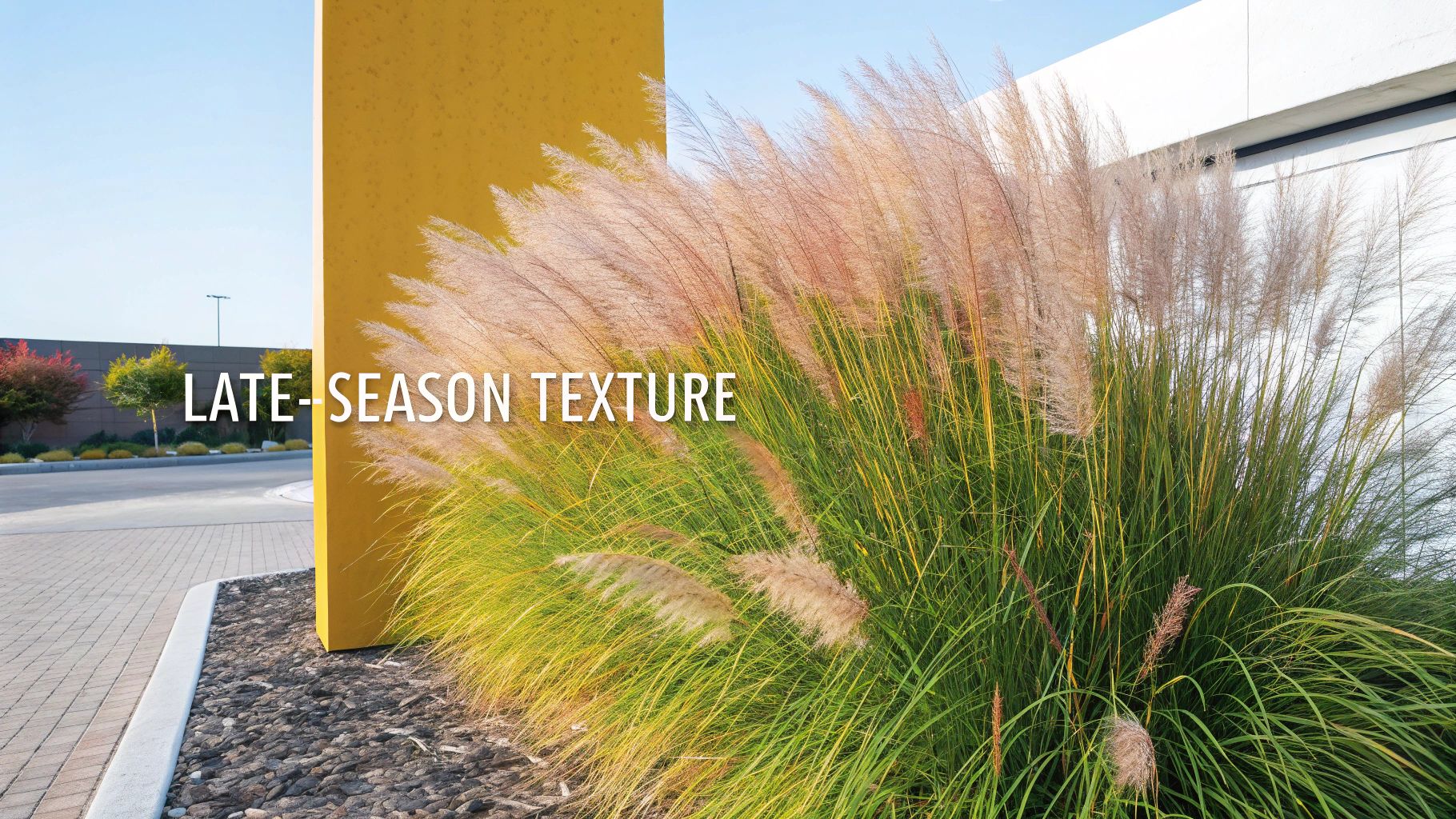
A showpiece among native Texas landscape plants, Lindheimer Muhly is a stunning bunch grass celebrated for its graceful form. Native to Central and South Texas, this ornamental grass adds texture, movement, and a soft, feathery presence to gardens, making it a favorite for landscapes in San Antonio and across the region.
Growth and Characteristics
Lindheimer Muhly typically forms a clump reaching 2 to 3 feet tall and wide, with fine, blue-green foliage. In the fall, it produces impressive, feathery flower panicles that rise up to 5 feet high, emerging with a purplish hue and fading to a beautiful silver-gray. These plumes persist through winter, providing visual interest and offering seeds and shelter for birds. Its upright, vase-shaped habit provides a striking vertical accent.
Landscape Applications and Tips
This grass is incredibly versatile, fitting perfectly into formal and naturalistic designs. Its drought tolerance and low-maintenance nature make it an ideal choice for xeriscapes and pollinator gardens. Its elegant form is a key component in many modern residential landscaping designs.
- For Visual Impact: Plant in groups of 3 to 5 to create a powerful, cohesive statement.
- Spacing: Allow 2 to 3 feet between plants for a natural, flowing appearance.
- Establishment: Plant in spring and water regularly the first year. It becomes extremely drought-tolerant once established.
- Maintenance: Cut back the foliage to about 6 inches in late winter to encourage fresh new growth.
For property owners in South Texas looking to add year-round texture and movement with minimal upkeep, Lindheimer Muhly is an exceptional choice.
10. Gregg's Salvia (Salvia greggii)
A powerhouse of color and resilience, Gregg's Salvia is one of the most popular native Texas landscape plants, celebrated for its incredibly long blooming season. This semi-evergreen shrub is a hummingbird magnet, producing a profusion of vibrant flowers from spring through the first frost, making it a garden superstar from San Antonio to Brownsville.
Growth and Characteristics
Gregg's Salvia typically reaches a manageable size of 2 to 4 feet tall and wide. Its small, aromatic leaves provide a delicate backdrop for the brilliant, tubular flowers that come in shades of red, pink, purple, and white. This continuous floral display provides a critical nectar source for hummingbirds, butterflies, and bees. Its fine texture and compact habit make it an excellent choice for adding persistent color to perennial borders.
Landscape Applications and Tips
Gregg's Salvia thrives in the harsh Texas sun and is exceptionally drought-tolerant once established, making it a cornerstone of xeriscapes and low-water gardens. It demands full sun and well-drained soil.
- For Mass Planting: Space individuals 3 to 4 feet apart for a stunning wave of continuous color.
- Establishment: Water occasionally during its first year. Once mature, it rarely needs supplemental irrigation.
- Pruning: Cut back by about one-third in late winter or early spring to encourage dense new growth.
- Wildlife Garden: A must-have for any hummingbird or pollinator garden.
For property owners in San Antonio or Corpus Christi looking for vibrant, long-lasting color with minimal maintenance, Gregg's Salvia is a fantastic choice that enhances local ecology.
Comparison of 10 Native Texas Landscape Plants
| Plant | Implementation complexity | Resource requirements | Expected outcomes | Ideal use cases | Key advantages |
|---|---|---|---|---|---|
| Texas Privet (Forestiera pubescens) | Moderate — establishment 6–12 months; occasional pruning for shape | Low water once established; tolerates poor soils; space 4–6 ft for hedges | Dense 6–12 ft semi-evergreen screen; spring fragrance; summer berries for wildlife | Hedges, screens, naturalized/xeriscape landscapes | Very drought tolerant, wildlife habitat, adaptable soils |
| Texas Red Oak (Quercus buckleyi) | High — large-tree planting and long-term management; disease vigilance | Moderate water first 2 years; deep soil and ample space (40–50 ft); long-term maintenance | Large shade tree with brilliant red fall color; long-lived; high wildlife value | Large yards, parks, long-term landscape focal points | Spectacular fall color, extensive wildlife support, longevity |
| Esperanza (Tecoma stans) | Low–Moderate — plant in spring; prune after frost | Low water; needs well-draining soil; best in warm zones (8b–11) | Prolific golden trumpet blooms from spring to frost; attracts hummingbirds and butterflies | South/coastal Texas xeriscapes, pollinator borders, color accents | Long bloom period, heat/drought tolerant, strong pollinator attraction |
| Agarito (Mahonia trifoliolata) | Low — minimal pruning; consider placement due to spines | Very low water once established; tolerates shade; space 6–8 ft | Dense 6–10 ft semi-evergreen screen; early yellow flowers; blue berries for birds | Security screening, wildlife habitat, low-water landscapes | Wildlife value, secure spiny foliage, drought tolerant |
| Flame Acanthus (Anisacanthus quadrifidus) | Low — easy to grow; deadhead to extend blooms | Extremely drought tolerant; full sun and good drainage; 2–3 ft | Bright orange-red summer–fall blooms; strong pollinator draw | Rock gardens, butterfly gardens, hot/dry borders | Heat tolerant, low cost, long flowering season |
| Turk's Cap (Malvaviscus arboreus) | Low — spreads by rhizomes; cut back in late winter | Low water after established; tolerates various soils; 3–4 ft | Late-summer to fall red blooms; dark berries; late-season wildlife nectar | Hummingbird gardens, rain gardens, wildlife corridors | Late-season blooms, low maintenance, unique floral form |
| Texas Rose (Rosa bracteata) | Moderate — prune annually; manage suckering/rhizomes | Low water; tolerates poor/sandy soils; thorny handling; space 4–5 ft | Spring white/yellow blooms; persistent hips for winter interest and wildlife | Coastal restorations, historic landscapes, wildlife corridors | Hardy statewide, fragrant flowers, winter fruit for wildlife |
| Desert Marigold (Baileya multiradiata) | Low — easy but requires excellent drainage; deadhead to prolong bloom | Very low water; prefers sandy/poor soils; 12–18 in height | Extended yellow blooms Apr–Nov; continuous color; pollinator-friendly | West Texas xeriscapes, rock gardens, wildflower meadows | Very long bloom period, extreme drought tolerance, low-growing |
| Lindheimer Muhly (Muhlenbergia lindheimeri) | Moderate — 2–3 year establishment; annual spring cleanup | Low water after year 2; full sun; space 2–3 ft; clumping habit | Fine-textured foliage with showy fall purple panicles; winter interest | Native grass plantings, massed borders, prairie/pollinator corridors | Late-season display, drought tolerant, long-lived |
| Gregg's Salvia (Salvia greggii) | Low — easy cultivation; prune lightly and divide periodically | Extremely drought tolerant; excellent drainage; full sun; space 3–4 ft | Long bloom Apr–Nov in multiple colors; strong hummingbird/butterfly attractor | Hummingbird gardens, xeriscapes, rocky or poor soils | Very long bloom period, color variety, drought hardy |
Bring Your Native Texas Landscape to Life with Professional Design
Embracing the rugged beauty of native Texas landscape plants is the first step toward creating a sustainable, vibrant, and low-maintenance outdoor environment. However, choosing the right plants is only half the battle. The true art lies in weaving these individual elements into a harmonious and functional design that elevates your property's value.
From Plant Selection to a Cohesive Vision
A successful native landscape requires a deep understanding of:
- Strategic Placement: Positioning plants like Esperanza to maximize sun exposure while using the shade of a Texas Privet to protect underplantings.
- Layering and Texture: Combining the bold foliage of Turk's Cap with the fine texture of Lindheimer Muhly to create visual depth and year-round interest.
- Site Preparation: A thriving garden begins with removing invasive species and amending the soil. For larger projects, understanding practical logistics, such as appropriate dumpster sizes for yard cleanouts, can streamline preparation.
- Integrated Solutions: An exceptional landscape integrates plant life with functional hardscaping, efficient irrigation systems, and dramatic landscape lighting.
Partnering with Experts for Lasting Results
Creating a landscape that thrives in Harlingen's heat or Brownsville's humidity requires local expertise. A professional design team considers soil composition, water flow, and your property's unique microclimate to ensure every plant is set up for success. By partnering with specialists, you transform a simple list of native Texas landscape plants into a living ecosystem that conserves water, supports pollinators, and provides a stunning backdrop for your home or business. This professional approach ensures your investment flourishes, delivering aesthetic and financial returns for years to come.
Ready to transform your vision into a breathtaking reality? The experts at Fischer Landscaping specialize in creating custom landscape designs that harness the power of native Texas plants for clients across South Texas. Contact us today for a consultation and let us build an outdoor space that is as resilient as it is beautiful.