
Imagine a vibrant, thriving landscape that not only withstands the intense South Texas heat but flourishes with minimal water and maintenance. This isn't a far-off dream; it's the reality of designing with the region’s indigenous flora. For homeowners, property managers, and businesses in areas like Corpus Christi, San Antonio, and the Rio Grande Valley, embracing local botanical heritage is the smartest way to achieve a beautiful, sustainable, and cost-effective outdoor space. These plants are genetically programmed to thrive in our unique soils, resist local pests, and support vital pollinators.
This guide explores six standout native plants of south texas, showcasing how their unique characteristics can solve common landscaping challenges. From creating shady retreats with durable trees to providing year-round color with drought-tolerant shrubs, you will discover practical solutions for a resilient landscape. Learn how incorporating these species can elevate your property's value while reducing maintenance demands and your environmental footprint. A professionally designed native landscape is an investment in both beauty and efficiency, perfectly suited for the challenging climate from Brownsville to Harlingen and beyond. Discover how the experts at Fischer Landscaping can transform your vision into a stunning, self-sufficient reality.
1. Turk's Cap (Malvaviscus arboreus var. drummondii)
A standout among the native plants of South Texas, Turk's Cap is a versatile and resilient semi-woody shrub highly valued for its unique blooms and adaptability. Its distinctive bright red, turban-shaped flowers, which never fully open, provide a continuous splash of color from early summer until the first frost. This prolonged blooming period makes it an essential food source for local wildlife when other plants have ceased flowering.
Landscape Use and Benefits
Turk's Cap is an excellent choice for shaded or partially shaded areas where other flowering plants might struggle. It thrives as an understory plant beneath the canopy of larger trees, making it a perfect solution for adding life to challenging spots in gardens from San Antonio to Harlingen. Its dense, mounding growth habit also makes it suitable for creating informal hedges or filling in large garden beds.
One of its most significant benefits is its value to wildlife. The vibrant red flowers are a magnet for pollinators.
- Hummingbirds: The tubular shape of the flowers is perfectly suited for hummingbirds, which are frequent visitors. This makes Turk's Cap a cornerstone plant for any wildlife-centric landscape design. For more ideas, you can explore other plants for hummingbirds in Texas.
- Butterflies & Bees: A variety of butterflies and bees are also drawn to its nectar-rich blossoms.
- Birds & Mammals: In the fall, the plant produces small, edible red fruits that are enjoyed by birds and other small mammals, providing an additional food source.
This summary highlights the key attributes that make Turk's Cap a valuable addition to any South Texas landscape.
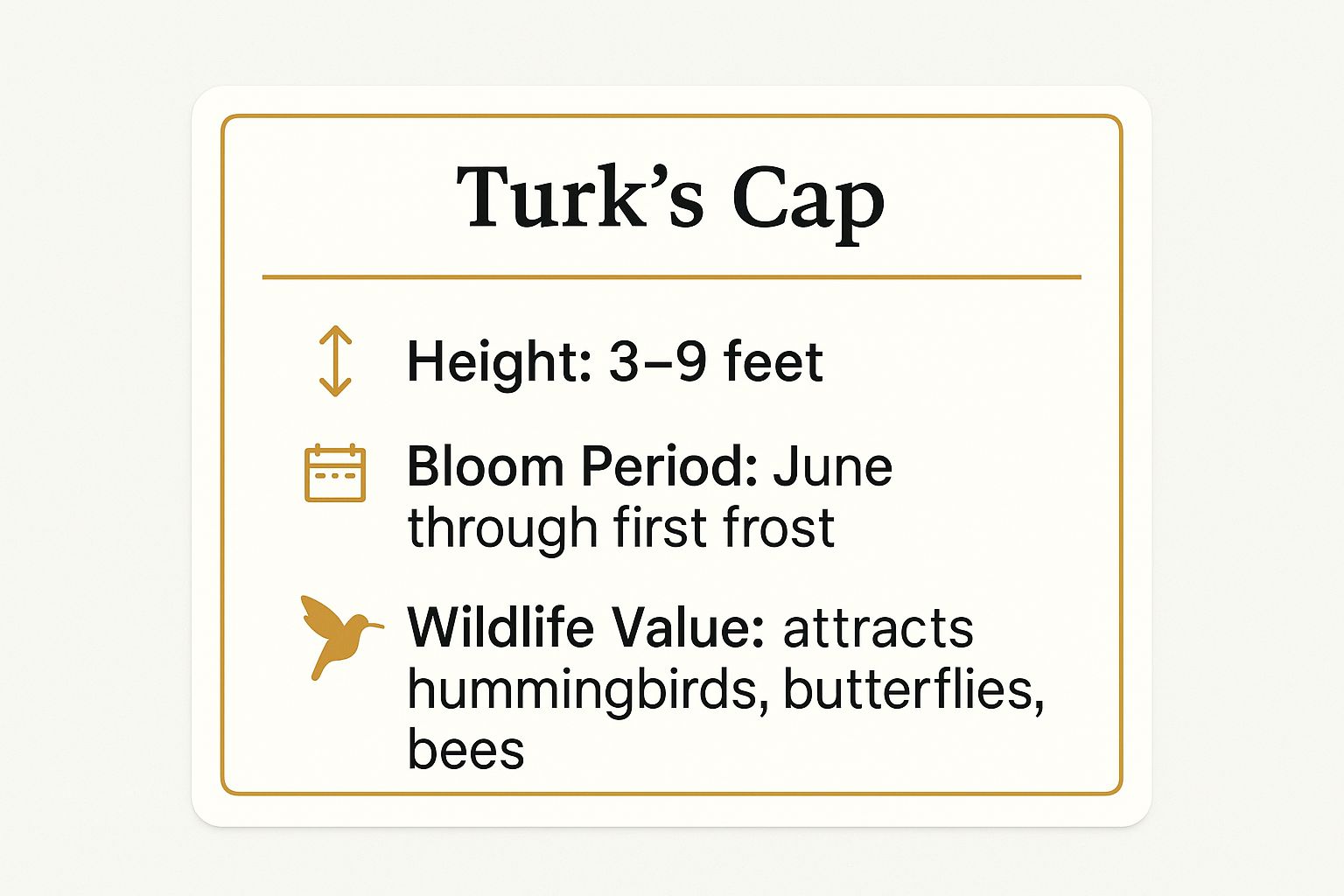
The data clearly shows that Turk's Cap offers a long bloom period and significant wildlife value, all within a moderately sized shrub that fits well in most residential and commercial landscapes.
Planting and Care
For optimal performance, plant Turk's Cap in a location that receives partial shade, especially protection from the harsh afternoon sun common in South Texas. While it is drought-tolerant once established, providing supplemental water during extreme dry spells will ensure vigorous growth and abundant flowering. To maintain a desired size and shape, prune the plant back in late winter before new growth emerges. A professional landscape service like Fischer Landscaping can help site and install these plants correctly to ensure your garden thrives.
2. Fragrant Sumac (Rhus aromatica)
A true workhorse among the native plants of South Texas, Fragrant Sumac is a low-growing, spreading shrub celebrated for its rugged durability and multi-season interest. This hardy plant produces clusters of small, fuzzy yellow flowers in early spring before its leaves emerge, providing an early nectar source for pollinators. It is particularly valued for its exceptional drought tolerance, vibrant fall color, and impressive ability to stabilize soil on challenging slopes.
Landscape Use and Benefits
Fragrant Sumac is a premier choice for difficult, sunny, and dry areas where other plants might fail. It thrives in full sun and well-drained soil, making it an ideal groundcover for xeriscape gardens from San Antonio down to Brownsville. Its dense, suckering nature allows it to form thickets that are perfect for preventing erosion on highway embankments and residential slopes. The leaves also emit a pleasant, citrus-like fragrance when crushed, adding a sensory element to the garden.
Its greatest landscape benefit is its functionality combined with its wildlife value.
- Erosion Control: Its robust, spreading root system makes it one of the best native choices for holding soil on steep banks and slopes. It is often combined with native grasses in large-scale stabilization projects.
- Pollinators & Bees: The early spring flowers are a critical food source for bees and other pollinators emerging from winter dormancy.
- Birds & Wildlife: In late summer, female plants produce fuzzy red berries that persist into winter, providing a vital food source for birds and small mammals. Its dense growth also offers excellent cover for wildlife.
This combination of utility and ecological support makes Fragrant Sumac an indispensable plant for resilient South Texas landscapes.
Planting and Care
For best results, plant Fragrant Sumac in a location that receives full sun to light shade. It is highly adaptable to various soil types, including clay, as long as the drainage is good. Once established, it is extremely drought-tolerant and requires very little supplemental water. To encourage a dense hedge, space plants 6 to 8 feet apart. It does spread by suckers, which should be pruned back regularly to control its size and maintain a tidy appearance. A professional landscape service can help design and implement effective erosion control solutions using this and other native plants to protect your property.
3. Texas Sage (Leucophyllum frutescens)
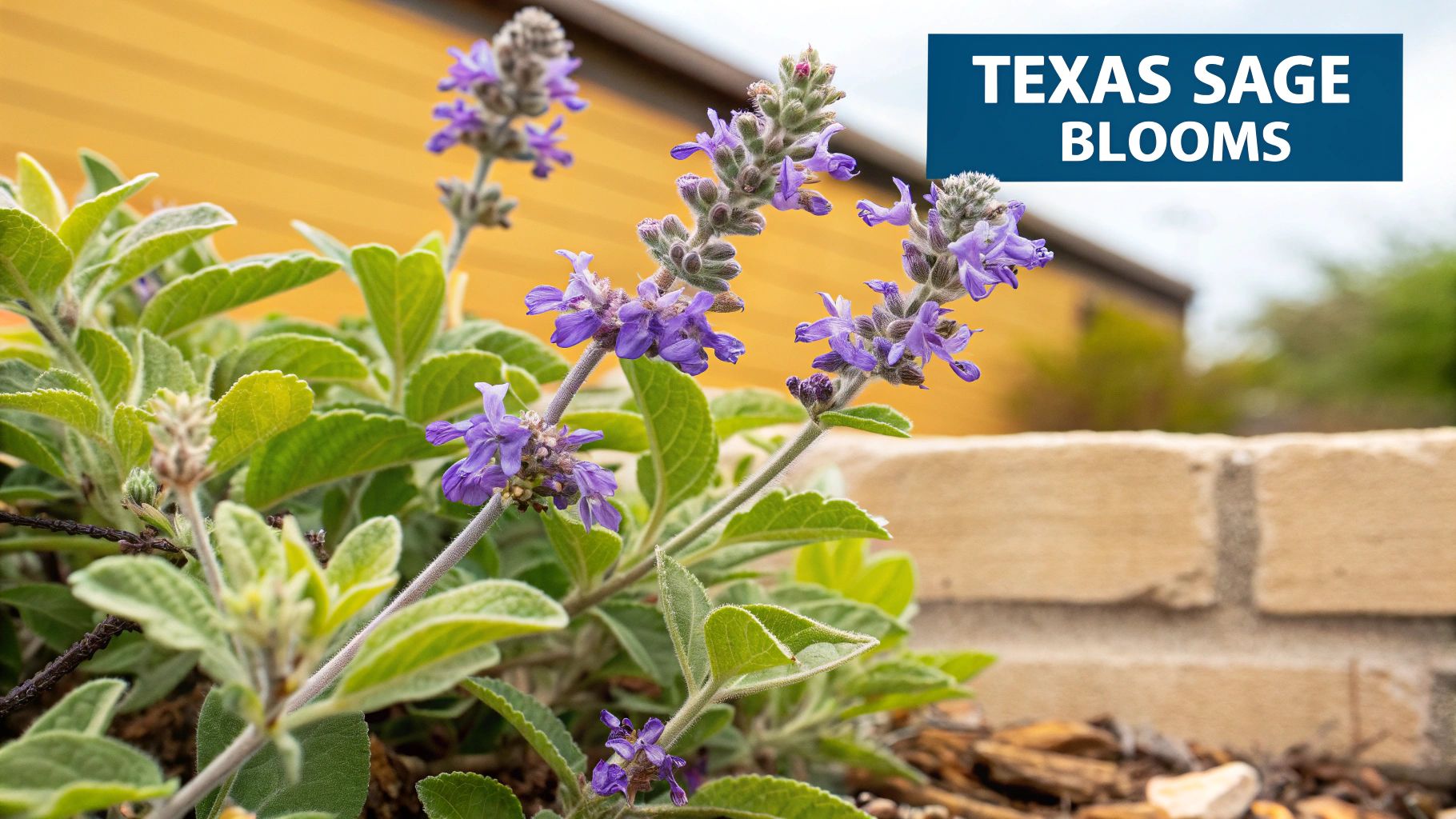
An iconic symbol of resilience among the native plants of South Texas, Texas Sage is a celebrated shrub known for its stunning beauty and remarkable hardiness. Often called Barometer Bush or Cenizo, its silvery-gray foliage provides striking year-round texture, but it truly shines when it bursts into a profusion of purple, lavender, or pink flowers. This dramatic bloom is famously triggered by changes in humidity, often appearing just after summer rains and giving the landscape an unexpected and breathtaking splash of color.
Landscape Use and Benefits
Texas Sage is a cornerstone of xeriscape design, making it an excellent choice for sunny, dry areas where other plants would falter. Its ability to thrive in the intense heat from Corpus Christi to San Antonio makes it a low-maintenance favorite for both residential and commercial properties. Its dense, rounded form works well as a specimen plant, an informal hedge, or as part of a mass planting along driveways and property lines.
The plant's value extends beyond its good looks, offering significant benefits to local ecosystems.
- Drought Tolerance: Once established, Texas Sage requires virtually no supplemental watering, making it a perfect fit for water-conscious landscaping and reducing long-term maintenance costs.
- Pollinator Support: The vibrant, nectar-rich flowers are a vital food source for bees, butterflies, and other native pollinators, creating a hub of activity in the garden.
- Deer Resistance: Its semi-arid origins have made it naturally unpalatable to deer, a crucial attribute for landscapes in areas with high deer populations.
This combination of aesthetic appeal and rugged self-sufficiency solidifies Texas Sage's position as a premier choice for any South Texas landscape design.
Planting and Care
For the most prolific flowering and healthiest growth, plant Texas Sage in a location that receives full, direct sunlight. Excellent drainage is critical; this plant will not tolerate "wet feet" or heavy clay soils that retain moisture. It is exceptionally drought-tolerant after its first year and overwatering can be detrimental. Prune lightly after a bloom cycle to shape the plant and encourage denser growth, but avoid heavy shearing, which can ruin its natural form. A professional landscape installation from a team like Fischer Landscaping ensures it is placed in an ideal location with the right soil conditions, setting it up for years of beautiful, low-effort performance.
4. Flame Leaf Sumac (Rhus lanceolata)
A true showstopper among the native plants of South Texas, Flame Leaf Sumac is a small tree or large shrub celebrated for delivering some of the most vibrant fall color in the region. This highly adaptable plant offers year-round interest, starting with clusters of small, greenish-white flowers in summer, followed by fuzzy red berries that persist into winter. Its brilliant autumn foliage, ranging from fiery orange to deep scarlet, provides a spectacular seasonal display that rivals anything found in northern climates.
Landscape Use and Benefits
Flame Leaf Sumac is an outstanding choice for landscapes needing a resilient, medium-sized tree that offers significant seasonal appeal. It thrives in full sun and a wide range of soil types, making it a reliable performer in challenging urban and suburban settings from the Texas Hill Country to the Rio Grande Valley. Its multi-trunked, open structure allows sunlight to filter through, making it an excellent canopy tree for an understory of smaller native perennials.
One of its greatest assets is its dual value for both aesthetics and wildlife support.
- Birds: The clusters of red berries that appear in late summer and fall are a critical food source for numerous bird species, including northern cardinals and mockingbirds, providing sustenance through the lean winter months.
- Pollinators: While not overtly showy, its summer blooms attract a variety of bees and other beneficial insects, contributing to a healthy garden ecosystem.
- Fall Color: Its primary ornamental feature is its stunning fall foliage. The brilliant red and orange leaves create a powerful visual impact, making it an ideal specimen tree or a beautiful addition to a naturalistic planting border.
This combination of toughness, wildlife value, and breathtaking color makes Flame Leaf Sumac a superior choice for any South Texas landscape design seeking both beauty and function.
Planting and Care
For best results, plant Flame Leaf Sumac in a location with full sun to light shade and well-drained soil. While extremely drought-tolerant once established, providing occasional deep watering during its first year and during prolonged dry spells will encourage a strong root system and more vibrant fall color. It tends to produce suckers from its base; these should be removed annually if you wish to maintain a more classic tree-like form. To ensure proper placement and long-term health, consulting a professional landscape service is a wise investment. They can help select the perfect spot where it has room to mature without crowding structures.
5. Texas Mountain Laurel (Dermatophyllum secundiflorum)
A true icon among the native plants of South Texas, the Texas Mountain Laurel is a slow-growing evergreen prized for its spectacular display of fragrant spring flowers. This small tree or large shrub produces dense, drooping clusters of vibrant purple blossoms that emit a powerful, sweet scent often compared to grape Kool-Aid. Its glossy, dark green compound leaves provide year-round texture, making it a landscape standout even when not in bloom.
Landscape Use and Benefits
Texas Mountain Laurel is an outstanding choice for a specimen tree or as a foundational anchor in a water-wise garden. Its slow, deliberate growth culminates in a dense, sculptural form that adds architectural interest to landscapes from Corpus Christi to San Antonio. It is perfectly suited for sunny, well-drained locations and excels in rock gardens or xeriscaped areas where its extreme drought tolerance is a major asset.
One of its greatest benefits is its stunning sensory appeal and low maintenance needs once established. The unforgettable fragrance is a major draw for both people and pollinators.
- Bees & Butterflies: The vibrant, nectar-rich flowers are a critical early-season food source for native bees, honeybees, and various butterfly species, kickstarting the pollinator season.
- Aesthetic Value: Its evergreen nature provides year-round structure and screening, while the spring flower show is a breathtaking event that can be the highlight of any garden.
- Drought Resistance: As a quintessential South Texas native, it is exceptionally adapted to heat and drought, requiring minimal supplemental water after its first few years. This makes it an ideal choice for sustainable, low-water landscapes.
The combination of its beauty, resilience, and wildlife value makes the Texas Mountain Laurel a long-term investment in the health and appeal of any South Texas property.
Planting and Care
For best results, plant Texas Mountain Laurel in a location that receives full sun and has excellent drainage; it will not tolerate "wet feet" or heavy clay soils. Amending the soil with decomposed granite or sand can improve drainage in challenging sites. Be patient, as its growth is notoriously slow, but the long-term reward is a hardy, long-lived, and beautiful tree. The seed pods contain bright red, highly toxic seeds, so it is wise to remove them if small children or pets will be in the area. A professional landscape service can help identify the ideal location on your property to ensure this specimen tree thrives for decades.
6. Agarito (Mahonia trifoliolata)
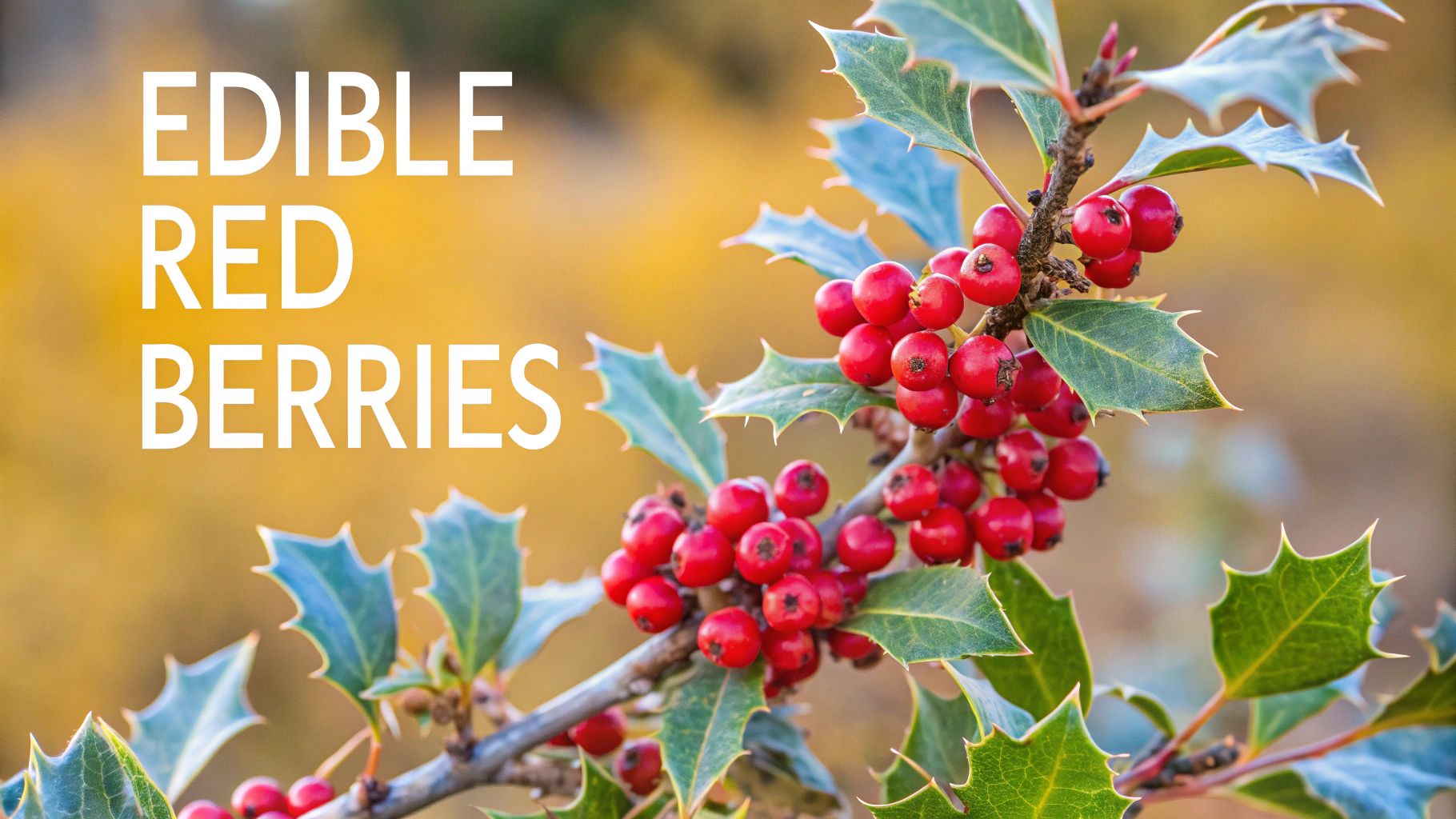
An iconic evergreen among the native plants of South Texas, Agarito is a rugged and spiny shrub celebrated for its hardiness and multi-season appeal. In late winter or early spring, it bursts forth with clusters of fragrant, bright yellow flowers, offering one of the first nectar sources of the year for local pollinators. These blooms are followed by tart, bright red berries in late spring and early summer, adding both ornamental value and an edible harvest.
Landscape Use and Benefits
Agarito's extreme drought tolerance and dense, thorny structure make it a highly functional plant for challenging South Texas landscapes from the Edwards Plateau to Brownsville. Its holly-like, grayish-green leaves provide year-round texture and color. It thrives in full sun and well-drained soils, making it an ideal candidate for xeriscaping projects where water conservation is a priority. For more information on creating a water-wise garden, you can explore the basics of xeriscaping. Its dense, spiny nature also makes it an excellent choice for creating natural security barriers or impenetrable hedges along property lines.
This shrub offers significant benefits for both homeowners and local fauna, serving multiple purposes in a landscape design.
- Wildlife Haven: The early spring flowers are vital for bees and other insects, while the berries are a prized food source for birds and small mammals. Its dense, protective branches offer excellent cover and nesting sites for birds.
- Edible Landscaping: The tart berries are a traditional favorite for making delicious jellies, syrups, and wines, making Agarito a staple in edible and permaculture-focused gardens.
- Low Maintenance: Once established, Agarito requires minimal water and care, embodying the resilience needed to thrive in the South Texas climate.
This combination of utility and beauty makes Agarito a valuable and sustainable choice for both residential and commercial properties.
Planting and Care
For best results, plant Agarito in a location that receives full to partial sun. It is adaptable to various soil types but performs best in well-drained rocky or sandy soils. Due to its sharp, spiny leaves, it is wise to plant it away from high-traffic walkways and play areas. When handling or pruning, always wear heavy-duty gloves and protective clothing to avoid injury. Pruning is generally not required unless you wish to shape the plant or manage its size. A professional landscaping team can help strategically place Agarito to maximize its benefits while ensuring safety and functionality in your outdoor space.
Key Traits Comparison of 6 South Texas Native Plants
| Plant Name | Implementation Complexity | Resource Requirements | Expected Outcomes | Ideal Use Cases | Key Advantages |
|---|---|---|---|---|---|
| Turk's Cap | Low (needs pruning for shape) | Minimal water once established; partial shade preferred | Continuous summer-fall blooms; attracts pollinators; edible fruits | Shade gardens, wildlife support, ornamental | Drought tolerant; thrives in shade; low maintenance; wildlife friendly |
| Fragrant Sumac | Moderate (sucker control needed) | Minimal water; adaptable to various soils | Early spring flowers; fall color; erosion control | Slope stabilization, xeriscaping, hedges | Drought/heat tolerant; erosion control; brilliant fall color |
| Texas Sage | Low (low maintenance post-establishment) | Very low water; full sun required | Mass flowering after rains; evergreen structure | Xeriscape, low-water gardens, desert landscapes | Extremely drought tolerant; deer resistant; attracts pollinators |
| Flame Leaf Sumac | Moderate (sucker management needed) | Low water once established; adaptable soils | Spectacular fall color; bird habitat; fast growth | Urban landscapes, small shade tree, beautification | Outstanding fall color; drought tolerant; adapts to urban conditions |
| Texas Mountain Laurel | Moderate (slow growth, careful establishment) | Low water once mature; excellent drainage | Fragrant purple blooms; long-lived ornamental tree | Specimen trees, fragrance gardens, xeriscapes | Unique fragrance; drought tolerant; long lifespan; deer resistant |
| Agarito | Moderate (thorny, safety considerations) | Minimal water; thrives in poor soils | Early spring fragrant flowers; edible berries | Edible landscaping, security barriers, wildlife gardens | Edible fruit; wildlife value; drought tolerant; natural security |
Bring Your South Texas Landscape to Life with Expert Design
Embracing the native plants of South Texas is more than a horticultural choice; it's a strategic investment in a landscape built for resilience, beauty, and ecological harmony. Throughout this guide, we've explored the unique characteristics of standout species like the vibrant Turk's Cap, the hardy Texas Sage, and the iconic Texas Mountain Laurel. Each plant offers a piece of the puzzle for creating a landscape that thrives in the distinct climate of regions from San Antonio to Brownsville.
These plants demonstrate a clear path toward sustainability. By selecting species naturally adapted to local soil and rainfall patterns, you significantly reduce the need for supplemental watering, chemical fertilizers, and intensive maintenance. This not only conserves precious resources but also saves you time and money, making your landscape a source of enjoyment rather than a constant chore. The result is an outdoor space that is both beautiful and practical.
From Plant Selection to a Cohesive Masterpiece
Choosing the right plants is a crucial first step, but integrating them into a unified and functional design is what elevates a simple garden into a breathtaking outdoor living area. The true potential of your property is unlocked when these native selections are thoughtfully combined with professional design and construction.
Imagine the deep greens of Agarito providing year-round structure against a custom-built stone patio, or the fiery autumn colors of Flame Leaf Sumac highlighted by strategic outdoor lighting. This is where plant knowledge meets landscape architecture.
A successful design from Fischer Landscaping considers:
- Strategic Placement: Arranging plants based on their mature size, sun exposure needs, and seasonal interest to create layers, texture, and continuous color.
- Functional Hardscaping: Integrating pathways, retaining walls, and patios that complement the natural aesthetic and improve usability. A well-designed hardscape provides the structural backbone for the softscape.
- Efficient Irrigation: Designing a smart irrigation system that delivers water directly to the root zones of native plants, only when necessary, to ensure they establish strong roots and flourish without waste.
- Long-Term Vision: Planning for how the landscape will grow and mature over time, ensuring it remains balanced and beautiful for years to come.
By partnering with a team that understands the local environment in Corpus Christi and Harlingen, you move beyond just planting. You are creating a cohesive, professionally executed landscape that enhances your property's value and curb appeal. This holistic approach ensures every element works together, from the foundation of the soil to the placement of the final plant.
Ready to transform your vision into a stunning reality? The experts at Fischer Landscaping specialize in creating beautiful, sustainable landscapes using the native plants of South Texas. Contact us today for a professional consultation and quote to design an outdoor space that is built to last.