Landscaping with Texas native plants is one of the smartest investments you can make for your South Texas property. It’s a practical solution that pays you back by slashing water usage, minimizing maintenance, and boosting your property's curb appeal and value. These resilient plants are purpose-built for our climate, meaning your landscape will look incredible through blistering heat and drought with surprisingly little effort.
Why Native Plants Are a Smart Investment for South Texas Properties
Let's face it: keeping a traditional, water-hungry landscape green in South Texas can feel like a full-time job. For homeowners and property managers in Corpus Christi, San Antonio, and the Rio Grande Valley, the dream of a beautiful yard often comes with the harsh reality of high water bills and endless weekend chores.
This is where landscaping with Texas native plants completely changes the equation.
Choosing plants that belong here isn't just a gardening trend; it's a strategic business and property management decision. These species have spent thousands of years adapting to our unique climate, from the coastal humidity of Brownsville to the dry inland heat of San Antonio. That built-in resilience translates directly into tangible benefits for you.
Lower Costs and Less Maintenance
The first thing you'll notice is the drop in your water bill. Once established, native plants require significantly less supplemental water, which is a huge advantage in our drought-prone state. In fact, switching to native species can dramatically reduce your outdoor water consumption, which for many households accounts for up to 50% of their total water use.
This infographic paints a clear picture of how investing in a native landscape pays off.

As the image shows, a professionally designed native landscape doesn't just reduce your monthly bills—it also enhances curb appeal and adds long-term value to your property.
The savings don't stop with water. You'll also spend far less time and money on fertilizers and pesticides. Native plants are adapted to our local soils, creating a balanced ecosystem that largely takes care of itself. That means more time enjoying your outdoor space and less time working in it.
A common myth is that a native landscape means a yard full of rocks and cacti. The reality couldn't be more different—it’s a vibrant, textured garden alive with colorful flowers, elegant grasses, and tough shrubs that look fantastic all year.
At Fischer Landscaping, we specialize in creating custom native plant designs that are both stunning and sensible. We skip the cookie-cutter approach to build landscapes that fit your personal style while honoring our South Texas environment. Exploring drought-resistant lawn alternatives can open your eyes to even more sustainable options. By putting the right plants in the right places, our expert team creates beautiful, resilient outdoor spaces that truly last.
Choosing the Right Plants for Your South Texas Landscape
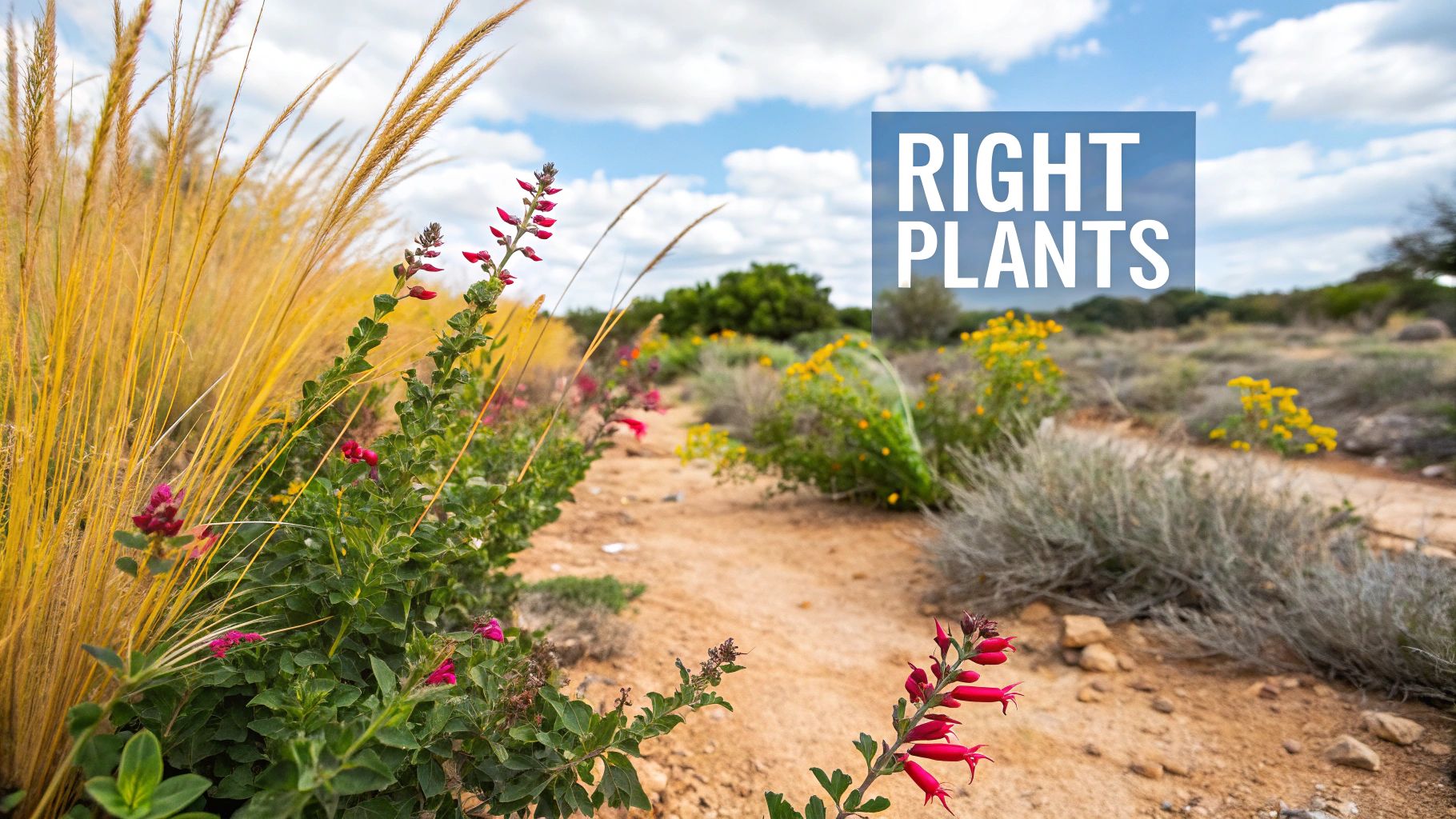
The secret to a thriving native garden isn't just picking pretty plants; it’s about making smart, strategic choices for your specific property. A successful landscape is a planned one, where every plant has a purpose and is set up for success from day one. This means getting beyond a simple list of favorites and starting to think like a landscape designer.
Every property is different. You might be working with the dense clay soils common around San Antonio or the sandy loam found closer to Corpus Christi. The amount of sun an area gets, how water drains after a downpour, and your yard's unique microclimate all play a huge role. Ignoring these factors is a recipe for a high-maintenance garden. Aligning your plant choices with your site’s conditions, on the other hand, is the foundation of a beautiful, low-maintenance landscape.
Selecting Plants by Function to Create a Cohesive Design
A common mistake is choosing plants based only on looks, which often leads to a random collection of plants that don't work together. A better, more professional approach is to group plants by their function to build a design that feels cohesive and practical. This ensures your landscape has structure, color, and texture all year long.
-
Vibrant Perennials for Seasonal Color: These are the showstoppers that bring your garden to life. Think of Turk’s Cap with its brilliant red flowers that hummingbirds can't resist, or Black-Eyed Susans for a splash of cheerful yellow. Perennials provide a dynamic display that changes with the seasons.
-
Hardy Shrubs for Structure: Shrubs are the backbone of your garden, providing year-round presence and definition. Texas Sage (Cenizo) is a classic choice for its silvery foliage and bursts of purple flowers after rain, while American Beautyberry offers stunning clusters of purple berries in the fall.
-
Graceful Grasses for Texture and Movement: Ornamental grasses add a soft, natural feel. The airy, pink plumes of Gulf Muhly catch the light beautifully, creating a breathtaking effect, especially when planted in masses.
Creating a Resilient and Beautiful South Texas Garden
When you combine these functional groups, you build a landscape that feels intentional and complete. Imagine pairing the sturdy, silver form of a Texas Sage with the delicate movement of Gulf Muhly and the seasonal pop of a Turk's Cap. Suddenly you have a layered, visually interesting garden bed. This is the heart of effective residential landscaping—making sure every element works together.
Texas is home to an extraordinary diversity of native plants, with more than 5,000 species found across its varied ecosystems. The prickly pear cactus, for example, not only offers striking ornamental value but also serves as a vital nectar source for native pollinators.
A professionally designed native landscape looks intentional, not accidental. By selecting plants that complement each other in size, texture, and function, you create a beautiful and resilient South Texas garden that stands the test of time.
To help you get started, here is a list of reliable native plants that perform beautifully in South Texas landscapes, from Harlingen and Brownsville up to Corpus Christi.
Top Native Plant Picks for South Texas Landscapes
| Plant Type | Plant Name | Key Features | Sun Needs | Water Needs |
|---|---|---|---|---|
| Perennial | Turk’s Cap | Red, hibiscus-like flowers; attracts hummingbirds. | Part Shade | Low |
| Perennial | Black-Eyed Susan | Cheerful, yellow daisy-like flowers; blooms all summer. | Full Sun | Low to Medium |
| Shrub | Texas Sage (Cenizo) | Silvery foliage; purple blooms after rain. Drought-proof. | Full Sun | Very Low |
| Shrub | American Beautyberry | Arching branches; vibrant purple berries in fall. | Part Shade | Medium |
| Grass | Gulf Muhly | Fine-textured; produces clouds of pink/purple plumes. | Full Sun | Low |
| Cactus | Prickly Pear | Architectural pads; edible fruit; pollinator magnet. | Full Sun | Very Low |
These are just a few reliable options to get you started. The key is to analyze your space, understand its conditions, and then choose the plants that are naturally built to thrive there—a process our experts at Fischer Landscaping have perfected.
Designing a Cohesive Native Garden Layout
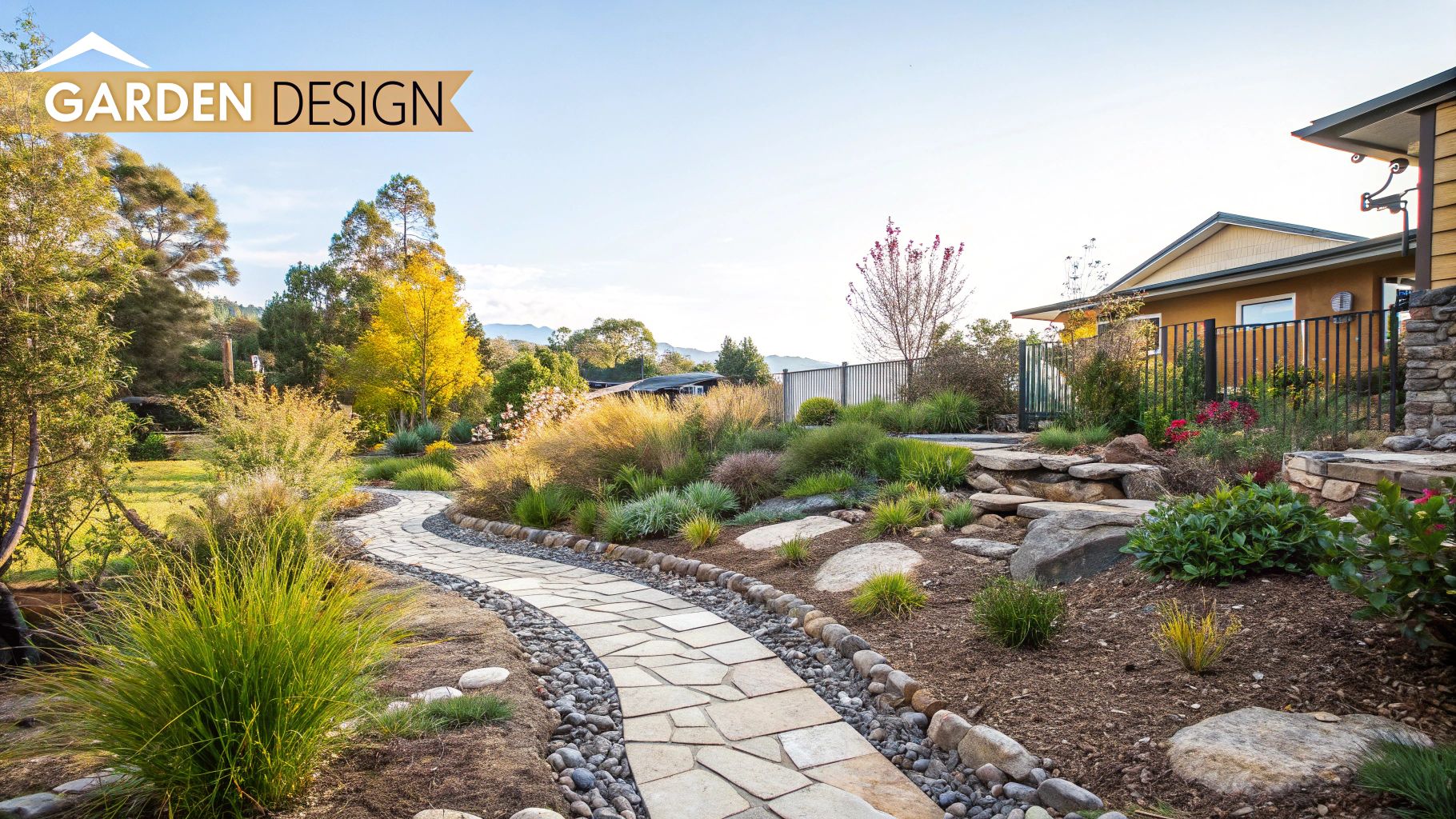
A thriving native landscape is far more than a random assortment of plants. It’s a living ecosystem where every element has a role. The goal of professional landscape design is to craft a layout that’s not only beautiful but also functions as a healthy, self-supporting environment. This is where thoughtful design turns a simple yard into a truly special outdoor space.
Instead of just plopping plants in the ground, a good design considers how everything will grow and interact over time. We think about mature sizes, shapes, and contrasting textures to create a garden that feels balanced and alive. Getting the layout right from the start ensures your garden doesn't just survive—it thrives.
Creating Depth with Layering and Plant Grouping
One of the most effective techniques we use is layering. Think of it as painting a picture with plants. We use taller shrubs or small trees as a backdrop, fill the middle ground with medium-sized perennials, and add low-growing groundcovers in front. This simple trick prevents a flat, one-dimensional look and immediately adds depth.
We also create plant guilds, which are small communities of plants that support each other, just as they do in nature. For example, a small tree can offer dappled shade for understory plants that wilt in the harsh afternoon sun. In return, those smaller plants act as a living mulch, keeping the soil cool and moist. It’s a synergistic approach that leads to a healthier garden with less work for you.
A well-designed landscape tells a story. By layering plants and grouping them into supportive communities, you create a garden that feels intentional, harmonious, and alive with purpose.
Integrating Hardscaping for Structure and Function
While plants are the stars of the show, hardscaping provides the backbone. A winding stone path, for instance, does more than show people where to walk; it creates a sense of journey, inviting exploration. Likewise, a dry creek bed can be a stunning focal point that also serves as a practical solution for managing rainwater runoff during heavy South Texas downpours.
Well-placed hardscaping elements don't just add year-round visual interest; they elevate the natural beauty of the plants around them. For a deeper dive, this guide on how to design a landscape offers helpful principles that apply to native gardens.
- Practical Example: For a butterfly garden at a home in Brownsville, we might anchor the design with a Flame Acanthus shrub, then weave in drifts of Texas Lantana to attract pollinators. A simple flagstone path could meander through the beds for up-close viewing. For a commercial property in Harlingen needing a bold, low-maintenance entrance, we might use dramatic mass plantings of Gulf Muhly grass accented by strategically placed limestone boulders.
This is where an experienced team makes all the difference. At Fischer Landscaping, we combine deep horticultural knowledge with a keen eye for design to create native landscapes that are cohesive, functional, and genuinely beautiful.
Professional Installation: Getting Your Native Plants in the Ground
Even the toughest Texas natives need a proper start to get established. A little professional care at the beginning builds the deep, healthy root systems they need to thrive through our brutal South Texas summers. Proper planting is the single most important factor for long-term success. It's the difference between a garden that thrives and one that struggles.
The Best Time to Plant and How to Prep the Soil
Most people are surprised to learn that fall is the prime planting season here. The cooler air reduces stress on the plant, but the soil is still warm enough to encourage vigorous root growth. Planting in fall gives them a huge head start before the summer heat returns.
Now, let's talk soil. A common mistake is treating native plants like fussy ornamentals. Natives are already adapted to our local soils, from heavy clay around San Antonio to the sandy loam near the coast. They don't need excessive compost or amendments; in fact, that can hold too much moisture and cause root rot.
The goal is to loosen the existing soil so the roots can spread. The planting hole should be two to three times wider than the plant's container, but no deeper.
The number one killer of new plants is planting them too deep. The top of the root ball must sit level with or even slightly above the surrounding ground. This critical detail prevents the plant's base from suffocating or rotting.
This one small detail can make or break the long-term health of your entire garden.
The Final Touches: Watering and Mulching
Once your plant is in the hole, backfill with the native soil. Now it's time for a deep soak to settle the soil and eliminate air pockets around the roots. For the first few weeks, the soil should be kept consistently moist while the plant gets acclimated.
After that initial watering, it's time for mulch—a non-negotiable step for success.
- Saves Water: A two-to-three-inch layer of native hardwood mulch dramatically slows evaporation.
- Keeps Roots Happy: Mulch acts as insulation, protecting roots from scorching sun and winter cold snaps.
- Stops Weeds: It creates a physical barrier, blocking sunlight and preventing weeds from competing for resources.
Just be sure to pull the mulch an inch or two away from the plant's stem. Piling mulch like a volcano traps moisture against the bark, inviting pests and disease.
At Fischer Landscaping, our installation crews live and breathe these details. We know exactly what it takes to give native plants the expert start they need to flourish in your landscape for years to come.
Sustainable Care for a Thriving Native Garden
Let’s be clear: a Texas native plant landscape is low-maintenance, not zero-maintenance. While these plants are incredibly tough, they still need smart, thoughtful care to look their best. The secret is to work with their natural growth habits, not against them.
For anyone managing property from Corpus Christi up to San Antonio, this shift in thinking is a game-changer. You move away from constant chores and toward occasional, purposeful upkeep, saving time and resources while enjoying a healthier landscape.
Smart Watering and Mulching Strategies
The first year after planting is critical for watering as new plants establish deep roots. After that, your approach should change completely. Mature native plants thrive on deep, infrequent soakings rather than daily sprinkles.
Mulch is the single most important tool for maintaining a healthy garden. A thick layer of natural hardwood mulch is essential.
- Moisture Retention: A solid 2-3 inch layer of mulch shields the soil from the Texas sun, drastically reducing evaporation.
- Weed Suppression: It smothers most weeds by blocking sunlight, so your native plants don't have to compete for water and nutrients.
- Temperature Regulation: Mulch insulates the soil, protecting roots from extreme summer heat and sudden winter cold snaps.
Pruning and Eco-Friendly Pest Management
When it comes to pruning natives, less is more. The goal isn't to shear them into artificial shapes but to encourage healthy growth. A light trim after a plant has finished flowering can keep it tidy and stimulate new growth. Hacking away with shears weakens the plant and destroys its natural form.
A native garden also becomes a bustling ecosystem that attracts beneficial insects, your built-in pest control squad. If a pest problem arises, resist grabbing a chemical spray, which kills beneficial insects along with pests. Often, a strong blast of water from the hose is enough. If more is needed, an insecticidal soap is a safer alternative.
The Critical Task of Removing Invasive Species
All your hard work can be undone by invasive, non-native plants—a massive challenge in Texas landscaping. Aggressive intruders like Bermudagrass will quickly escape a lawn and choke out a native garden bed. As Texas Parks and Wildlife explains, these invaders are fierce competitors that can make establishing a native landscape incredibly difficult.
Removing invasive plants early is absolutely crucial. If you let them get a foothold, what was once a low-maintenance oasis becomes a constant, frustrating battle. This is one of the most vital ongoing tasks for any native gardener.
For busy homeowners and property managers, keeping up with proper watering, pruning, and vigilance against invasive species can be overwhelming. This is where our professional landscape maintenance programs provide real peace of mind. We handle all the details, ensuring your beautiful South Texas landscape is expertly cared for so you can simply enjoy it.
Your Top Questions About Native Plant Landscaping
It's smart to ask questions when considering a move away from a traditional lawn. Switching to a native landscape is a fantastic investment, and we find that most clients in South Texas want to understand the practical side of things first.
We've compiled the most common questions to give you clear, honest answers. We want you to feel confident that landscaping with Texas natives is a practical, beautiful, and valuable choice for your home or business.
How Long Until My Native Landscape Looks Mature?
Patience pays off, and probably faster than you'd expect. The old gardener's wisdom holds true for many perennials: "The first year they sleep, the second they creep, and the third they leap."
However, many native grasses and shrubs establish roots and begin filling in within the first season. A professional installation from Fischer Landscaping gives your landscape a massive head start. We select healthy, robust plants and prepare the site perfectly to accelerate growth, so you can enjoy a fuller, more established look much sooner.
Is a Native Landscape More Expensive Than a Traditional Lawn?
The upfront cost of installing a native landscape can be similar to putting in a new lawn and traditional garden beds, depending on the design's complexity and hardscaping features. The real financial story, however, unfolds over time.
A native landscape is, without a doubt, more cost-effective in the long run. You will spend significantly less on water, eliminate the need for routine fertilizers and pesticides, and see your overall maintenance costs drop. It’s an investment that's as good for your wallet as it is for the local ecosystem.
Can I Still Have a Colorful Garden with Native Plants?
Absolutely! The idea that native landscapes are just green and brown is a myth. A South Texas garden can be an explosion of color. Our region is home to an incredible variety of native plants that bloom throughout the year.
- Fiery Reds: The brilliant red of a Turk's Cap or Flame Acanthus are hummingbird magnets.
- Vibrant Purples: Texas Sage is a showstopper, bursting into purple blooms after a good rain.
- Sunny Yellows: For cheerful, long-lasting color, Damianita and Black-Eyed Susans bring a sunny feel to any garden.
A professional designer knows how to orchestrate waves of color, ensuring something is always putting on a show, whether your property is in Corpus Christi or Harlingen. Strategic plant selection is the secret to a vibrant garden and a cornerstone of our landscape design process.
What Are the Biggest Mistakes to Avoid?
We see a few common pitfalls, and they almost always come from treating tough native plants like delicate, non-native flowers. The top three mistakes are:
- Overwatering: Once established, most native plants prefer to be on the drier side. Too much water is their biggest enemy.
- Wrong Plant, Wrong Place: You can't fight Mother Nature. Planting a sun-lover in the shade or a plant that needs drainage in heavy clay is a recipe for failure.
- Amending the Soil Too Much: Our native plants evolved in our local soils. They don’t need rich, heavily amended garden soil to thrive.
Working with an experienced professional helps you sidestep these common and costly mistakes from the very beginning.
Ready to see how a beautiful, low-maintenance native landscape could transform your property? The team at Fischer Landscaping is here to help you design, install, and maintain a stunning outdoor space that truly thrives in South Texas.