A stubborn, swampy patch in your yard is more than an eyesore—it's a red flag signaling a serious drainage problem. For property owners in South Texas, a professionally installed landscaping pipe drainage system is the most effective long-term solution to protect a building's foundation, prevent soil erosion, and maintain a healthy, vibrant landscape. The concept is straightforward: an underground pipe system collects excess water and safely channels it away from your property before it can cause damage.
At Fischer Landscaping, we specialize in creating practical, solution-driven drainage systems that safeguard your investment.
Why Your South Texas Lawn Stays Soggy After Rain
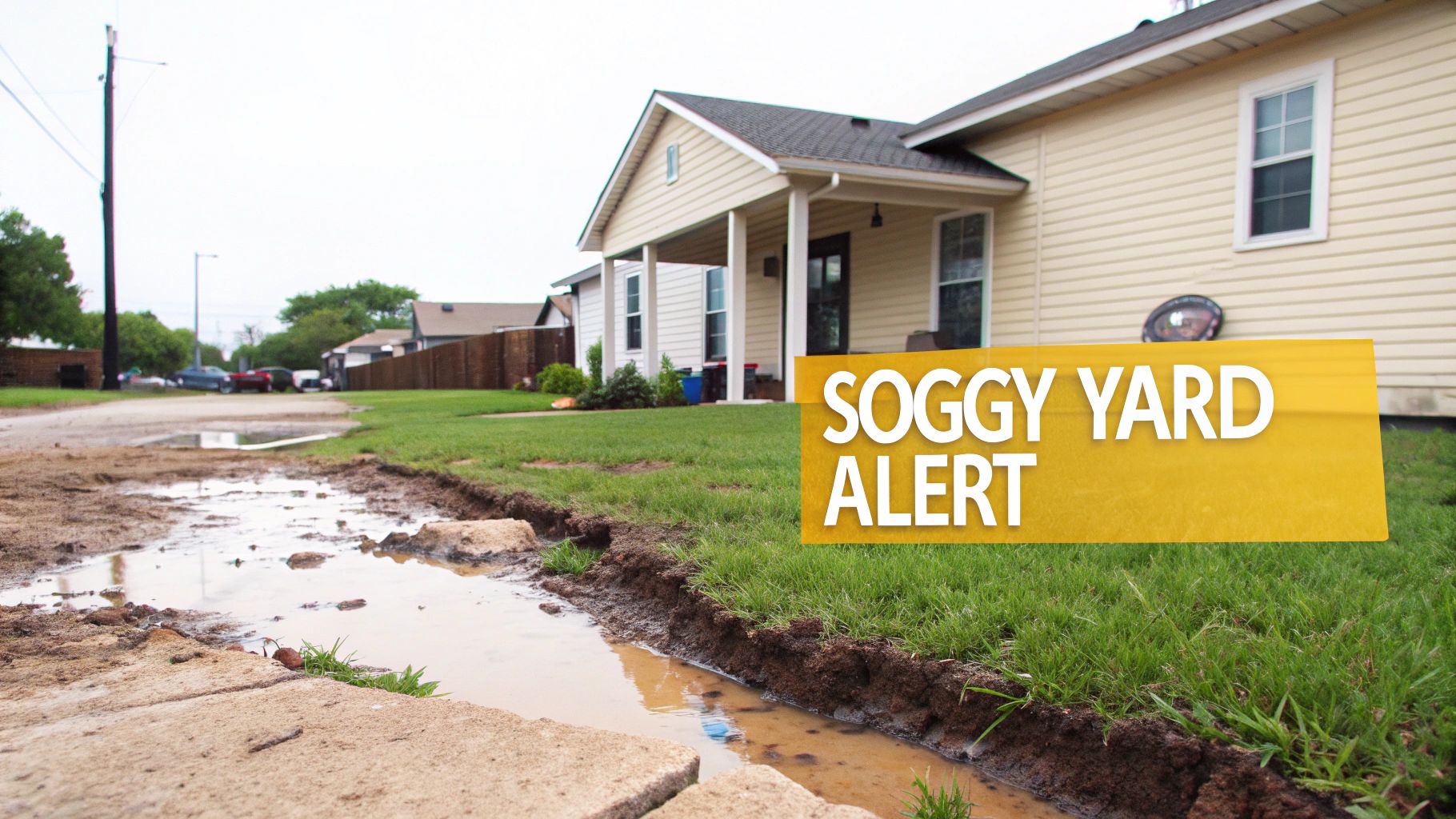
If you have a persistent puddle by the patio or a patch of lawn that’s always muddy, your property is telling you it can't handle the water. Here in South Texas, our heavy clay soil is notoriously poor at absorbing moisture. When you combine that with the intense downpours common to our region, any property with less-than-perfect grading is at risk. It’s a recipe for drainage disasters that extend far beyond a squishy lawn.
From Corpus Christi to San Antonio, we help homeowners and businesses solve water-related challenges. This isn't just an aesthetic issue; it’s a direct threat to your property’s value and the structural integrity of your buildings.
The Real Risks of Poor Drainage
Delaying a drainage solution can lead to expensive headaches. When water pools against your foundation, it creates immense hydrostatic pressure that can cause cracks and weaken the entire structure. This is a significant concern for properties throughout the region, from Harlingen to Brownsville.
But the danger doesn't stop at your foundation. Poor drainage creates a toxic environment for your landscape.
- Dying Plants and Turf: Grass and plant roots literally drown in waterlogged soil. Without oxygen, they rot, and your beautiful, expensive landscaping turns into a yellow, wilted mess.
- Pest Infestations: Standing water is an open invitation for mosquitoes, gnats, and other pests, making your outdoor spaces unusable.
- Soil Erosion: Uncontrolled runoff strips away valuable topsoil and mulch, destabilizing your yard and creating an unkempt appearance.
An effective landscaping pipe drainage system isn't a luxury; it's an essential investment in protecting your most valuable asset. By proactively managing water, you safeguard your foundation, preserve your landscape, and maintain your property's long-term value.
A Growing Need for Professional Solutions
The reality is that water management issues are becoming more common. With increased urbanization and more frequent, intense rainfall, the need for robust drainage solutions has never been greater. The global market for drainage systems was valued at $50.3 billion and is projected to nearly double by 2035—a clear sign that property owners are recognizing this critical need. You can read more about the growing drainage systems market trends to see why proactive solutions are becoming the norm.
A professionally installed system from Fischer Landscaping is a permanent solution, engineered to direct water where it needs to go before it can do any damage. To get a clear picture of what your property needs, a consultation with our hardscaping and drainage experts is the best first step.
Choosing the Right Drainage Pipe for Your Property
Selecting the correct drainage pipe isn’t about aesthetics—it’s about solving a specific water problem effectively. We've seen it time and again: a mismatch between the pipe and the problem leads to a system that fails within a few years. The materials must withstand the unique demands of your property, whether it's a home in Corpus Christi or a commercial space in Harlingen.
Understanding your options is the first step toward a lasting solution. Different pipes serve different functions. For example, a perforated pipe is ideal for a French drain because it collects groundwater along its length. However, using that same pipe to move runoff from gutters would create a leaky mess. For that application, you need a solid, non-perforated pipe.
Corrugated vs. Rigid Pipes
For most property owners in South Texas, the choice is between flexible corrugated pipes and rigid PVC. Corrugated pipes are popular due to their flexibility and affordability. Their accordion-like design allows them to bend around trees, rocks, and other obstacles, simplifying installation in an established landscape.
On the other hand, for areas with heavy vehicle traffic or where maximum long-term reliability is paramount, rigid PVC is almost always the superior choice. Its smooth interior walls allow water and small debris to flow freely, significantly reducing the risk of clogs. For commercial lots or under a driveway, we often recommend a heavy-duty double-wall pipe to handle the constant pressure.
The goal of any drainage system is longevity. Investing in the right pipe material for your soil and water volume isn't a minor detail—it's the foundation of a system built to protect your property for decades.
The market for these pipes is large for a reason. Global demand for corrugated drain pipes was recently valued at around $5 billion and is expected to keep climbing. While standard single-wall pipes are common for simple jobs, the more durable double-wall versions are becoming the standard for situations where failure is not an option.
A Practical Comparison of Drainage Pipes
To determine the best choice for your yard, it helps to compare the main options directly. Each has its place, and understanding the pros and cons will save you headaches later.
Below is a quick breakdown to help you compare the most common types of drainage pipes we use in landscaping projects.
Comparison of Common Landscaping Drainage Pipes
| Pipe Type | Key Features | Best For | Considerations |
|---|---|---|---|
| Flexible Corrugated | Lightweight, bendable, and budget-friendly. Available in perforated and solid. | French drains, garden beds, and routing around gentle curves or obstacles. | The ribbed interior can trap sediment if not installed with the correct slope. |
| Rigid PVC | Smooth interior for excellent flow, highly durable, and resistant to crushing. | Moving large volumes of water from downspouts or catch basins; runs under driveways. | Less flexible, so it requires more fittings for turns, which can add to labor time. |
| Double-Wall Corrugated | Corrugated exterior for strength, smooth interior for optimal water flow. | High-traffic areas, commercial properties, and projects that demand top durability. | More expensive than single-wall pipe, but it’s a worthwhile long-term investment. |
Remember, a well-designed drainage system is more than just the pipe. Using the right fittings—like flexible T connectors—is essential for directing water precisely. Every component must work together to create a reliable solution.
If you’re unsure what’s right for your property in San Antonio or Brownsville, our team is here to help. Contact Fischer Landscaping for a professional assessment and a free, no-obligation quote.
How a Professional French Drain System Is Installed
A French drain might seem simple, but a professional installation is a game of inches. It’s a carefully engineered system where every detail—from the slope of the pipe to the type of gravel—plays a critical role. Done right, it provides a dry, protected property for years. Done wrong, it becomes a soggy, failed project that needs to be torn out and redone.
It all starts with a strategic plan. We first walk the property to understand its topography, pinpoint where water originates, and map the most efficient path for the drain. This isn't just about digging toward the lowest spot; it's about creating a gravity-fed channel that works in harmony with your landscape.
Trenching and Grading with Precision
Once we've marked the path, the real work begins. Many property owners worry about their lawn being torn up, which is why we use specialized equipment to create a clean, narrow trench that minimizes disruption. But before any pipe or gravel is placed, we focus on the most crucial part: the slope.
A French drain works by gravity. We meticulously engineer a precise gradient—typically a 1% slope, meaning the pipe drops one foot for every 100 feet it runs. This ensures water moves steadily toward the discharge point. If the slope is too shallow, water stagnates, creating a muddy mess. Too steep, and you risk erosion at the outlet.
The success of a landscaping pipe drainage system hinges on meticulous grading. This foundational step guarantees that water is actively and consistently pulled away from your home's foundation and problem areas, rather than just sitting underground.
Assembling the Core Components
With the trench perfectly graded, we line it with a high-quality, permeable landscape fabric. This material is the system's unsung hero. It wraps the entire trench, acting as a filter to let water in while keeping out the fine silt and clay particles that would otherwise clog the pipe. Skipping this step is one of the biggest mistakes in DIY installations.
Next, we lay the perforated pipe with the holes facing down. This often surprises people, but it’s the correct orientation. As groundwater rises into the gravel-filled trench, it enters the pipe from below to be carried away.
This quick guide illustrates the decision-making process for pipe selection.
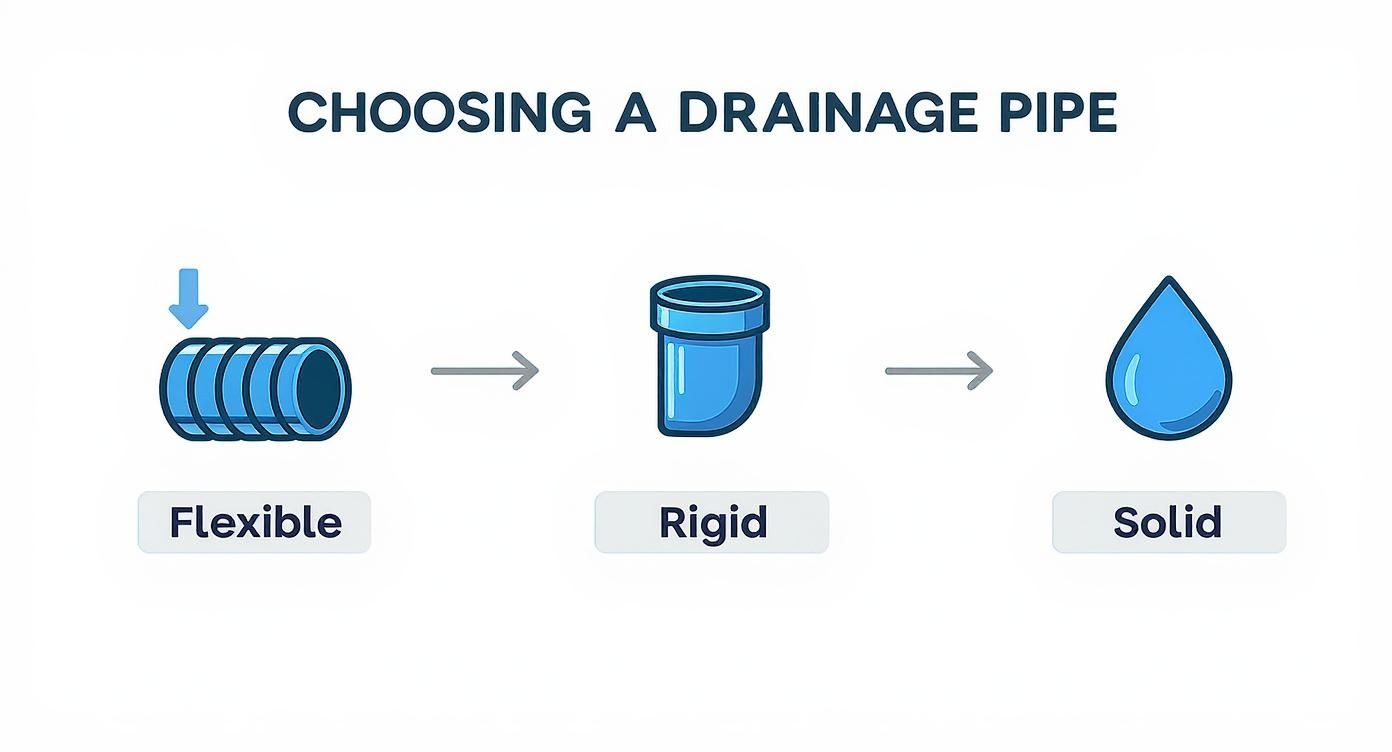
As you can see, different project needs—whether it's flexibility, rigidity, or high-volume water transport—will determine whether corrugated, PVC, or solid pipes are the right choice for the job.
Finishing with the Right Materials
After the pipe is set, we fill the trench with clean, washed drainage gravel. This gravel creates a highly porous zone that allows water to move freely from the surrounding soil into the drainage system. The type of rock is important; we avoid materials with too many "fines" (tiny particles) that can compact over time and reduce permeability.
The final touch is creating a safe, effective discharge point. This could be a pop-up emitter that sits flush with the lawn, a direct connection to a storm drain, or an integrated dry creek bed. The goal is always to release the collected water where it won’t cause new problems, like erosion or flooding a neighbor's property. Occasionally, this is part of a larger project that might involve our professional demolition and clearing services to prepare the landscape for a complete transformation.
Making Drainage a Beautiful Part of Your Landscape
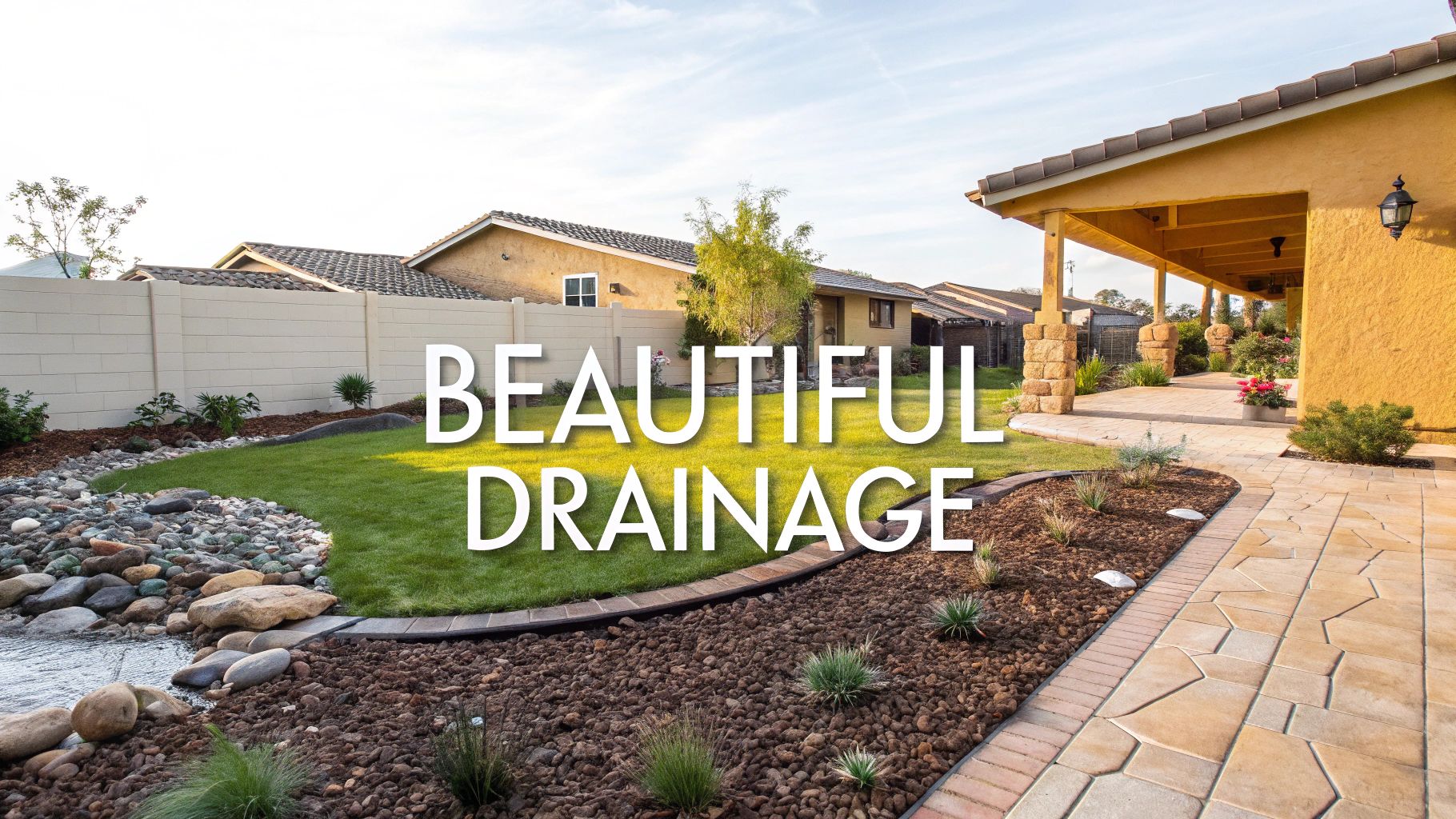
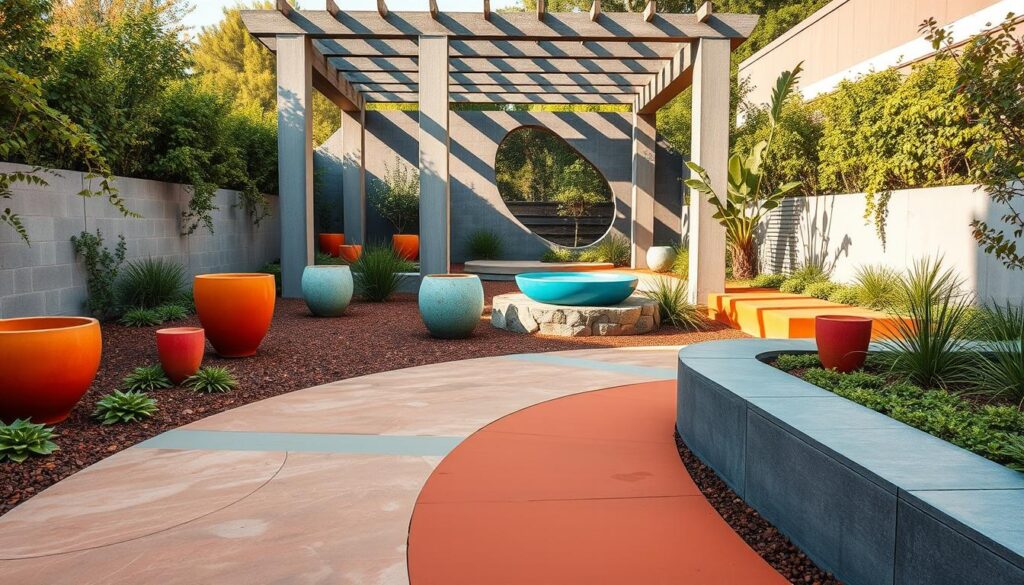
When you think about drainage, you might picture ugly plastic grates and exposed pipes. But a high-performance system designed to protect your property doesn't have to be an eyesore. At Fischer Landscaping, we believe the best landscaping pipe drainage solutions are either completely invisible or so beautifully integrated they become a key feature of your outdoor living space.
This is where expert design elevates a functional necessity into an aesthetic asset. By combining strategic grading with thoughtful plant and hardscape choices, we turn a water problem into a stunning landscape feature. It's a philosophy we apply to every project, from residential backyards in Brownsville to sprawling commercial properties in San Antonio.
Turning Outlets into Attractions
One of the biggest design challenges is managing the discharge point—where all the collected water exits the system. A poorly placed outlet can simply move the problem, creating erosion or a new muddy patch. Our approach is to transform these termination points into focal points that enhance your yard.
Here are a few ways we blend function with form:
- Dry Creek Beds: A French drain can empty into a winding, elegant dry creek bed filled with smooth river rocks and lined with native, drought-tolerant plants. This disperses water safely while adding incredible texture and visual interest.
- Rain Gardens: We can direct runoff into a specially designed rain garden. These shallow depressions are filled with water-loving native plants that absorb and filter the water, creating a miniature ecosystem that attracts butterflies and birds.
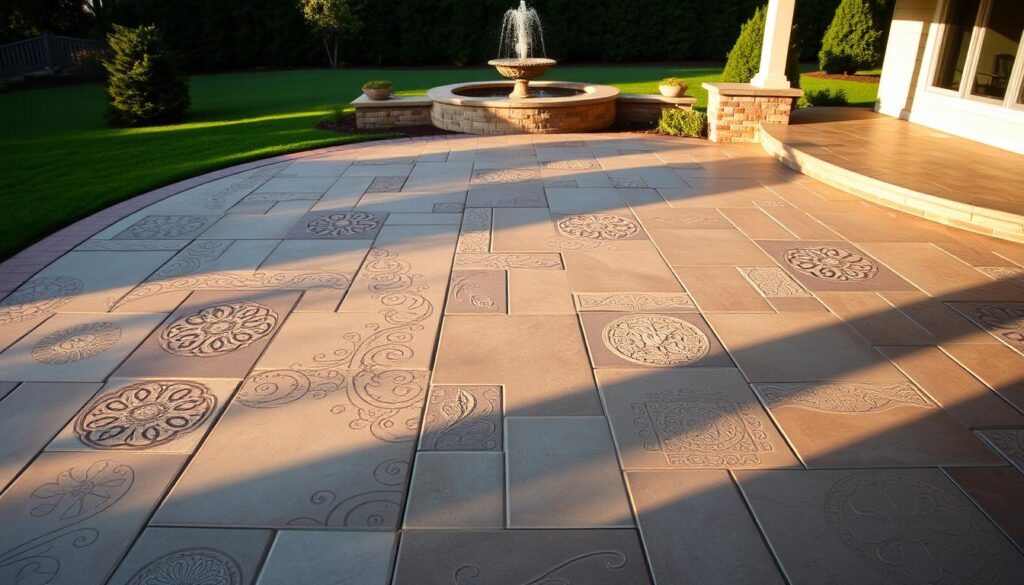
- Integrated Catch Basins: On patios and walkways, we install decorative catch basins with high-end cast iron or bronze grates that complement your pavers. They tie directly into the underground pipe system, keeping surfaces dry without interrupting the visual flow of your hardscaping.
The goal is to make your drainage system feel like an intentional part of the landscape design, not a clumsy afterthought. When done right, function and beauty work together to increase both the usability and the value of your property.
Seamless Integration with Your Lawn
Of course, sometimes the best solution is the one you can't see.
Through careful layout planning and the use of pop-up emitters that sit completely flush with the ground, we ensure your lawn remains a pristine, uninterrupted carpet of green. Once our work is done, the only thing you should notice is the absence of soggy spots. This is especially critical for achieving a perfect finish with new grass, which is why we consider drainage a foundational part of our professional turf installation services.
Ready to solve your water issues without sacrificing curb appeal? Contact Fischer Landscaping today for a personalized quote and let’s create a drainage solution that’s as beautiful as it is effective.
Critical Drainage Mistakes to Avoid
A poorly planned landscaping pipe drainage system can easily create more problems than it solves. We've seen it time and again on properties across South Texas, from Corpus Christi to San Antonio, where we are often called to fix installations that failed due to simple yet critical errors.
These mistakes not only waste your initial investment but can also lead to costly property damage. Getting it right the first time means understanding where things can go wrong.
Getting the Slope Wrong
The single most common failure we see is an incorrectly calculated slope. Drainage pipes rely entirely on gravity to function.
If a trench is graded with too little slope—often less than a 1% grade—water stagnates. It becomes a sludgy mess that clogs the system, rendering it useless.
Conversely, a slope that’s too steep causes water to rush out with excessive force, creating new erosion problems at the discharge point. Achieving the correct balance requires professional precision.
Skipping the Protective Fabric
Another frequent and costly mistake is failing to line the drainage trench with a high-quality landscape fabric. This geotextile material acts as the system's bodyguard, allowing water to pass through while blocking the fine silt and clay common in our South Texas soil.
Without this protective barrier, soil particles will inevitably wash into the gravel and clog the pipe. This is a non-negotiable step for any installation built to last.
A significant and potentially expensive drainage mistake homeowners can make involves improper management or understanding of their property's sewer drain systems, which often intertwine with landscape drainage. Learning more about properly managing sewer drain systems can prevent major headaches.
Ignoring Tree Roots and Property Lines
Finally, poor placement can cause unforeseen headaches. Digging a trench too close to mature trees can damage major roots, harming or even killing a valuable tree.
It is also critical to ensure your outlet doesn't dump water onto a neighbor’s property or a public sidewalk, which can lead to disputes or legal trouble. A professional drainage plan from Fischer Landscaping considers the entire property and its surroundings, creating a solution that is both effective and neighbor-friendly. For a design that accounts for every detail, consult our hardscaping and drainage experts today.
Your Landscaping Pipe Drainage Questions Answered
When you're facing a soggy yard, it's natural to have questions before committing to a drainage solution. Here are answers to some of the most common questions we hear from property owners across South Texas.
How Do I Know If I Really Need a Professional Drainage System?
The most obvious sign is standing water. If your lawn has puddles 24 hours or more after a storm, your soil cannot handle the moisture.
Other red flags include:
- Chronically soggy patches of grass that feel spongy underfoot.
- Visible soil erosion, especially on slopes.
- Water pooling directly against your home's foundation.
These issues are common in areas like Corpus Christi with heavy clay soil. If you're seeing any of these symptoms, it's time for a professional assessment to protect your property.
What Is the Difference Between a French Drain and a Swale?
A swale is a shallow, graded ditch on the surface designed to direct rainwater, often covered in grass to blend into the lawn. It manages visible surface water.
A French drain is a subsurface trench filled with gravel and a perforated pipe. It actively pulls excess water out of saturated soil, addressing groundwater issues you can't see. French drains are the go-to solution for protecting foundations and drying out perpetually wet ground.
A common misconception is that any drainage problem can be solved with one type of system. The best solution is always tailored to the specific water source, soil type, and property layout.
How Much Does Landscape Drainage Installation Cost in South Texas?
The investment for a landscaping pipe drainage system varies. A straightforward French drain on a small residential lot might cost a few thousand dollars, while a complex system for a larger commercial property will be more.
Factors that influence the final price include:
- The size and accessibility of your property.
- The severity of the water issue.
- Your specific soil conditions (clay is more challenging).
- The overall complexity of the design.
The only way to get an accurate number is with a professional site assessment. We can provide a custom quote that addresses the unique needs of your property, whether you're in Harlingen or Brownsville. A proper drainage plan is also a critical first step before other services, like our specialized hydroseeding services.
Can I Connect My Gutter Downspouts to a Drainage System?
Absolutely—in fact, you should. Tying your downspouts into the main system is one of the most important steps.
We use solid, non-perforated pipe to channel the high volume of roof runoff directly away from your foundation and into the drainage line or a safe discharge point. A single storm can dump thousands of gallons of water next to your house, and this simple connection is one of the most effective ways to prevent serious damage.
Ready to solve your property's drainage problems for good? The team at Fischer Landscaping has the expertise to design and install a system that protects your investment for years to come. Contact us today for a free, no-obligation quote!