Thinking about adding the timeless beauty of natural stone to your South Texas landscape? It's a fantastic investment that adds lasting value and curb appeal. Generally, you can expect the landscape boulder cost to fall between $100 to $600 per ton for the stone itself. However, the final project cost depends on the type of stone you choose, its size, and the logistics of getting it to your property.
The Real Cost of Landscape Boulders
When property managers and homeowners in South Texas begin planning a hardscaping project with natural stone, the first question is always, "What will this cost?" While the price per ton is a good starting point, it's just one piece of the puzzle. The true cost of a professional boulder installation covers more than just the rock; it includes the design expertise, heavy machinery, and skilled labor required to place it perfectly.
Whether you envision a massive, eye-catching centerpiece for your business in Corpus Christi or a sturdy, elegant retaining wall for a home in San Antonio, boulders bring a sense of permanence and character that no other element can match. To create a realistic budget, you first need to understand the key factors that drive the price.
Breaking Down Material Costs
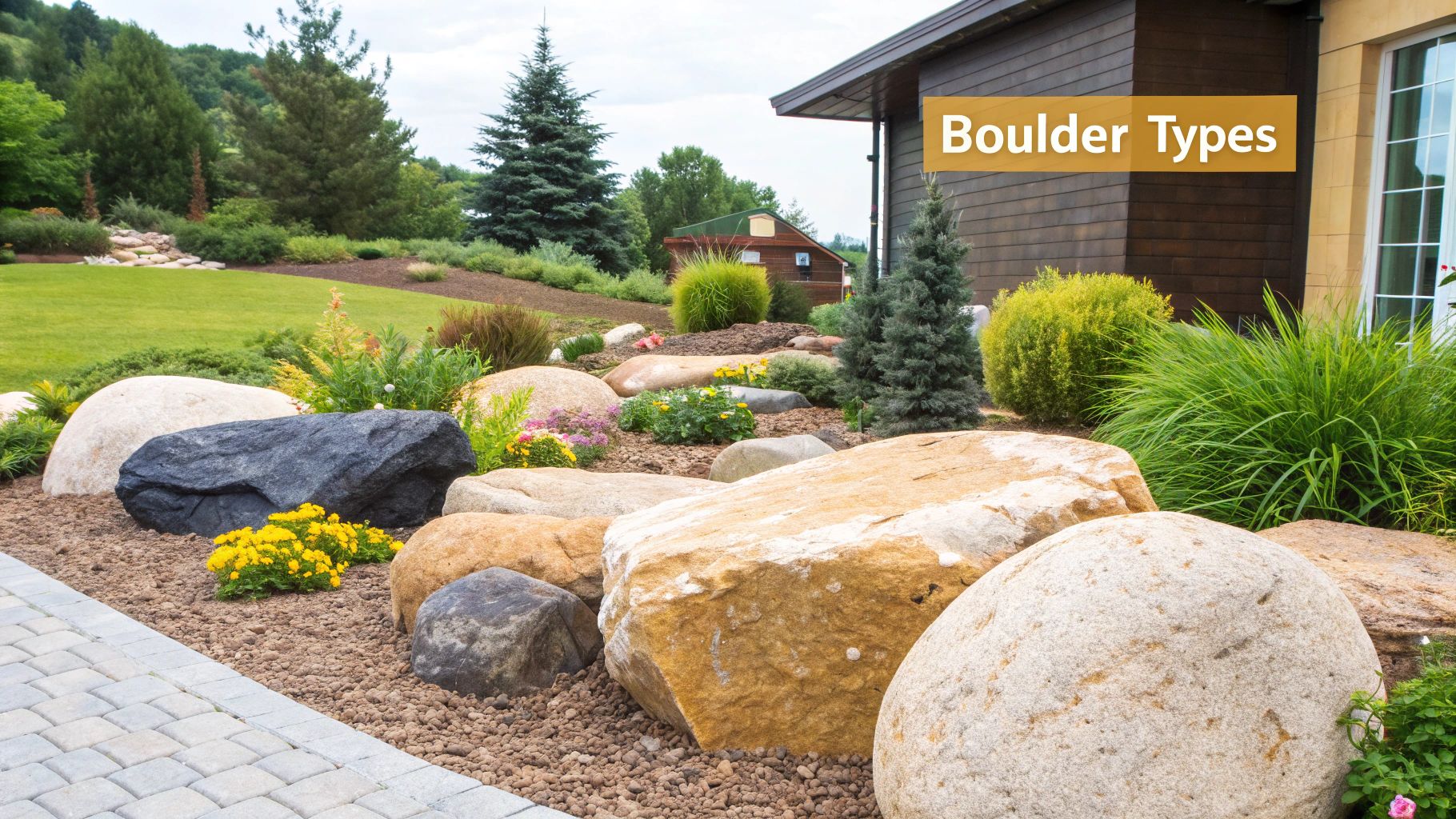
The largest line item on your material bill will be the type of stone you select. Boulders are sold by weight (typically by the ton), and different rocks command different prices based on supply, demand, durability, and aesthetics.
For example, a locally quarried sandstone is usually more budget-friendly than a unique type of granite that has to be transported from hundreds of miles away. The price range for landscape boulders is wide, with a national average of around $250 per ton. Here’s a quick overview:
- Common Sandstone: Ranges from $60 to $300 per ton.
- Premium Granite or Quartzite: These denser, often more colorful stones can cost $125 to $600 per ton.
Keep in mind that stones sourced from other states or countries can climb even higher due to shipping costs. You can learn more about how different boulder types affect pricing in various reports.
To give you a clearer picture for our area, here's an estimate of what to expect.
Estimated Landscape Boulder Cost Per Ton in Texas
This table provides a quick overview of potential material costs for different types of boulders commonly used in South Texas landscaping projects.
| Boulder Type | Average Cost Per Ton (Material Only) |
|---|---|
| Sandstone | $120 – $280 |
| Limestone | $140 – $350 |
| River Rock Boulders | $150 – $400 |
| Granite | $200 – $550 |
| Moss Rock | $250 – $600+ |
Remember, these are ballpark figures for the materials. The final project cost will include delivery and professional installation, which are critical for a successful outcome.
Choosing the right boulder is about finding the perfect balance between aesthetics, function, and budget. A seasoned professional can guide you to a stone that not only looks incredible but is also durable enough for the South Texas climate, protecting your investment for years to come.
At Fischer Landscaping, we guide clients from Brownsville to Harlingen through these decisions every day. Our goal is to ensure you get fantastic value and a finished project that makes your property stand out.
Key Factors That Drive Boulder Pricing
Trying to determine the final cost of a landscape boulder project can feel complex. It’s not a simple number; it’s a combination of several important factors. Understanding what goes into that final price tag is the first step toward making a smart investment in your property.
At Fischer Landscaping, we believe in transparent pricing. By explaining the why behind the cost, we help property owners from Corpus Christi across South Texas find the perfect balance between their dream landscape and a realistic budget. Let's dig into what truly shapes the cost of these natural wonders.
The Big Three: What Defines the Stone Itself
Long before a boulder is loaded onto a truck, its value is determined by its basic physical traits. Three characteristics form the foundation of its material cost.
- Size and Weight: This is the most straightforward factor. Boulders are sold by the ton, so larger stones are more expensive. A modest 3-foot accent boulder might weigh half a ton, but a massive 6-foot statement piece can easily tip the scales at several tons, and the price climbs accordingly.
- Geological Type: Not all rock is created equal. Common, local options like South Texas sandstone or limestone are typically more affordable because they’re readily available. In contrast, dense granite or a richly colored moss rock carries a premium price tag due to its durability, rarity, and unique appearance.
- Quality and Appearance: Sometimes, it's all about character. A boulder with dramatic color variations, an unusual texture, or a striking natural shape is more sought-after than a uniform stone. These "character stones" have a one-of-a-kind visual appeal that commands a higher price.
This image breaks down how these core factors influence the initial price.
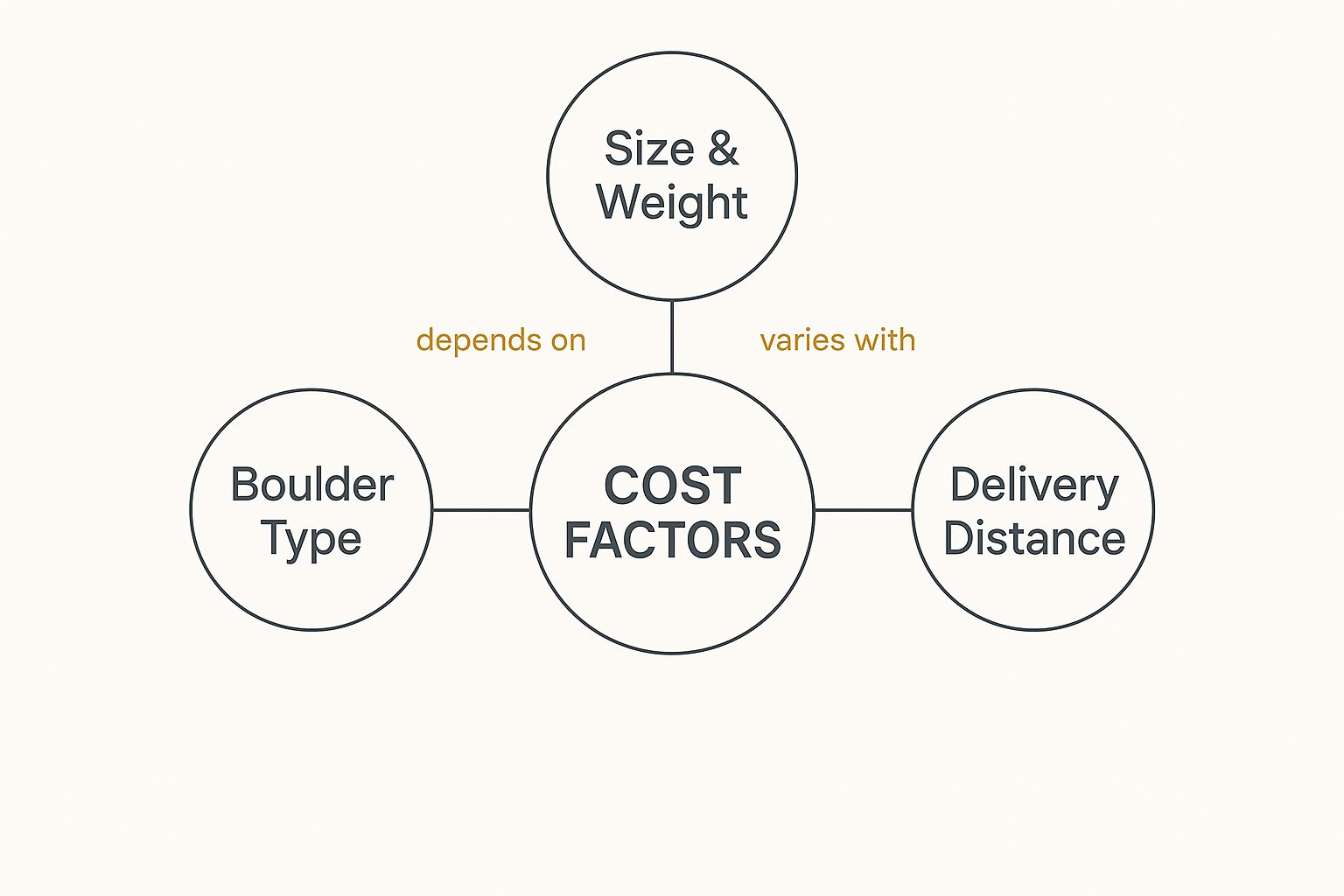
As you can see, the boulder’s physical makeup is just one side of the coin. The other is getting it safely to your property.
Logistics: The Hidden Cost Driver
Moving a multi-ton boulder from a quarry to your backyard in San Antonio or Brownsville is a major logistical operation. It's less like a package delivery and more like moving industrial equipment. You're not just paying for the stone; you're paying for the specialized skills and heavy machinery needed to transport and place it safely.
The cost of moving these giants is complex and often mirrors heavy equipment shipping rates. This is why sourcing from a local quarry can significantly reduce travel-related expenses and your overall budget.
A boulder's journey is a huge piece of its total cost. The accessibility of your property—an open front yard versus a cramped backyard—dictates the equipment needed. That can mean the difference between using a forklift and calling in a crane, which directly impacts the final installation bill.
Our team at Fischer Landscaping specializes in these complex logistics. We conduct a full site assessment to map out the safest, most efficient way to deliver and place your boulders, ensuring your vision for beautiful hardscaping services comes to life without unexpected costs. We manage everything, from sourcing the perfect stone to its final, artful placement.
Beyond the Boulder: Uncovering Installation Costs
So, you've picked out the perfect boulder. But the price tag on the stone itself is just the beginning. A significant part of your investment—and what ultimately determines the project's success—is the professional installation. These are the costs that transform a heavy stone into a natural, seamless part of your landscape.
Understanding these expenses is crucial for budgeting the full landscape boulder cost. The demand for stunning outdoor spaces is growing, and the numbers confirm it. North America's landscaping products market reached an impressive $88.64 billion in 2024, with the United States alone accounting for $21.71 billion. This isn't just a trend; it's a clear signal that property owners value professional, lasting results.
Site Preparation: The Foundation of Success
Long before a boulder arrives, the real work begins. Proper site preparation isn't just a good idea; it's non-negotiable for ensuring your new feature is stable, safe, and looks fantastic for years to come.
This process is more than just clearing a spot. It often involves meticulous grading to ensure the boulder settles naturally and won't shift over time. Improper grading can lead to issues like erosion or water pooling around the base. What was once a beautiful focal point can quickly become a major problem.
The goal of site preparation is to make the boulder look like it has been there for centuries. It's about sculpting the earth, managing drainage, and building a solid base so that the stone never moves.
For properties with tricky slopes or unique terrain, this step is even more critical. If your yard already has drainage issues, this is the perfect time to address them. In fact, our team can integrate effective drainage solutions right into your new hardscape design.
The Heavy Lifting: Logistics and Labor
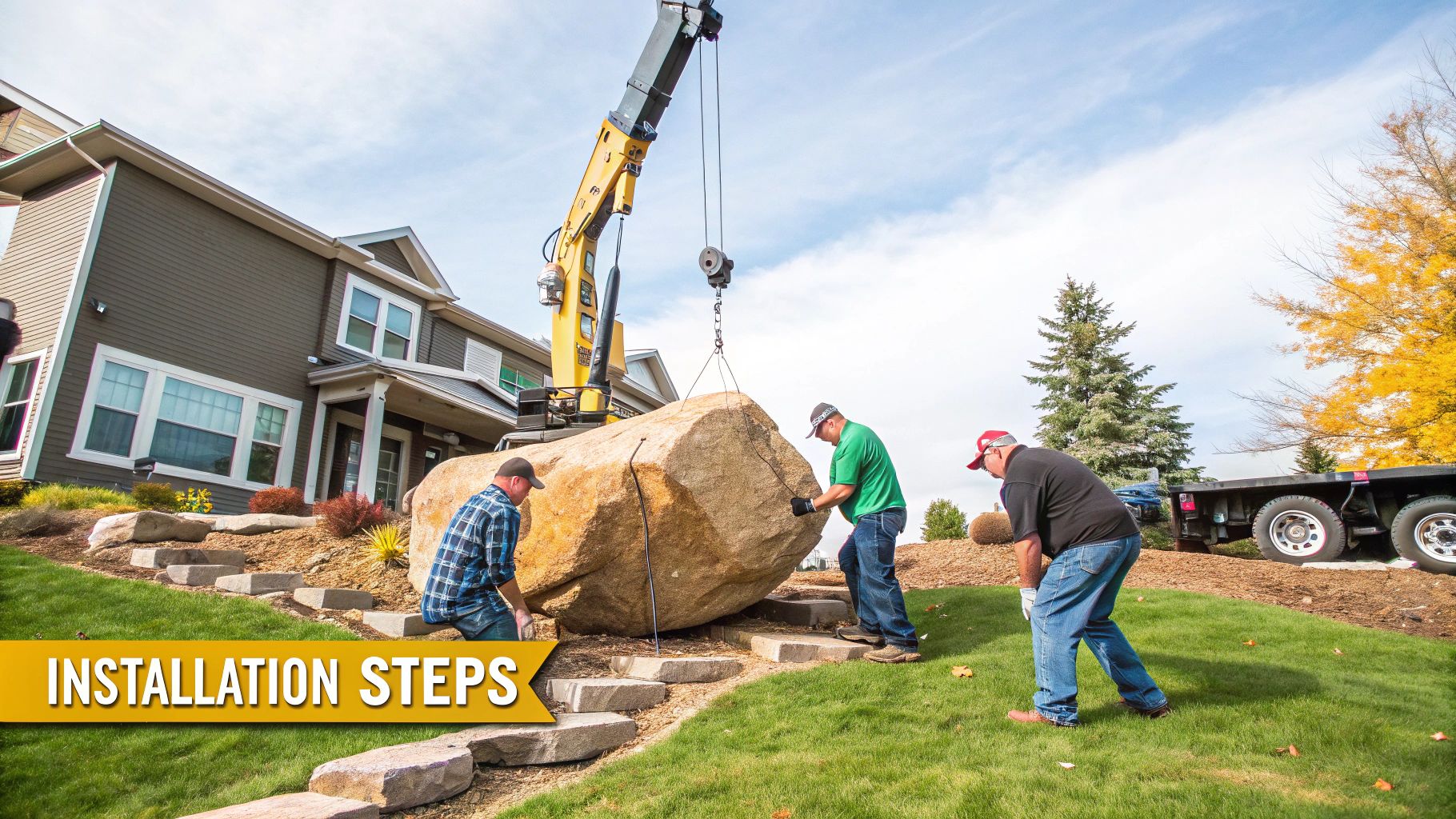
Let's be clear: moving a multi-ton stone is not a weekend DIY project. The installation costs are directly tied to the highly specialized equipment and expertise needed to transport and place each boulder with absolute precision and safety.
Beyond the cost of the rock, getting it into position is a major factor. This requires specialized Heavy Equipment Transport services just to move the boulder from the quarry to your location. The process involves:
- Specialized Trucks: Flatbed trucks built to handle extreme weight are essential for transport.
- Heavy Machinery: On-site, equipment like forklifts, skid steers, or even cranes are often needed to carefully move the boulder into place.
- Skilled Labor: The real art comes from an experienced crew. Professional landscapers know how to position a boulder perfectly, considering its angle, how it sits in the soil, and how it connects with the rest of your landscape.
Attempting this yourself is more than difficult—it's dangerous. The potential for property damage is immense, from cracking your driveway to hitting underground utility lines. Worse, an unstable boulder is a serious safety hazard. A professional team brings the right equipment, proper insurance, and the experience to get the job done right, ensuring your investment is both beautiful and secure.
Choosing the Right Boulders for Your Property
When selecting a boulder, you're choosing a piece of the natural world that will define your property for decades. For homeowners and businesses in Brownsville and Harlingen, the key is finding a stone that looks incredible while withstanding the intense South Texas sun and weather. It's a decision that blends art with practicality.
The color and texture should complement your home's exterior and surrounding garden. A warm-toned sandstone, for example, can beautifully match local brick or stucco, creating a cohesive look. Alternatively, a dark, rugged piece of granite can create a powerful contrast against the soft greens of your plants.
Matching Boulders to Your Landscape Vision
A boulder's appearance is only half the story; its function is just as critical. These stones are incredibly versatile, capable of solving common landscape challenges while adding serious curb appeal. Your intended use will guide you toward the right type, size, and quantity of boulders.
Here are a few popular applications we see in South Texas:
- Dramatic Focal Points: A single, large "character stone" placed in a garden bed can anchor the entire design, drawing the eye and giving the landscape a sense of scale.
- Natural Retaining Walls: A series of thoughtfully placed boulders can create a gorgeous, organic-looking terraced wall that's perfect for managing slopes and preventing erosion.
- Unique Outdoor Seating: We love incorporating large, flat-topped boulders into patios or gardens. They serve as rustic, permanent seats that feel like an integral part of the environment.
Functionality Meets Regional Style
Boulders are more than just decorative; they serve practical purposes that enhance your property's value and usability. Using them for natural-looking retaining walls is a fantastic application, and you can explore some of our top retaining wall ideas perfect for South Texas landscapes to get inspired. By choosing stones native to our region, you ensure the final design feels authentic and is built to last.
The demand for these natural elements is rising. The global market for landscape rocks was valued at around $3.5 billion in 2024 and is expected to keep growing, with North America leading the way. This reflects a broader trend of people investing in beautiful, durable outdoor living spaces. You can learn more about this by reading up on the growing landscape rock market and its trends.
At Fischer Landscaping, we specialize in sourcing high-quality, regional stones that are perfectly suited to our local climate. We help you choose boulders that not only bring your vision to life but also provide a lasting, low-maintenance solution for your property.
Our team has the expertise to ensure every stone we place contributes to a landscape that is beautiful, functional, and cohesive. Contact us today to discuss your project and get a professional recommendation.
How to Budget for Your Boulder Project
When you're planning for landscape boulders, it helps to see it as a permanent investment in your property, not just an expense. These natural stone features are a durable, low-maintenance upgrade that adds lasting value and significant curb appeal.
Unlike plants that need constant care or mulch that requires annual replacement, a well-placed boulder is a one-time addition. It will look just as stunning decades from now as it does on day one. Understanding the complete financial picture from the start is key to planning a smooth, successful project without any sticker shock.
Sample Boulder Project Budget Allocation
To give you a clearer idea of where your money goes, let's break down a typical project budget. Remember, these are estimates—the exact percentages will vary depending on the complexity of your project.
This table shows a common distribution of costs for a professional boulder installation.
| Expense Category | Percentage of Total Budget |
|---|---|
| Boulder Materials | 30% – 40% |
| Delivery & Logistics | 15% – 25% |
| Site Preparation | 10% – 20% |
| Labor & Installation | 25% – 35% |
As you can see, the cost of the stone itself is just one piece of the puzzle. The professional installation, which demands specialized skills and heavy machinery, is a significant portion of the total investment. For a deeper dive into what a professional quote includes, our guide explains how much a professional landscaper costs and why that expertise is worth every penny.
Smart Ways to Manage Your Budget
Creating a stunning boulder landscape doesn't have to break the bank. With strategic planning, you can manage costs effectively without sacrificing the quality of the final result.
Here are a few practical tips for property owners in Corpus Christi and San Antonio:
- Source Locally. Choosing stone quarried in South Texas can significantly cut transportation costs, a major part of the overall budget.
- Simplify Site Access. Placing boulders in areas that are easy for our equipment to reach will save on labor and machinery time.
- Phase the Project. If you have a grand vision, consider breaking it down into manageable phases. We can start with a key focal point this year and add more elements later.
A well-planned budget is your project's roadmap. It ensures your vision and your finances are aligned, leading to a result you'll love without the stress. You can even use a reliable home improvement calculator to help organize your numbers.
Ready to turn your vision into a reality? The team at Fischer Landscaping is here to provide a detailed, personalized quote that respects your budget and brings your dream landscape to life. Contact us today to start the conversation.
Answering Your Landscape Boulder Questions
When considering natural stone for your property, it's normal to have questions. It's a significant investment, and getting the details right is crucial for a result you'll love for years. Here are answers to some of the most common questions we get from clients across South Texas.
What’s the Best Boulder for the South Texas Climate?
For the intense heat and sudden downpours we experience from Corpus Christi to San Antonio, you need stone that can withstand the elements. That’s why we highly recommend local options like sandstone and limestone.
These stones were formed in this region, so they are naturally adapted to our climate. They won’t crack under the blazing summer sun or erode in a heavy storm, meaning your landscape will look great for decades. Plus, their earthy tones complement our local architecture and plant life perfectly.
Can I Just Install Boulders Myself?
While the DIY spirit is admirable, this is one project best left to professionals. Moving and placing landscape boulders is a serious matter of safety and precision.
Consider this: a medium-sized boulder can easily weigh over 1,000 pounds. Attempting to move that without proper equipment—like a skid steer and specialized rigging—is extremely dangerous. You could cause serious injury, damage your property, or hit buried utility lines.
A professional crew has the right machinery and, more importantly, the experience. We know how to set a stone so it is perfectly stable and looks like a natural part of the landscape. The potential costs of a DIY attempt gone wrong, both financially and physically, far outweigh any perceived savings.
How Many Boulders Do I Actually Need?
There’s no magic number; it all depends on your design goals. Are you creating a single, dramatic centerpiece, or are you building a functional retaining wall to manage a slope?
- For a focal point: Often, one large, beautiful "character stone" is all you need to anchor an entire garden bed.
- For a retaining wall: This requires a different approach. You'll need a collection of boulders in various sizes, carefully selected to interlock and form a strong, stable wall. We've built stunning retaining walls for South Texas landscapes that are both functional and beautiful.
- For a natural grouping: A cluster of three or five boulders of varying sizes often creates a more organic and powerful look than a single stone. Odd numbers tend to appear more natural to the eye.
The best way forward is to have an expert assess your property. During a consultation, we can walk your site, understand your vision, and determine the ideal size and number of boulders to achieve the right scale and balance for your landscape.
Ready to bring the timeless strength and beauty of natural stone to your landscape? The team at Fischer Landscaping are the South Texas stone experts. We're here to help you select the perfect boulders and ensure they're installed safely and professionally. Contact us today to request your personalized quote.