
When it comes to preparing your sprinkler system for winter, the process boils down to three critical actions: shutting off the main water supply, draining every last drop of water from the pipes, and insulating any components exposed to the elements. For homeowners and property managers in South Texas, this isn't just routine maintenance; it's a vital procedure to prevent freezing water from expanding and causing catastrophic damage to your entire irrigation setup.
Why Winterizing Your Sprinklers Is a Non-Negotiable in South Texas
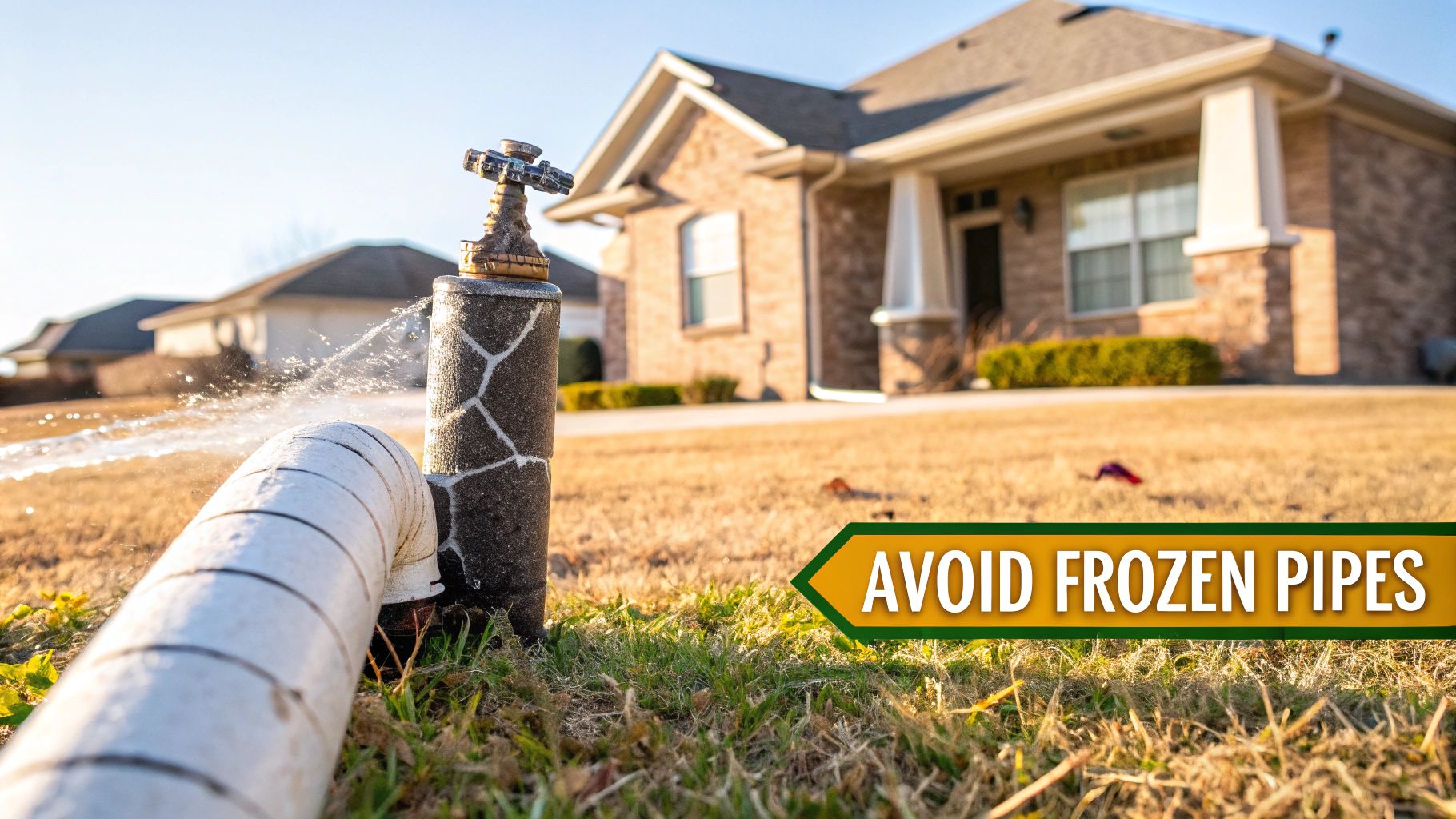
It's a common misconception that our milder winters let us off the hook. But all it takes is one unexpected freeze in Corpus Christi or a sudden cold snap in San Antonio to wreak havoc on an unprotected system. The real enemy here isn't just the cold; it's what happens when trapped water freezes.
As water turns to ice, it expands by about 9%. That expansion puts an incredible amount of pressure on every part of your irrigation system.
- Pipes: The force is easily strong enough to create hairline cracks or completely burst underground pipes. You often won't even know it's happened until you find a costly, hidden leak in the spring.
- Valves: These intricate components have delicate seals and diaphragms that can easily tear or rupture under the strain of expanding ice.
- Sprinkler Heads: Even the sprinkler heads themselves can crack, leading to poor performance and uneven watering when you need them most.
The Cost of Doing Nothing
Skipping this crucial task is a huge financial gamble. A professional winterization service is a small, proactive investment—usually between $60 and $150—that provides complete peace of mind. You can see how this compares to national averages for the service over at Angi.com.
A single burst pipe or a damaged backflow preventer can easily run you $500 to $2,000 or more in repairs. And that's before you even factor in the cost of digging up your yard and restoring your landscape.
Protecting your property means thinking ahead. For homeowners who take pride in their outdoor spaces, proactive maintenance is just smart ownership—a core philosophy behind our Brownsville landscaping services. Proper winterization ensures your system is primed and ready to go when the growing season returns, keeping your lawn and gardens looking their best.
Your Pre-Winterization System Shutdown Checklist
Before you grab an air compressor, there are a few critical shutdown steps you need to handle. Think of this as the prep work that sets you up for a smooth and successful winterization. Jumping ahead can lead to damaged pipes or a much bigger headache down the line.
First things first, you have to cut off the water supply to your irrigation system. This main shut-off valve is usually tucked away in a basement, crawl space, or sometimes in an underground utility box near your water meter. It's a non-negotiable step—if water is still getting into the lines, you'll never be able to clear them out properly.
Run a Final System Check
With the main valve closed tight, head over to your sprinkler controller. You're going to run one last manual cycle, zone by zone. This isn't about watering the lawn; it's all about bleeding off the remaining water pressure trapped in the system. This simple action makes the whole process safer and far more effective.
As the system cycles through its final run, take a walk around your property. This is your last, best chance for a quick visual inspection before everything goes dormant.
- Spot any damaged heads: Look for anything that's obviously cracked, leaning over, or not popping up and spraying like it should.
- Check for existing leaks: Keep an eye out for any persistent puddles or soggy areas that could signal a hidden leak in the line.
Taking care of these little problems now will save you from major surprises come springtime. A broken head can make the blowout difficult, and forcing compressed air through a leaky pipe will only make the damage worse.
Fixing these issues is a core part of good residential landscaping maintenance. It ensures every piece of your system is in solid shape before winter arrives. Catching problems early is the best way to protect your irrigation setup's long-term health. If you find any issues, our team can help diagnose and repair them. Learn more about our approach to residential landscaping.
The Professional Blow-Out Method: A Deeper Dive
When you need absolute certainty that your sprinkler system is protected, nothing comes close to a professional blow-out. This is the gold-standard technique for winterization, using a large volume of compressed air to physically push every last drop of water out of the pipes, heads, and valves. For the kind of sudden freezes we can get here in South Texas, it’s the most reliable way to prevent costly damage.
Now, this is where we must offer a serious word of caution. This is not a task for the typical air compressor you have in your garage. Those are designed for high pressure and low volume—perfect for filling a tire, but the complete opposite of what’s needed here. Trying to use one can create a dangerous pressure surge that can literally shatter PVC pipes and blow sprinkler heads apart.
To do this right, you need a high-volume, low-pressure air compressor. The professional-grade equipment we use is specifically designed to push a large quantity of air through the lines at a carefully regulated pressure, usually between 40 and 80 PSI. The exact pressure depends entirely on the type of piping in your system—poly pipe requires a lower PSI than rigid PVC, for instance.
The Zone-by-Zone Clearing Process
A proper blow-out isn't a "one-and-done" blast of air. It’s a meticulous, zone-by-zone process that requires patience and a careful eye.
Our technicians start by connecting the compressor to the system, typically right after the backflow preventer. From there, we use your controller to activate just one sprinkler zone at a time. This is critical because it forces the entire volume of air through that single line, giving it the power to push all the water out through the sprinkler heads in that specific area.
We run the air through until we see the water turn into a fine mist, and then finally, just air. That visual confirmation is our signal that the line is completely empty and safe. We then shut that zone off and repeat the exact same process for every other zone in your system until they're all clear.
This infographic lays out the foundational steps you'd take to get your system ready for a professional service.
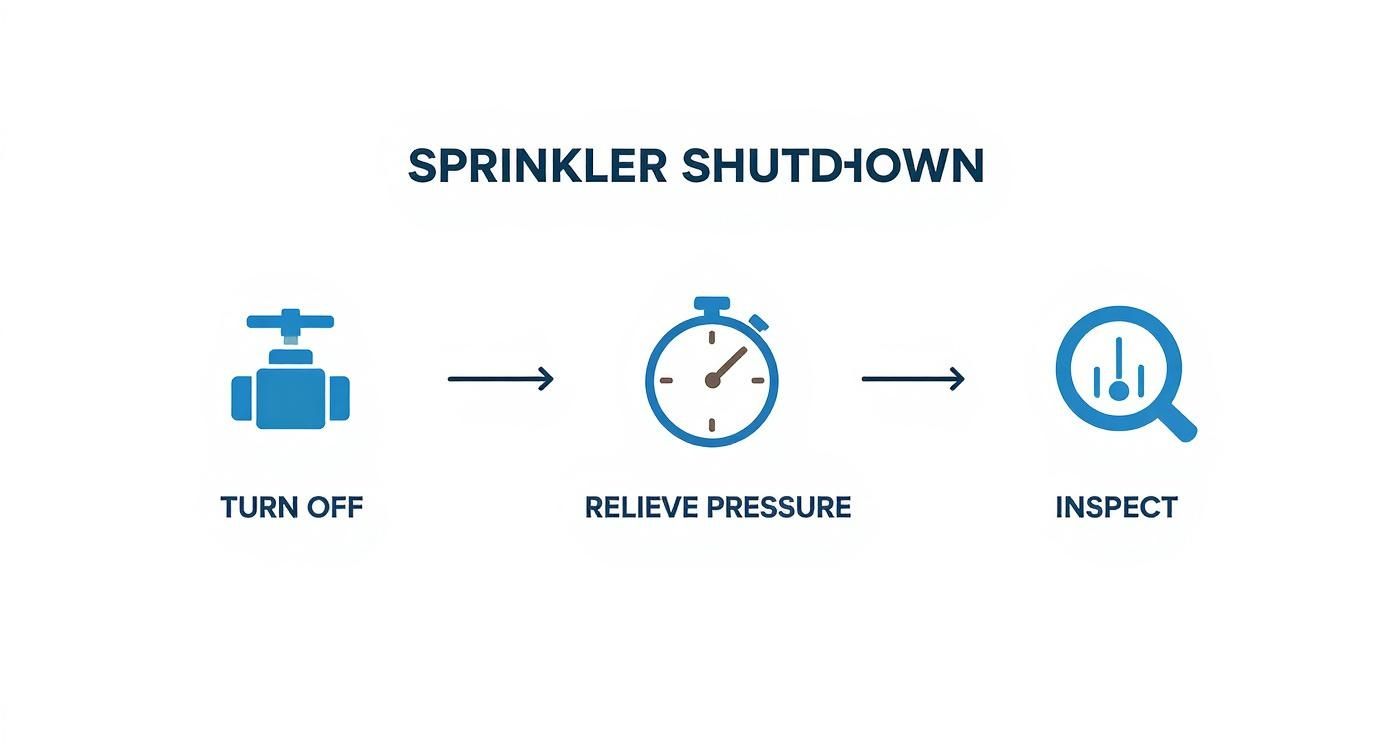
Getting these basics right—shutting off the water and relieving any existing pressure—is what allows us to perform a safe and highly effective blow-out.
Sprinkler Winterization Methods Compared
There are a few ways to tackle winterization, but not all methods are created equal. The right choice often comes down to your local climate and the type of irrigation system you have. The blow-out method is by far the most thorough, but it's helpful to see how it stacks up against other common techniques.
| Method | Effectiveness | Best For | DIY Friendliness |
|---|---|---|---|
| Professional Blow-Out | Excellent | All climates, especially those with hard freezes. Essential for systems with elevation changes. | Low (Requires Pro) |
| Manual Drain | Good | Milder climates with rare, light freezes. Systems must have manual drain valves installed. | High |
| Automatic Drain | Fair to Good | Milder climates. Relies on valves opening automatically when pressure drops. | High (System Dependent) |
Ultimately, while manual and automatic draining can work in some situations, the compressed air blow-out is the only method that guarantees every component is free of water, offering complete protection.
Safety Is Non-Negotiable
We can't stress this enough: working with compressed air is serious business. Without proper training, it's easy to cause damage or injury. Debris can be shot out of sprinkler heads at high velocity, and pressurizing the system incorrectly can cause components to fail explosively.
Our technicians are trained to handle the specific systems found across Corpus Christi and Harlingen, managing the pressure with precision to protect your landscape investment.
Trusting a professional team with specialized equipment is about more than just protecting your pipes—it’s about ensuring your safety. At Fischer Landscaping, we have the right tools and the expertise to perform a comprehensive blow-out, giving you total peace of mind that your system is secure for winter. Find out how this fits into our detailed commercial landscaping maintenance plans.
Protecting Your Above-Ground Sprinkler Components
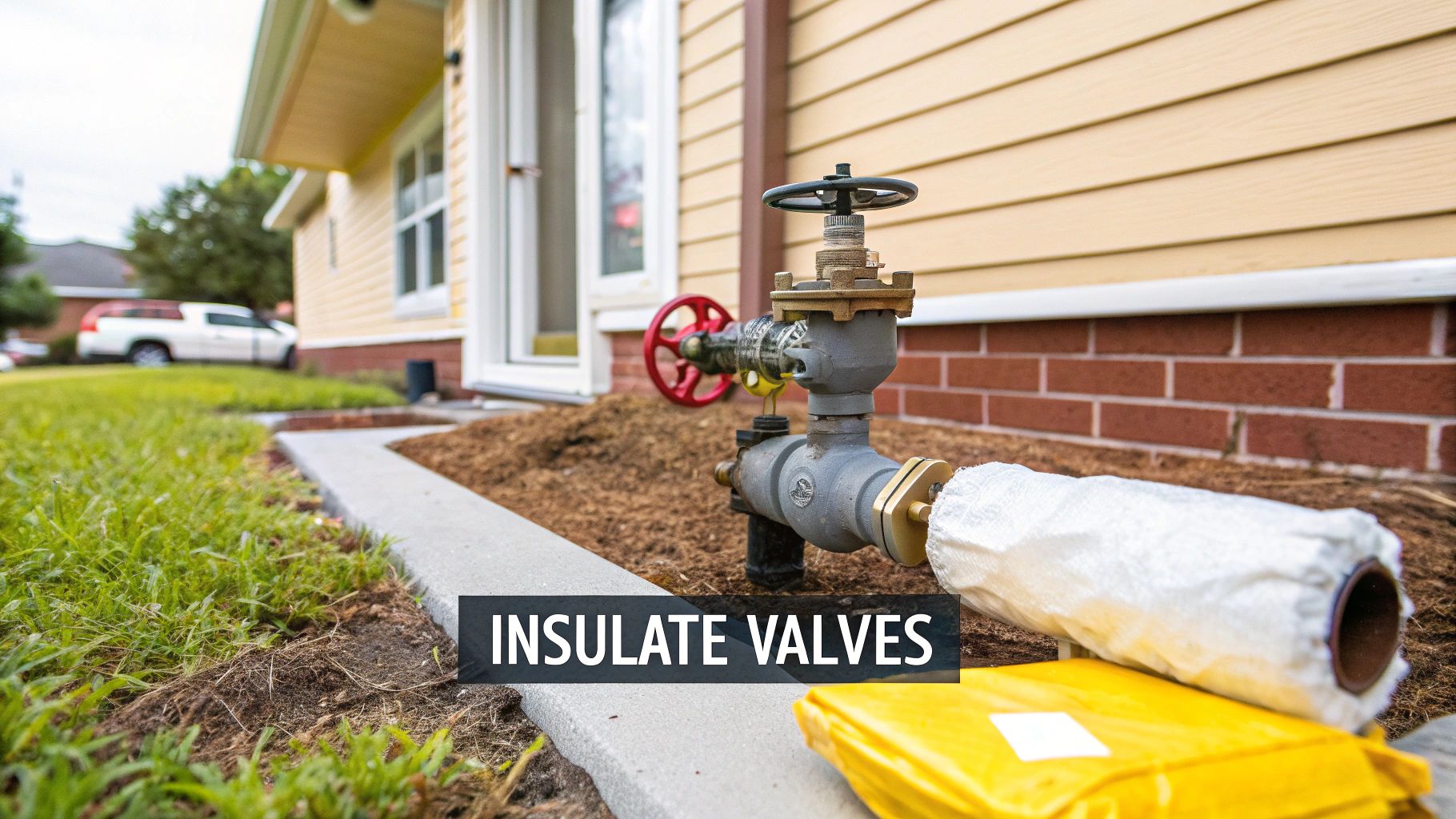
Even after a professional blow-out clears the underground lines, your work isn't quite finished. Some of the most vulnerable parts of your entire irrigation system are the ones left exposed to the open air. For homeowners in Brownsville and Harlingen, protecting these components is a critical defense against those unpredictable South Texas cold snaps.
The most important—and expensive—of these is your backflow preventer. A cracked backflow assembly can easily set you back hundreds of dollars to replace. That makes proper insulation a non-negotiable step.
Insulating Your Key Components
Your main goal here is simple: shield the main shut-off valve and the backflow preventer from freezing temperatures. You've got a couple of solid, field-tested options to get this done right.
- Insulated Pouches: These are basically custom-fit, weather-resistant bags made to slide right over your backflow assembly. They're incredibly easy to put on and take off, and they provide a snug, protective layer against the cold.
- Foam Insulation Tape: If you prefer a more tailored approach, wrapping the pipes and valves with self-sticking foam insulation tape is another great choice. The key is to be meticulous—cover every single inch of exposed metal, because even one small gap can let the frost in.
Taking care of these details is what separates a decent winterization from a great one. It’s about protecting your investment from top to bottom. And it is an investment; the global sprinkler irrigation market is projected to grow significantly, which shows just how many homeowners are relying on these systems. You can find more insights on the growth of sprinkler irrigation systems on databridgemarketresearch.com.
Here's a pro tip that can save you a lot of grief: Don't forget the small details. After insulating, open the little test cocks on your backflow preventer and leave them halfway open, sitting at a 45-degree angle. This simple move allows any lingering water droplets to expand and drain out, preventing them from cracking the delicate internal ball valves.
If you’re not completely confident about the best materials or how to apply them, the team at Fischer Landscaping can help. We handle hardscaping services that frequently involve irrigation work, so we have the hands-on experience to protect every last component of your system.
When It’s Time to Call in the Pros for Sprinkler Winterization
Tackling your sprinkler winterization yourself can feel like a smart way to save a few bucks. But one small oversight can lead to the very disaster you were trying to avoid. The truth is, the risks of a DIY job often eclipse the potential savings, especially when a hidden mistake leads to cracked pipes, a busted backflow preventer, or a muddy mess to excavate in the spring.
Bringing in a professional team like Fischer Landscaping is about more than just getting a task off your to-do list. It’s about getting it done with precision. Our technicians know the specific demands of irrigation systems in the Corpus Christi and San Antonio areas. We use commercial-grade equipment to dial in the exact air pressure needed for your specific pipes—a level of control a typical garage air compressor just can't safely deliver.
Common DIY Pitfalls
Trying to blow out your system without the right gear or experience is a gamble. Over the years, we've been called in to fix countless issues that started as a well-intentioned DIY project.
The most common problems we see are:
- Incomplete Water Removal: It doesn't take much. Just a small amount of water left in a low-lying pipe or a valve is all it takes for a hard freeze to cause a crack.
- Too Much Air Pressure: It's easy to overdo it with a high-PSI compressor. This can literally shatter PVC fittings and shred the delicate internal parts of your sprinkler heads.
- Forgetting Key Components: The backflow preventer is the heart of your system, and it's often the most expensive component. We frequently see them left unprotected, resulting in a costly replacement come springtime.
Your landscape is a serious investment. In the U.S., the sprinkler irrigation market was valued at around USD 1 billion in 2024, which really underscores how vital proper maintenance is. These are valuable assets worth protecting. You can read more about the growing reliance on irrigation technologies on gminsights.com.
At the end of the day, trusting a professional means the job gets done right the first time. It takes the guesswork out of the equation and protects your system with expertise built over years of field experience.
If you want to be certain your irrigation system is properly buttoned up for the winter, get in touch with our team today at Fischer Landscaping to get your service on the schedule.
Answering Your Sprinkler Winterization Questions
Here in South Texas, we get a lot of calls about winterizing sprinklers. Our winters can be mild one year and deliver a shocking freeze the next, so it’s natural to have questions. Let's tackle some of the most common ones we hear from homeowners across Corpus Christi, San Antonio, and the Rio Grande Valley.
Do I Really Need to Winterize My System Every Year in South Texas?
Yes, you absolutely do. It’s a common misconception that our milder climate gives you a pass, but all it takes is a single night of temperatures dipping below freezing to wreck your irrigation system.
Think of it as cheap insurance. A professional winterization service is a tiny investment compared to the thousands of dollars you could spend replacing burst pipes, cracked valves, and shattered sprinkler heads. Being proactive is always less painful—and less expensive—than dealing with an emergency repair.
What’s the Real Difference Between Draining and a Blow-Out?
This is a great question. Draining your system, whether it’s a manual or automatic process, simply uses gravity to let water run out. While it’s better than doing nothing, it almost always leaves behind pockets of water in low-lying pipes or inside valve assemblies.
A professional blow-out, on the other hand, is a much more thorough process. We use a high-volume, low-pressure air compressor to actively push every last drop of water out of the lines, valves, and heads. It's the only way to be 100% certain your system is empty and protected.
Given the varied terrain and complex sprinkler layouts we see across South Texas, a proper blow-out is the only method we trust. It removes all the guesswork and truly protects your landscape investment from a surprise freeze.
When Should I Get My Sprinkler System Winterized?
The sweet spot for winterizing in our region is usually between late October and the end of November. You want to time it after your lawn has had its last big growth spurt but well before the first legitimate freeze is in the forecast.
Our advice? Get on the schedule early. If you wait until a cold snap is announced on the news, you and everyone else will be scrambling for an appointment.
Don't gamble with your irrigation system this winter. At Fischer Landscaping, we have the right equipment and the local know-how to perform a comprehensive blow-out that keeps your system safe. Protecting your investment starts with getting the job done right. You can request a free quote directly from our website at https://fischerlandscapingusa.com.