As landscaping professionals serving South Texas, we often get asked how to prevent soil erosion. Our answer always comes down to two key strategies: smart planting and solid structural support. For anyone managing property from the rolling hills around San Antonio to the coastal plains of Corpus Christi, this isn't just a gardening tip—it's essential property protection.
Unchecked water runoff can carve up a landscape in a surprisingly short amount of time, washing away valuable topsoil, destabilizing slopes, and putting your home’s foundation at risk. A proactive approach not only protects your investment but also enhances its beauty and value.
Understanding the Threat of Soil Erosion in South Texas
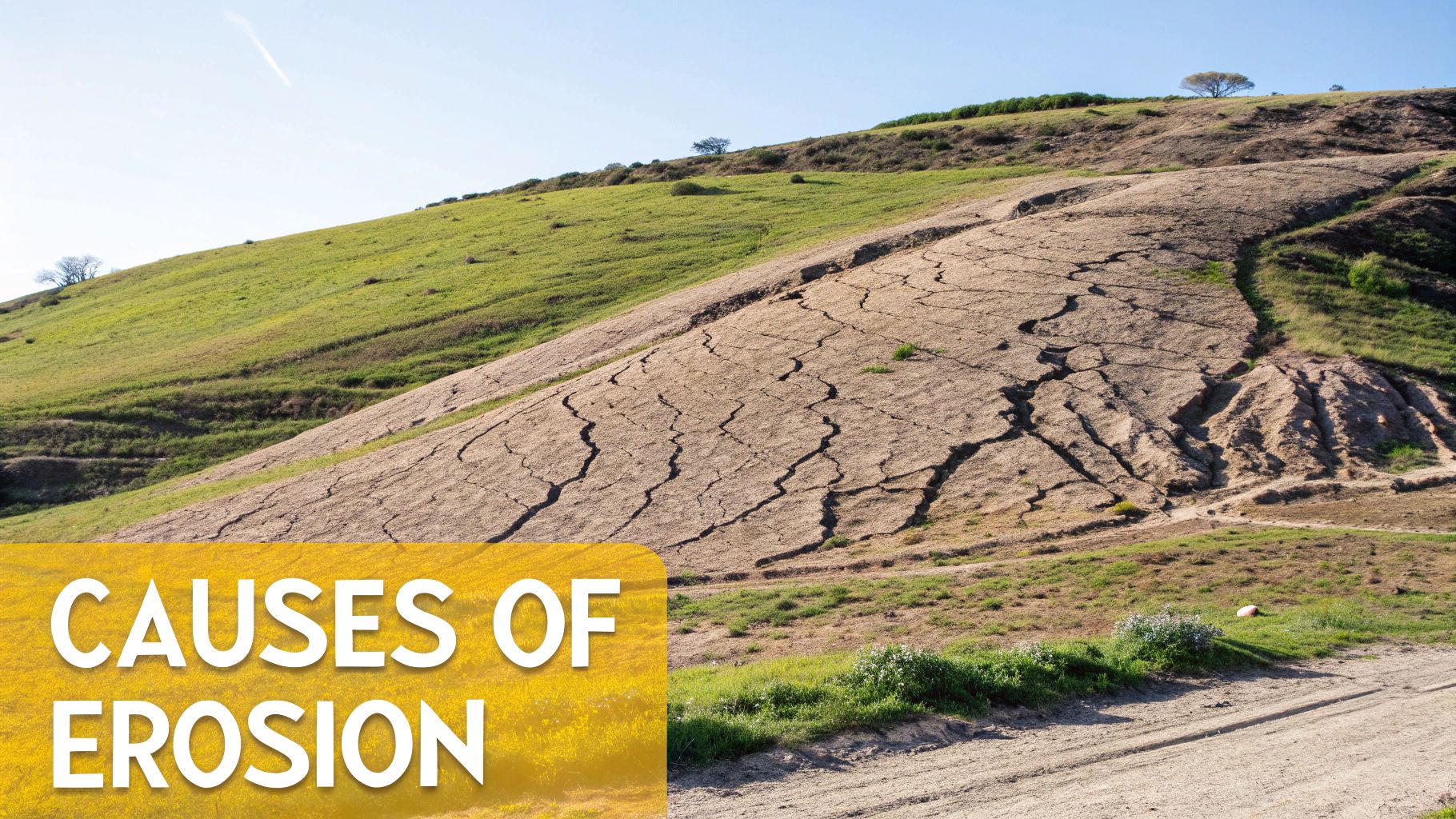
Here in South Texas, our weather patterns create a perfect storm for erosion. We get heavy Gulf Coast downpours followed by long, dry spells, a combination that leaves soil particularly vulnerable. Erosion is a quiet threat, but it can methodically undermine your property's foundation, destroy your landscaping, and ultimately hurt its value.
This isn't just about saving a bit of dirt; it's about protecting one of your biggest assets. When water has nowhere to go due to poor grading or bare ground, it will find a path, and it will take your soil with it, leading to some seriously expensive repairs.
And this isn't just a local concern. The challenge of soil erosion by water is set to become a much bigger problem worldwide in the coming years. Recent studies project that global soil erosion rates could jump by a staggering 66% by 2070. The economic fallout is estimated to be around $8 billion globally just from the impact on agricultural productivity. You can discover more about these startling erosion projections and their global impact.
Identifying the Warning Signs
Catching erosion early is key to protecting your property and avoiding costly repairs. By spotting the signs before they become major problems, you can save yourself a lot of headaches and money down the road.
We advise our clients to walk their property, especially after a heavy rain, and keep an eye out for these tell-tale signs. It’s much easier to see the evidence of water’s destructive path when the ground is still wet.
Common Signs of Soil Erosion on Your Property
This table breaks down the most common red flags we see on properties across South Texas. Use it as a quick checklist to assess your own landscape.
| Warning Sign | What to Look For | Potential Impact |
|---|---|---|
| Exposed Tree Roots | The root systems of trees and large shrubs becoming visible at the surface. | A clear sign that a significant amount of topsoil has already washed away. |
| Small Gullies or Rills | Tiny channels or trenches carved into lawns, garden beds, or bare soil after rainfall. | These are the first pathways for more significant water damage and soil loss. |
| Bare Patches of Soil | Areas where grass, groundcover, or other plants have died off or struggle to grow. | These spots are completely unprotected and highly vulnerable to wind and water erosion. |
| Muddy Puddles or Runoff | Water pooling on your property that looks cloudy, or muddy water flowing off your land. | The cloudiness is your topsoil being carried away with the water. |
Erosion rarely stays small. It's a progressive problem that gains momentum over time.
What starts as a small washed-out patch in the lawn can escalate into a major issue that destabilizes an entire slope or undermines your patio. A professional assessment from Fischer Landscaping can stop this process before it gets out of hand. Contact us for a free quote.
Diagnosing Your Property’s Unique Erosion Risks
Before you can tackle soil erosion, you have to understand the specific vulnerabilities of your land. The first step is a thorough site evaluation to figure out where and why your property is at risk. For anyone with property from Brownsville to Harlingen, this is a practical assessment you can start today.
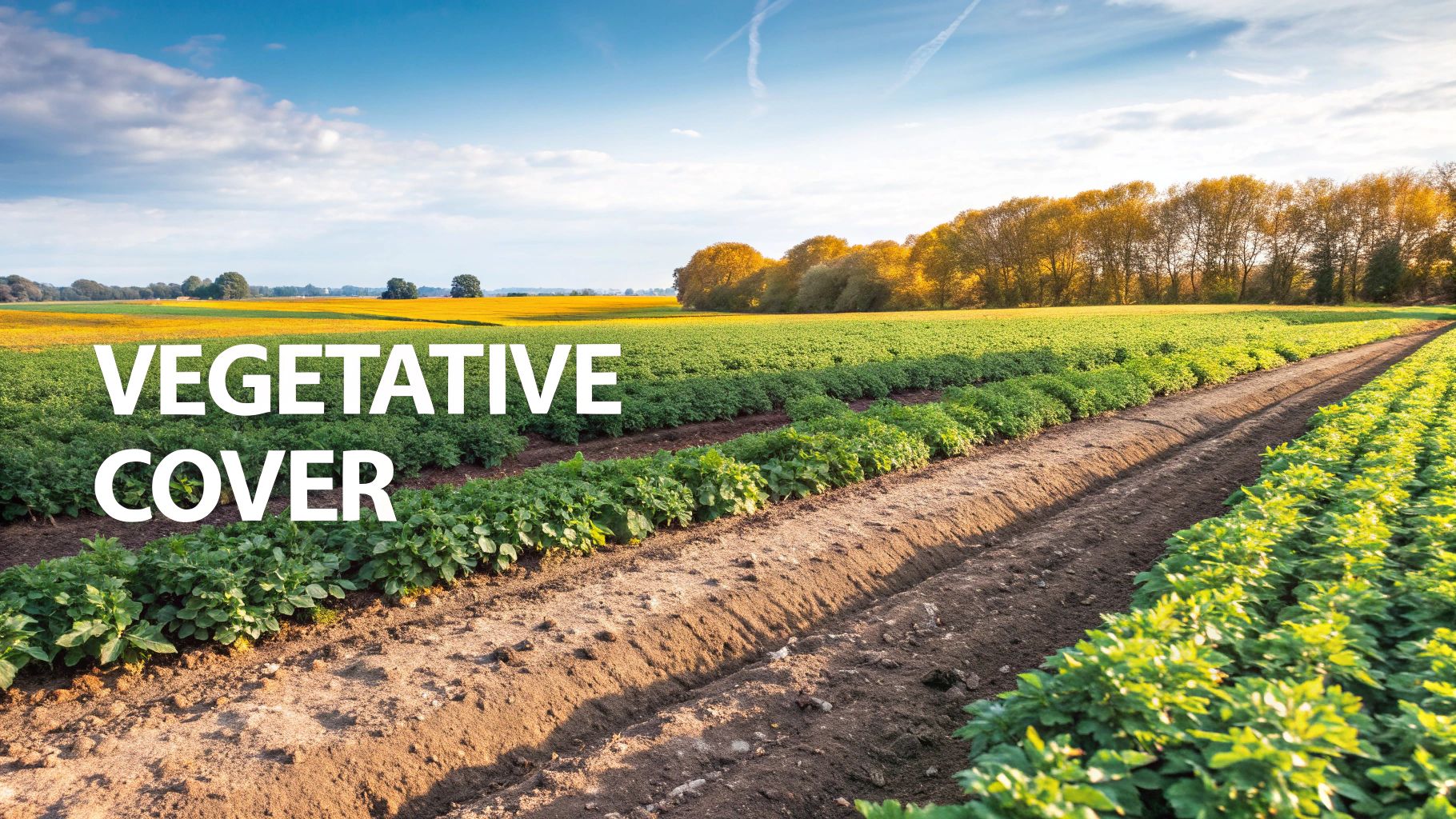
Start by walking your entire property. Look for obvious red flags: patches of bare ground, steep slopes with no plant life, or the gnarled, exposed roots of older trees. These are sure signs that topsoil is already being lost. Also, look for any small channels or gullies etched into the dirt—these are superhighways for rainwater, designed to carry your valuable soil right off your property. They almost always get worse with every storm.
Reading the Flow of Water
One of the best things you can do is observe your property during the next heavy rain. Grab an umbrella and see where the water goes. Where does it rush downhill in a torrent, and where does it pool up? Understanding these natural drainage patterns is the key to planning an effective, long-term solution.
A sloped yard in San Antonio that funnels every drop of rain toward the house foundation presents a completely different challenge than a flat commercial lot in Corpus Christi that’s getting scoured by wind. Identifying these specific flow patterns tells you exactly where you're most vulnerable.
A self-assessment is incredibly valuable and gives you a solid foundation of knowledge about your landscape. However, a professional consultation can often reveal underlying issues you might miss, such as compacted soil or subtle grading problems that accelerate runoff.
Understanding Your South Texas Soil
The type of soil you're working with plays a huge role in how stable it is. Here in South Texas, we've got everything from sandy coastal soils to heavy inland clays, and they all behave differently.
- Sandy Soils: Common near the coast, this soil drains quickly but is also very loose. Without a protective layer of plants, it can be washed or blown away easily.
- Clay Soils: Found more inland, clay soils are dense and absorb water slowly. During a downpour, water sheets right off the surface instead of soaking in, which can cause major erosion even on gentle slopes.
- Loam Soils: This is the ideal mix of sand, silt, and clay. But even perfect loam will erode if it's left bare on a slope.
Knowing your soil's makeup helps you choose the right game plan. For example, amending heavy clay might be a necessary long-term fix, while sandy soils need immediate plant cover. A professional assessment from Fischer Landscaping can include a soil analysis to build an erosion control plan that's truly targeted to your property's needs.
Harnessing Native Plants to Stabilize Your Soil
Your first and best line of defense against erosion is often alive and growing right in your own yard. Using plants—what we call softscaping—is the most natural and effective place to start. A healthy network of roots acts like a living web, holding your valuable topsoil in place against the forces of wind and heavy South Texas rain.
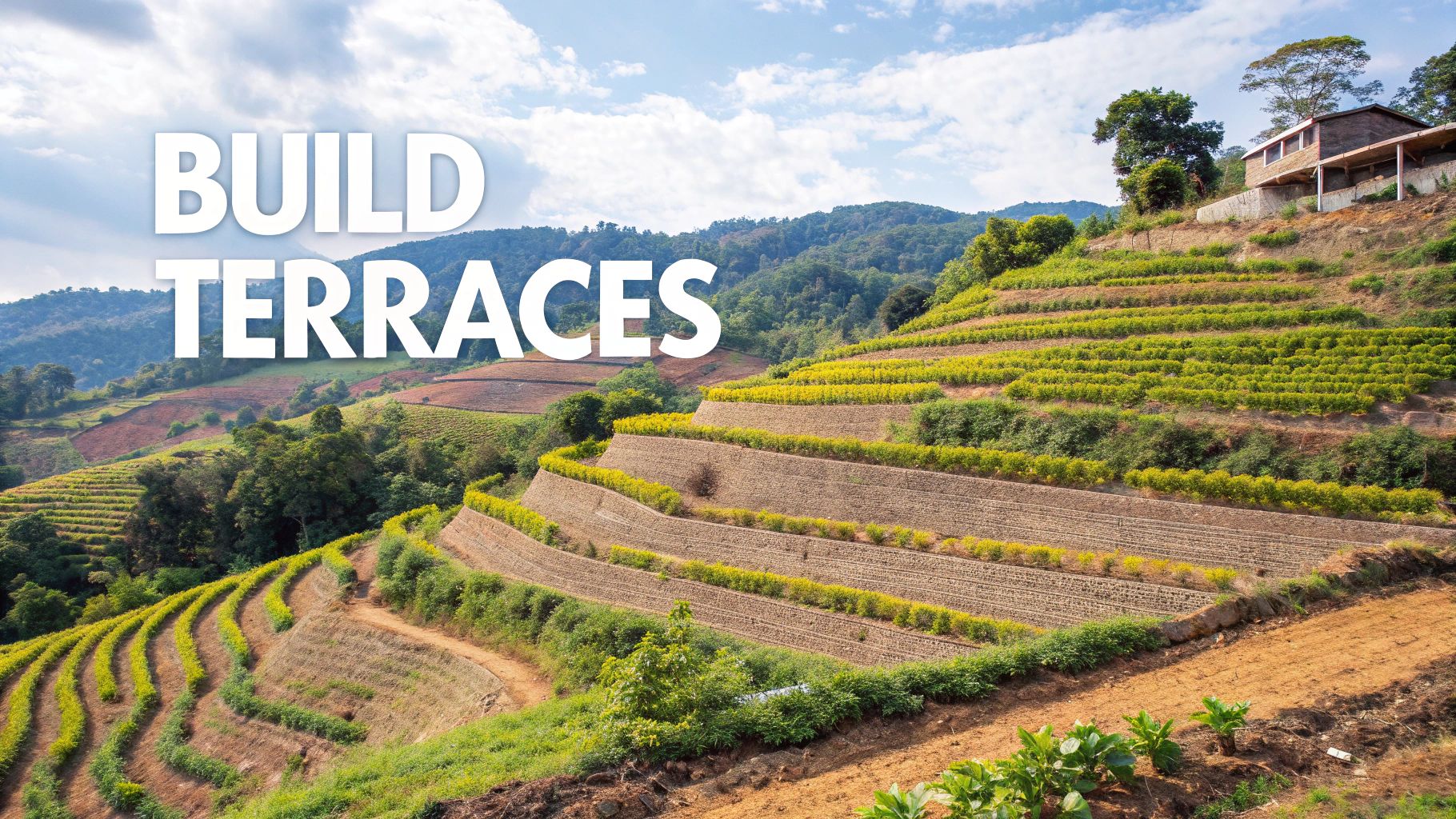
This isn't just a local problem; it's a global crisis. The world is losing an astonishing 24 billion tons of fertile soil every single year, mostly because land is left bare and unprotected. To put that in perspective, that’s an area of healthy land roughly the size of four football fields washing away every second. Considering that healthy soil is responsible for producing 95% of our food, protecting what we have is a job we all share.
Choosing the Right Plants for South Texas
In our unique and often challenging climate—from the humidity of Corpus Christi to the intense heat of San Antonio—not just any plant will do. The key is to select native and well-adapted species that have deep, fibrous root systems tough enough to handle our weather extremes. These are the plants that form the backbone of a resilient landscape.
Here are a few powerhouse plant types we consistently rely on at Fischer Landscaping:
- Native Grasses: Think Little Bluestem and Buffalo Grass. These champions send roots deep into the ground, weaving a dense mat that’s incredibly good at anchoring soil, even on slight slopes.
- Drought-Tolerant Groundcovers: Spreading plants like Frogfruit or Silver Ponyfoot create a living mulch. They cover bare ground quickly, shielding it from the direct, erosive impact of raindrops.
- Hardy Shrubs: For steeper grades, you need serious anchors. Deep-rooted shrubs like Texas Sage or Cenizo provide strong structural support and break up heavy rainfall before it can build momentum down a hill.
This strategy is a cornerstone of smart, water-wise landscaping. If you're interested in creating a yard that's both beautiful and low-maintenance, you should take a look at our guide on the basics of xeriscaping.
Practical Softscaping Techniques
Plant selection is crucial, but a few other techniques can dramatically boost your soil’s stability. One of the simplest and most effective moves you can make is to apply a thick layer of mulch—about 2 to 3 inches—over any exposed soil in your garden beds. This organic shield does three things at once: it absorbs the force of rain, helps the soil retain precious moisture, and slowly improves the soil's structure as it breaks down.
For bigger challenges, like a newly graded slope or a large bare patch of dirt, hydroseeding is a fantastic solution. This process involves spraying a special mixture of seed, mulch, fertilizer, and a binding agent directly onto the soil. It provides immediate protection from the elements and kickstarts germination, establishing a protective green carpet much faster than traditional seeding.
By combining the right native plants with smart techniques like mulching and hydroseeding, you create a powerful, self-sustaining system for erosion control. It's the strategy we use to build beautiful, lasting landscapes that work with our local environment, not against it.
Implementing Hardscapes for Permanent Erosion Control
Sometimes, a steep slope or serious water runoff is just too much for plants to handle on their own. That’s when it's time to bring in hardscaping. Hardscaping, which involves using non-living elements like stone, retaining walls, and engineered drains, offers powerful, permanent solutions for the toughest erosion challenges. These aren't just cosmetic additions; they fundamentally reshape and stabilize your land.
For anyone dealing with a significant grade change, whether it's a sloped backyard in San Antonio or a commercial lot in Harlingen, hardscapes are the definitive answer. An expertly built structure can turn a steep, problematic grade into a stable, attractive, and genuinely useful part of your property.
Retaining Walls: The Ultimate Soil Stabilizers
Without a doubt, the most effective tool for taming a severe slope is a properly built retaining wall. These are far more than just decorative barriers—they are engineered structures designed to hold back tons of soil and withstand immense water pressure. By creating level terraces, retaining walls can transform an unstable slope into a series of usable flat areas, perfect for a garden, patio, or a stretch of lawn.
The material you choose is critical for both long-term performance and the final look.
- Natural Stone: Offers a timeless, organic appearance that blends beautifully into the landscape, and its durability is second to none.
- Concrete Blocks: A versatile and budget-friendly choice, these come in a huge range of colors and textures to complement any style of home or building.
Proper construction is everything. A retaining wall needs a solid foundation, the right kind of backfill, and, most importantly, integrated drainage to relieve the hydrostatic pressure that builds up behind it. You can get a better sense of the technical skill involved in our guide on how to build retaining walls.
Strategic Water Management Systems
Beyond walls, the core of any good hardscape strategy is controlling the flow of water. The goal is to capture and redirect runoff before it can pick up enough speed to start stripping away your soil. A professionally designed system doesn't just protect your landscape; it safeguards your home's foundation, too.
A big part of managing water runoff starts right at your roof. Learning about correctly installing gutter systems is a great first step to direct rainwater away from your foundation and landscaping, which drastically cuts down on erosion risk.
Other essential hardscape installations include:
- French Drains: These hidden trenches filled with gravel and a perforated pipe are incredibly effective at intercepting groundwater and channeling it safely away from soggy areas or your foundation.
- Swales: These are shallow, grassy channels designed to slow water down. Instead of letting water rush downhill, they encourage it to spread out and gently soak into the ground, reducing runoff and hydrating surrounding plants.
Comparing Hardscaping Erosion Solutions
Choosing the right hardscape can feel overwhelming. This table breaks down the most common solutions to help you match the right one to your specific needs, budget, and aesthetic preferences.
| Hardscape Solution | Best For | Key Benefit | Considerations |
|---|---|---|---|
| Retaining Walls | Severe slopes, terracing, creating usable space | Maximum soil stabilization, aesthetic upgrade | Higher initial cost, requires professional design |
| French Drains | Soggy yards, foundation protection, high water table | Removes subsurface water effectively, invisible | Can be labor-intensive to install |
| Swales | Gentle slopes, managing surface runoff | Natural appearance, promotes infiltration | Requires space, may not be enough for heavy flow |
| Gutters & Downspouts | Protecting foundation perimeter, all properties | Directs roof water away, prevents concentrated flow | Requires regular cleaning and maintenance |
Each of these hardscapes plays a specific role. For serious slope issues, a retaining wall is often the cornerstone of the project, while drains and swales provide crucial support by managing the water that causes the erosion in the first place.
This chart really drives home how effective different engineered solutions can be.
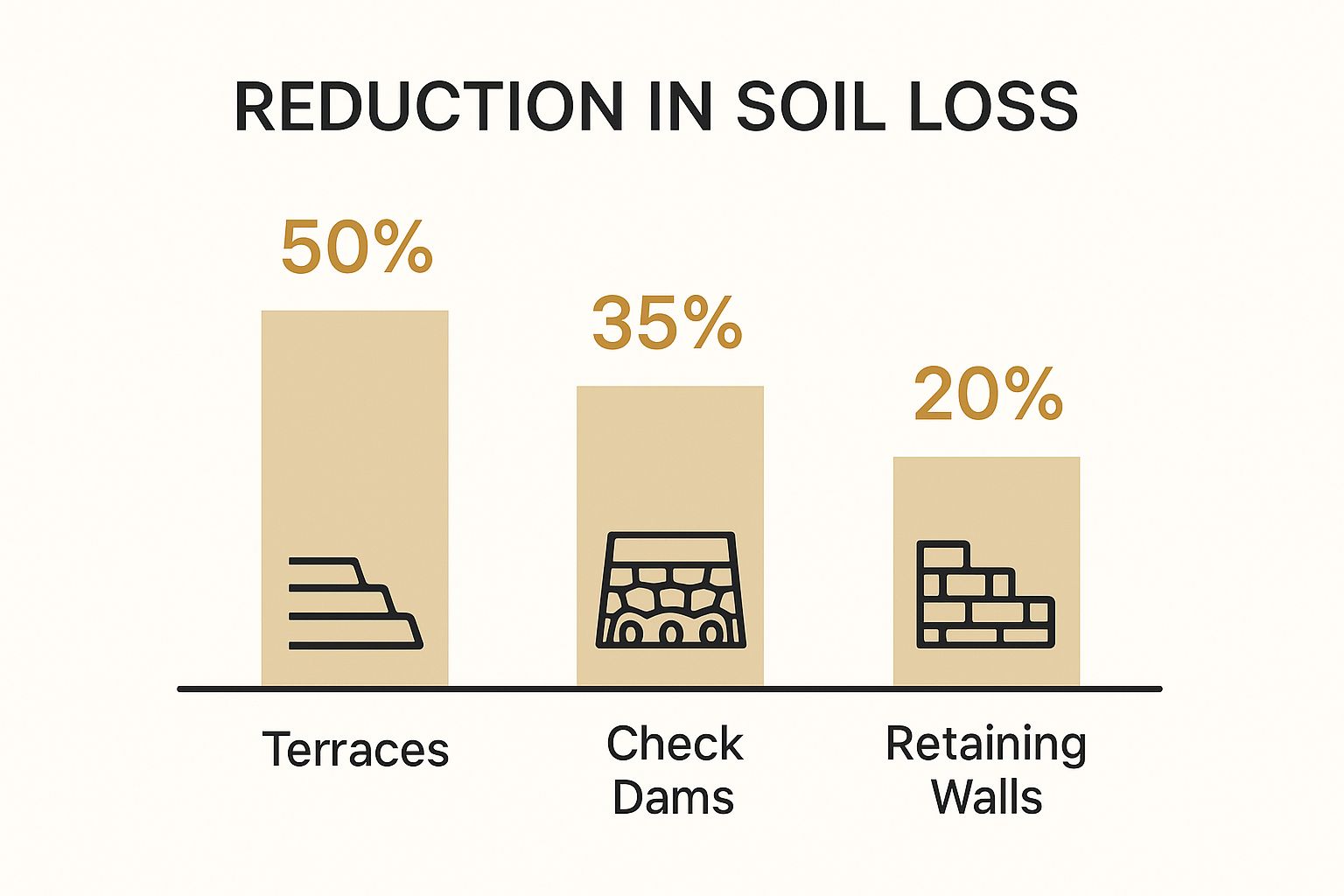
As you can see, terracing—which is what retaining walls create—provides the most significant reduction in soil loss. It’s the premier solution for steep grades, hands down.
Hardscaping is an investment in the permanent stability and value of your property. When you integrate structures like retaining walls and French drains, you're not just stopping erosion—you're creating a resilient, long-lasting landscape that can withstand whatever our South Texas weather throws at it.
If you're dealing with stubborn erosion that plants just can't fix, it’s time for a professional, structural approach. Contact Fischer Landscaping to discuss your options.
Maintaining Your Landscape for Long-Term Stability
Erosion control is a long-term commitment, not a one-time fix. After you've installed native plants, built a retaining wall, or laid down mulch, protecting that investment requires consistent maintenance. It’s the ongoing habits that make the difference between a landscape that stands strong for years and one that slowly washes away.
A well-kept landscape is a resilient one. By catching and fixing small issues early—like thinning mulch or a clogged drain—you stop them from snowballing into major headaches that could threaten your property, whether you're in Corpus Christi or San Antonio.
Proactive Maintenance Habits
Regular upkeep doesn't have to be a huge chore. Integrating a few smart practices into your routine will protect your soil and keep your erosion control measures working effectively.
- Regular Inspections: Walk your property regularly, especially after a heavy rain. This is the perfect time to spot trouble.
- Check Structures: Look closely at retaining walls for any signs of bulging, cracking, or shifting.
- Clear Drainage Systems: Check your French drains, swales, and gutters for leaves, silt, or debris. A blockage might seem minor, but it can force water to find a new, destructive path during the next downpour.
The real goal of maintenance is prevention. A clogged drain isn't just an inconvenience; it's a potential catalyst for water to carve a new path through your yard, undoing all your hard work.
Adjusting Care for a Healthy Landscape
Proper care goes beyond just clearing drains and checking walls. How you water your property, for instance, plays a huge role. Blasting your landscape with too much water can be just as damaging as a torrential rainstorm, creating artificial runoff that strips away precious topsoil. You'll want to adjust your irrigation schedule based on the season and recent rainfall to keep the soil moist but never waterlogged.
This is all tied to the health of your plants and grass. A thick, vibrant lawn is one of your best natural defenses against surface erosion. For a deeper dive, check out our guide on lawn care and maintenance tips for a lush green yard.
It’s interesting to note that human activity has impacted soil for a very long time. Research shows that even ancient farming techniques from 3,500 years ago dramatically increased how vulnerable soil was to erosion. You can learn more about the historical impact of land use on soil loss—it really puts into perspective why modern, sustainable maintenance is so critical.
For homeowners and property managers who’d rather have peace of mind, our professional landscape maintenance programs are the answer. We act as your long-term partner, handling the inspections, adjustments, and general upkeep. This ensures your property remains stable, healthy, and beautiful all year long. Contact Fischer Landscaping today, and we can put together a quote for a maintenance plan that fits your South Texas property perfectly.
Answering Your Soil Erosion Questions
As landscape professionals in South Texas, we get a lot of questions about soil erosion. It's a major concern for property owners from Corpus Christi all the way to San Antonio, and for good reason. People want to know what it costs, what actually works, and how to protect their investment.
Here are straightforward answers to some of the most common questions we hear.
How Much Does Professional Erosion Control Cost?
This is always the first question, and the honest answer is: it really depends. There's no one-size-fits-all price because the cost is tied directly to the size of your property, the severity of the erosion, and the solution we land on.
A simple fix like spreading a thick layer of mulch or staking down jute netting on a small, gentle slope is quite affordable. But if we're talking about a steep, unstable hillside that threatens your foundation, you're looking at a more significant structural investment. For instance, a professionally installed retaining wall in the San Antonio area can run anywhere from $25 to $75 per square foot, based on the materials and site challenges.
It's better to think of this as protecting your property's value, not just another expense. The only way to get a firm number is to have a professional walk the site with you.
Are Temporary Fixes Like Erosion Blankets Worthwhile?
Absolutely. Temporary measures like erosion control blankets (made from materials like coir or straw) and silt fences are indispensable, especially on newly disturbed ground like construction sites or areas where you've just installed new plants.
These tools are designed to hold the soil and slow down water just long enough for new vegetation to take root. They're a bridge, not a final destination. We often pair them with hydroseeding to give a new lawn the best possible chance of surviving its first big Texas downpour.
Think of erosion blankets as a protective shield for your soil's most vulnerable stage. They give your new plants the fighting chance they need to grow strong and become a long-term defense against erosion.
What Native Plants Are Best for South Texas?
Using native plants is one of the smartest, most sustainable ways to fight erosion. They are already adapted to our unique climate and soils, meaning they establish strong roots without needing constant attention.
A well-thought-out landscape design will incorporate plants that are not only beautiful but also workhorses when it comes to holding soil. Here are a few of my go-to choices for South Texas:
- Grasses: Nothing anchors soil quite like the deep, fibrous roots of native grasses. Buffalo Grass and Little Bluestem are fantastic for creating a dense underground web that locks everything in place.
- Groundcovers: For covering bare ground quickly, you can't beat low-growing options like Frogfruit or Silver Ponyfoot. They spread out to form a living mat that deflects the force of falling rain.
- Shrubs: When you're dealing with a more significant slope, hardy shrubs are your best friend. The powerful root system of a plant like Texas Sage (Cenizo) provides incredible stability.
Protecting your property from soil erosion isn't just about maintenance; it's about preserving the value and safety of your home or business. Whether through smart planting or permanent hardscaping, the right solution secures your landscape for the long haul.
If you're tired of seeing your valuable soil wash away, the team at Fischer Landscaping is ready to put a stop to it. We provide professional, long-lasting erosion control solutions for properties throughout South Texas, including Corpus Christi, San Antonio, Brownsville, and Harlingen.
Request your free, no-obligation quote today and let's build a stable, beautiful landscape together.