Installing a new irrigation system is a rewarding project that transforms how you care for your landscape. The process involves mapping your yard, digging trenches, laying pipes, and connecting sprinkler heads or drip lines to a water source and controller. Success, however, hinges on meticulous planning and precision—get that right, and you'll give every plant exactly the water it needs without wasting a drop.
This guide provides a clear roadmap for homeowners and property managers in South Texas. While a DIY installation is possible, understanding the professional process highlights why partnering with an expert like Fischer Landscaping ensures a reliable, efficient system built to last.
Why Smart Irrigation is Essential for South Texas Landscapes
Anyone trying to maintain a lush landscape in South Texas faces a tough challenge. We contend with intense sun, high temperatures, and unpredictable rainfall. From Corpus Christi to San Antonio, relying on a hose and a portable sprinkler is often inefficient, time-consuming, and drives up water bills.
A professionally installed irrigation system is not a luxury; it’s a critical investment in your property's health, value, and curb appeal. This guide moves beyond basic instructions to cover the strategic thinking needed to install a system tailored for our local climate. The sandy loam in Harlingen requires a different watering strategy than the heavy clay soils around Brownsville, and your system must account for these variations.
The Tangible Benefits of a Well-Designed System
A thoughtfully designed irrigation system delivers more than just green grass. The benefits significantly impact your budget and property.
- Significant Water Savings: Modern smart controllers and high-efficiency sprinkler heads deliver water precisely where it's needed, minimizing runoff and evaporation. This precision can cut your landscape water usage by up to 50% compared to manual watering.
- Foundation Protection: The expansive clay soil common across South Texas poses a serious risk to property foundations. It swells when wet and shrinks dramatically when dry, creating movement that can lead to costly structural damage. A properly designed irrigation system maintains consistent soil moisture around your home, protecting its integrity.
- A Healthier Landscape: Consistent, deep watering encourages strong root growth, making your turf and plants more resilient to drought, pests, and diseases. An automated system ensures your landscape stays hydrated, even when you're away from home.
A well-designed irrigation system is the cornerstone of a sustainable landscape. It’s about applying the right amount of water, in the right place, at the right time.
For maximum water efficiency, pair your irrigation system with drought-tolerant plants. Learning the basics of xeriscaping will help you create a beautiful, low-maintenance landscape that thrives in our climate. Ultimately, partnering with Fischer Landscaping guarantees a system designed for your property's specific needs, helping you avoid the costly mistakes common with DIY kits.
Designing Your System for Peak Performance
A high-performance irrigation system is built on a smart plan, not just expensive parts. Before any digging begins, creating a detailed design is the most critical step. A well-thought-out layout prevents future headaches and ensures every part of your landscape receives the precise amount of water it needs.
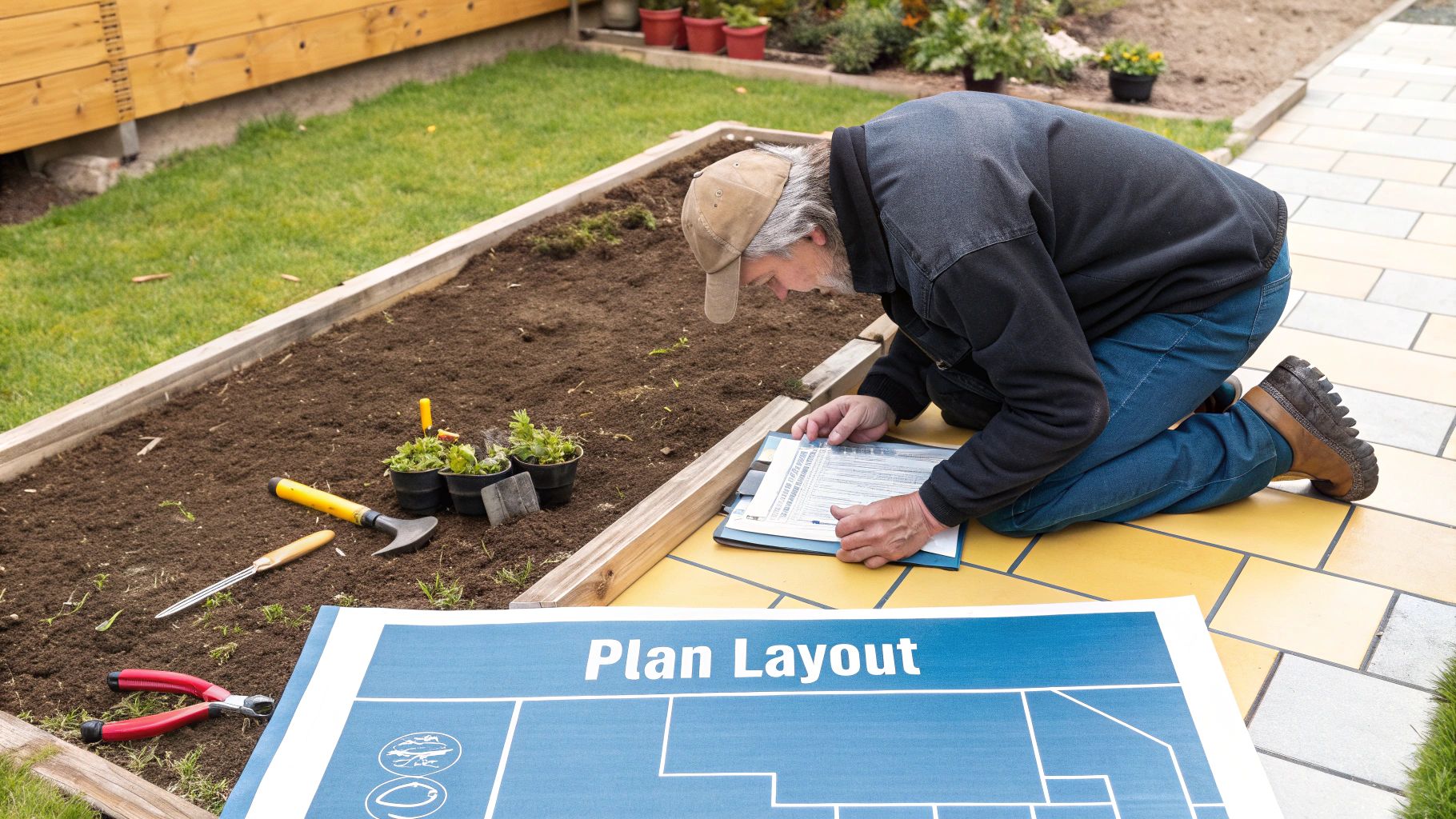
Start by mapping your property on graph paper. Sketch the major elements first: property lines, your house, driveway, and patios. Then, add existing landscape features like trees, shrubs, and garden beds. This map is the foundation of your entire plan.
Mapping Your Unique Watering Zones
With your property map complete, it's time to define your hydrozones—areas with similar watering needs. Grouping plants and turf this way is a core principle of efficient irrigation. For example, a sun-drenched patch of St. Augustine grass in Corpus Christi requires a different watering schedule than a shaded bed of native perennials.
When outlining zones, consider these factors:
- Sun vs. Shade: Areas exposed to the intense South Texas sun need more water than shaded spots.
- Plant Type: Lawns, shrubs, flower beds, and vegetable gardens all have unique water requirements.
- Soil Type: Sandy loam soils in areas like Harlingen drain quickly and need more frequent, shorter watering cycles. In contrast, the dense clay common around Brownsville retains moisture longer, requiring slower, deeper watering to prevent runoff.
This careful planning is a hallmark of professional landscape design and is essential for water conservation and plant health.
Checking Your Water Pressure and Flow Rate
Next, you must measure your home's water pressure (in PSI) and flow rate (in GPM). This data is non-negotiable. Without it, you cannot properly size your pipes or select the right sprinkler heads, leading to a system that underperforms.
Your system’s design is only as good as the water supply supporting it. Measuring pressure and flow rate beforehand prevents the common mistake of designing a system your home can't handle.
Choosing the correct pipe size is crucial for maintaining pressure throughout the system. A detailed pipe size chart and reference guide is an invaluable tool for this step. The pressure and flow rate measurements will determine how many sprinkler heads can run on a single zone without sacrificing performance.
Selecting the Right Sprinkler Heads
With your zones and water capacity defined, you can select the hardware. The sprinkler heads you choose are critical to your system's efficiency. Different heads are designed for specific tasks, from covering large lawns to gently watering delicate flowers.
Choosing the right head for each zone prevents overwatering in one area while another remains dry. Here’s a quick guide to help match the right head to the right application.
Comparing Sprinkler Head Types for Your South Texas Yard
| Sprinkler Head Type | Best For | Watering Pattern | Average Cost (Per Head) |
|---|---|---|---|
| Fixed Spray Heads | Small to medium lawns, garden beds, groundcover | Fixed fan-like spray, often in arcs (90°, 180°, etc.) | $2 – $5 |
| Rotor Heads | Medium to large lawns (30+ feet) | Single rotating stream, covers long distances | $10 – $20 |
| Rotary Nozzles | Slopes, clay soil, irregularly shaped areas | Multiple rotating streams, low precipitation rate | $5 – $10 |
| Bubblers & Drip | Trees, shrubs, dense flowerbeds, container gardens | Direct-to-root watering, ultra-low volume | $1 – $3 (per emitter) |
This table provides a starting point. A professional site analysis from Fischer Landscaping considers all these variables to create a custom design that maximizes performance and water conservation.
Drip vs. Sprinklers: Which Is Right for Your South Texas Yard?
When planning your irrigation system, a key decision is choosing between sprinklers and drip irrigation. In South Texas, this choice is crucial for maintaining a healthy landscape while conserving water. The ideal solution for most properties is not an either/or decision but a hybrid approach that uses both systems strategically.
Sprinkler systems, with their familiar spray heads and rotors, remain the most effective solution for large, open turf areas. Nothing covers a broad lawn in Corpus Christi or San Antonio more efficiently. They are designed to broadcast water over a wide area, which is precisely what turfgrass needs.
For nearly everything else, however, drip irrigation is the superior choice. It is essential for foundation watering and the perfect solution for flower beds, shrubs, and vegetable gardens.
Why Drip Irrigation Is a Game-Changer
A drip system delivers water slowly and directly to the base of each plant. This targeted approach is what makes it so effective. It nearly eliminates the two biggest sources of water waste in our climate: evaporation and wind drift. While a significant portion of water from a sprinkler can evaporate in the hot Texas air, drip systems deliver almost all of it to the soil.
Here’s why we recommend drip irrigation so often:
- Unmatched Water Efficiency: By applying water directly to the root zone, drip systems nourish your plants without watering the atmosphere. This is the single most effective way to conserve water and lower your utility bills.
- Healthier Plants: Sprinklers can wet plant foliage, creating a damp environment where fungal diseases thrive. Drip irrigation keeps leaves dry and encourages deeper, stronger root growth.
- Essential Foundation Protection: We install dedicated drip lines around home foundations to maintain consistent soil moisture. This prevents the damaging shrink-swell cycles in our clay soil that can lead to foundation cracks—a costly but preventable problem.
The precision of drip irrigation makes it the undisputed champion for any non-lawn area. You're not just saving water; you're giving your landscape exactly what it needs, where it needs it, for peak health.
This shift toward micro-irrigation is a global trend. The market is projected to grow from USD 11.95 billion in 2025 to USD 30.05 billion by 2035, with drip systems expected to account for over 76% of that market. You can explore more data on this trend at Future Market Insights.
The Best of Both Worlds: A Hybrid System
For most properties in areas like Brownsville and Harlingen, a hybrid system is the optimal solution. This approach uses rotors or spray heads for open lawn areas and dedicated drip zones for garden beds, trees, and the foundation line.
This integrated design ensures no part of your landscape is over- or under-watered. While this can be a DIY project, a professional installation from Fischer Landscaping ensures every zone is properly balanced and calibrated for maximum efficiency. If you are considering a DIY drip system, our guide on how to install drip irrigation systems is a great resource.
Bringing Your Irrigation Plan to Life: The Installation Process
With your design complete, it's time to begin the installation. This is where your plan becomes a functional network of pipes and sprinklers. Proper execution at this stage is crucial for creating a reliable system that will last for years.
The first and most important step is to call 811 before you dig. This free service notifies local utility companies to mark the location of their underground lines on your property. Accidentally hitting a gas or electric line is a dangerous and expensive mistake you must avoid.
Trenching and Pipework: The Backbone of Your System
Once all utility lines are clearly marked, you can start trenching. In South Texas, trenches should be at least 8 to 12 inches deep to protect the pipes from lawn aerators and routine digging.
You have two options for digging:
- By Hand: For small yards or simple layouts, a trenching shovel is sufficient. However, it is hard work, especially in the dense clay soil common around Corpus Christi.
- Rent a Trencher: For larger projects, renting a walk-behind trencher is the best choice. It creates clean, consistent trenches quickly and with far less physical effort.
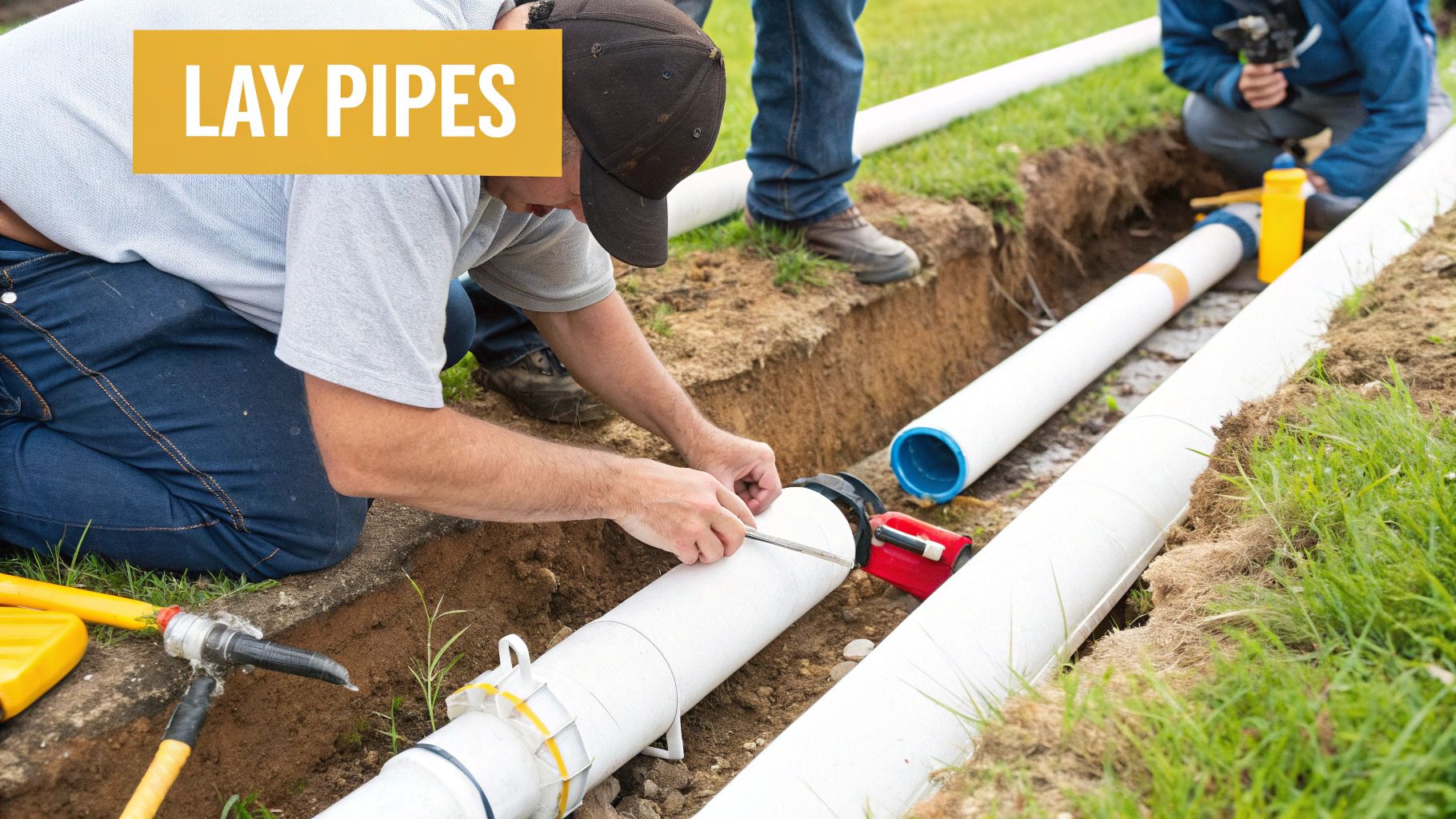
With the trenches dug, you can begin laying the PVC pipe. This involves cutting pipes to length and using PVC primer and cement to glue all fittings. Take your time to ensure every joint is secure. A single leaky connection can cause persistent problems that are difficult to locate and repair later.
The Valve Manifold and a Crucial Final Flush
The valve manifold is the control center of your irrigation system. It consists of a series of valves, typically housed in an underground box, that direct water to each zone. Correctly assembling the manifold is essential for independent control over your lawn, garden beds, and other areas.
Professional Tip: Before attaching any sprinkler heads, flush the entire system. Open the ends of the pipes and turn on the water for a few minutes to clear out any dirt, glue residue, or PVC shavings. This simple step prevents your new sprinkler nozzles from clogging immediately.
The image below provides a visual reference for checking your work after assembly.
This cycle of running a zone, observing its performance, and making adjustments is fundamental to calibrating your new system for perfect coverage.
The industry is constantly evolving to meet consumer demands for easier installations. The growing popularity of surface drip systems is a key market driver, with components like drip tubing projected to account for over a third of revenue in 2024. You can read more about these drip irrigation market trends and insights to see how the market is changing.
Knowing how to install an irrigation system is one thing; executing it flawlessly is another. The hands-on experience of a professional team makes a significant difference. At Fischer Landscaping, we handle every detail to ensure you get a high-performance system built to withstand the South Texas climate.
Final Connections and System Testing
You’ve laid the pipes and assembled the valve manifold. Now it's time for the final connections and thorough testing. This last stage ensures your system is safe, efficient, and reliable from day one.
The most critical connection is to your main water line, and it requires a backflow preventer. This device is non-negotiable and required by law. It acts as a one-way gate to prevent irrigation water, which may contain fertilizers or pesticides, from flowing back into your home's drinking water supply.
Powering Up and Programming Your Controller
With the plumbing complete, mount the controller—the brain of your system—in a protected location like a garage. A modern smart controller is an excellent investment, especially for navigating water restrictions in South Texas.
Smart controllers offer significant advantages:
- Connect to Wi-Fi to access local weather data in real-time.
- Automatically adjust watering schedules based on weather forecasts, skipping cycles before rain and increasing watering during heatwaves.
- Provide remote control via your smartphone, allowing you to manage your system from anywhere.
Programming the controller brings your design to life. You will set a custom watering schedule for each zone. For example, lawn zones typically require longer, less frequent watering to encourage deep root growth, while flower beds in sandy soil may benefit from shorter, more frequent cycles.
The System Testing Checklist
Do not backfill the trenches until you have thoroughly tested the entire system. Finding and fixing a leak now is a simple task. Finding one after the trenches are filled is a major project.
A thorough system test is your final quality-control inspection. It's your last chance to catch problems, dial in the performance, and make sure every drop of water is going exactly where you planned before you bury the evidence.
Turn on the main water supply and use the controller to manually run each zone one at a time. Walk the length of the pipes for each zone, carefully inspecting every fitting, sprinkler head, and connection for leaks. If you encounter issues with the main water line tie-in, it’s wise to consult a licensed professional, like those providing plumbing repair services in Austin, to ensure the connection is secure and up to code.
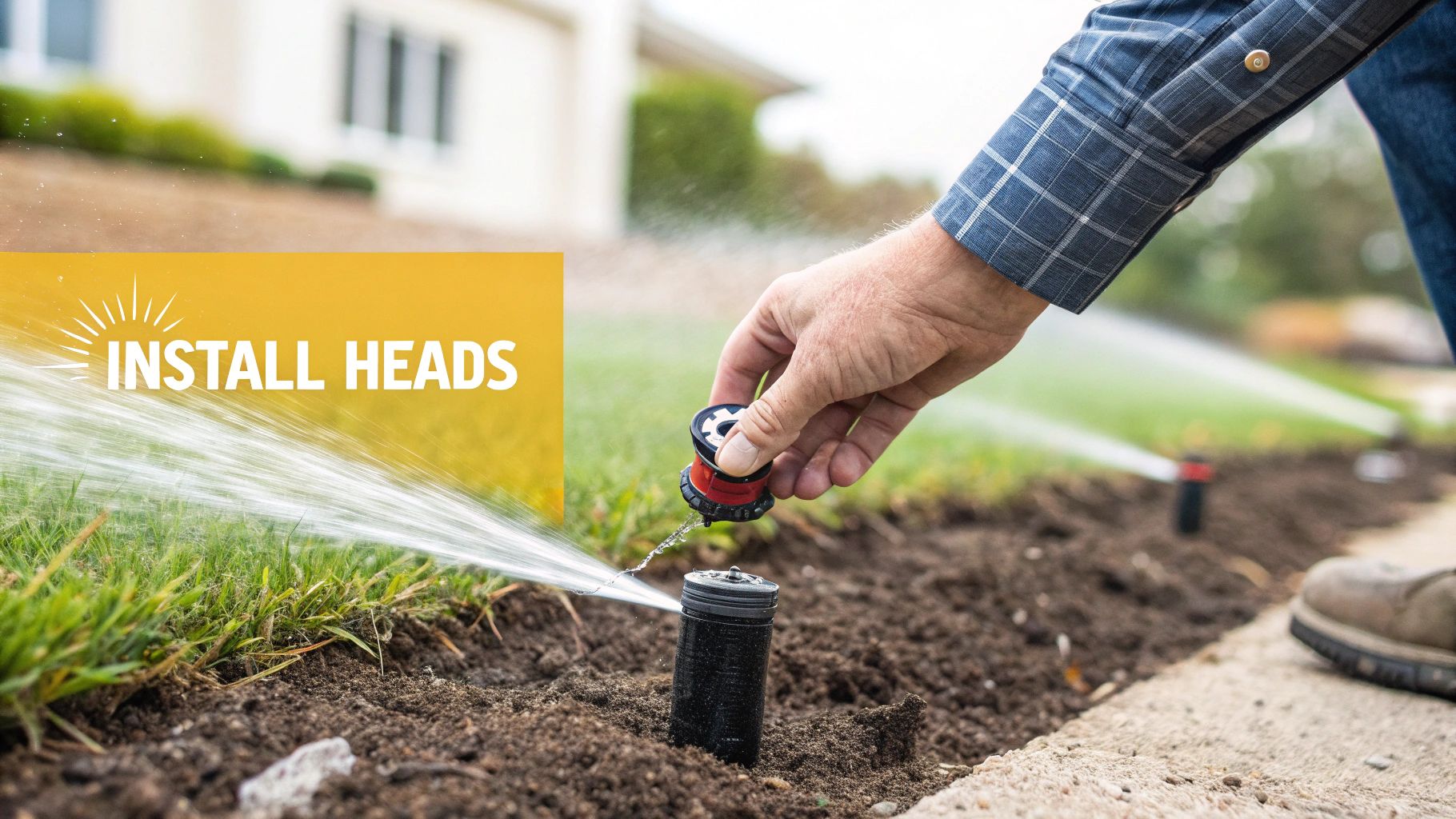
While the zones are running, adjust each sprinkler head to achieve perfect head-to-head coverage, where the spray from one sprinkler reaches the base of the next. This calibration eliminates dry spots and is a key feature of a professional, high-efficiency system.
Let the Pros Handle It: Why Fischer Landscaping is the Smart Choice
As you can see, learning how to install an irrigation system is a complex project. An efficient, long-lasting system requires a deep understanding of South Texas's unique climate and soil, along with precise calculations for water pressure, flow rates, and hydrozones.
A DIY approach can seem cost-effective, but common mistakes—like a buried leak or incorrect sprinkler heads—can lead to dead patches in your lawn, high water bills, and even foundation damage. A weekend project can quickly become a season-long frustration.
Get it Done Right the First Time
Partnering with Fischer Landscaping eliminates the guesswork and risk. We have years of experience designing and installing custom irrigation systems for homes and businesses throughout South Texas, from Corpus Christi to San Antonio. We know what works in our local environment.
Here’s what you get when you work with us:
- A Truly Custom Design: We start with a comprehensive site analysis to create a system tailored to your property's unique sun exposure, soil type, and plant needs.
- Built-to-Last Components: We use only commercial-grade pipes, valves, and smart controllers that are designed to withstand the Texas heat and outperform retail-grade parts.
- Flawless Installation: Our expert technicians ensure every connection is watertight, every trench is at the proper depth, and every sprinkler head is calibrated for precise, head-to-head coverage.
Hiring a pro isn't just about convenience—it's an investment in your property. A properly installed system protects your home, conserves a huge amount of water, and keeps your landscape looking its best for years.
A professional installation provides peace of mind, knowing the job was done correctly by a team you can rely on for future maintenance and support. Your time is valuable, and your property is a significant asset. Let us handle the complexities so you can simply enjoy a beautiful, healthy landscape.
Ready to see how a professional irrigation system can transform your South Texas property? Contact Fischer Landscaping today to schedule a consultation. We’ll assess your property and provide a free, no-obligation quote for a custom irrigation solution.