In Texas, especially in sunny regions like Corpus Christi, San Antonio, and the Rio Grande Valley, establishing shade quickly is more than a luxury; it's a necessity for homeowners and businesses alike. A mature tree canopy can drastically reduce cooling costs, enhance property value, and create inviting outdoor living spaces. However, waiting decades for a tree to mature isn't always practical for homeowners or commercial properties looking for an immediate impact.
This guide is for property owners who want to accelerate their landscape's transformation. We will explore the fastest growing trees in Texas, providing the practical details you need to make the right choice for your property. From iconic native oaks to resilient evergreens, we'll cover options that thrive in the diverse climates from Brownsville to Harlingen, helping you achieve a lush, established look in record time. While trees are a focal point, a complete outdoor space involves many components. For more ideas on creating your ideal outdoor area, you can discover more about essential backyard elements to complete your landscape.
Let's delve into each tree's unique characteristics, growth rates, and, most importantly, how to ensure its long-term health and success with professional planting and ongoing care.
1. Eastern Red Cedar (Juniperus virginiana)
For those seeking one of the fastest growing trees in Texas that is also exceptionally tough, the Eastern Red Cedar is a premier native choice. This resilient evergreen is highly adapted to the state's challenging conditions, offering a dependable growth rate of 1 to 2 feet per year once established. Its durability makes it a practical solution for properties across South Texas.
Beyond its speed, the Eastern Red Cedar provides significant functional benefits. Its dense, scale-like foliage and pyramidal shape create an effective year-round visual barrier, making it an ideal candidate for privacy screens and living fences. Its hardiness also makes it a cornerstone species for windbreaks, a common application on large properties throughout Texas to protect homes and businesses from harsh winds.
Growth Potential and Sizing
The following data chart visualizes the expected annual growth and mature size of the Eastern Red Cedar, providing a clear reference for landscape planning.
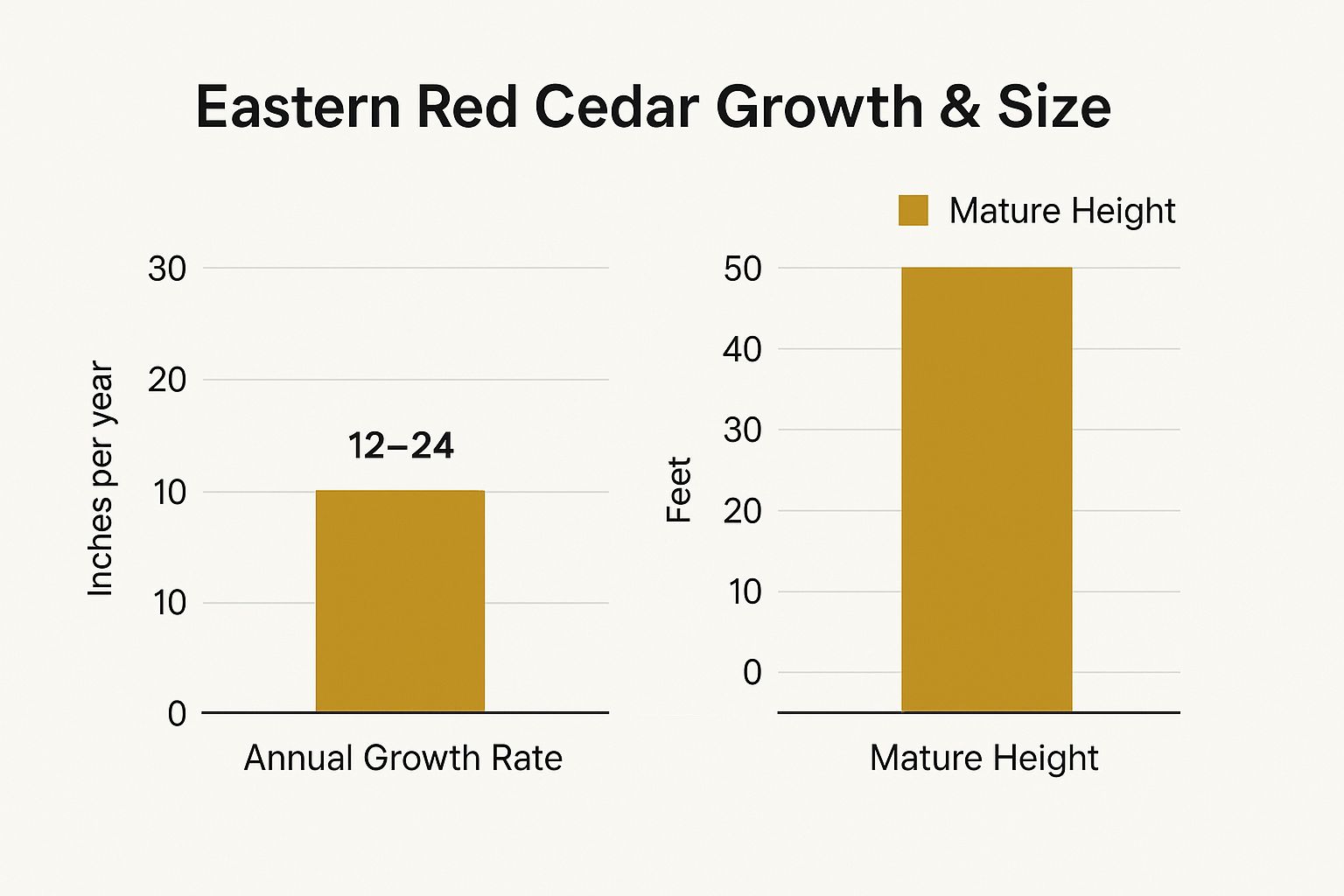
This visualization highlights the tree's impressive vertical potential, reaching up to 50 feet at maturity while consistently adding height each year.
Best Practices for Planting
To ensure your Eastern Red Cedar thrives and reaches its full potential, follow these key implementation tips:
- Optimal Planting Time: Plant in the fall or early spring to allow the root system to establish before the stress of summer heat.
- Strategic Spacing: For an effective windbreak or privacy screen, space trees approximately 8 to 10 feet apart. This allows room for growth while ensuring the canopies will eventually merge.
- Watering Wisdom: While drought-tolerant once established, it requires consistent moisture during its first year. Afterward, avoid overwatering, as the tree's hardiness is enhanced by slight drought stress.
- Proper Mulching: Apply a 2 to 3-inch layer of mulch around the base to retain soil moisture and regulate temperature, but keep it several inches away from the trunk to prevent rot.
For property managers in Corpus Christi or homeowners in San Antonio planning a large-scale planting, professional installation from a team like Fischer Landscaping ensures correct spacing and soil preparation for rapid, healthy growth.
2. Bald Cypress (Taxodium distichum)
For a truly majestic and fast-growing native tree, the Bald Cypress is an exceptional choice for Texas landscapes. This deciduous conifer grows rapidly in moist conditions, often adding 1 to 2 feet of height per year. Despite its association with wetlands, it adapts remarkably well to a variety of Texas soil types, as long as it receives adequate moisture during establishment.
The Bald Cypress offers unique, year-round visual appeal. Its soft, feathery, needle-like leaves provide a lush green canopy in the summer before turning a stunning bronze-orange in the fall. As a deciduous conifer, it drops its needles in winter, revealing an elegant, pyramidal structure. This seasonal change provides shade in the summer and allows sunlight to pass through in the winter, making it a functional and beautiful specimen tree for large properties and business parks.
Growth Potential and Sizing
The Bald Cypress is celebrated for its impressive stature and conical form. It develops a thick, buttressed trunk, especially in wet conditions, and can reach significant heights, making it a long-term landscape investment. A mature Bald Cypress becomes a dominant, architectural feature in any large-scale design, providing both shade and a powerful vertical element. Its growth is vigorous in its early years, quickly establishing its presence.
Best Practices for Planting
To ensure your Bald Cypress thrives and achieves its iconic form, follow these key implementation tips:
- Optimal Planting Time: Plant in the fall to allow the root system to establish over the cooler, wetter months before the summer heat arrives.
- Strategic Spacing: Give this tree ample room to grow. Plant it at least 20 to 25 feet away from buildings, driveways, and other trees to accommodate its mature spread and root system.
- Watering Wisdom: While it can tolerate drier urban soils once established, it requires consistent and deep watering for its first two to three years. In areas like San Antonio, supplemental irrigation is crucial.
- Consider Cultivars: For smaller residential lots, consider a dwarf cultivar like 'Peve Minaret' which offers the same classic beauty in a more compact form.
For commercial properties or residential estates in South Texas planning to feature this magnificent tree, professional installation is key to ensuring proper soil amendment and irrigation setup for rapid, healthy development.
3. Live Oak (Quercus virginiana)
While celebrated for its majestic, sprawling canopy and longevity, the Live Oak also ranks among the fastest growing trees in Texas, especially in its youth. Under optimal conditions, a young Live Oak can grow an impressive 2 to 3 feet per year. This iconic evergreen is a cornerstone of Texas landscapes, from historic San Antonio missions to modern Corpus Christi commercial properties, offering a timeless aesthetic combined with a surprisingly vigorous growth rate.
Its value extends far beyond speed. The Live Oak provides a dense, year-round shade canopy that can significantly reduce cooling costs for homes and businesses. Its magnificent structure and cultural significance make it a legacy tree—a long-term investment that adds immense value and character to any property for centuries. This species is a true symbol of Texas resilience.
Growth Potential and Sizing
The following data chart visualizes the expected annual growth and mature size of the Live Oak, providing a clear reference for landscape planning.
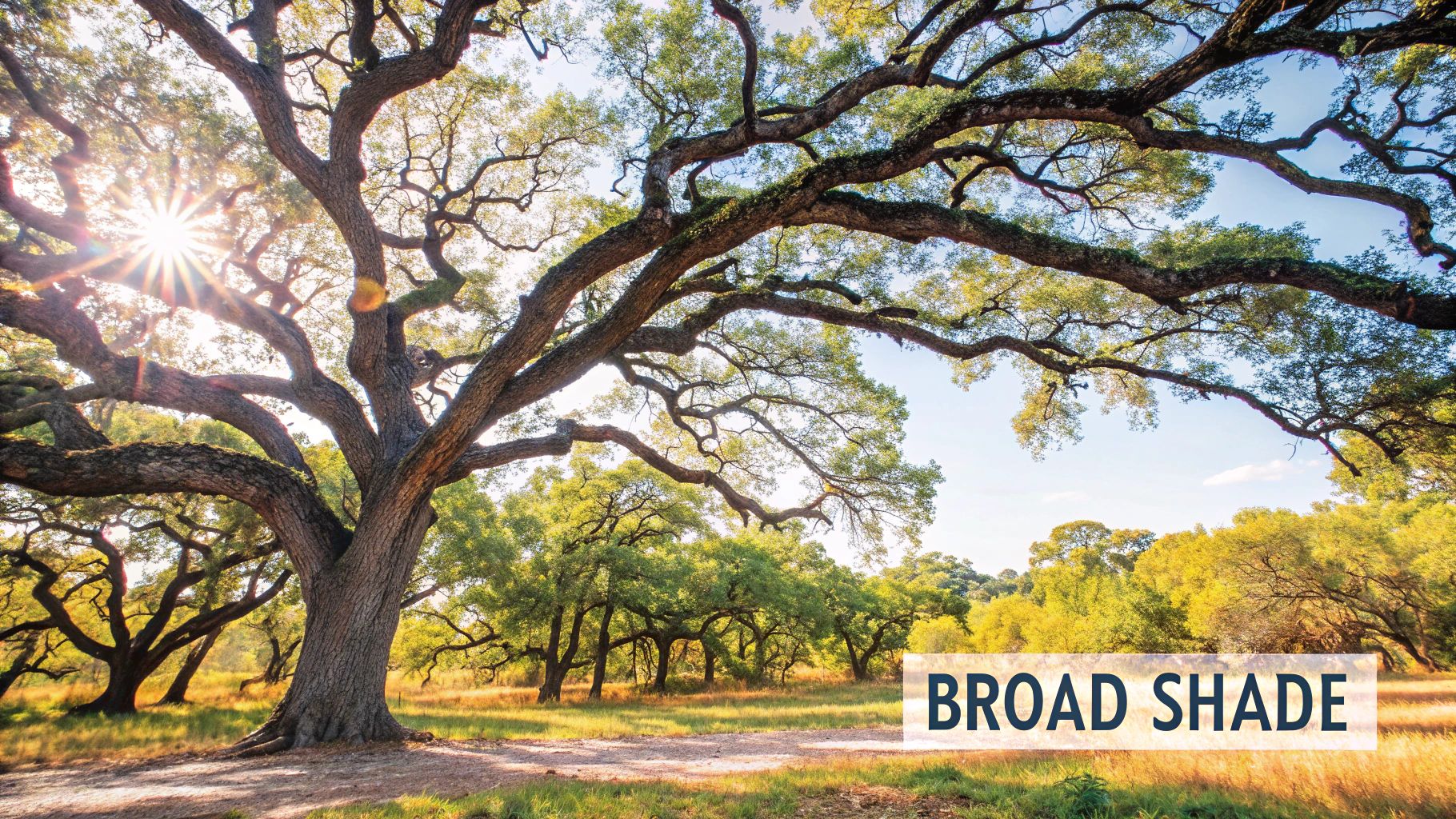
This visualization emphasizes the tree's formidable spread, which requires thoughtful placement to accommodate its eventual 80 to 100-foot-wide canopy.
Best Practices for Planting
To ensure your Live Oak thrives and becomes a magnificent specimen, follow these essential implementation tips:
- Strategic Spacing: Due to its massive spread, plant it at least 30 to 50 feet away from buildings, driveways, and other permanent structures to prevent future conflicts with roots and branches.
- Oak Wilt Prevention: Never prune a Live Oak between February and June. This is the high-risk season for oak wilt, a deadly fungal disease. Always paint any wounds or cuts immediately, regardless of the season.
- Watering Wisdom: Establish a deep and infrequent watering schedule. This encourages the root system to grow deep into the soil, enhancing drought tolerance once the tree is mature.
- Root Zone Protection: Avoid compacting the soil over the root zone. Do not park vehicles or store heavy materials under the tree, as this can starve the roots of oxygen and water.
Given the long-term commitment and specific needs of a Live Oak, professional installation is crucial for homeowners from Corpus Christi to Brownsville. A professional team ensures proper site selection and soil preparation, setting the foundation for a healthy, fast-growing tree that will endure for generations. Integrating such a significant tree is a key part of comprehensive landscaping in Texas.
4. Chinese Pistache (Pistacia chinensis)
For property owners seeking a fast-growing ornamental tree that delivers a spectacular seasonal display, the Chinese Pistache is an outstanding choice. It has become one of the most popular and fastest growing trees in Texas due to its impressive growth rate of 2 to 3 feet per year and its remarkable adaptability to the state's demanding climate. It thrives in intense summer heat and demonstrates excellent drought tolerance once established.
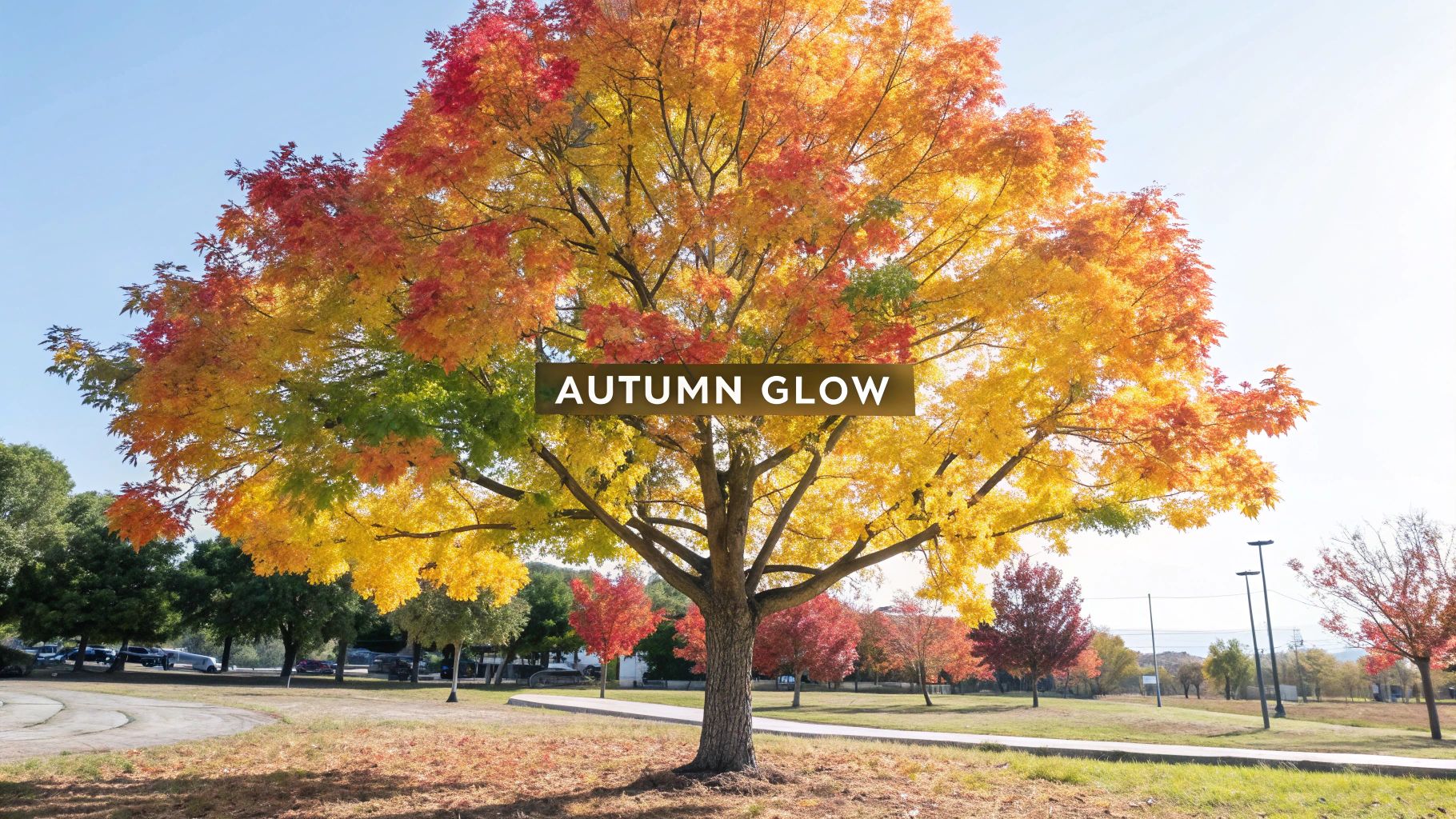
Beyond its rapid growth, the Chinese Pistache is celebrated for its stunning fall color. Its foliage transforms into a brilliant canopy of orange, red, and yellow, providing a dramatic visual anchor for any landscape. This reliability makes it a staple for new home developments and commercial properties seeking to establish mature-looking trees quickly.
Growth Potential and Sizing
The Chinese Pistache typically matures to a height of 30 to 60 feet with a similar spread, forming a beautiful, rounded canopy that provides ample shade. Its consistent annual growth allows it to become a significant landscape feature in a relatively short period, making it ideal for both residential yards and larger commercial properties.
Best Practices for Planting
To maximize the health, growth, and vibrant fall color of your Chinese Pistache, adhere to these key implementation strategies:
- Optimal Planting Time: Plant in the fall to give the root system a head start before the summer heat arrives, or in early spring after the last frost.
- Male Tree Selection: Opt for male trees (often sold as cultivars like 'Keith Davey') to avoid the messy berries produced by female trees, which can stain pavement.
- Sunlight and Soil: This tree requires full sun to achieve its best growth rate and most brilliant fall colors. It is highly adaptable to various soil types.
- Watering Schedule: Water consistently during the first year to encourage deep root growth. Once established, it becomes highly drought-tolerant and is an excellent choice for xeriscaping or water-wise landscapes.
- Structural Pruning: Prune young trees in the dormant season to develop a strong central leader and well-spaced scaffold branches. This early structural care prevents issues as the tree matures.
For developers in San Antonio or homeowners in Corpus Christi, professional tree installation ensures your Chinese Pistache is sited and planted correctly for rapid establishment and long-term health.
5. Green Ash (Fraxinus pennsylvaniaica)
For property owners seeking rapid shade, the Green Ash has historically been one of the fastest growing trees in Texas. This native deciduous tree is highly adaptable to a wide range of Texas soils and can add an impressive 2 to 4 feet of height per year in ideal conditions.
Beyond its quick growth, the Green Ash offers significant aesthetic and functional value. Its broad, rounded canopy provides dense shade that can help reduce cooling costs in the summer, and its leaves turn a vibrant, attractive yellow in the fall. However, its popularity for new plantings has declined due to the threat of the invasive Emerald Ash Borer. Due to this risk, we advise consulting with a landscaping professional to determine if this is a suitable choice for your property.
Growth Potential and Sizing
The Green Ash shows impressive vertical potential, reaching up to 60 feet at maturity while consistently adding height each year.
Best Practices for Planting
To ensure your Green Ash thrives, it is important to follow key implementation and monitoring tips:
- Optimal Planting Time: Plant in the fall to allow the root system to establish over the cooler, wetter months before the onset of summer heat.
- Strategic Spacing: Ensure the tree has ample room to grow, planting it at least 20 to 30 feet away from structures, power lines, and other trees to accommodate its mature canopy.
- Watering Wisdom: While adaptable, the Green Ash performs best with consistent moisture. Water deeply during its first few years and throughout periods of drought. Proper irrigation is key, much like the water-efficient strategies used in xeriscaping in Corpus Christi.
- Pest Monitoring: Regularly inspect the trunk and canopy for signs of the Emerald Ash Borer, which include D-shaped exit holes, canopy dieback, and bark splitting. Early detection is critical for management.
6. Texas Red Oak (Quercus buckleyi)
For those desiring a classic shade tree without the decades-long wait, the Texas Red Oak is a standout among the fastest growing trees in Texas. This native deciduous oak is perfectly adapted to the state's alkaline soils, particularly in Central Texas. It offers an impressive growth rate for an oak, capable of adding 2 to 3 feet of height per year in its youth, combining rapid establishment with the long-term benefits of a sturdy, native hardwood.
Beyond its growth speed, the Texas Red Oak delivers spectacular aesthetic value. Its lobed leaves provide dense summer shade, and in autumn, it puts on a brilliant display of red and orange-red foliage. This makes it an excellent choice as a specimen tree in residential yards, adding significant curb appeal and property value. It also serves a vital ecological role, providing acorns for wildlife.
Growth Potential and Sizing
The Texas Red Oak offers a balanced profile of rapid early growth and a manageable mature size, making it a suitable choice for both suburban lots and larger properties. It typically matures to a height of 30 to 50 feet with a similar spread, creating a broad, rounded canopy perfect for casting shade. Its consistent annual growth in the early years allows homeowners to see substantial progress quickly.
Best Practices for Planting
To ensure your Texas Red Oak thrives and avoids common issues, follow these key implementation tips:
- Optimal Planting Time: Plant from late fall to early spring. This allows the root system to establish during the cooler, wetter months before the onset of summer heat.
- Soil and Drainage: This oak demands well-draining soil. It is well-suited to the limestone and rocky soils of the Hill Country but will struggle in compacted, poorly drained clay.
- Watering Wisdom: Provide deep, infrequent watering during the first one to two years to encourage a robust root system. Once established, it is remarkably drought-tolerant.
- Oak Wilt Prevention: A critical consideration in Texas. Never prune an oak between February and June. Always paint any wounds or cuts immediately, regardless of the season, to prevent infection by the beetles that transmit this fatal disease.
For property managers in San Antonio or homeowners in the surrounding regions, professional planting ensures the tree is sited correctly and proper oak wilt prevention measures are followed from day one, safeguarding your landscape investment.
7. Loblolly Pine (Pinus taeda)
When sheer speed is the primary objective, few trees can compete with the Loblolly Pine, arguably the fastest-growing major tree species native to Texas. Thriving in the acidic, moist soils of East Texas, this impressive conifer is capable of astonishing growth, often shooting up 3 to 5 feet per year under ideal conditions. Its rapid verticality makes it an unparalleled choice for property owners in the appropriate regions needing to establish a mature landscape quickly.
The Loblolly Pine’s straight trunk and towering height provide a distinct aesthetic and significant practical benefits. For homeowners on large rural properties, its fast growth offers an excellent solution for creating visual screens or robust windbreaks in a fraction of the time required by other species.
Growth Potential and Sizing
The Loblolly Pine offers rapid growth and substantial mature size, making it a powerful choice for landscape and forestry planning.
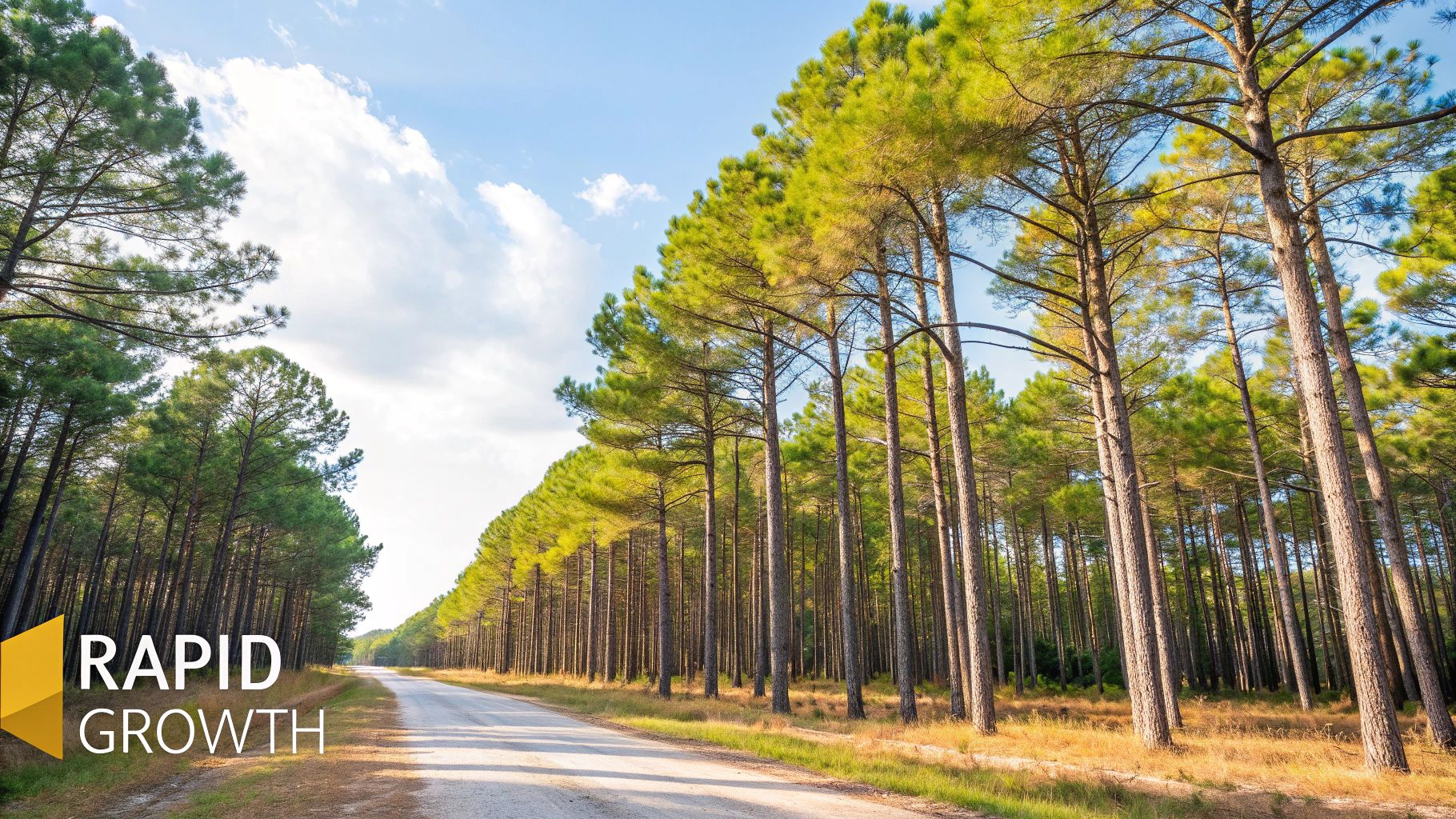
This visualization emphasizes the tree's powerful vertical growth, quickly reaching heights that provide significant shade, privacy, and wind protection.
Best Practices for Planting
To maximize the growth and health of your Loblolly Pine, adhere to these key implementation strategies:
- Optimal Planting Time: Plant seedlings in late fall or winter, during the dormant season, to allow roots to acclimate before the spring growth spurt.
- Strategic Spacing: For an effective privacy screen or windbreak, space trees 10 to 12 feet apart. For timber or reforestation, follow forestry guidelines, which may be as close as 6 to 8 feet.
- Watering Wisdom: While well-adapted to East Texas rainfall, young trees require consistent watering during their first one to two years to establish a deep root system.
- Proper Mulching: Apply a 3-inch layer of pine straw or bark mulch around the base to conserve moisture, suppress weeds, and mimic its natural forest floor environment.
For large-scale projects, such as establishing a windbreak on a commercial property, professional installation is crucial for ensuring proper soil conditions and spacing, setting the stage for decades of vigorous growth.
8. Mexican Buckeye (Ungnadia speciosa)
For those seeking one of the fastest growing trees in Texas that is better suited for smaller landscapes, the Mexican Buckeye is an exceptional native choice. Often growing as a multi-trunked large shrub or small tree, this deciduous species offers a rapid growth rate of 2 to 3 feet per year. It is highly valued for its striking early-spring display of fragrant, bright pink flowers that appear before the leaves, providing a critical early food source for pollinators.
The Mexican Buckeye’s adaptable nature makes it a perfect fit for naturalized areas, xeriscaping projects, and understory plantings across the state. Its unique, showy seed pods add multi-season interest, and its tolerance for various soil types makes it a low-maintenance favorite for native plant gardens. This fast grower offers ornamental value without demanding the space required by larger shade trees.
Growth Potential and Sizing
The following data chart visualizes the expected annual growth and mature size of the Mexican Buckeye, providing a clear reference for landscape planning.
This visualization illustrates the tree’s manageable size, making it an ideal ornamental or accent tree that quickly reaches its mature height of up to 30 feet.
Best Practices for Planting
To ensure your Mexican Buckeye establishes quickly and thrives, follow these key implementation tips:
- Optimal Planting Time: Plant in the fall to allow its root system to develop during the cooler, wetter months before the onset of Texas summer heat.
- Soil and Drainage: This tree is adaptable but performs best in well-draining soil. Amending heavy clay is beneficial. Ensuring proper soil composition is crucial, and you can learn more about choosing the right plants for your soil type on fischerlandscapingusa.com.
- Pruning for Form: It naturally grows with multiple trunks. If a single-trunk tree form is desired, prune away competing stems while the plant is young to encourage a dominant leader.
- Safety Note: The seeds are attractive but poisonous if ingested. Avoid planting in areas where small children or pets might be tempted to eat them.
For homeowners in Brownsville or property managers in Harlingen looking to add fast-growing native ornamentals, professional planting ensures the Mexican Buckeye is sited correctly for optimal health and visual impact.
Fast Growth Comparison of 8 Texas Trees
| Tree Species | Implementation Complexity | Resource Requirements | Expected Outcomes | Ideal Use Cases | Key Advantages |
|---|---|---|---|---|---|
| Eastern Red Cedar | Low – slow initial establishment | Low water, minimal care | Year-round screening, wildlife habitat | Windbreaks, privacy screens, reforestation | Drought tolerant, supports local wildlife |
| Bald Cypress | Moderate – needs good drainage | Moderate water during early years | Large shade, seasonal interest | Wetlands, urban large spaces | Adapts to wet/dry soils, long-lived |
| Live Oak | High – requires space and care | Moderate water, pruning for disease | Broad shade, longevity | Large properties, cultural/historic sites | Extremely durable, iconic, wildlife support |
| Chinese Pistache | Low – fast establishment | Moderate watering early | Vibrant fall color, urban tolerance | Urban streets, xeriscaping, ornamental | Heat/drought tolerant, spectacular fall color |
| Green Ash | Moderate – pest monitoring needed | Regular water during establishment | Fast shade, yellow fall color | Quick shade planting (with caution) | Very fast growth, native species |
| Texas Red Oak | Moderate – disease precautions | Moderate water | Red-orange fall color, wildlife support | Native gardens, urban tolerant landscapes | Fast-growing native oak, excellent fall color |
| Loblolly Pine | Moderate – spacing and rainfall | High water in early years | Very fast vertical growth, timber | East Texas forests, windbreaks, timber | Fastest grower in Texas, timber value |
| Mexican Buckeye | Low – smaller size, pruning needed | Low water | Early spring flowers, pollinator support | Small yards, naturalized/native landscapes | Early nectar source, suitable for small sites |
Partner with the Experts for Guaranteed Landscaping Success
Transforming your Texas property with the lush canopy of a mature tree doesn't have to be a decade-long waiting game. Selecting one of the fastest growing trees in Texas can dramatically accelerate your timeline, providing shade, beauty, and value in just a few short years. From the drought-tolerant resilience of the Chinese Pistache to the stately grace of the Bald Cypress, the right tree can redefine your landscape.
However, rapid growth is the result of a strategic partnership between the right species and the right environment. Successful tree planting is a science. Factors like soil pH, drainage, sun exposure, and long-term irrigation are critical variables that determine whether a tree merely survives or truly thrives. A Loblolly Pine planted in the alkaline clay of San Antonio will not perform the same as one in the acidic soils of East Texas.
From Selection to Success: A Holistic Approach
Achieving the impressive growth rates discussed requires more than just digging a hole. A professional approach ensures every stage is optimized for success:
- Site-Specific Selection: Choosing a tree isn't just about aesthetics. A professional assessment of your property in Corpus Christi or Harlingen ensures the selected tree is perfectly matched to your specific microclimate and soil composition. This critical first step prevents future struggles and wasted investment.
- Professional Installation: The health of a tree is heavily influenced by its first few months in the ground. Proper planting depth, root ball preparation, and initial soil amendments are crucial. Expert installation from a team like Fischer Landscaping avoids common pitfalls like root girdling or planting too deep, which can stunt growth for years.
- Long-Term Health and Irrigation: Fast-growing trees often have significant water requirements, especially during establishment. A professionally designed irrigation system delivers consistent moisture directly to the root zone, promoting deep root development and maximizing growth potential while conserving water.
Ultimately, investing in one of the fastest growing trees in Texas is an investment in your property's future. By partnering with experts, you ensure that this investment pays dividends in the form of rapid shade, enhanced curb appeal, and a vibrant, sustainable landscape that you can enjoy sooner rather than later. Don't leave the success of your new trees to chance; let a professional team create the ideal conditions for them to flourish.
Ready to bring your landscape vision to life with the perfect fast-growing tree? The expert team at Fischer Landscaping specializes in tree selection and professional landscaping installation tailored to the unique conditions of South Texas. Contact us today for a consultation and let us help you build a beautiful, thriving outdoor space that grows with you.