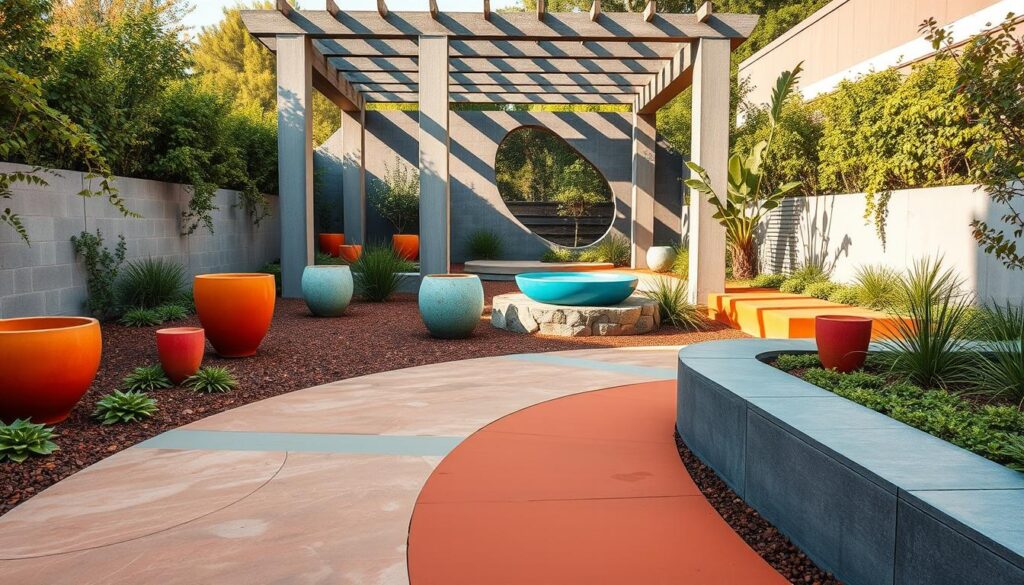
For homeowners and property managers in South Texas, from Corpus Christi to San Antonio, the relentless heat and recurring droughts present a constant landscaping challenge. The dream of a lush, vibrant outdoor space often seems at odds with the reality of water restrictions and high utility bills. However, a stunning landscape that not only survives but thrives in our unique climate is achievable by choosing the right plants.
This guide provides a curated selection of the best drought tolerant plants for Texas, designed to bring color, texture, and life to your property without demanding constant irrigation. Beyond choosing the right species, a truly efficient landscape requires professional planning and installation. At Fischer Landscaping, we specialize in creating water-wise outdoor spaces that are both beautiful and sustainable. Hidden leaks in your irrigation can also undermine even the most water-wise plant selections, so using professional leak detection services is a crucial step in preventing unseen water waste.
We'll explore resilient, beautiful options perfect for the local environment, from Harlingen to Brownsville, and show you how a professionally designed garden enhances your property's value. This isn't just about saving water; it's about creating smart, sustainable landscaping that celebrates the rugged beauty of our region. This curated list will equip you with practical knowledge to transform your outdoor space into a resilient oasis.
1. Pride of Barbados (Caesalpinia pulcherrima)
For a truly show-stopping addition to any South Texas landscape, the Pride of Barbados, also known as Red Bird of Paradise, is an exceptional choice. This fast-growing, deciduous shrub brings a vibrant, tropical feel with its brilliant orange and red flowers, which feature dramatic, long red stamens. Despite its exotic appearance, this plant is one of the most resilient and drought tolerant plants for Texas, thriving in the intense summer heat that defines regions from San Antonio to Brownsville.
Why It Thrives in South Texas
Pride of Barbados flourishes in full sun, producing a spectacular display of blooms from late spring until the first frost. Once established, its water needs are minimal, making it a perfect candidate for xeriscaping and low-maintenance garden designs. Its ability to tolerate high temperatures and survive on infrequent, deep watering makes it a sustainable choice for both residential and commercial properties aiming to conserve water without sacrificing curb appeal. It also attracts essential pollinators like butterflies and hummingbirds, adding life and movement to your garden.
Landscape Design & Care Tips
This versatile shrub works well as a standalone specimen, a colorful informal hedge, or as a backdrop in a perennial border. To ensure maximum blooming and healthy growth, follow these professional tips:
- Planting: Choose a location that receives at least six hours of direct sunlight daily.
- Watering: Water deeply but infrequently after the first year to encourage a robust root system.
- Pruning: Cut it back hard in late winter or early spring to remove any frost damage and promote vigorous new growth. This practice ensures a fuller, more prolific plant come springtime.
The following quick reference guide summarizes the key attributes of this remarkable plant.
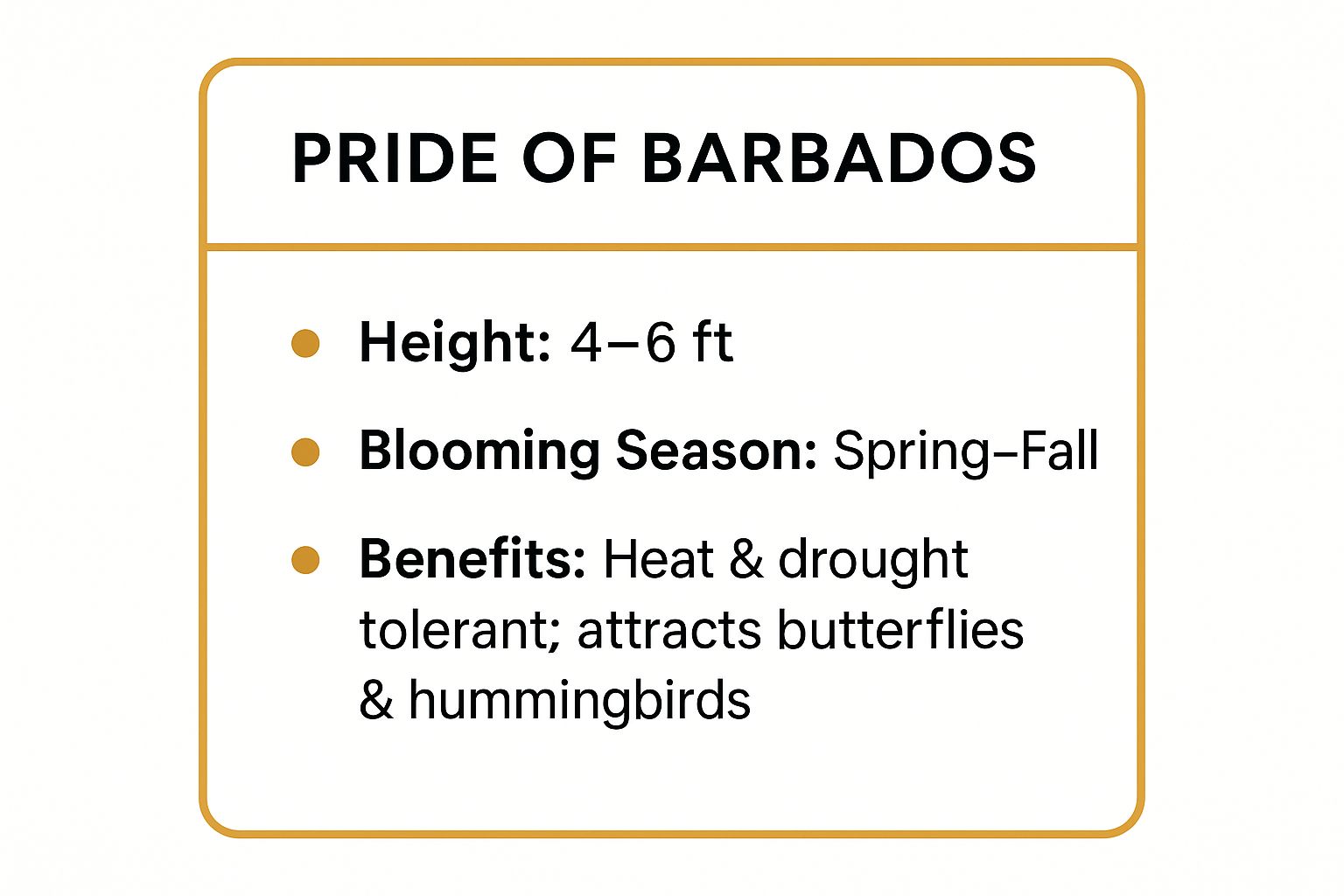
As the infographic highlights, its manageable height and long blooming season make it a valuable asset for any landscape design focused on season-long color and pollinator support. Integrating plants like Pride of Barbados is a key strategy for creating a beautiful yet resilient landscape. For expert plant selection and installation that aligns with your property's specific conditions, Fischer Landscaping provides invaluable guidance.
2. Texas Sage (Leucophyllum species)
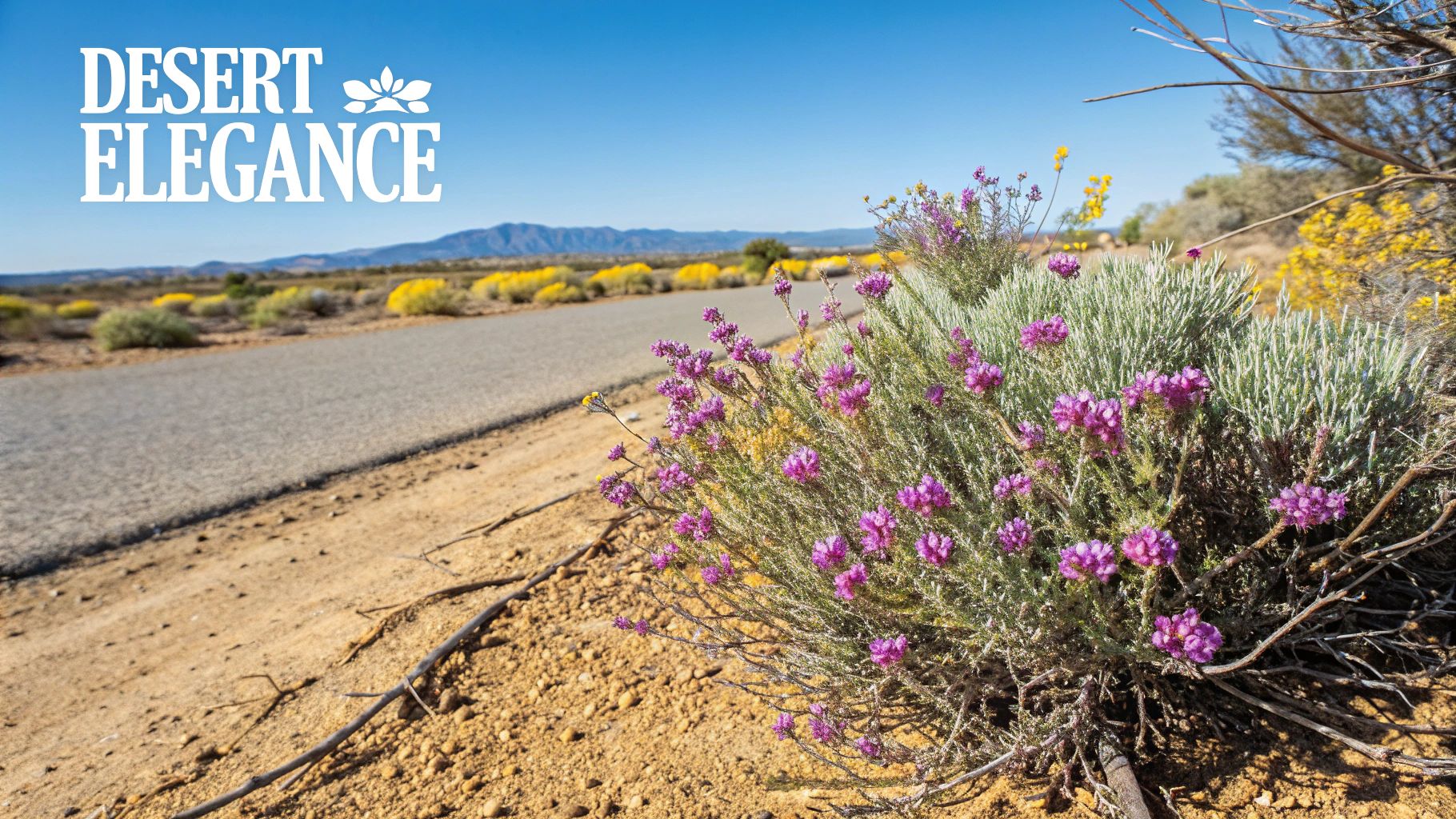
A true icon of Texas landscapes, Texas Sage is a go-to choice for durability and striking beauty. Often called the "Barometer Bush" for its habit of bursting into bloom after rain, this hardy shrub is renowned for its silvery-green foliage and profusion of purple, pink, or white flowers. Originally native to the Chihuahuan Desert, it has proven to be one of the most reliable and drought tolerant plants for Texas, flourishing in demanding conditions across South Texas.
Why It Thrives in South Texas
Texas Sage is exceptionally adapted to the heat and arid conditions of South Texas. Its ability to thrive in full sun with minimal water once established makes it a cornerstone of sustainable landscaping and a popular choice for both the Texas Department of Transportation and the Lady Bird Johnson Wildflower Center. It excels in low-water garden designs, making it a critical component for any property owner interested in the basics of xeriscaping. This resilience ensures vibrant color and texture even during the hottest, driest months, providing year-round visual interest without demanding constant irrigation.
Landscape Design & Care Tips
This versatile shrub is perfect as a foundational planting, a low-maintenance hedge, or a standout specimen in a rock garden. It pairs beautifully with other native plants and provides a soft, contrasting texture. To maximize its health and blooming potential, follow these professional tips:
- Planting: Ensure it is planted in a location with full sun and excellent drainage; it despises "wet feet."
- Watering: Overwatering is the most common mistake. Water deeply but infrequently, allowing the soil to dry out completely between waterings.
- Pruning: Avoid heavy shearing. Instead, prune lightly after a major bloom cycle to maintain its natural, soft shape and encourage future flowers.
Texas Sage is more than just a plant; it is a symbol of the rugged beauty of the Texas landscape. Its low-maintenance nature and stunning floral displays make it an invaluable asset for creating a resilient and beautiful garden. For professional guidance on selecting the right Leucophyllum variety for your specific soil and sun conditions, our expert landscape design services can ensure your project thrives.
3. Esperanza (Tecoma stans)
For a brilliant splash of year-round color, Esperanza, also known as Yellow Bells, is a must-have for any Texas landscape. This fast-growing, deciduous shrub produces clusters of bright yellow, trumpet-shaped flowers that bloom prolifically from spring through fall. Native to the Americas, Esperanza has become a beloved staple among drought tolerant plants for Texas, celebrated for its incredible resilience and cheerful appearance that brightens gardens from Corpus Christi to Harlingen.
Why It Thrives in South Texas
Esperanza is perfectly adapted to the demanding Texas climate, flourishing in full sun and high heat. Its ability to produce continuous blooms, even during the hottest summer months, makes it an invaluable asset for maintaining vibrant curb appeal. Once established, it requires very little water, making it an ideal selection for water-wise gardening and low-maintenance commercial landscapes. The bright flowers are also a magnet for pollinators, attracting hummingbirds, butterflies, and bees, which adds ecological value to your property.
Landscape Design & Care Tips
This versatile shrub can be used as a stunning specimen plant, a fast-growing screen, or integrated into a mixed perennial border for a burst of color. For a healthy, thriving Esperanza, consider these professional care recommendations:
- Planting: Plant after the last frost date in a location that receives at least six to eight hours of direct sunlight.
- Watering: Water regularly during its first year to establish a deep root system. Afterward, it becomes extremely drought tolerant and requires only occasional deep watering.
- Pruning: Prune back in late winter to remove any freeze-damaged wood and encourage a more compact, bushy shape for the upcoming season. Regular light pruning can also help manage its size.
4. Cenizo/Purple Sage (Leucophyllum frutescens)
For an iconic symbol of the Chihuahuan Desert landscape, Cenizo, also known as Texas Ranger, is an unparalleled choice. This evergreen shrub is celebrated for its stunning silvery-white foliage that provides striking year-round contrast. It is one of the most rugged and drought tolerant plants for Texas, exploding with delicate purple flowers after summer rains, often earning it the nickname "Barometer Bush." This plant is perfectly adapted to the harsh, arid conditions found throughout South Texas, performing beautifully from Brownsville to San Antonio.
Why It Thrives in South Texas
Cenizo is the epitome of a low-water, heat-loving plant. It demands full, unrelenting sun and thrives in the poor, rocky, or caliche soils that are common throughout Texas. Its ability to survive with virtually no supplemental irrigation once established makes it a cornerstone of xeriscaping and sustainable landscape design. The silvery leaves reflect intense sunlight, helping the plant conserve water and stay cool, a critical adaptation for surviving brutal summer temperatures and a key reason it is one of the essential native plants of South Texas.
Landscape Design & Care Tips
This versatile shrub is ideal for creating naturalistic, low-maintenance hedges, serving as a backdrop for smaller desert perennials, or as a standalone specimen. To ensure it flourishes and retains its compact form, follow these professional tips:
- Planting: Select a site with at least eight hours of direct sunlight and excellent drainage. Never amend the soil; Cenizo prefers native, alkaline conditions.
- Watering: Water only to establish it during the first year. Afterward, avoid all supplemental irrigation, as overwatering can lead to root rot.
- Pruning: Prune lightly only after a flowering cycle to shape the plant. Avoid severe shearing, which can ruin its natural form and reduce blooming.
Cenizo's durability and striking appearance make it a valuable asset for any landscape focused on extreme water conservation without sacrificing beauty. For expert selection and placement that ensures your plants thrive in the specific conditions of your property, consulting with a professional landscaping service is the best course of action.
5. Mexican Buckeye (Ungnadia speciosa)
For an early sign of spring in a South Texas landscape, the Mexican Buckeye is an unparalleled native choice. This adaptable large shrub or small multi-trunked tree puts on a spectacular show with fragrant, bright pink flower clusters that emerge even before its leaves in late winter or early spring. Its resilience and unique seasonal interest make it one of the best drought tolerant plants for Texas, perfectly suited for the challenging alkaline soils and dry conditions found from the Hill Country to the Gulf Coast.
Why It Thrives in South Texas
The Mexican Buckeye is a testament to native plant endurance, thriving in full sun to partial shade and requiring almost no supplemental water once established. It is exceptionally well-adapted to the limestone and rocky soils common throughout the region, making it an easy-to-grow option where other plants might struggle. Beyond its drought tolerance, it serves as a critical early-season nectar source for bees and butterflies, supporting local ecosystems when few other plants are in bloom.
Landscape Design & Care Tips
This versatile plant can be trained into a small, elegant single-trunk tree or left as a multi-stemmed shrub, making it ideal for specimen plantings, naturalized areas, or as an understory tree in larger landscapes. To help it flourish in your garden, follow these professional tips:
- Planting: Choose a well-drained location in fall to allow its root system to establish over the winter.
- Watering: Water regularly during its first year, then transition to deep, infrequent watering. After its second year, it typically requires no supplemental irrigation.
- Pruning: If a single-trunk form is desired, prune away basal suckers in the winter. Otherwise, minimal pruning is needed.
Integrating hardy natives like the Mexican Buckeye is a smart strategy for creating a beautiful, low-maintenance landscape that conserves water and supports local wildlife. For help selecting and properly installing native plants that suit your property's unique conditions, a professional landscape design service can ensure a thriving and sustainable outdoor space.
6. Agarito (Mahonia trifoliolata)
For a landscape that embodies the rugged spirit of the Texas Hill Country, Agarito is an unparalleled choice. This evergreen native shrub is celebrated for its distinctive holly-like leaves, fragrant yellow flowers in late winter, and bright red berries in the summer. Its tough, thorny nature not only makes it deer-resistant but also establishes it as one of the hardiest drought tolerant plants for Texas, capable of thriving in the challenging conditions from San Antonio to the drier western regions.
Why It Thrives in South Texas
Agarito is perfectly adapted to the limestone soils and minimal rainfall common throughout Central and South Texas. It flourishes in full sun or partial shade and, once established, requires virtually no supplemental watering. This makes it an ideal plant for xeriscaping and sustainable landscape designs focused on extreme water conservation. The early-blooming flowers provide a crucial nectar source for pollinators, while the berries are a food source for birds and can be harvested for human use, famously made into jellies and wines.
Landscape Design & Care Tips
This shrub’s dense, thorny structure makes it an excellent choice for creating a natural security barrier or a wildlife-friendly hedge. It can also be used as a structural accent in a native plant garden. To get the most from this resilient plant, consider these professional tips:
- Planting: Settle it into a well-drained spot, ideally in the fall, to allow roots to establish over the cooler, wetter months.
- Watering: Water periodically during its first year; after that, it will thrive on natural rainfall alone.
- Pruning: Agarito has a beautiful natural form and requires little pruning. If needed, wear heavy-duty gloves to trim for shape after it finishes flowering.
By incorporating resilient natives like Agarito, you create a landscape that is both beautiful and intrinsically suited to the local environment. For homeowners in Corpus Christi or Harlingen looking to build a truly sustainable garden, our expert landscape installation services can help you select and place the perfect native plants for your property.
7. Turk's Cap (Malvaviscus arboreus var. drummondii)
For landscapes needing a reliable splash of color in shadier spots, Turk's Cap is a standout native perennial. This adaptable shrub is celebrated for its unique, turban-like red flowers that never fully open, creating a distinctive look from summer through fall. As one of the few shade-loving, drought tolerant plants for Texas, it solves a common landscape challenge in areas from Corpus Christi to San Antonio, providing vibrant blooms where other plants might struggle.
Why It Thrives in South Texas
Turk's Cap is a resilient performer that thrives in the partial shade common under the canopies of live oaks and other native trees. While it can handle full sun, it excels with morning sun and afternoon protection, a trait that makes it invaluable for diverse garden designs. Once established, it requires little supplemental water, tolerating dry spells with ease. Its flowers are a major draw for hummingbirds and butterflies, and the small, edible red fruits that follow provide food for birds and other wildlife.
Landscape Design & Care Tips
This versatile plant works beautifully as an understory shrub, a naturalized hedge in a woodland garden, or as a key component in a pollinator-focused design. To get the most from Turk's Cap, follow these professional recommendations:
- Planting: Site it in a location with morning sun and afternoon shade for optimal flowering and health. It adapts to various soil types but prefers well-drained soil.
- Watering: Water regularly during its first year. Afterward, it is quite drought-tolerant but will appreciate a deep watering during prolonged heat waves.
- Pruning: In late winter, prune the plant back to about 6-12 inches from the ground. This encourages fresh, vigorous growth and a more compact, floriferous shape in the spring.
Its ability to attract pollinators makes it a crucial part of any wildlife-friendly garden. For more ideas on creating a vibrant habitat, you can explore other top plants for hummingbirds in Texas. Integrating hardy natives like Turk's Cap is a smart strategy for building a beautiful, low-maintenance, and ecologically functional landscape. A professional landscaping service can help you select the ideal location to ensure this and other plants thrive on your property.
8. Prickly Pear Cactus (Opuntia species)
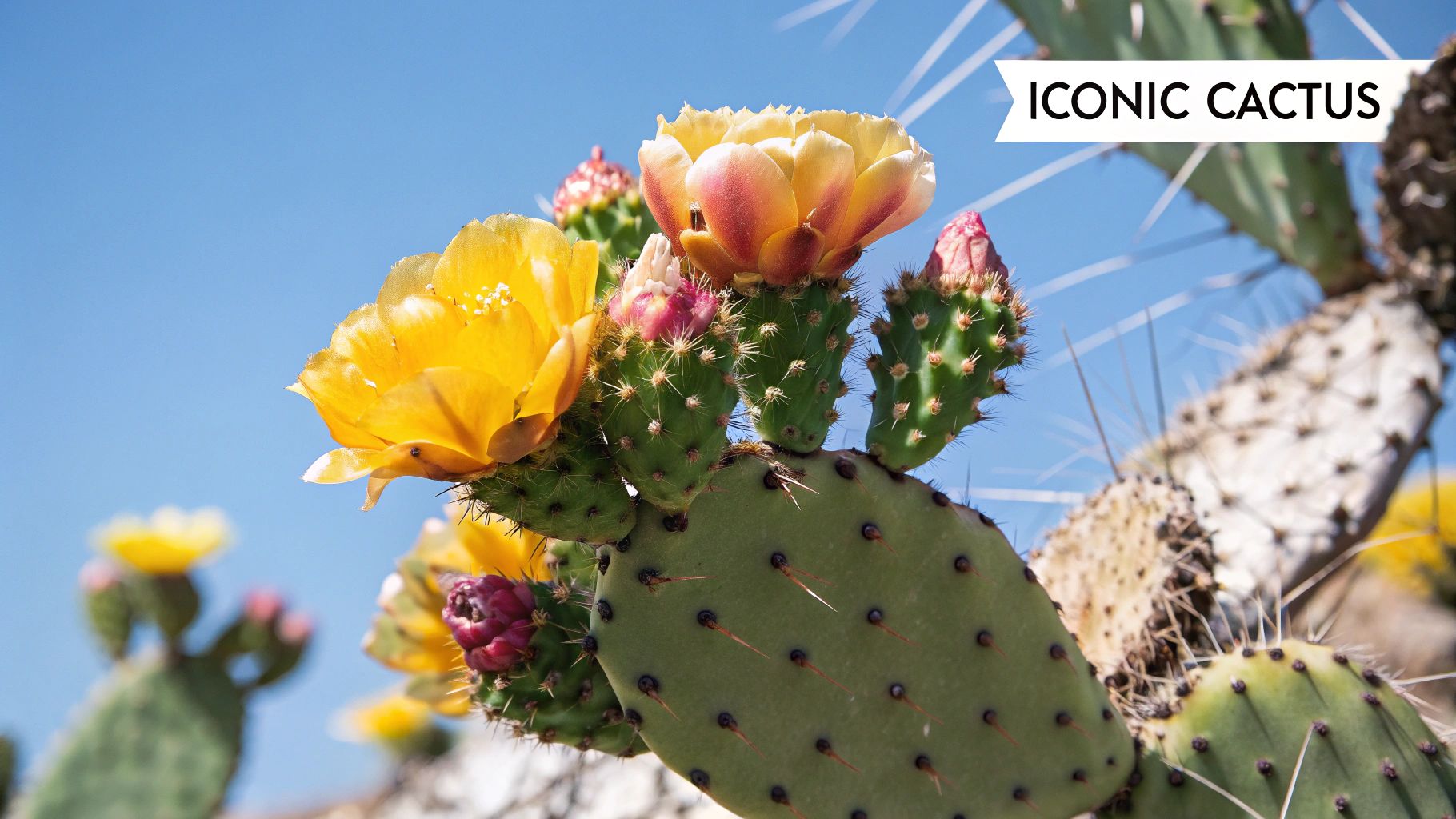
As the official state plant of Texas, the Prickly Pear Cactus is the quintessential symbol of a rugged, resilient landscape. This iconic flat-padded cactus is arguably one of the most effective drought tolerant plants for Texas, representing the pinnacle of water-wise gardening. Native species thrive across the state, from the Rio Grande Valley to the Panhandle, producing stunning yellow, red, or pink flowers in late spring. These blooms are followed by vibrant, edible fruits known as "tunas," making the Prickly Pear both an ornamental and functional addition to any property.
Why It Thrives in South Texas
The Prickly Pear’s ability to store water in its pads allows it to endure the most extreme heat and prolonged droughts that characterize South Texas summers. It demands full, unforgiving sun and thrives in the well-drained, often rocky soils found in areas from Corpus Christi to San Antonio. Its unparalleled drought resistance makes it a cornerstone of xeriscaping and a top choice for commercial properties and municipalities seeking to drastically reduce irrigation costs. Beyond its structural beauty, it provides food and shelter for native wildlife, contributing to a healthy local ecosystem.
Landscape Design & Care Tips
Prickly Pear adds dramatic architectural form and texture to a garden. It can be used as a natural, impenetrable barrier, a focal point in a rock garden, or massed together for a bold statement. To incorporate this Texas native successfully, consider these professional tips:
- Planting: Ensure the location has excellent drainage to prevent root rot. Amending heavy clay soil is crucial for its survival.
- Handling: Always use thick, heavy-duty gloves and tongs when handling to protect against its sharp spines and tiny, irritating glochids.
- Spacing: Allow ample room for the cactus to spread naturally, as many species can grow quite large over time.
- Watering: Once established, it requires virtually no supplemental watering, surviving entirely on natural rainfall.
The Prickly Pear embodies the spirit of a low-maintenance, sustainable Texas landscape. For homeowners and developers looking to create an authentic and enduring outdoor space, integrating native plants like the Prickly Pear is a smart investment. A professional landscape design service can help select the right species for your property and ensure proper installation for a thriving, beautiful result.
Drought-Tolerant Plants Comparison for Texas
| Plant Name | Implementation Complexity | Resource Requirements | Expected Outcomes | Ideal Use Cases | Key Advantages |
|---|---|---|---|---|---|
| Pride of Barbados (Caesalpinia pulcherrima) | Moderate (pruning, frost care) | Low once established (deep infrequent watering) | Long blooming period, attracts pollinators | Heat-tolerant gardens, xeriscaping | Heat & drought tolerant; continuous blooms |
| Texas Sage (Leucophyllum species) | Low (minimal pruning) | Very low (no supplemental water) | Drought resilient, attractive silver foliage | Xeriscaping, highway & commercial landscaping | Exceptional drought tolerance; low maintenance |
| Esperanza (Tecoma stans) | Moderate (regular pruning needed) | Moderate (initial watering, pruning) | Nearly year-round blooms, wildlife attraction | Drought-tolerant gardens, butterfly gardens | Long blooming; fast growing; heat tolerance |
| Cenizo (Leucophyllum frutescens) | Low (slow growth, minimal pruning) | Very low (no irrigation, good drainage) | Dense screen, drought survival | Harsh desert conditions, xeriscaping | Outstanding drought tolerance; no fertilization |
| Mexican Buckeye (Ungnadia speciosa) | Moderate (prune suckers, plant selection) | Low after establishment | Early spring nectar, wildlife habitat | Native Texas landscapes, restoration | Native; early nectar source; drought tolerant |
| Agarito (Mahonia trifoliolata) | Moderate (thorny, careful handling) | Low (no irrigation after establishment) | Wildlife food, barrier plant | Wildlife gardens, natural barriers | Thorny for defense; drought tolerant; edible berries |
| Turk's Cap (Malvaviscus arboreus var. drummondii) | Moderate (size control, shade water) | Low to moderate (some summer water in sun) | Shade tolerant blooms, attracts hummingbirds | Shade gardens, woodland landscaping | Shade-tolerant drought plant; long bloom season |
| Prickly Pear Cactus (Opuntia species) | Low (planting with protective gear) | None (no irrigation) | Edible fruit, architectural interest | Xeriscaping, food gardens | Extreme drought tolerance; edible fruit & pads |
Transform Your Vision into a Resilient Texas Landscape
Embracing the rugged beauty of South Texas doesn't mean sacrificing a vibrant, lush landscape. As we've explored, the key lies in intelligent plant selection. From the fiery blooms of the Pride of Barbados to the cool, silvery foliage of Texas Sage and the cheerful yellow trumpets of Esperanza, you have a rich palette of drought tolerant plants for Texas at your disposal. These species are not just survivors; they are thrivers, offering stunning colors, unique textures, and vital support for local wildlife, all while demanding significantly less water and maintenance.
Moving beyond individual selections, the true art of landscape design is in the composition. A resilient garden is more than just a collection of hardy plants; it's a fully integrated ecosystem where each element works in harmony. The most successful landscapes in regions from Corpus Christi to San Antonio are those that pair water-wise plantings with functional and beautiful hardscaping elements.
From Plant List to Master Plan
The transition from a list of plants to a cohesive, sustainable landscape design is where professional expertise becomes invaluable. A successful project considers several critical factors beyond just plant choice:
- Strategic Placement: Understanding the specific sun exposure, soil type, and drainage of your property is crucial. A Prickly Pear Cactus needs a different environment than a Turk's Cap to truly flourish.
- Layered Design: Creating visual interest involves layering heights, textures, and colors. Imagine the evergreen structure of Agarito providing a backdrop for the seasonal blooms of Mexican Buckeye, creating a dynamic scene year-round.
- Efficient Irrigation: A drought-tolerant garden still needs water, especially during establishment. A professionally designed irrigation system delivers water directly to the root zone, minimizing waste and ensuring your plants get exactly what they need without excess.
- Integrating Hardscapes: Paver patios, retaining walls, and stone pathways do more than just add structure and usability to your outdoor space. They also reduce the amount of lawn area that requires constant watering and upkeep, further enhancing your property's sustainability.
By thoughtfully combining these elements, you create a landscape that is not only prepared for the harsh Texas climate but is also a beautiful, functional extension of your home or business. This intentional approach transforms your yard from a maintenance burden into a personal oasis that increases property value and curb appeal. The right combination of drought tolerant plants for Texas and expert design is the foundation for a landscape that endures and inspires.
Ready to transform your vision into a stunning, water-wise reality? The expert team at Fischer Landscaping specializes in creating custom landscape and hardscape designs tailored to the unique climate of South Texas. Contact us today for a professional consultation and let us help you build a resilient, beautiful outdoor space that thrives for years to come.