
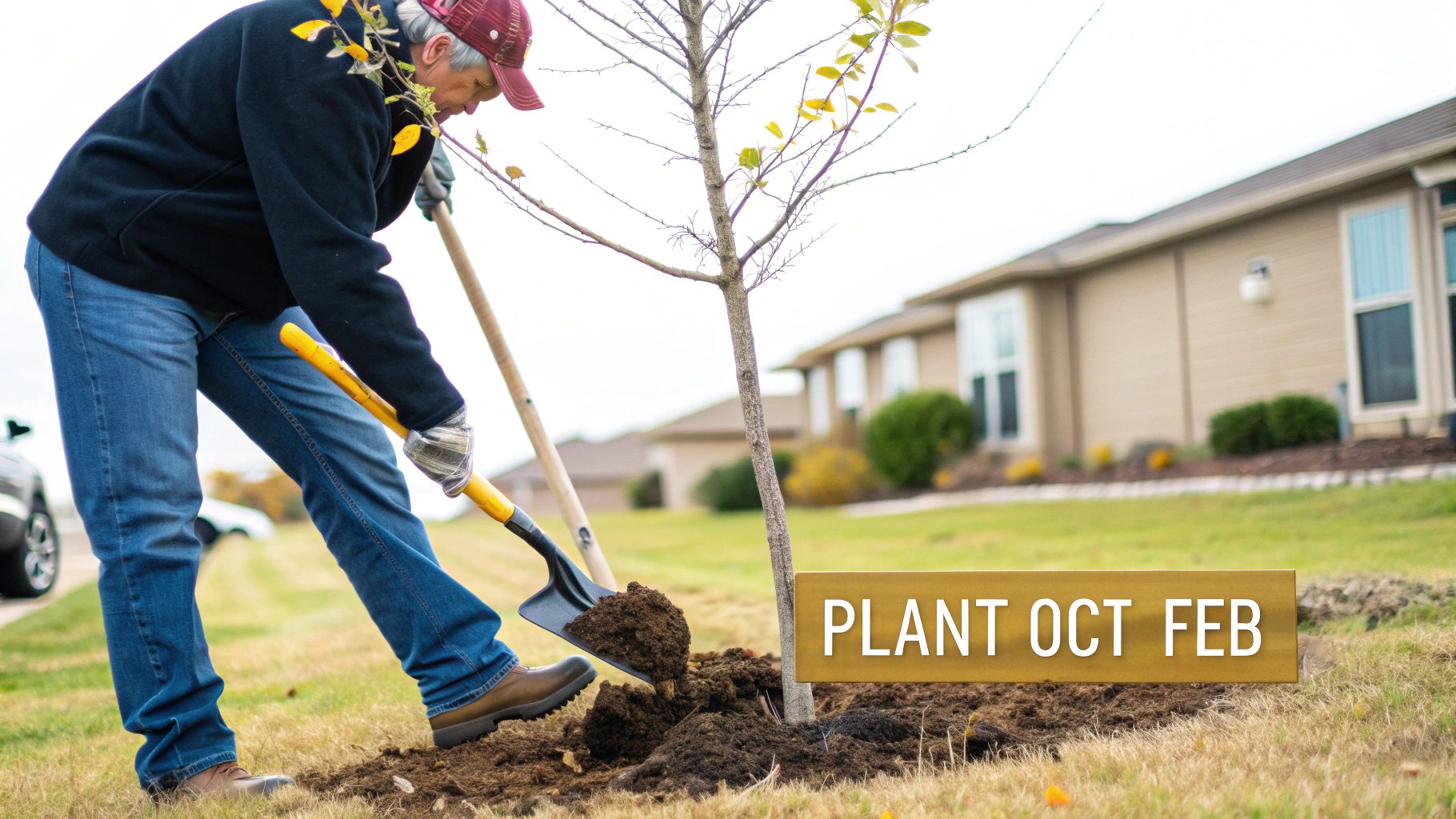
For homeowners and property managers in Texas, the dream of a yard shaded by beautiful, mature trees begins with one crucial step: timing. The single most important factor for success is planting at the right time of year. Hands down, the absolute best time to plant new trees in Texas is during the fall and winter months, typically from October through February.
This cooler season acts as a critical establishment period, giving your new tree a vital head start. It allows the tree to settle in and develop a strong root system before the brutal Texas summer heat arrives. Getting this right is the first step in protecting your landscaping investment.
Why Timing Is Everything for Texas Trees
Planting a tree is an investment in your property's future value and appeal. Choosing the right season protects that investment and sets your tree up for a long, healthy life. Planting in the fall or winter allows a new transplant to acclimate to its new home gently, without the immediate, life-or-death stress of a scorching summer.
The Science Behind Seasonal Planting
The primary goal for any newly planted tree is to establish a strong, deep root system. The window between October and February provides the perfect environment for this essential growth to happen.
We all know Texas summers are no joke, with temperatures regularly soaring above 95°F. That kind of heat puts immense stress on a young tree trying to grow roots and new leaves at the same time.
Fall and winter planting takes advantage of cooler air and more reliable rainfall. This combination encourages roots to spread deep into the still-warm soil without the overwhelming demand for water that summer brings. This simple, actionable strategy dramatically boosts survival rates. You can find more insights on why this seasonal window is so effective for ensuring tree health in Texas.
By planting in the cooler months, you allow the tree to focus all its energy on what’s happening underground—root development. When spring arrives, it's already well-anchored and fully prepared to support a burst of new leaf growth.
Benefits of Fall and Winter Planting
Choosing to plant during the cooler seasons pays off in several ways, especially in the unique climate of South Texas, from Corpus Christi and San Antonio down to Brownsville and Harlingen.
- Less Transplant Shock: Moving is stressful for trees. The cooler weather is far less taxing on a tree that has just been uprooted and placed in a new environment.
- Prime Root Growth Conditions: The soil stays warm enough for roots to grow and establish themselves long before the ground has a chance to freeze (a rare event in South Texas).
- Smarter Water Use: Your new tree won't need as much supplemental watering, thanks to lower evaporation rates and the natural increase in rainfall during these seasons.
- A Head Start for Spring: When the tree emerges from its winter dormancy, it does so with a robust root system, ready to thrive.
Working with a professional on your tree installation and cleanup ensures you get the most out of these benefits, as our experts bring proven techniques to the planting process.
Seasonal Tree Planting Guide for Texas
To give you a clearer picture, here’s a practical breakdown of what to expect when planting trees during Texas's distinct seasons.
| Season | Optimal Window | Pros | Cons |
|---|---|---|---|
| Fall | Late September – Early December | The ideal season. Cooler air reduces stress, while warm soil promotes vigorous root growth. | An early cold snap can be a risk in North Texas. May require more watering if fall is unusually dry. |
| Winter | December – February | Excellent for dormant trees. Low water needs and minimal stress. Allows maximum time for root establishment before summer. | A hard freeze can damage young trees. Planting in soggy, cold soil can be difficult. |
| Spring | March – Early May | Decent planting window. Mild weather supports new growth. Good for species that prefer warmer soil to start. | The window is short. A sudden heatwave can quickly stress a tree that hasn't established its roots. |
| Summer | June – August | Not recommended. Only plant if absolutely necessary, and only container-grown trees. | Extreme heat and drought cause severe transplant shock. Requires intensive, daily watering and has a high failure rate. |
While you can technically plant a tree in the spring, the advantages of fall and winter are undeniable. They give your tree the best possible odds of not just surviving, but thriving for years to come.
Why Fall and Winter Are the Best Times to Plant
Planting a tree in spring or summer is like asking a runner to start a marathon with no training—they are immediately hit with the stress of the Texas heat and have to scramble for water just to survive. Planting in the fall, however, gives your tree a full training season to build strength before the real race begins.
This "training season" runs from October through February, when all the important work happens underground. The air is cool, so the tree isn't stressed supporting leaves and branches. Meanwhile, the soil still holds warmth from the summer, creating the perfect recipe for root growth. With no pressure to produce leaves, the tree can put 100% of its energy into developing a deep, healthy root system.
The Power of a Winter's Nap
A tree's dormancy period in winter is like hibernation. All visible, above-ground growth shuts down, allowing the tree to conserve energy. This is a huge benefit for a newly planted tree. Instead of splitting its focus between growing roots and maintaining a canopy of leaves, it can concentrate entirely on anchoring itself into its new home.
By the time the first blast of summer heat arrives in South Texas, a fall-planted tree is no longer a fragile rookie. It's a seasoned pro, fully hydrated and ready to handle the stress, with a root system that can pull water and nutrients from deep in the ground.
This head start is the best defense against the two biggest threats to trees in places like Corpus Christi and San Antonio: intense heat and drought. A tree that has spent months establishing its roots is more resilient and won't require constant watering.
Beating Transplant Shock Before It Starts
Anytime a tree is moved, it experiences stress known as transplant shock. It's the tree's natural reaction to having its roots disturbed. Trying to do this during a blazing Texas summer magnifies that stress tenfold. The tree loses moisture through its leaves faster than its damaged roots can absorb water—a fast track to wilting, leaf drop, and failure.
Planting in the fall and winter provides a much gentler transition.
- Cooler Air: Less water is lost through the leaves (a process called transpiration).
- More Rain: The fall and winter months typically bring more natural moisture to help settle the soil and keep roots hydrated.
- Less Energy Needed: Without the demand to support new growth, the tree can focus all its resources on recovery.
This strategic timing is a fundamental part of professional landscape design and installation and separates a thriving landscape from a struggling one. It's how we at Fischer Landscaping ensure your investment grows into a strong, beautiful part of your property for decades.
Choosing the Right Tree for the Right Time
Success in Texas landscaping isn't just about when you plant; it's about what you plant. You can nail the timing perfectly, but if the tree isn't suited for the climate, you're setting yourself up for a struggle. Matching the right tree species to the right planting window is crucial for long-term health, especially in the demanding climates from San Antonio down to the Rio Grande Valley.
Native Hardwoods Versus Other Varieties
Hardy native hardwoods are the undisputed champions of fall planting. Think of iconic Texas trees like the stately Live Oak or the tough-as-nails Cedar Elm. Planting them in the cooler months is a game-changer. It gives their root systems a long, uninterrupted runway to expand and anchor deep into the still-warm soil before the brutal summer heat shows up.
But what about evergreens, fruit trees, or decorative palms? They play by slightly different rules. While many still do best with a fall planting, some, like certain fruit trees, can be successfully planted in late winter or the earliest days of spring. For a unique species like the Medjool, you have to get the timing and care just right. You can learn more about planting and caring for these majestic palms to make sure they establish well.
This is where professional insight makes all the difference. Our landscape design team at Fischer Landscaping helps you pick trees that not only fit your aesthetic but are hand-picked for your property's specific conditions and the ideal planting season in your area, whether you're in Corpus Christi or Harlingen.
The whole idea behind fall and winter planting is pretty straightforward: it’s all about letting the roots get a head start while the top of the tree is dormant. This infographic breaks down the key advantages.
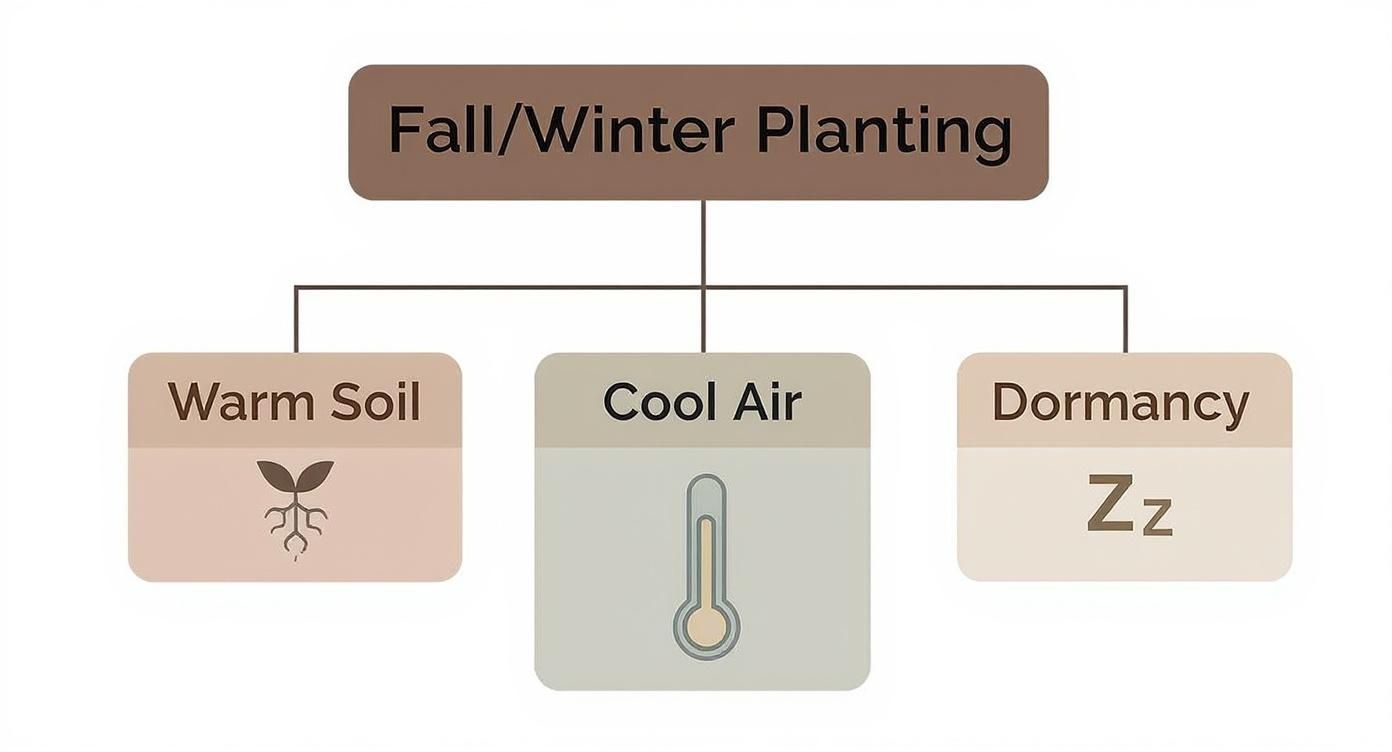
As you can see, the mix of warm soil, cool air, and the tree's natural dormancy is the perfect recipe for strong root growth. The tree isn't wasting energy on producing new leaves, so all its resources go straight to building a solid foundation underground.
A Closer Look at Planting Windows
Even large-scale professional operations stick to this seasonal schedule. Texas hardwood reforestation projects, for example, typically schedule their plantings between December 1 and March 1. This precision timing aligns with the trees' natural dormancy, which dramatically boosts survival rates.
Choosing the right tree can also be a deeply personal decision. A tree can be a living tribute to honor a memory or celebrate a milestone. If you're looking for a species with a special significance, this guide to plant memorial trees offers some thoughtful ideas that go beyond the usual landscape choices.
To help you navigate your options, we've put together a quick reference guide for some of the most popular and resilient trees that thrive in South Texas.
Ideal Planting Times for Popular South Texas Trees
This table provides a snapshot of the best planting windows and key characteristics for tree species that do well in the climates of Corpus Christi, San Antonio, and the Rio Grande Valley.
| Tree Species | Best Planting Season | Drought Tolerance | Sun Exposure |
|---|---|---|---|
| Live Oak | October – February | High | Full Sun |
| Cedar Elm | October – January | High | Full Sun |
| Texas Red Oak | November – February | Medium | Full Sun |
| Mexican Sycamore | November – March | Medium-High | Full Sun |
| Anacacho Orchid | October – January | High | Full/Part Sun |
| Retama | October – February | Very High | Full Sun |
| Texas Mountain Laurel | October – January | High | Full Sun |
Remember, this is a starting point. Always consider your specific soil type and microclimate before making a final decision. The goal is to give your tree the absolute best chance to not just survive, but truly thrive for decades to come.
Laying the Groundwork for a Healthy Tree
You can pick the perfect tree for your yard and time the planting just right, but if the site isn't properly prepared, you're setting yourself up for failure. A healthy tree needs a solid start, and that begins with the ground it's planted in. Getting the prep work right is where professional expertise really makes a difference.
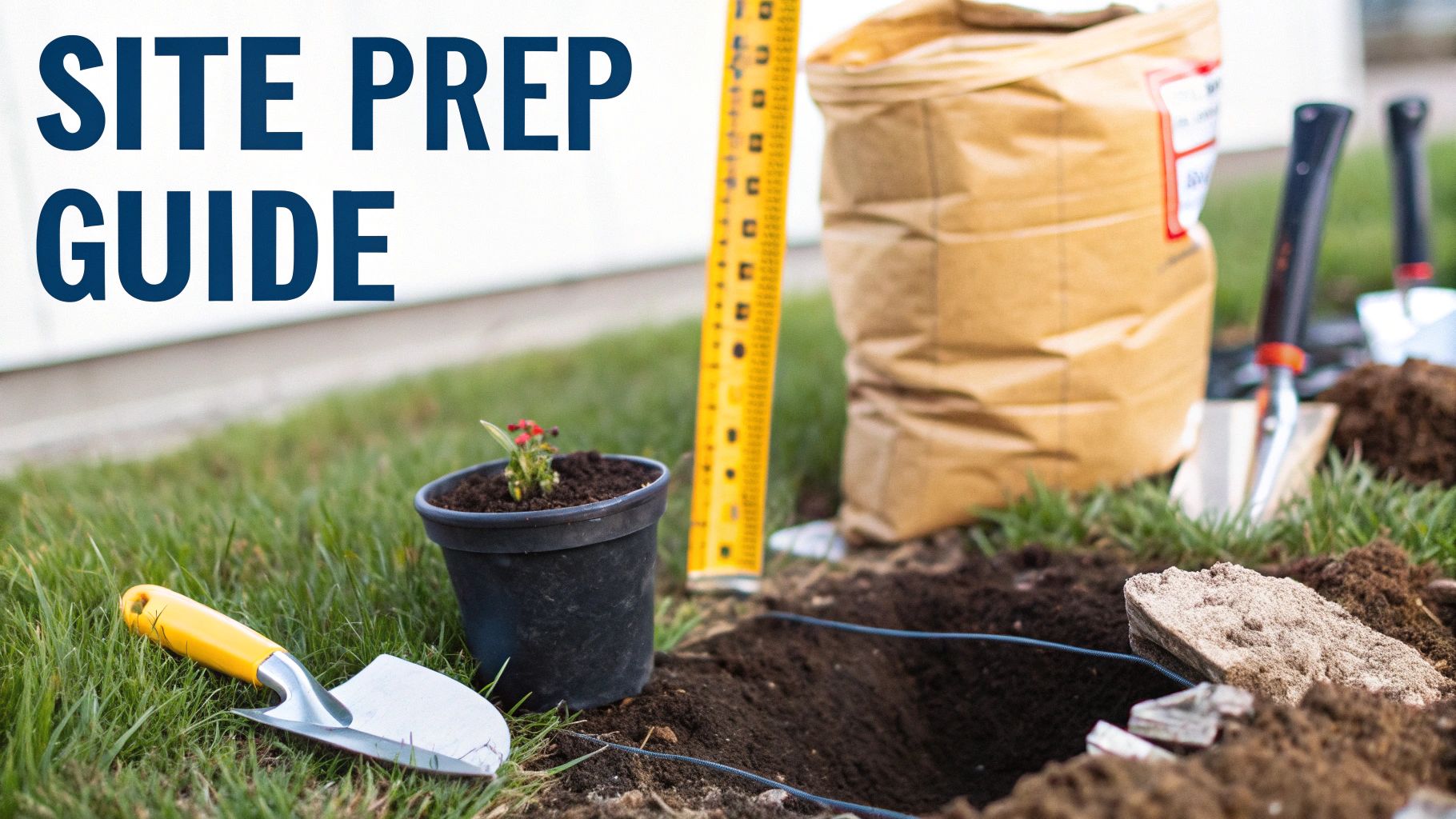
At Fischer Landscaping, we’ve seen what happens when this step is rushed. Shortcuts during site prep almost always lead to a stressed, weak tree that's more vulnerable to pests and disease down the road. Our solution-driven approach ensures a strong foundation for every tree we plant.
Digging the Right Kind of Hole
One of the biggest mistakes we see is digging a hole that's too deep and narrow. A tree's roots don't just dive straight down; they need to spread out horizontally to find water and stabilize the tree.
The rule of thumb is simple: dig a hole that is at least two to three times wider than the root ball, but no deeper than the root ball itself.
Planting a tree too deep is a surprisingly common and fatal error. You need to identify the root flare—that spot where the trunk starts to widen out just above the root system. This flare must sit slightly above the surrounding ground level. If you bury it, you're essentially suffocating the tree and creating a perfect environment for rot.
Working With, Not Against, Your Soil
South Texas soil can be tough, especially around Corpus Christi and San Antonio. We often deal with heavy, dense clay that compacts easily and doesn't drain well, which can lead to root rot. This is why just digging a hole and dropping in a tree isn't enough.
A professional soil assessment tells us the whole story. We look at pH levels, nutrient deficiencies, and the soil's physical texture. With that information, we can mix in the right amendments—usually a high-quality compost—to create an ideal growing environment tailored to your specific yard.
Amending the soil does more than just add nutrients. It fundamentally changes the soil structure to encourage:
- Better Drainage: It helps break up heavy clay, preventing water from sitting around the roots.
- Good Aeration: It creates pockets of air, allowing roots to breathe and grow.
- Nutrient Access: It makes it easier for the tree's new roots to absorb the food they need.
This methodical preparation is crucial for success. The same principle of foundational soil health is vital for larger projects, like the prep work we do for our hydroseeding services in Corpus Christi. Investing in the soil from day one pays off for the entire life of your tree.
Post-Planting Care to Ensure Your Tree Thrives
Getting your new tree into the ground is a fantastic start, but the work has just begun. The first year is the most critical time in your tree's life. During these initial months, it focuses all its energy on establishing a strong root system, which will be the foundation for its long-term health. The care you provide now directly impacts whether your investment grows into a beautiful, mature asset for your property.
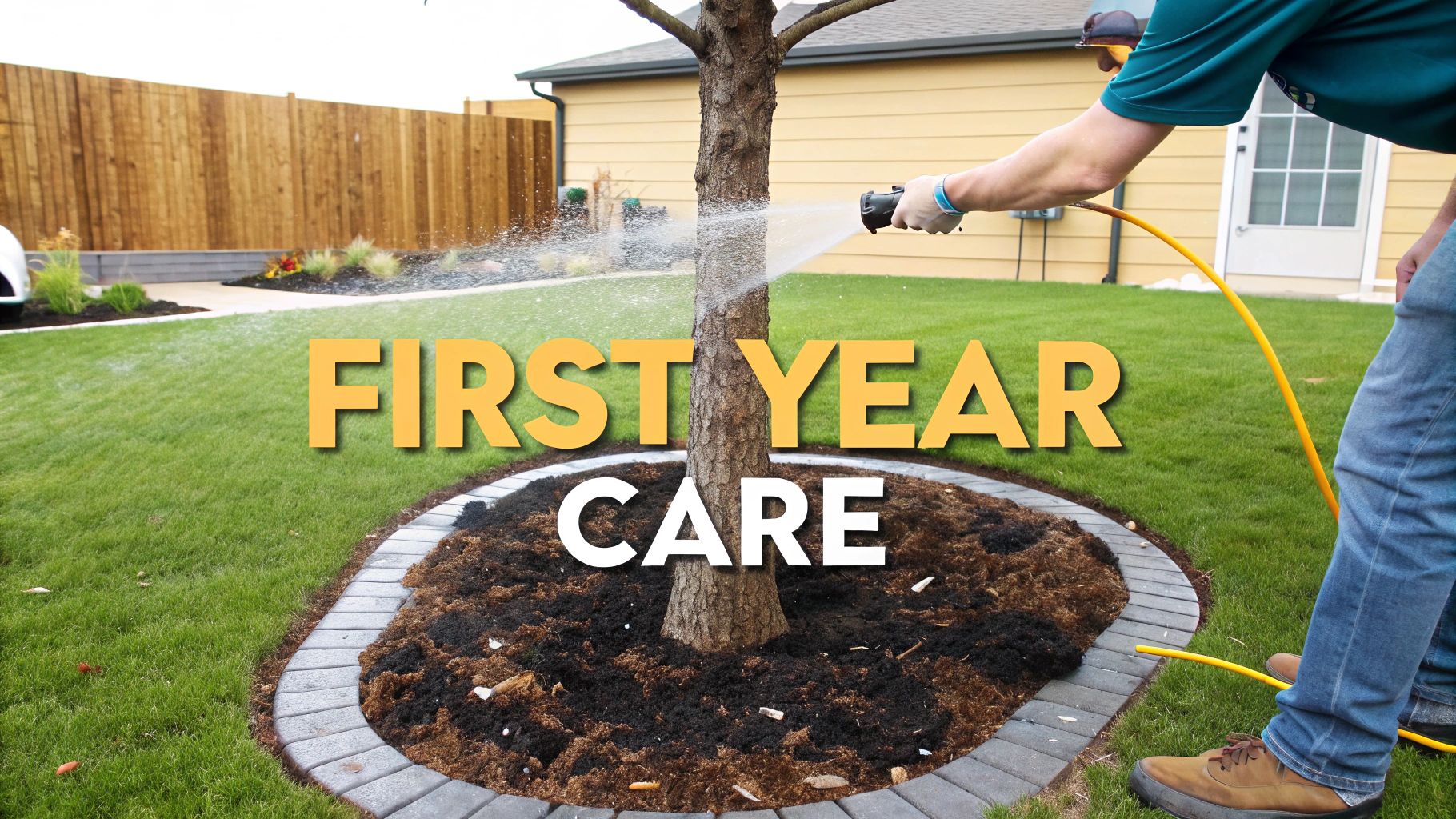
This initial care period is so important that even major state-wide programs are built around it. For instance, initiatives like H-E-B Trees for Texans exclusively fund plantings during the cooler season from October through March. They know from experience that this timing gives young trees the best possible chance to develop a robust root network before the brutal Texas summer arrives. It’s a best practice for a reason.
The First-Year Care Calendar
Your new tree is on a journey, and each season brings new challenges and requires a different approach, especially here in South Texas.
- First Few Weeks (Immediately After Planting): It's all about water. Give the tree a deep, thorough soaking right after planting to settle the soil and eliminate air pockets. For the next few weeks, check the soil every couple of days; if the top two inches are dry, it’s time to water again.
- First Winter (December-February): As things cool down, your tree's water needs decrease. A deep watering every two to three weeks is usually sufficient, but always check the soil first.
- First Spring (March-May): When you see new leaves emerge, it's a sign the tree is getting thirsty again. Increase watering to about once a week. The key is ensuring water penetrates deep into the root zone.
- First Summer (June-September): This is the make-or-break season. The intense heat in places like Corpus Christi and San Antonio puts immense stress on a young tree. You'll need to water deeply two to three times per week to keep the root ball consistently moist—but be careful not to create a swamp.
Watering and Mulching Best Practices
If you get two things right, make it watering and mulching. These are the twin pillars of successful post-planting care.
The golden rule for watering new trees is simple: water deeply and infrequently, not shallowly and often. This approach encourages the roots to grow downward in search of moisture, building a more drought-resistant tree for the long haul.
When it comes to mulch, spread a 2-3 inch layer of organic mulch around the tree's base, but shape it like a donut, not a volcano. Keep the mulch a few inches away from the trunk. This simple technique locks in moisture, suppresses weeds, and moderates soil temperature. Piling mulch against the trunk (a mistake known as "volcano mulching") traps moisture right against the bark, inviting rot and disease.
Making it through that first year is a big responsibility. Our professional tree installation and cleanup services take the guesswork out of the equation with a complete care plan. We ensure your new tree gets the expert start it needs to flourish for years to come. Contact Fischer Landscaping today for a quote and let us help you protect your investment.
Your Tree Planting Questions, Answered
Starting a new landscaping project always brings up a few questions. We've compiled some of the most common ones we hear from homeowners and businesses across South Texas to give you straightforward, expert advice.
Can I Plant A Tree In The Spring Or Summer?
While fall and winter are ideal, you can plant a tree in the spring. Just know that you’re signing up for a much more intensive care routine. The window for a new tree to establish its roots before the brutal summer heat hits is incredibly narrow. This means you'll have to be diligent with watering to prevent transplant shock. We strongly advise against planting in the summer. The punishing heat and dry conditions create a huge risk of the tree not making it.
How Much Water Does A New Tree Really Need?
The key is to keep the root ball consistently moist, but never soggy. A practical rule of thumb is to provide 10 gallons of water for every inch of the trunk's diameter. So, if you have a tree with a two-inch trunk, it's going to need about 20 gallons each time you water. Plan on watering deeply two to three times a week for the first few months, then gradually cut back as the tree settles in.
What Are The Biggest Mistakes To Avoid?
Two classic mistakes cause more headaches than all the others combined: planting too deep and "volcano mulching."
- Planting Too Deep: Always find the tree's root flare—that spot where the trunk widens just before the roots begin. Make sure this flare sits slightly above the ground. Burying it is a slow death sentence, leading to suffocation and trunk rot.
- "Volcano Mulching": Never pile mulch up against the trunk. This bad habit traps too much moisture, inviting pests and disease. Instead, think "donut." Spread a 2-3 inch layer of mulch in a wide circle, keeping it a few inches away from the trunk itself.
Why Should I Hire A Professional For Tree Installation?
Hiring a professional landscaping company like Fischer Landscaping is about protecting your investment and ensuring your tree doesn't just survive, but thrives. An expert gets all the details right, from the initial planning to the final placement.
A professional site assessment catches potential problems with soil, drainage, and sunlight before anyone picks up a shovel. This expertise in choosing the right tree for the right spot and using proper planting techniques gives your tree the absolute best shot at a long, healthy life.
For larger organizations focused on environmental impact through tree planting, specialized funding can make a world of difference. It's worth exploring resources that list grants for environmental nonprofits. Expert planning is just as critical for these large-scale projects. Opting for professional landscape design and installation services takes all the guesswork out of the equation, ensuring your property in Corpus Christi or San Antonio gains a beautiful, flourishing asset for decades to come.
Ready to add gorgeous, healthy trees to your property without the stress? The team at Fischer Landscaping knows exactly how to select, site, and plant the perfect trees for your South Texas landscape. Contact us today to request a quote and let our professionals handle the hard work for you.