
As a homeowner or property manager in South Texas, you quickly learn that timing is everything, especially when it comes to landscaping. The absolute best window for planting trees isn't in the spring, but during the cooler, dormant months from October to February. This might seem counterintuitive, but it gives your new trees the critical head start they need to survive and thrive in our unique coastal climate.
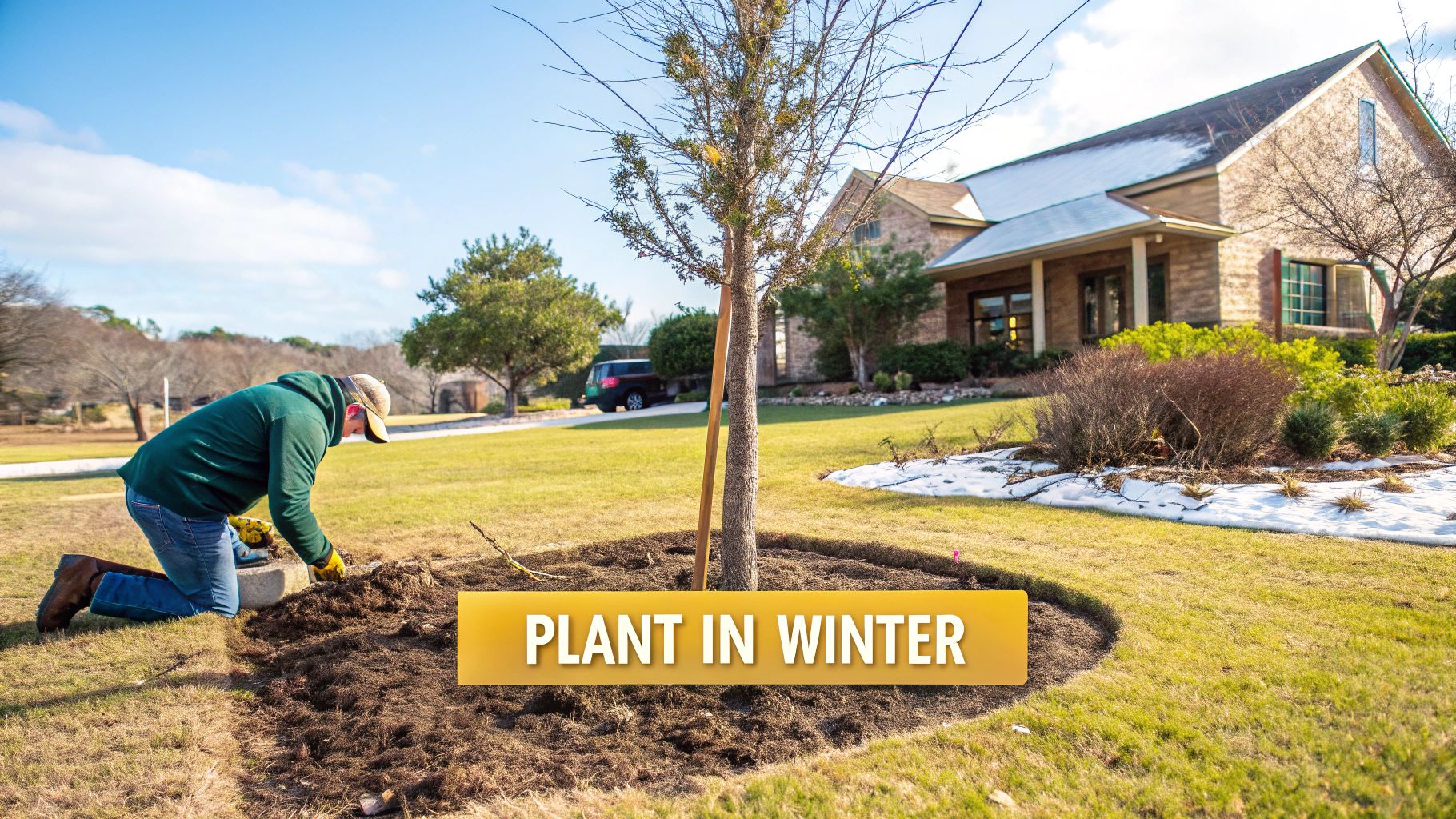
South Texas Tree Planting Calendar At a Glance
To make it simple, here's a quick look at how the seasons stack up for tree planting in South Texas, from Corpus Christi to San Antonio.
| Season | Optimal Planting Window | Primary Advantage |
|---|---|---|
| Fall/Winter | October – February | Allows roots to establish without heat stress, leading to higher survival rates. |
| Spring | March – April | Possible but risky. Requires intensive watering as summer heat arrives quickly. |
| Summer | May – September | Not recommended. Extreme heat and drought conditions cause severe transplant shock. |
This calendar clearly shows why our professional landscaping services focus heavily on the cooler months. It's about working with our local climate, not against it, to ensure your investment pays off.
The Cooler Weather Advantage
Planting during our mild fall and winter allows a tree to put all its energy into one critical task: building a strong root system. Instead of struggling to support new leaves while surviving scorching heat, the tree can quietly focus on growing deep, extensive roots. This process, known as root establishment, is the foundation of a tree’s long-term health.
Think of it as building a strong foundation for a house before you put up the walls. By the time the brutal South Texas summer arrives, a tree planted in fall or winter is prepared. Its robust root network is already in place, ready to pull in the water and nutrients it needs to not just survive, but thrive.
This simple shift in timing delivers major benefits for your property:
- Reduced Transplant Shock: Moving is stressful for trees. Cooler, dormant periods make the transition much easier on the plant.
- Better Water Conservation: With a well-established root system, your new tree will require less supplemental watering during its first summer.
- Higher Survival Rates: Trees planted in this optimal window have a significantly better chance of surviving their critical first year.
This strategic approach is what turns a new sapling into a lasting, beautiful part of your property. For homeowners down in the Valley, knowing these local details is what makes a landscape project successful, which is why working with professional Brownsville landscaping services who understand the climate can make all the difference.
Why Fall and Winter Planting Is Crucial Here
If you moved to Texas from another part of the country, you likely think of spring as planting season. Here in South Texas, we play by a different set of rules. Our mild winters aren't a time to wait; they're the secret weapon for establishing strong, healthy trees that will add value to your property for years to come.
A newly planted tree has two big jobs: grow roots underground and sprout leaves and branches above ground. It can't do both well at the same time. When you plant during our cooler months, the tree is dormant above ground, allowing it to focus 100% of its energy on developing a deep, robust root system in our still-warm soil.
This gives the tree a massive head start before the summer heat hits Corpus Christi, Harlingen, and the surrounding areas.
The Underground Advantage
A tree planted in November has months to quietly build its foundation. It develops an intricate network of roots that anchor it firmly and act as its plumbing system, ready to pull up water and nutrients when the summer demand is highest.
Now, compare that to a spring planting. A tree planted in April is immediately thrown into a high-stress situation. It has to push out new leaves for photosynthesis while also trying to grow a brand new root system as temperatures are already climbing. This is a recipe for stress, demanding constant watering and dramatically lowering its odds of survival.
This chart highlights the benefits of planting in the dormant season, showing just how much it impacts survival rates and that critical root development window.
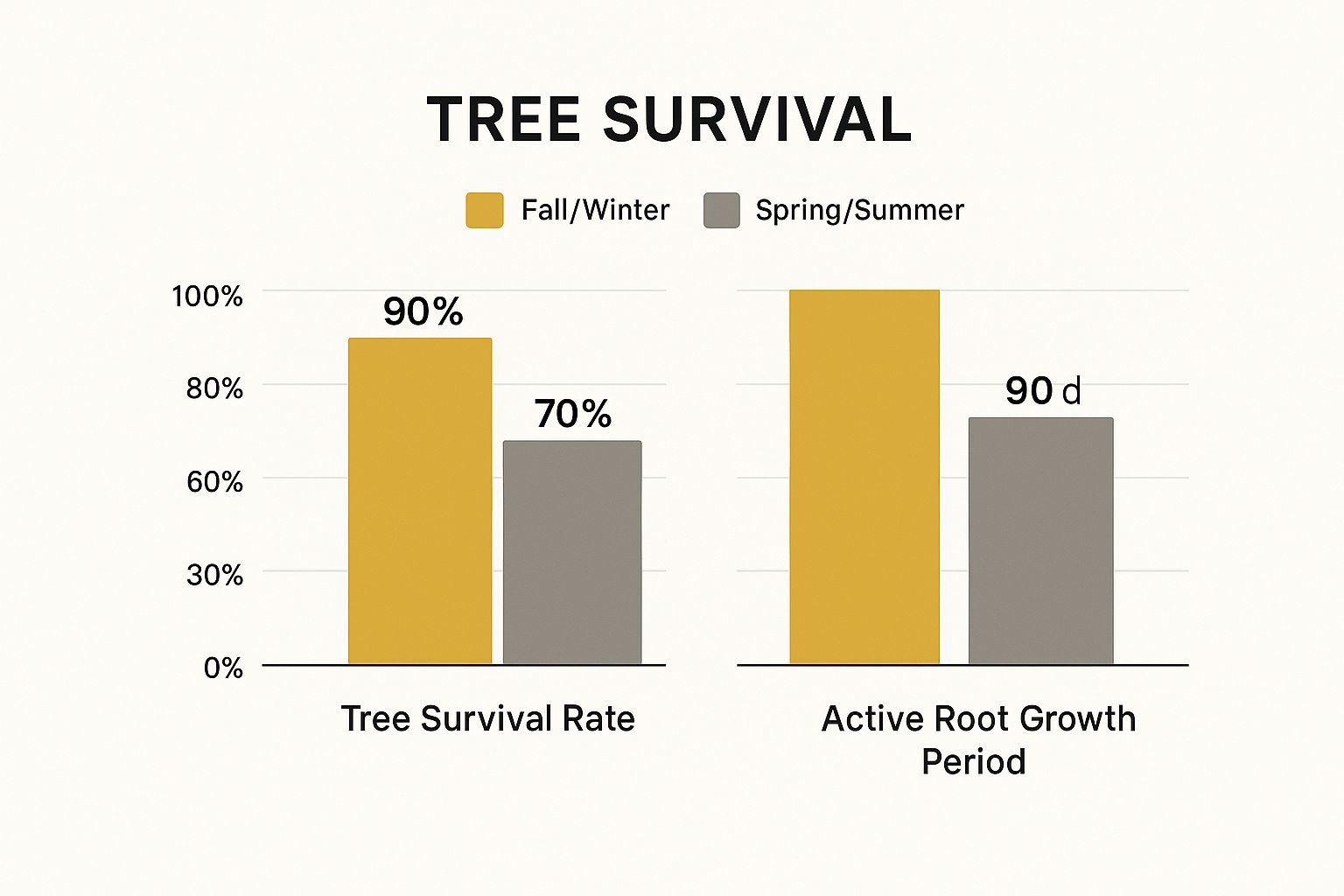
The data is clear. Planting in the fall or winter gives a tree a 30% longer period for active root growth, which in turn leads to a 20% higher survival rate.
Working With Our Climate, Not Against It
This is exactly why local expertise is so important for successful landscaping in the Coastal Bend. Understanding our unique climate isn't just a nice-to-have; it's the difference between a sad, struggling sapling and a majestic tree that adds real value to your property.
By timing the planting correctly, you significantly reduce transplant shock—the stress a plant experiences after being moved. A less stressed tree is a healthier, more resilient tree from day one.
Choosing the right time to plant is the most critical first step you can take. A professional team ensures this is done perfectly, from sourcing the healthiest nursery stock to getting the installation just right. If you want expert guidance for your property, our comprehensive tree installation services are designed to ensure success.
Matching The Right Tree To The Right Season
While the fall-to-winter window is our golden rule here in South Texas, it’s not a one-size-fits-all solution. The best time to plant often depends on the specific species. You wouldn't treat a delicate citrus tree the same way you'd handle a rugged, native Live Oak.
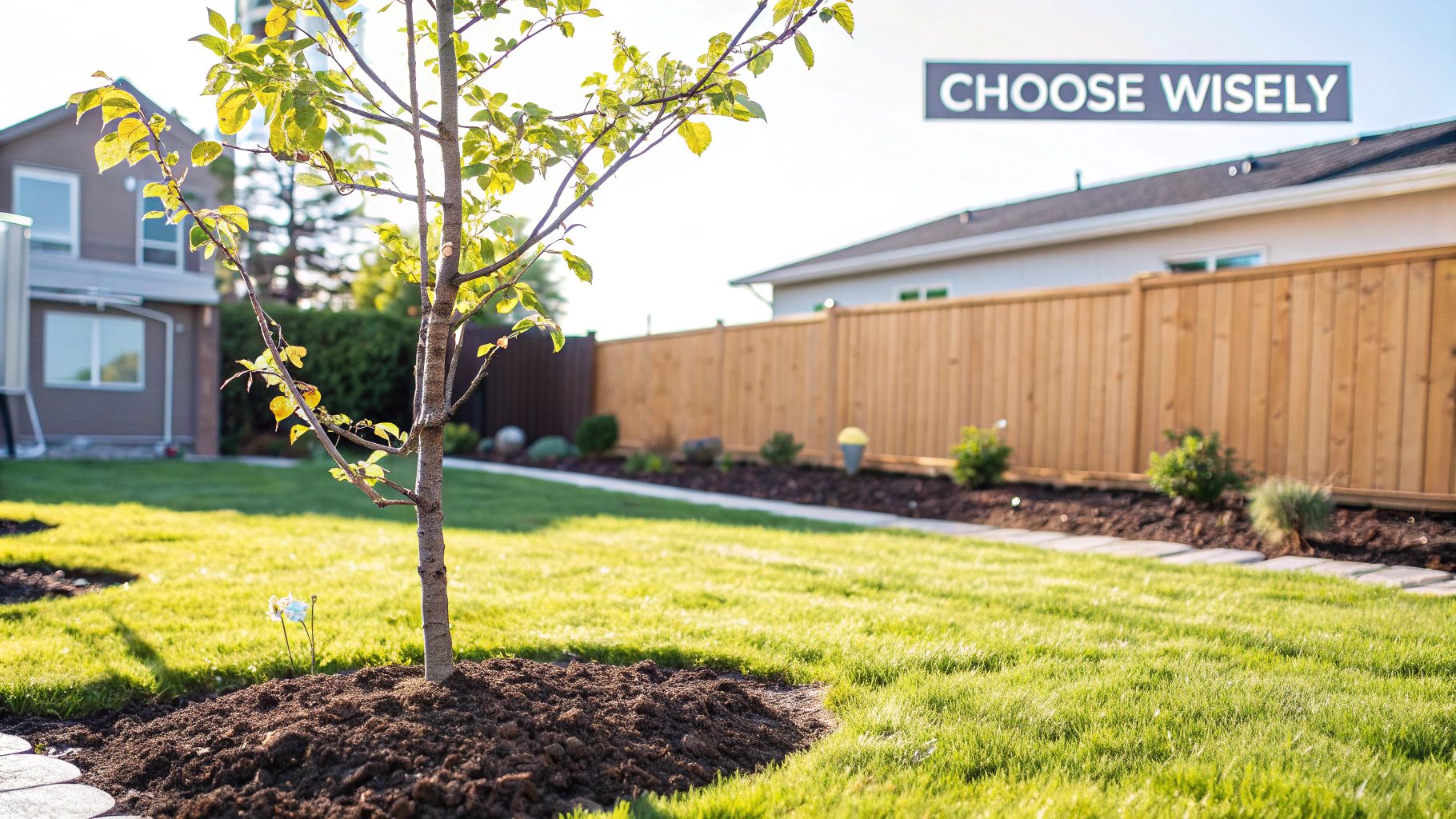
Getting these nuances right is what separates a thriving landscape from one that struggles, whether you're managing a commercial property in Harlingen or a backyard in San Antonio. Hardy native trees, for instance, are much more forgiving and can generally be planted anytime during the cooler dormant season with fantastic results.
In contrast, more sensitive ornamental or fruit-bearing trees often need a more precise planting schedule to avoid shock and get a strong start.
Hardy Natives Vs. Sensitive Ornamentals
Trees native to our area have spent centuries adapting to the local climate, making them incredibly resilient and smart choices for almost any project.
- Live Oaks & Cedar Elms: These are the tough workhorses of the Texas tree world. You can plant them anytime between October and February, and they’ll have plenty of time to establish their roots before the summer heat.
- Fruit Trees (e.g., Citrus, Peach): These are more delicate and don't appreciate a late cold snap. For them, it's best to aim for the latter part of the dormant season—think late January or February. This timing helps protect vulnerable new growth from potential frost damage.
- Ornamental Trees (e.g., Crape Myrtles): While still quite tough, these trees benefit most from a late fall planting. This gives their roots the maximum amount of time to grow deep before they put energy into their spectacular summer blooms.
Container-Grown Vs. Bare-Root Trees
The form your tree comes in also plays a role. Most trees from a local nursery are container-grown, meaning their root system comes intact in a pot. This offers more planting flexibility, though fall and winter still reign supreme.
Bare-root trees are less common and arrive with exposed roots. These must be planted during full dormancy in winter to prevent the roots from drying out. They require careful handling and precise timing, leaving little room for error.
Popular South Texas Trees and Their Ideal Planting Windows
| Tree Type (Example) | Best Planting Season | Key Consideration |
|---|---|---|
| Live Oak | October – February | Highly adaptable and forgiving, making it a great choice for a wide planting window. |
| Crape Myrtle | November – December | A late fall planting maximizes root development before its summer flowering cycle. |
| Mexican Sycamore | October – January | Establishes well in the cooler months, preparing it for fast growth in spring. |
| Citrus (Orange, Lemon) | Late January – February | Plant after the risk of a hard freeze has passed to protect young, sensitive growth. |
| Cedar Elm | October – February | Another tough native that thrives when planted during any part of the dormant season. |
This table shows just how much the "right time" can vary. Picking the perfect tree is more than an aesthetic choice; it's a strategic decision for the long-term health of your landscape.
Matching the right tree to the right planting time sets the stage for success. It creates the ideal conditions for roots to establish, which means less watering, a lower risk of failure, and better protection for your investment.
To ensure you're choosing varieties that will flourish in our climate, consulting a guide like the USDA Planting Zone Chart is a smart move. A consultation with a professional can also make all the difference, ensuring the tree you pick is a perfect match for your soil, sun exposure, and long-term goals.
Preparing Your Site for Planting Success
Choosing the right time to plant is a great start, but it's only half the story. For a tree to truly thrive, it needs a strong foundation, which means getting the soil and water right from day one. This is where we move from "when" to "how," ensuring your investment pays off for years to come.
The soil in South Texas varies widely, from the dense clay found inland to the sandy loam common near the coast in Corpus Christi. Each type presents challenges. Clay soil can become waterlogged and compacted, choking roots, while sandy soil lets water drain away too quickly.
This is why professional soil preparation is so crucial. At Fischer Landscaping, we don't just dig a hole and hope for the best. We amend the soil with the right mix of organic matter to improve its structure, enhance drainage, and boost nutrient levels. It's about creating the perfect environment for roots to spread and get established.
Mastering Water and Mulch
How you water a new tree during its first year is absolutely critical. A common mistake is providing frequent, light sprinklings. This encourages shallow roots, leaving the tree vulnerable when the weather gets hot and dry.
The key is to water deeply and infrequently. This approach encourages roots to grow downward in search of moisture, building a more resilient and drought-tolerant system for the long haul.
If you get two things right after planting, make them watering and mulching. These steps protect the tree from stress, save water, and build a strong foundation for decades of healthy growth.
A good layer of mulch is essential, not optional. It acts as a protective blanket for the root zone, performing several important jobs at once:
- Moisture Retention: It slows evaporation, keeping the soil moist much longer.
- Temperature Regulation: Mulch insulates the soil, shielding new roots from our brutal summer heat.
- Weed Suppression: It smothers weeds that compete for water and nutrients.
The Professional Advantage
This initial site preparation is where hiring a professional landscaping service truly shows its value. We can analyze your soil and create a tailored plan to optimize it. For larger properties, we can install efficient irrigation systems that deliver water directly to the roots, eliminating guesswork and waste.
A well-prepared site is also the cornerstone of your entire landscape. Healthy soil is just as vital for a successful turf installation as it is for a new tree. When you trust this crucial first step to an expert, you’re giving your tree the best possible start for a long, healthy life.
Common Planting Mistakes to Avoid
Knowing when to plant is a critical first step, but even a perfectly timed project can fail if the details are handled incorrectly. Here in the Corpus Christi area, we've seen countless well-intentioned planting efforts struggle due to a few common, avoidable mistakes.
Getting it right from the moment the shovel hits the dirt is what separates a thriving tree from one that's doomed from the start.
Most problems begin the second the tree goes into the ground. Understanding these pitfalls makes it clear why having a professional handle the installation brings so much peace of mind.
Digging and Depth Errors
Planting a tree too deep is the number one mistake we see. The hole should only be as deep as the root ball itself. You want the root flare—the spot where the trunk widens just above the roots—to sit slightly above the surrounding ground level. Burying the flare suffocates the tree, leading to disease and a slow decline.
Another common error is failing to address the roots from the nursery container. Before planting, it's essential to tease apart the root ball and correct any girdling roots—roots that have grown in a tight circle inside the pot. If left uncorrected, these roots will continue to circle and eventually choke the tree as it grows.
Mulching and Location Mishaps
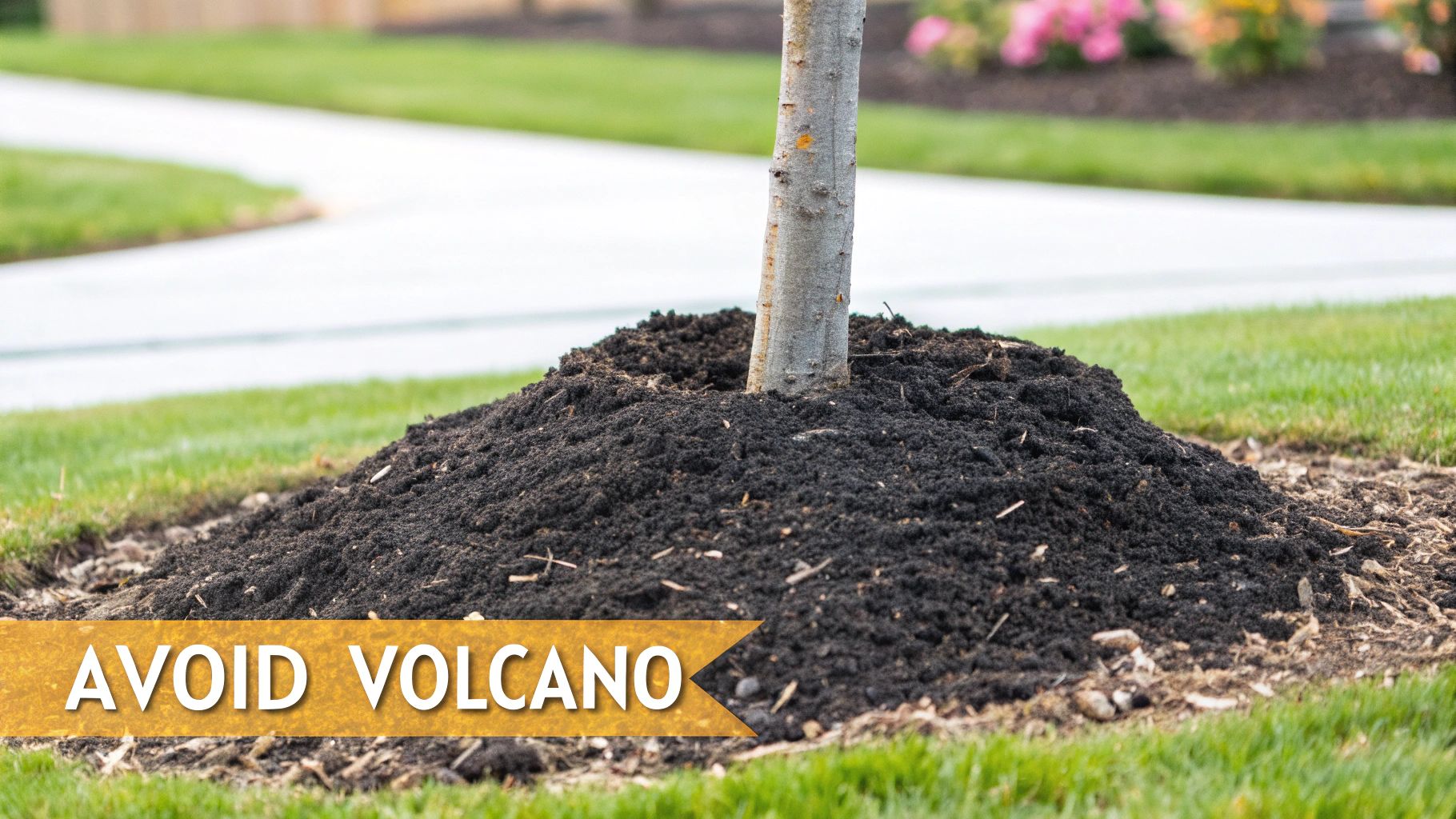
Good mulching is a tree's best friend, but bad mulching is its worst enemy. Avoid the dreaded "mulch volcano," where mulch is piled high against the trunk. This traps moisture against the bark, creating a perfect environment for rot and disease.
The rule of thumb is simple: a mulch ring should look like a donut, not a volcano. Leave a few inches of bare ground around the trunk for airflow, then spread a 2-4 inch layer of mulch over the root zone.
Finally, think before you dig. Choosing the wrong spot can lead to major headaches later. Ask yourself these key questions about the tree's mature size:
- Will it eventually grow into overhead power lines?
- Could its roots damage sidewalks or your home's foundation?
- Is this spot sunny or shady enough for this particular species?
Planning ahead saves you from expensive removal or drastic pruning down the road. These details really matter. Even with global planting efforts, the world still saw a net loss of over 100 million hectares of forest between 2000 and 2020. You can read the full research on global forest gains to see why every successfully planted tree counts. A professional consultation from Fischer Landscaping ensures these critical details are handled correctly from day one.
Ready for a Tree That Thrives? Let the Pros Handle It
Your landscape is a significant investment in your property's value and your quality of life. We've covered why fall and winter are the best times for planting in South Texas, but timing is only one piece of the puzzle. Ensuring a tree takes root and flourishes for decades often requires a professional's touch.
While a DIY approach can be rewarding, there's a lot that can go wrong. Partnering with the experts at Fischer Landscaping takes the guesswork out of the equation. We handle every crucial detail, from selecting the healthiest trees to understanding the unique soil conditions here in Corpus Christi and the Coastal Bend.
Think of it this way: we handle all the tricky science behind a successful planting. Your only job is to sit back and enjoy watching your beautiful new tree grow.
What Professional Tree Planting Looks Like
When you hire Fischer Landscaping, you get more than just a hole dug in the ground. You get a complete, solution-driven process designed for long-term success.
- Smart Selection: We start by matching the right tree to your property's specific sunlight, soil, and drainage conditions for a perfect fit.
- Perfect Planting: Our crew gets the details right every time, from precise planting depth to properly preparing the root ball and amending the soil.
- Guidance for the Future: We don’t just plant it and leave. We provide clear guidance on how to water, mulch, and care for your new tree as it gets established.
Our professional tree installation and cleanup services are designed to give your new tree the absolute best start for a long, healthy life. If you’re ready to enhance your property with a beautiful, strong tree, let's talk. Contact Fischer Landscaping today to schedule a professional consultation.
Got Questions? We've Got Answers
Even with the best plan, you might still have a few questions. Here are some of the most common inquiries we receive from property owners across South Texas, along with straightforward, actionable answers from our team.
What Is the Absolute Best Month to Plant a Tree in Corpus Christi?
While the entire window from October to February is your prime time, if we had to choose just one month, it would be November.
In November, the soil still retains some summer warmth, which encourages rapid root growth. At the same time, the cooler air means the tree isn't stressed trying to support a full canopy of leaves. This combination provides the perfect head start for a strong, healthy tree.
Can I Plant Trees Here in the Spring or Summer?
You can, but we strongly advise against it. Nurseries sell container-grown trees year-round, but planting one in the brutal heat of a South Texas summer sets it up for a tough battle for survival.
Asking a tree to establish itself in June is like asking someone to run a marathon right after major surgery. It has to cope with transplant shock and scorching temperatures simultaneously. This requires an enormous amount of water and often leads to a stressed, struggling tree with a much lower chance of survival.
Here’s the bottom line: A tree planted in the summer is just trying to survive. A tree planted in the fall is focused on getting established. That fall-planted tree is going to be healthier and grow better almost every single time.
How Much Should I Water a Newly Planted Tree?
Consistent moisture is key right after planting. For the first few weeks, plan on giving your new tree a deep, slow soak 2-3 times per week. You want to ensure the entire root ball and the surrounding soil get thoroughly saturated.
After that initial period, you can usually reduce watering to one deep soak per week, but always monitor the weather. A string of hot, dry days will require extra watering. This is one of the most critical topics we cover during our landscaping consultations.
Ready to add beautiful, healthy trees to your property that are set up to thrive from day one? The team at Fischer Landscaping has the local knowledge and hands-on experience to make sure your investment flourishes in our unique South Texas climate.
Get a free, no-obligation quote from our tree planting experts today!