
When you hear "insecticide," you probably think of a spray that kills bugs—end of story. But bee-safe insecticides are a whole different class of product. These are pest control solutions designed with a scalpel, not a sledgehammer. They're formulated to go after specific harmful insects while leaving honey bees and other crucial pollinators largely unharmed.
The whole point is to maintain ecological balance. This approach ensures your landscape can stay vibrant and healthy without accidentally wiping out the beneficial insects that make it all possible.
Protecting Pollinators in Your South Texas Landscape
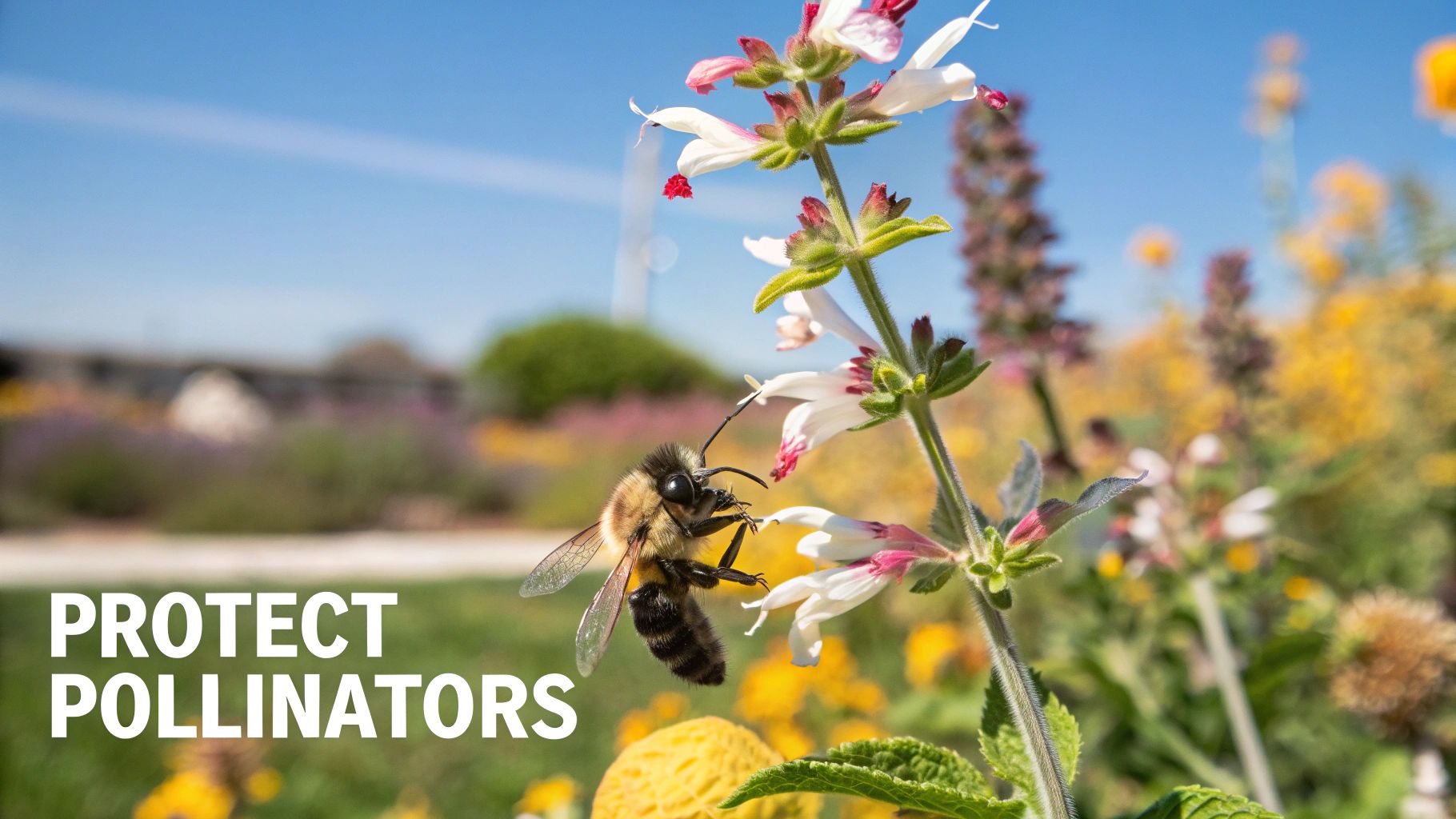
If you own property anywhere in South Texas, from a San Antonio backyard to a sprawling Corpus Christi business park, you know a great landscape is more than just nice-looking plants. It's a living, breathing ecosystem, and its success depends on a tiny, often-unseen workforce: the pollinators. Bees, butterflies, and other beneficial bugs are the heroes behind the health of our local plants, from your tomato patch to the native Texas Lantana.
The problem is, this delicate system is incredibly easy to disrupt. Far too often, conventional pesticides are a blunt force, wiping out the pests you don't want but taking the good guys down with them. Many common insecticides you'd find on a shelf at a big-box store can't tell the difference between a destructive aphid and a hardworking honey bee. This indiscriminate method can devastate local pollinator populations, which directly impacts the health and vitality of your plants.
Adopting a Smarter Pest Management Strategy
This is exactly why shifting to bee-safe insecticides is so important for modern landscaping. It's about moving away from a "spray everything" mindset and toward a more targeted, intelligent approach to pest control. The goal isn't to surrender your property to pests, but to select solutions that solve the problem without creating a bigger one for the ecosystem.
A smarter strategy means understanding the habits of both the pests and the pollinators. As professionals, we know that most bees are busiest during the middle of the day. A big part of the solution is choosing products with low toxicity to bees and, just as importantly, applying them when pollinators are least active—think early morning or late evening. This simple timing adjustment can dramatically reduce their exposure.
Embracing this mindful strategy brings some serious upsides:
- Preserves Local Biodiversity: When you protect pollinators, you're supporting the entire local food web. This leads to a healthier environment in communities all over our area, from Brownsville to Harlingen.
- Enhances Plant Health: More pollinators mean better fruit and seed production. The end result is stronger, more resilient plants across your landscape.
- Improves Property Value: A thriving, ecologically sound landscape is a huge asset. It boosts curb appeal and signals that a property is managed with care and responsibility.
Protecting pollinators is just one piece of a larger puzzle. To get a better sense of how small changes can make a big difference, it's worth learning how to reduce your overall environmental footprint.
Here at Fischer Landscaping, we've always believed that a beautiful yard and a healthy ecosystem should go hand-in-hand. Our approach to commercial and residential landscaping is built on these principles, ensuring your South Texas property doesn't just look good today, but flourishes for years to come.
Finding the Right Bee Safe Insecticide
Walking down the insecticide aisle can be daunting. With so many options, how do you pick the right one? The secret isn't finding a single "best" product, but rather choosing the right one for the specific pest you're dealing with, especially here in South Texas. It's about a targeted approach that gets the job done without harming our vital pollinators.
This isn't just a niche idea; it's a major shift in how we manage landscapes. The market for bioinsecticides, which includes these pollinator-friendly options, was valued at USD 2.2 billion back in 2020 and is growing fast. This trend, detailed in a market analysis by MarketsandMarkets.com, shows that homeowners and professionals alike are demanding smarter, safer alternatives.
What Are Your Go-To Options?
When you spot a pest problem in your Corpus Christi garden or on a commercial property in San Antonio, you have several excellent bee-safe choices. These aren't like the harsh, broad-spectrum chemicals of the past. They're much more precise.
You'll generally run into three main types:
- Microbial Insecticides: These are fascinating. They use naturally occurring microorganisms, like the bacteria Bacillus thuringiensis (Bt), to target pests. Different strains of Bt are specialists, going after specific insects like caterpillars or mosquito larvae while being completely harmless to bees, birds, and people. It’s like having a microscopic sniper on your side.
- Botanical Oils (like Neem Oil): Sourced directly from plants, these oils are a gardener's classic. Neem oil, for example, can repel pests, interfere with their hormones, or smother them. It's great for common nuisances like aphids and mites. The key is to apply it in the evening after bees have gone home for the day, as it can be harmful to them while it's still wet.
- Horticultural Oils: Think of these as highly refined oils, either from petroleum or plants, that work by suffocating soft-bodied insects and their eggs on contact. They are fantastic for tackling scale, mites, and aphids. Once the oil dries, it leaves no toxic residue, making it safe for the next day's bee activity.
To make it easier to see how these stack up, here’s a quick comparison of what you might use in a typical South Texas landscape.
Comparing Common Bee Safe Insecticide Options
| Insecticide Type | Active Ingredient Example | Best For Targeting | Application Notes |
|---|---|---|---|
| Microbial | Bacillus thuringiensis (Bt) | Caterpillars (e.g., cabbage loopers, tomato hornworms) | Must be ingested by the pest. Apply thoroughly to leaves where caterpillars are feeding. |
| Botanical Oil | Neem Oil | Aphids, mites, whiteflies, fungal diseases (like powdery mildew) | Best applied in the evening. Avoid spraying in direct sunlight to prevent leaf burn. |
| Horticultural Oil | Refined Mineral or Plant Oil | Scale insects, mites, aphids, mealybugs (especially during dormant season) | Requires direct contact to be effective. Coats and suffocates the pest and its eggs. |
Choosing the right tool from this list depends entirely on what pest you're seeing and where.
Putting It Into Practice
Let's make this real. Imagine you have a gorgeous hibiscus in your Harlingen yard, but it’s suddenly covered in aphids. Your first instinct might be to grab a powerful, all-purpose spray. But that would wipe out the aphids and any bees that come to visit those beautiful flowers.
A much better, more strategic choice would be a horticultural oil. By spraying it late in the evening, you can smother the aphids directly. The oil will dry overnight, leaving no lasting toxic threat for the bees that show up for their morning shift. That’s the kind of thoughtful pest control that makes a real difference.
The best bee safe insecticide is one that targets your specific pest without causing collateral damage to beneficial insects.
Ultimately, this is just one piece of a much larger puzzle. Smart pest management is a core part of creating a healthy, vibrant landscape. By integrating these targeted solutions into your overall residential landscaping plan, you can ensure your property not only looks incredible but also actively supports the local ecosystem. At Fischer Landscaping, we specialize in helping homeowners develop these kinds of integrated plans, building resilient and truly stunning outdoor spaces.
Getting Your Application Technique Right
Picking the right product is only half the battle. The real skill in using bee-safe insecticides comes down to how and when you put them to work. This is where you separate effective, laser-focused pest control from accidentally harming the beneficial insects that make your South Texas landscape flourish.
This focus on careful application isn't just a good idea; it's a growing movement. The market for bee-friendly pesticide schedules was valued at USD 2.34 billion and is expected to climb, a trend fueled by a deeper appreciation for the role pollinators play. As detailed in a report from Growth Market Reports, this signals a major shift toward smarter, safer pest management across the board.
The process for choosing and applying these products correctly is straightforward but critical, as this infographic shows.
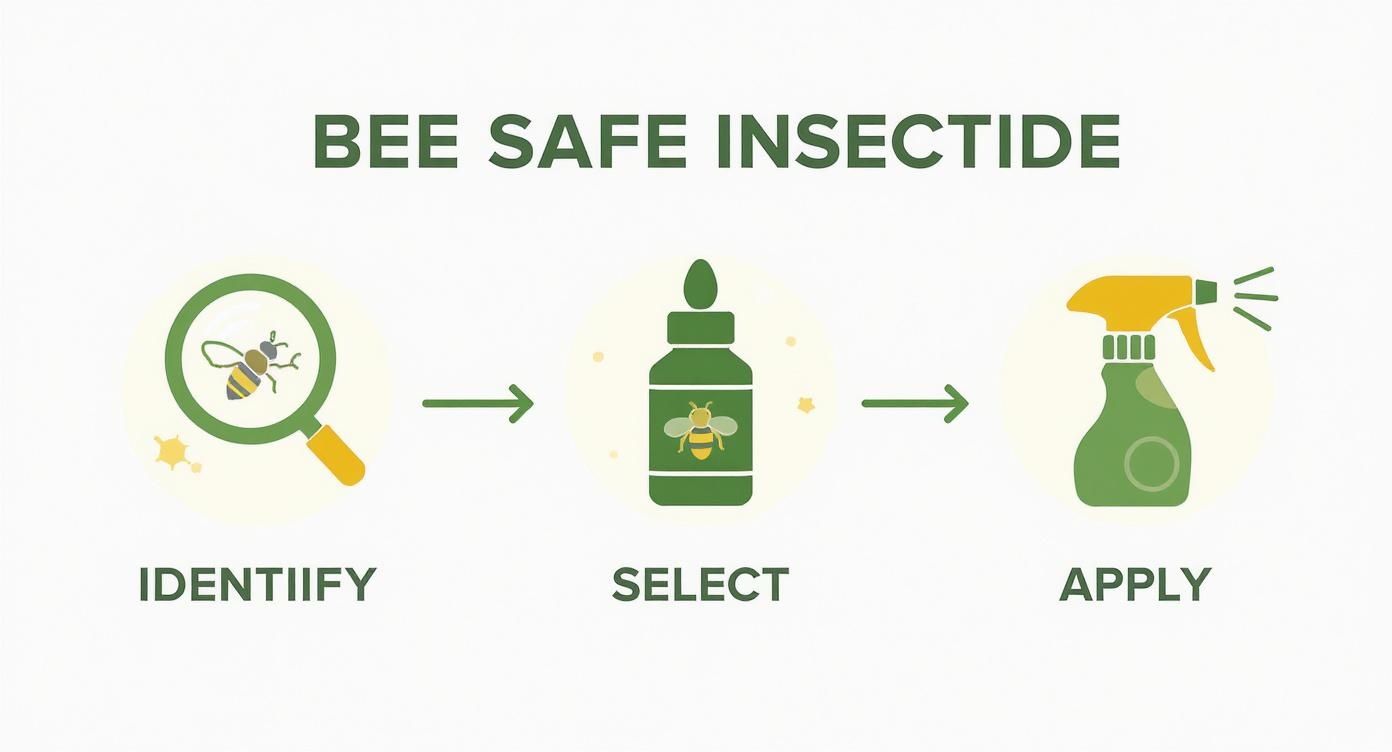
As you can see, successful, bee-conscious pest control is a deliberate process. It starts with identifying the pest, moves to selecting a targeted solution, and ends with applying it precisely.
Master Your Timing and Technique
When it comes to protecting pollinators in Corpus Christi, San Antonio, and the surrounding areas, timing is everything. Bees are busiest during the warmest parts of the day, usually from mid-morning to late afternoon. Spraying anything during this peak activity window is asking for trouble, even if you're using a bee-safe product.
Pro Tip: The golden rule is to apply treatments either very early in the morning, right around sunrise, or late in the evening as the sun goes down. This gives the product plenty of time to dry before bees start their morning rounds.
Beyond timing, how you apply the product makes a huge difference. Casting a wide net with broad, indiscriminate spraying is almost never the answer.
- Watch Out for Drift: Wind is not your friend. Never spray on a breezy day, as even a slight wind can carry droplets onto flowering plants you never meant to treat, putting unsuspecting pollinators at risk.
- Be a Sharpshooter: Focus your application directly on the problem areas. If aphids are hiding on the undersides of leaves, that’s where you spray. Do your absolute best to avoid spraying open blossoms.
- Think Outside the Spray Bottle: For certain pests, a soil drench can be a much better option than a foliar spray. This method gets the insecticide to the plant's roots, minimizing any contact with flying insects on the surface.
Staying on top of your landscape's health with regular property mow and maintenance services helps you catch pest issues early, often before they become big problems that require more intensive treatment.
Always Read the Label—Then Go One Step Further
Think of the insecticide label as a legal document packed with critical instructions, including specific warnings about pollinators. You must read the entire label before you mix or apply anything. It’s your best source for proper application rates and safety protocols.
Want an extra layer of protection? If you’re treating plants that are right next to flowers bees just can't resist, consider temporarily covering those neighboring blooms with a lightweight cloth. Just remember to remove it the next morning after the spray has dried. It’s a simple step, but it can make all the difference.
At Fischer Landscaping, our technicians are trained to combine deep knowledge of local pests with these precise application methods. We know that protecting your landscape investment means caring for the whole ecosystem, ensuring your property remains a healthy, vibrant space for everyone—including our pollinators.
Creating a Resilient Bee-Friendly Landscape
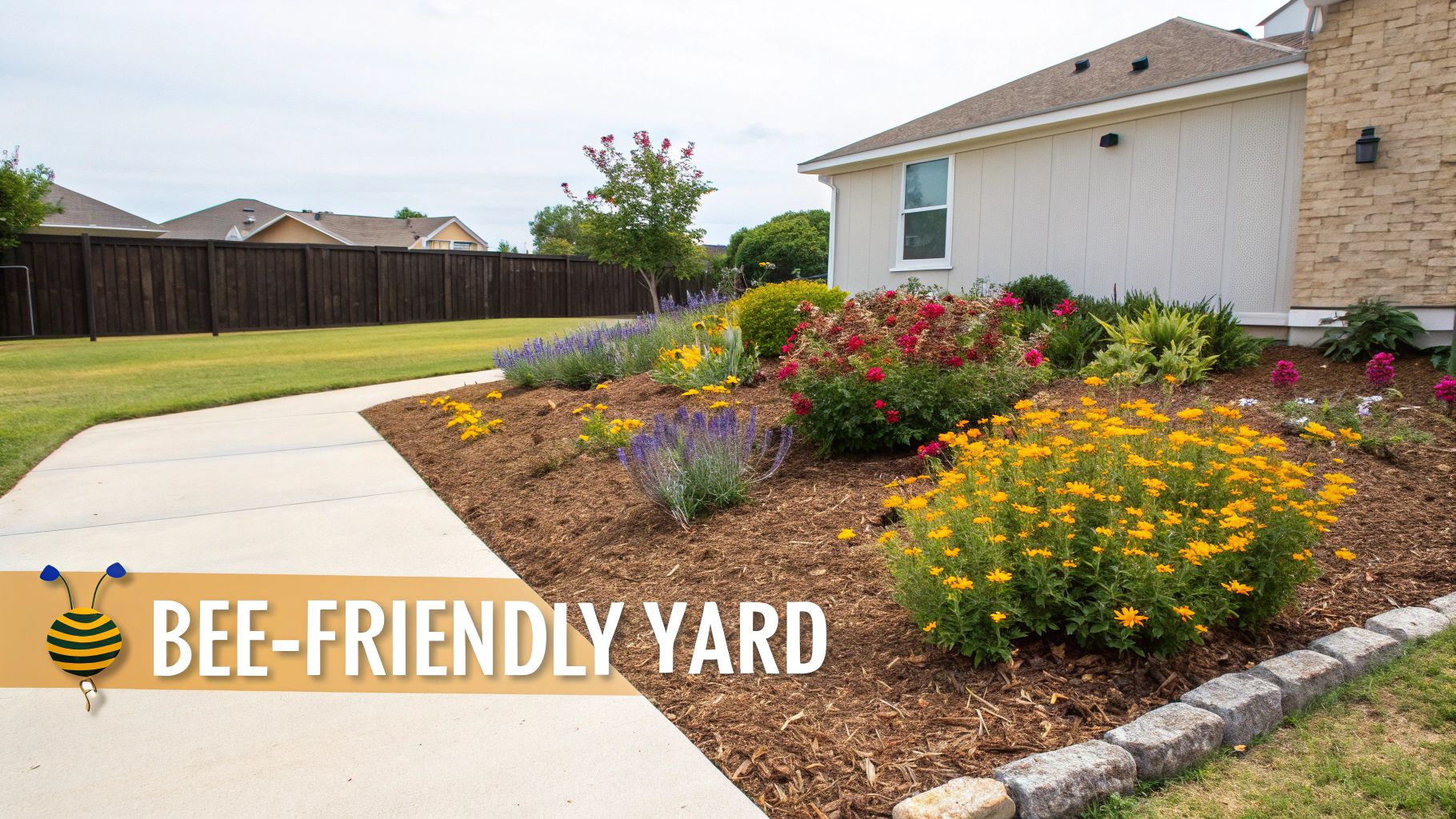
Real, effective pest management starts long before you ever think about reaching for a sprayer. While choosing the right bee safe insecticides is a critical skill, your best strategy is actually building a landscape that resists pests on its own. It's a proactive philosophy we live by at Fischer Landscaping, known as Integrated Pest Management (IPM), and it's how we create healthy, resilient properties all across South Texas.
Think of your landscape design as your first line of defense. A thoughtfully planned garden works with nature, not against it. This creates an environment where plants thrive and pests just can't seem to get a foothold, which naturally reduces how often you need to intervene and helps pollinators flourish.
Building a Strong Foundation for Your Landscape
The path to a pest-resilient landscape starts from the ground up. Here in South Texas, whether you're dealing with the humidity in Brownsville or the heat in San Antonio, healthy soil is the absolute cornerstone of healthy plants. Stressed plants—whether from poor soil, lack of nutrients, or improper watering—are practically an open invitation for insect infestations and disease.
Our focus is always on improving soil structure and making sure plants get the right amount of water at the right time. Proper irrigation, for example, is more than just quenching thirst; it prevents the damp, stagnant conditions that many fungal diseases and pests love. Getting these fundamentals right creates strong, vigorous plants that can fend for themselves. Beautifully designed water features not only add beauty but can also attract beneficial birds that prey on pests, contributing to a balanced garden ecosystem.
Harnessing the Power of Native Plants
One of the most powerful IPM strategies is also one of the simplest: choose the right plants for our corner of the world. Native and well-adapted plants have spent generations evolving to handle the specific soil and climate conditions around Corpus Christi and Harlingen. This makes them inherently tougher against local pests and diseases, which means less work for you.
When you incorporate these hardy species, you're not just planting—you're building a self-sustaining landscape that doubles as a perfect habitat for local pollinators.
A landscape rich with native, pollinator-friendly plants is not just beautiful—it's a smart, low-maintenance ecosystem that actively works to keep pests in check.
Thinking about adding some pollinator powerhouses to your property? Here are a few great choices for our region:
- Texas Lantana: A true workhorse. This vibrant, drought-tolerant shrub is an absolute magnet for butterflies and bees, and it blooms its heart out even in the peak of summer heat.
- Salvia (Sage varieties): Native salvias are fantastic. They provide brilliant spikes of color and serve as a critical nectar source for hummingbirds and all kinds of bees.
- Turk’s Cap: This is a great choice for shadier spots. Its unique red flowers are a favorite for a wide range of pollinators, and it has an impressively long blooming season.
Working with a professional landscaping team from the start helps build this kind of resilient, ecologically sound outdoor space. We do more than just put plants in the ground; we design a thriving ecosystem custom-fit to your property, ensuring it stays a healthy and beautiful asset for years to come.
Common Pest Management Blunders and How to Sidestep Them
We all want a beautiful, thriving landscape. But sometimes, in our rush to fix a problem, we can accidentally do more harm than good, especially to the pollinators that keep South Texas buzzing. Protecting these tiny powerhouses isn't just about picking the right product; it's also about steering clear of some very common, well-intentioned mistakes.
One of the biggest blunders we see is a simple case of mistaken identity. A homeowner spots a chewed-up leaf, panics, and grabs the first broad-spectrum insecticide they can find. More often than not, it's the wrong tool for the job. This approach doesn't just waste money; it puts beneficial insects in the line of fire for no reason.
Applying Too Much, Too Late, or In the Wrong Weather
It’s easy to fall into the "more is better" trap. But dousing a plant with extra insecticide won't solve the problem faster. It only increases the chances of harmful chemical runoff and exposes everything in the vicinity—including bees—to unnecessary risk.
Then there's the issue of timing and weather. Spraying on a windy day is a classic mistake. That fine mist doesn't just stay on your problem plant; it drifts everywhere, contaminating nearby flowers where pollinators might be foraging. It's a disaster waiting to happen.
This is why a professional strategy, like the one we live by at Fischer Landscaping, is rooted in precision. We start with a positive ID of the pest, then apply a targeted solution at the absolute minimum dose required to be effective.
The goal of smart pest management is precision, not power. Applying the right product in the right way is far more impactful than blasting your landscape with a powerful chemical and hoping for the best.
The Hidden Threat of Systemic Insecticides
Perhaps the sneakiest mistake is using systemic insecticides without fully grasping how they operate. These products are absorbed by the plant, making every part of it—from the roots to the leaves, nectar, and pollen—toxic from the inside.
This means a bee can land on a flower and ingest a lethal dose days or even weeks after you applied the product to the soil. You might think you're being careful by avoiding the blooms, but the danger is already integrated into the plant itself.
Systemic products are a major player in the global insecticide market, which is valued at a staggering USD 21.38 billion. While the industry is slowly moving toward safer options, many products on hardware store shelves still contain these hidden threats. You can discover more insights about the insecticides market to see just how prevalent these chemicals are.
Avoiding these ecologically damaging missteps is exactly why bringing in an expert makes sense. The trained technicians at Fischer Landscaping understand the intricate web of life in your yard. We can develop a pest control plan that actually works, protecting your property in Corpus Christi or San Antonio while keeping our crucial local pollinators safe.
Your Questions About Bee-Safe Insecticides Answered
When you're trying to manage pests without harming pollinators, a lot of questions pop up. Here are some of the most common ones we hear from property owners around South Texas, with straightforward answers to help you navigate your options.
Are "Organic" or "Natural" Products Always Safe for Bees?
This is probably the biggest misconception out there. While it seems like "natural" should automatically mean safe, that's not always the case. Some organic-approved insecticides, like certain pyrethrins (which come from chrysanthemum flowers), are still quite toxic to bees if you spray them directly or apply them at the wrong time.
It’s less about whether a product is synthetic or organic and more about how and when you use it. You have to look past the marketing buzzwords on the bottle and really understand the active ingredients.
How Long After Spraying Is It Safe for Bees?
There's no single answer here—it completely depends on the product. This is why reading the label isn't just a suggestion; it's a must.
For example, horticultural oils and insecticidal soaps are only a threat to bees while they're wet. Once the product has fully dried on the plant, the danger has passed. But other products have residual toxicity that can linger for hours, or even days. If the label isn't crystal clear, the safest bet is always to wait longer.
A pro will always choose products with the shortest possible residual impact and apply them when bees aren't active. This creates a safe window where the treatment does its job and the pollinators can return to a non-toxic environment.
Can I Still Control Tough Pests Like Fire Ants?
Of course. Tackling aggressive pests like fire ants in a Corpus Christi backyard or grubs tearing up a commercial lawn in San Antonio doesn't mean you have to wage war on your local pollinators. The trick is to use hyper-targeted solutions.
Think about fire ants. Instead of broadcasting a harsh chemical, a professional will use granular baits. The ants do the work for you, carrying the bait back to the colony. This takes out the queen and the nest from the inside out, without ever affecting the bees foraging on your flowers. For grubs, we can use microbial treatments that work below ground, leaving beneficial insects on the surface completely alone. It's about being smart and precise, not just powerful.
Getting these details right is what makes the difference between a landscape that just looks good and one that's genuinely healthy. At Fischer Landscaping, we have the field experience to identify your specific pest problems and use targeted, bee-safe strategies that protect both your property and our local ecosystem.
Ready to build a landscape that's beautiful, resilient, and pollinator-friendly? Request a quote from us today.