In South Texas, from the bustling streets of San Antonio and Corpus Christi to the vibrant communities of Brownsville and Harlingen, the desire for a lush, shady landscape is universal. A mature tree canopy not only provides welcome relief from the relentless sun but also boosts property value, reduces energy costs, and creates a serene outdoor environment for homes and businesses. The challenge, however, is patience. Many property owners don't have decades to wait for a sapling to mature.
This guide is a practical solution for homeowners and property managers who want results sooner. We will explore the best fast growing trees Texas soil and weather conditions can support, helping you make an informed decision for rapid growth without compromising long-term health. Selecting species that can withstand our unique climate is crucial. For a truly resilient landscape, consider pairing your new trees with some of the top drought tolerant plants suitable for Texas gardens.
While planting a tree may seem straightforward, selecting the right species and ensuring its proper installation is a science. Professional expertise from a company like Fischer Landscaping turns a hopeful investment into a guaranteed asset for your property's future, ensuring your new tree thrives from day one. In the following sections, we’ll detail the top performers that deliver both speed and substance for your South Texas property.
1. Bald Cypress (Taxodium distichum)
The Bald Cypress is a uniquely adaptable and stately choice among fast growing trees for Texas landscapes, particularly for property owners from the Gulf Coast to San Antonio. While technically a deciduous conifer, meaning it sheds its needles in winter, its rapid growth rate of 2-3 feet per year allows it to quickly establish itself as a prominent feature. It can reach a mature height of 50 to 70 feet, providing substantial shade and vertical interest.
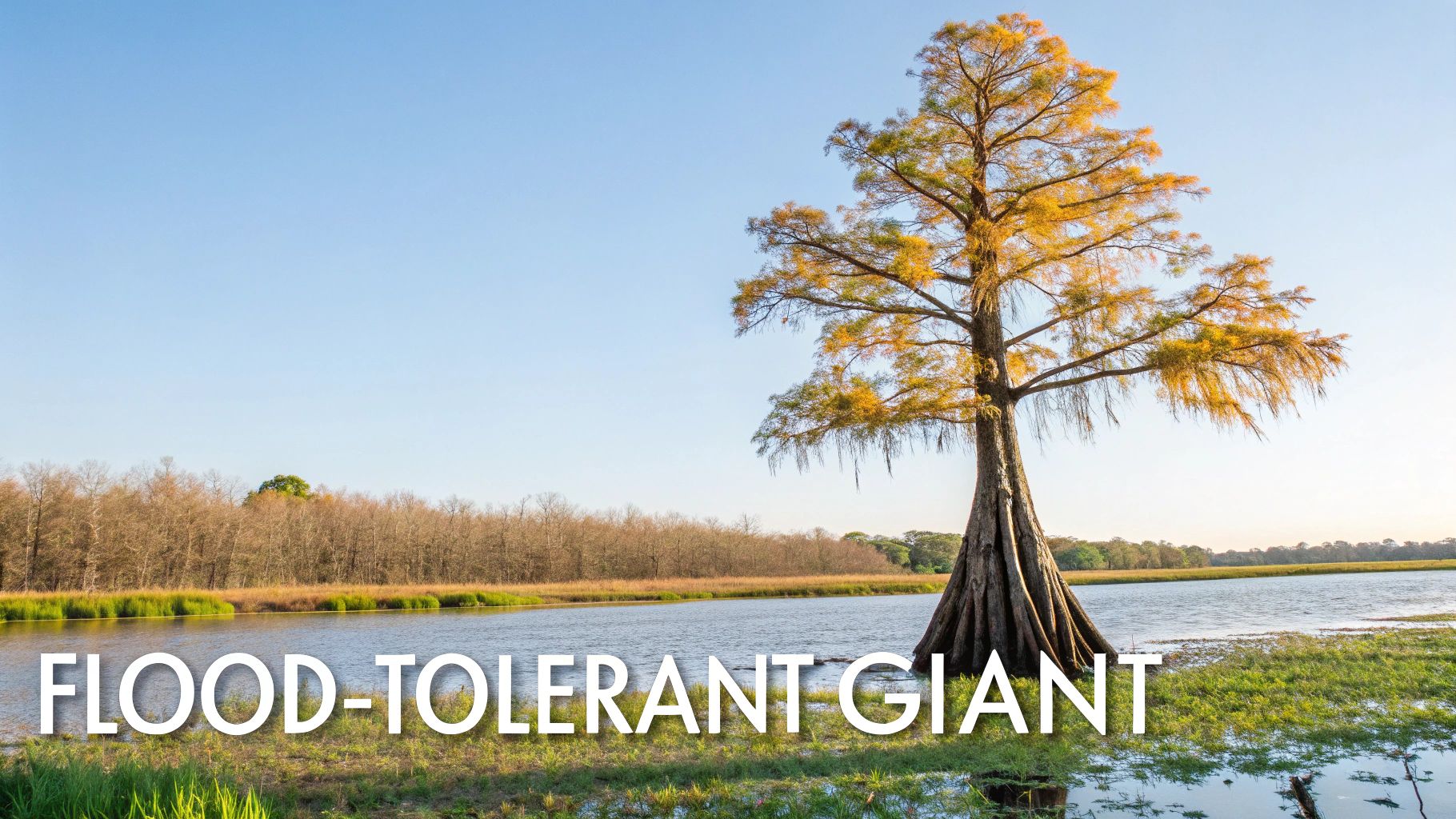
This native tree is renowned for its tolerance of wet, swampy conditions, making it an excellent candidate for properties in Corpus Christi or any area with poor drainage. Once established, however, it demonstrates surprising drought tolerance, allowing it to thrive in more diverse Texas climates. Its feathery, bright green foliage provides a soft texture during the growing season before turning a striking russet-orange in the fall.
Why Choose the Bald Cypress?
The Bald Cypress is ideal for property owners seeking a fast-growing tree that is both beautiful and resilient. Its ability to handle "wet feet" makes it a perfect solution for low-lying areas or properties near ponds and streams. Its strong wood and pyramidal shape also make it highly resistant to wind, a crucial benefit for coastal areas like Corpus Christi and Brownsville. For expert guidance on integrating this majestic tree into your landscape, our professional design team can help.
Actionable Planting and Care Tips
- Optimal Planting Time: Plant in the spring to give the root system a full growing season to establish before the stress of summer heat.
- Moisture Retention: Apply a thick layer of mulch (3-4 inches) around the base of a young tree to conserve soil moisture and regulate temperature, which is especially important during its first few years.
- Watering Strategy: While it loves water, provide deep, infrequent watering after it is established to encourage a strong, deep root system. This helps it become more drought-tolerant over time.
- Sunlight Needs: Plant in a location that receives full sun for at least six hours a day for the fastest and healthiest growth.
2. Live Oak (Quercus virginiana)
The Live Oak is an iconic and enduring symbol of the Texas landscape, celebrated for its majestic, sprawling canopy and deep-rooted cultural significance. While its growth rate of 18-24 inches per year is more moderate, it is a valuable fast-growing tree for its longevity and sheer presence. It matures into a massive, wide-spreading shade tree, often reaching 40-50 feet in height with a canopy that can spread twice as wide, creating a powerful statement in any large landscape.
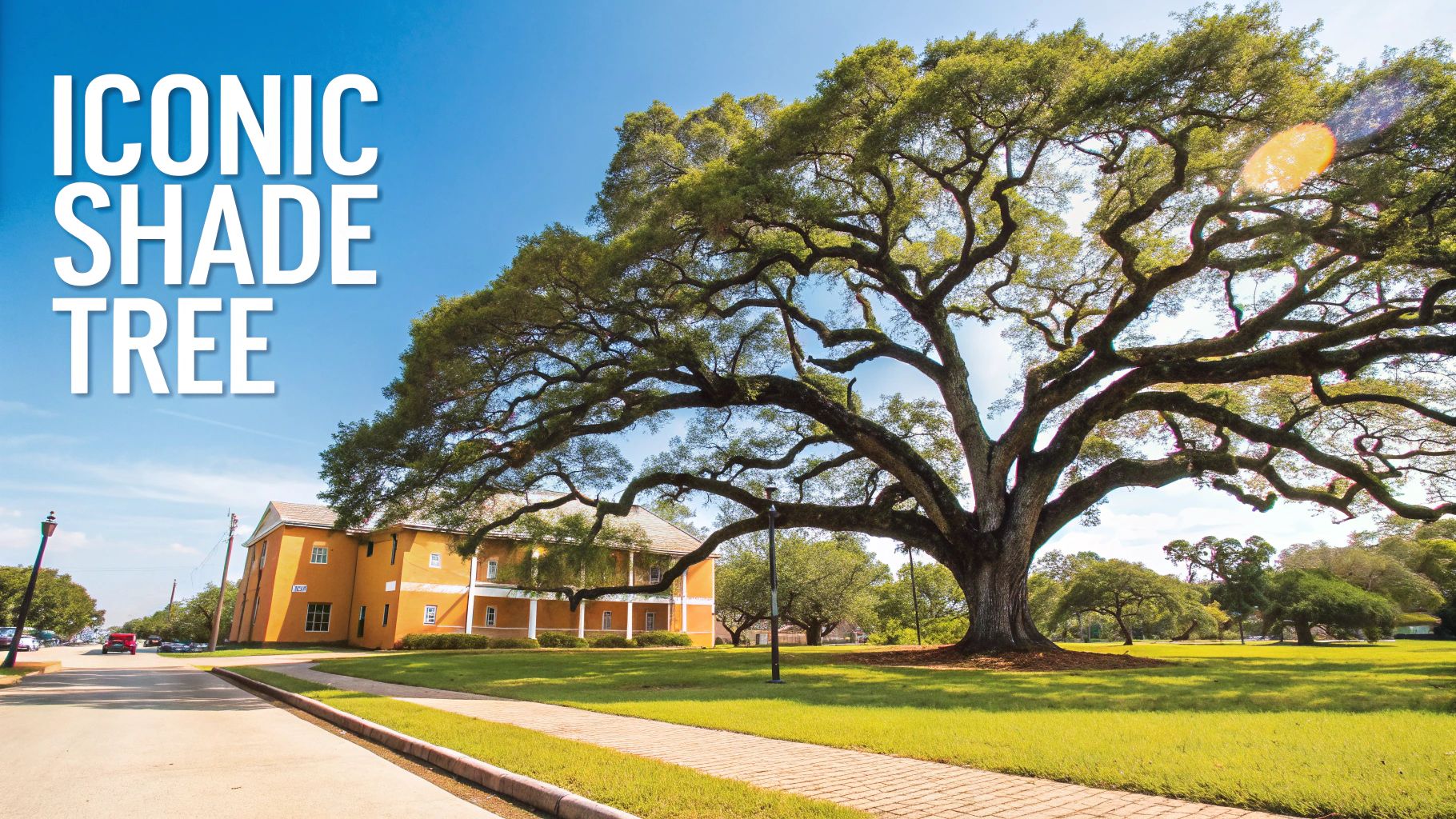
This native evergreen is exceptionally hardy and drought-tolerant once established, making it a cornerstone of landscapes from the Texas Hill Country to the Gulf Coast. Its defining characteristic is its magnificent branch structure, which creates a vast area of dense, year-round shade. Iconic specimens like those lining the San Antonio River Walk showcase the tree’s potential to define a space for generations.
Why Choose the Live Oak?
The Live Oak is the perfect choice for property owners looking to make a long-term investment in their landscape. Its unparalleled shade can significantly reduce cooling costs, and its robust nature makes it resilient to Texas's demanding climate. This tree is ideal for large residential properties, commercial campuses, or public parks in Corpus Christi where its grand scale can be fully appreciated. Integrating a legacy tree like the Live Oak into your property requires careful planning, something our landscape installation services team excels at.
Actionable Planting and Care Tips
- Planting Stock: Start with a high-quality, nursery-grown tree. This gives it a significant head start for faster establishment and growth.
- Watering Strategy: During the first two years, provide deep but infrequent watering to encourage the roots to grow downward, building a strong, drought-resistant foundation.
- Spacing for Growth: Plant Live Oaks at least 40-60 feet away from structures and other trees to accommodate their massive mature spread and prevent future conflicts.
- Root Zone Protection: Avoid compacting the soil around the base of the tree with heavy equipment or foot traffic, as this can damage the sensitive root system and hinder growth.
3. Sycamore (Platanus occidentalis)
The American Sycamore is a truly majestic and vigorous choice among fast growing trees for Texas, celebrated for its massive scale and distinctive appearance. This native deciduous tree boasts a rapid growth rate of 2-3 feet per year, quickly establishing a grand presence and eventually reaching heights of 75 to 100 feet. Its most notable feature is its beautiful, exfoliating bark that peels away to reveal a creamy white, tan, and green mottled pattern underneath.
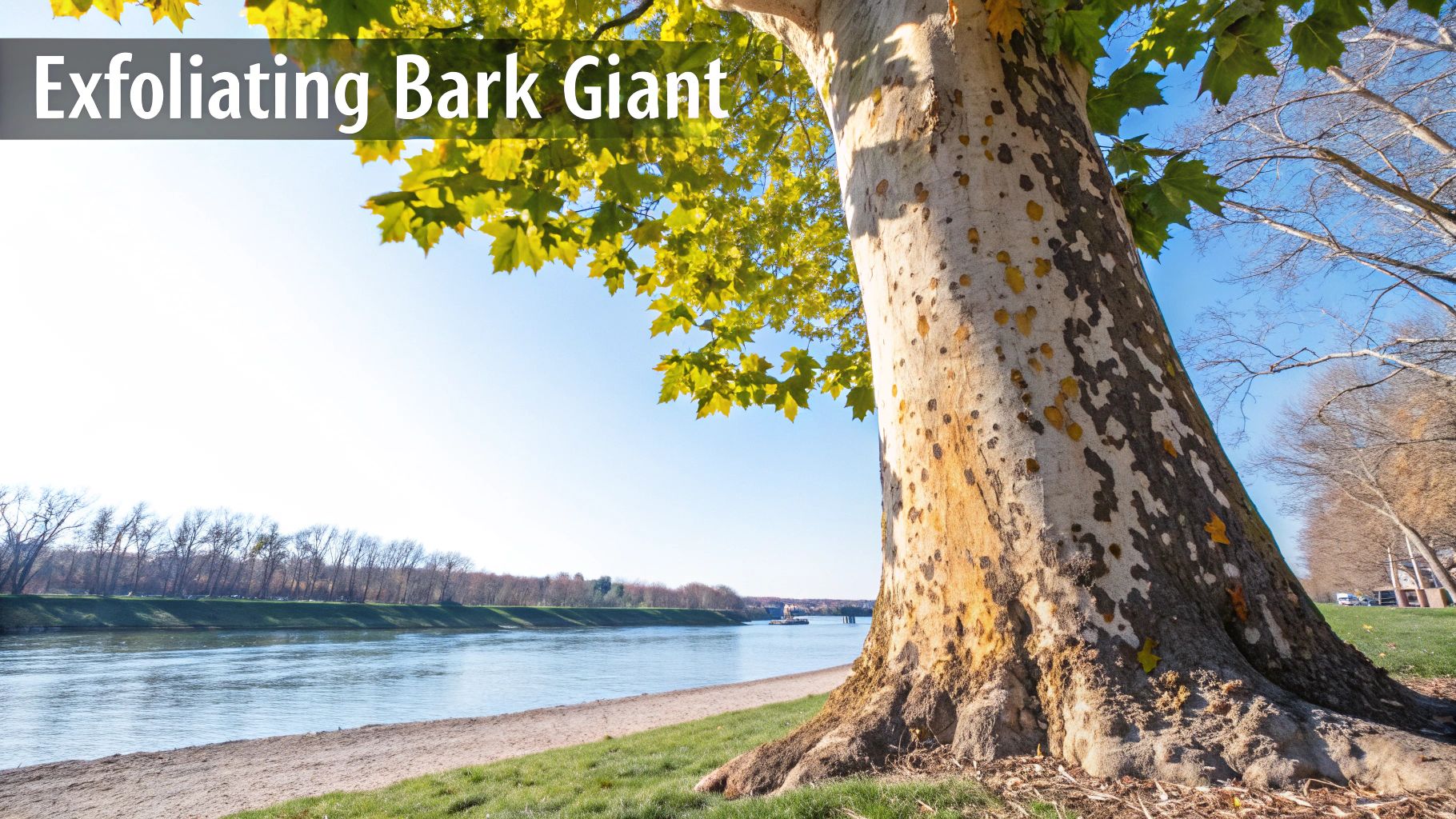
Naturally found along Texas waterways, the Sycamore thrives in moist, well-drained soils, making it an excellent candidate for properties with access to water. Its enormous, broad leaves provide dense, cooling shade, a highly sought-after benefit in the sweltering Texas summer. The tree's impressive trunk can grow to a massive diameter, making it a powerful and enduring anchor in large-scale landscapes.
Why Choose the Sycamore?
The Sycamore is the perfect tree for property owners with ample space who desire a fast-growing, monumental shade tree with unique year-round visual interest. Its affinity for water makes it an ideal selection for planting near creeks, ponds, or in low-lying areas of a property. Its large canopy not only provides excellent shade but also offers significant value to local wildlife. Our design team can help site this tree to maximize its health and aesthetic impact, especially when integrated with custom water features.
Actionable Planting and Care Tips
- Optimal Planting Time: Plant in the spring to allow the roots to establish before the intense summer heat arrives, especially in hotter regions like San Antonio.
- Space Requirements: Ensure the planting site has plenty of room. The Sycamore's canopy can spread 50 to 80 feet, so avoid planting it too close to buildings or power lines.
- Watering Strategy: Provide consistent, deep watering during its first few years to encourage a robust root system. While it loves moisture, avoid waterlogged soil.
- Pruning Approach: This tree requires minimal pruning. Allow it to develop its natural, sprawling form for the best aesthetic and structural integrity. Remove only dead or damaged branches as needed.
4. Desert Willow (Chilopsis linearis)
The Desert Willow is a superb choice among fast growing trees for Texas, especially for those in the arid and semi-arid climates common in our region. This small, graceful tree is celebrated for its rapid growth of up to 2 feet per year and its extreme drought tolerance. Reaching a mature height of 15 to 25 feet, it fits perfectly into smaller residential yards in places like San Antonio and is a champion of water-wise landscaping.
Despite its name, the Desert Willow is not a true willow but is prized for its beautiful, orchid-like flowers that bloom from late spring through fall. These trumpet-shaped blossoms, in shades of pink, purple, and white, are a magnet for hummingbirds and butterflies, adding vibrant life to your landscape. Its slender, willow-like leaves create a soft, airy texture, offering dappled shade without overwhelming a space.
Why Choose the Desert Willow?
The Desert Willow is the ideal tree for property owners seeking a fast-growing, low-maintenance, and visually stunning addition that thrives on minimal care. Its exceptional drought resistance makes it a cornerstone of xeriscaping projects, significantly reducing water consumption once established. For those looking to create a sustainable and resilient landscape, this tree is a perfect fit. Integrating it into a professionally designed, low-water garden ensures it complements other native plants and hardscaping elements for a cohesive, eco-friendly outdoor space.
Actionable Planting and Care Tips
- Optimal Planting Time: Plant in the fall or early spring to allow the roots to establish before the intense summer heat arrives.
- Soil Requirements: This tree demands well-draining soil. Sandy or loamy soils are ideal; avoid heavy clay that retains too much moisture.
- Watering Strategy: Water deeply but infrequently during its first year to encourage a robust root system. Once established, it requires very little supplemental water.
- Pruning: Minimal pruning is needed. If shaping is desired, prune in late winter to remove any dead or crossing branches and encourage a more tree-like form.
- Sunlight Needs: For the most prolific blooms and vigorous growth, plant your Desert Willow in a location that receives full, direct sun.
5. Fruitless Mulberry (Morus alba 'Fruitless')
For property owners seeking almost immediate shade, the Fruitless Mulberry stands out as one of the most vigorous and fast growing trees in Texas. With an astonishing growth rate of 3-6 feet per year, it can quickly establish a dense canopy, reaching a mature height of 30 to 40 feet. This deciduous tree is a popular choice for new construction in areas like San Antonio and Harlingen, where rapid landscape establishment is a priority.
This particular cultivar was developed to provide all the benefits of a mulberry tree's aggressive growth without the messy fruit drop, making it ideal for patios, driveways, and commercial properties. Its extreme hardiness allows it to thrive in the harsh Texas climate, tolerating everything from intense summer heat to poor, compacted soils. Its large, heart-shaped leaves create a thick shade that can significantly cool outdoor living spaces and reduce energy costs.
Why Choose the Fruitless Mulberry?
The Fruitless Mulberry is the ultimate solution for anyone needing a shade tree in a hurry. Its rapid growth makes it a favorite for new housing developments and commercial properties that require quick greening. While its aggressive nature means it may not be suitable for all landscapes, its resilience and low-maintenance needs are undeniable. For property managers and developers, this translates to a fast, reliable, and cost-effective way to enhance curb appeal. Consulting with Fischer Landscaping can help determine if its growth habit is a good fit for your long-term property goals.
Actionable Planting and Care Tips
- Optimal Planting Time: Plant during its dormant season in late fall or winter to allow roots to acclimate before the spring growth spurt.
- Structural Pruning: It is crucial to prune young trees to develop a strong, well-spaced branch structure. This prevents weak limbs and potential storm damage later on.
- Wind Support: In windy areas, especially in coastal regions like Corpus Christi, stake the tree for its first two years to ensure it establishes a straight, stable trunk.
- Watering Strategy: The Fruitless Mulberry is quite drought-tolerant once established but benefits from deep watering during its first few years to encourage a robust root system.
6. Texas Ash (Fraxinus texensis)
The Texas Ash is a native landscaping staple, especially for properties in the Texas Hill Country and Edwards Plateau. With a solid growth rate of 18–24 inches per year, it matures at a practical 40–50 feet and thrives in the alkaline, limestone-rich soils common to our area. Its resilience makes it a top pick for homeowners in San Antonio, Corpus Christi, and surrounding communities seeking reliable fast growing trees Texas soil supports.
Why Choose the Texas Ash?
The Texas Ash is a problem-solver. It excels where other species struggle, tolerating high-pH soils common around Harlingen and displaying brilliant golden-yellow foliage each fall. It's a tough, beautiful, and reliable choice for a local landscape.
Partner with Fischer Landscaping for expert placement and soil preparation. Our team integrates the Texas Ash into comprehensive landscape installation services, ensuring it thrives from day one.
Actionable Planting and Care Tips
- Optimal Planting Time: Install in the fall to maximize root establishment before the stress of summer heat.
- Site Selection: Choose a location with full sun (6+ hours) and well-draining, limestone-rich soil typical of Brownsville and San Antonio.
- Watering Strategy: Water moderately in the first year; deep, infrequent irrigation thereafter promotes drought-resistant roots.
- Soil Amendment: For sites with poor drainage, our team can amend the soil to improve structure and health.
- Maintenance: This tree maintains a beautiful natural form with minimal pruning needed.
Ready to upgrade your yard with fast growing trees? Request a quote today from Fischer Landscaping to get started.
7. Escarpment Cherry (Prunus serotina var. eximia)
The Escarpment Cherry is a beautiful and resilient native choice, particularly for those in the Texas Hill Country and surrounding regions. While it has a more moderate growth rate of 12-18 inches per year, its deep adaptation to local conditions allows it to establish quickly and thrive. It reaches a manageable mature height of 25 to 35 feet, making it an excellent medium-sized tree for suburban yards in areas like San Antonio.
This Texas native offers exceptional four-season interest. In the spring, it produces clusters of fragrant white flowers, followed by small, dark berries that are a magnet for local birds. Its glossy green leaves provide pleasant shade in the summer before turning to attractive shades of yellow and red in the fall. Its ability to thrive in the limestone-rich soils of Central and South Texas makes it a standout among fast-growing trees that require less soil amendment.
Why Choose the Escarpment Cherry?
The Escarpment Cherry is ideal for property owners who want to create a landscape that supports local wildlife and reflects the natural beauty of Texas. Its moderate size makes it perfect for smaller residential lots or as an understory tree in a larger landscape design. For homeowners looking to create a complete, wildlife-friendly habitat, our team can design and install a landscape that integrates native species like the Escarpment Cherry seamlessly.
Actionable Planting and Care Tips
- Optimal Planting Time: Plant in the fall or early spring to allow the roots to establish before the summer heat arrives.
- Location and Soil: Choose a site that receives full sun and has well-drained soil. This tree is naturally adapted to the alkaline soils common in our area.
- Proper Spacing: Give the tree room to grow by spacing it 20-25 feet from other trees or structures to showcase its attractive natural form.
- Watering Strategy: Water moderately during its first two years to establish a strong root system. Once mature, it is quite drought-tolerant.
- Pruning and Maintenance: This tree requires minimal pruning. Simply remove any dead or crossing branches to maintain its natural shape.
8. Chinaberry Tree (Melia azedarach)
The Chinaberry Tree is a historically popular but controversial choice among fast growing trees in Texas. Naturalized across the state, this non-native tree boasts an extremely rapid growth rate, often shooting up 3-4 feet annually. It typically reaches a mature height of 35 to 50 feet, forming a dense, rounded canopy that provides significant shade in just a few years.
This tree is known for its fragrant, lilac-like flowers that bloom in the spring, followed by clusters of golden-yellow berries. Its primary appeal lies in its incredible resilience, as it thrives in poor soils, heat, and drought. However, it's crucial to note that conservation professionals now widely recognize it as an invasive species that can outcompete native Texas flora.
Why Choose the Chinaberry Tree?
The Chinaberry Tree should be considered with extreme caution. Its primary advantage is its sheer speed and toughness, making it a quick shade solution for harsh, disturbed urban sites. It was historically planted in older neighborhoods throughout San Antonio and Corpus Christi for this reason. However, due to its invasive nature, we strongly recommend considering native alternatives like the Desert Willow or Texas Ash, which offer similar benefits without harming local ecosystems. For property owners still considering this tree for a contained area, professional consultation is key. Our team can help with responsible tree installation and cleanup, ensuring it doesn't spread.
Actionable Planting and Care Tips
- Plant with Extreme Caution: Due to its invasive tendencies, plant only in highly urbanized or developed areas far from natural habitats or conservation lands.
- Prevent Spreading: The most critical task is to remove the berries before they drop. This prevents birds from spreading the seeds and stops volunteer seedlings from sprouting.
- Monitor for Volunteers: Regularly inspect your property for unwanted seedlings and remove them immediately to control their aggressive spread.
- Consider Native Alternatives: Before planting, explore superior native fast-growing trees. Trees like the Texas Ash or Escarpment Cherry provide shade and beauty while supporting local wildlife.
8 Fast-Growing Texas Trees — Quick Comparison
| Tree | Implementation complexity | Resource requirements | Expected outcomes | Ideal use cases | Key advantages |
|---|---|---|---|---|---|
| Bald Cypress (Taxodium distichum) | Moderate — slow root establishment first 2–3 years; plant in spring | Prefers wet/poorly drained soils; tolerates drought once established; mulch during establishment | Fast growth 2–3 ft/yr to 50–70 ft; long-lived (500+); deciduous with copper-bronze fall color | Wetlands, bayous, water-feature landscapes, restoration projects | Flood-tolerant, wildlife habitat, low pest pressure |
| Live Oak (Quercus virginiana) | Moderate–high — slow early establishment (3–5 yrs); needs large planting space | Low water once established; tolerates drought; avoid soil compaction | Moderate growth 1.5–2 ft/yr to 40–60 ft with wide canopy; very long-lived (200–400+); evergreen structure | Large shade trees for parks, campuses, residential estates | Exceptional shade, drought tolerance, strong wildlife support |
| Sycamore (Platanus occidentalis) | Moderate — needs ample space; prone to storm branch breakage and some diseases | Prefers moist soils and riparian sites; tolerates flooding; may have invasive roots | Very fast growth 2–3 ft/yr to 75–100 ft; striking exfoliating bark; heavy litter | Riparian restoration, riverbanks, large parks and properties | Rapid shade, distinctive bark, flood-tolerant |
| Desert Willow (Chilopsis linearis) | Low — easy to establish in well-draining sandy soils | Very low water after establishment; requires well-draining (avoid clay) | Fast growth ~2 ft/yr to 15–25 ft; long bloom (June–Oct); attracts hummingbirds/pollinators | Xeriscapes, West/Central TX arid sites, pollinator gardens | Exceptional drought tolerance, long bloom period, low maintenance |
| Fruitless Mulberry (Morus alba 'Fruitless') | Low — very easy, vigorous; prune young trees for structure; monitor volunteers | Tolerant of poor/compacted soils and extremes; minimal maintenance; shallow roots | Extremely fast growth 3–6 ft/yr to 30–40 ft; quick shade; shorter lifespan (60–80 yrs) | Rapid shade needs, parking lots, quick landscape establishment (avoid near structures) | Fastest shade production, hardy, no messy fruit (cultivar) |
| Texas Ash (Fraxinus texensis) | Low–moderate — plant in fall; suited to limestone sites | Prefers alkaline/calcareous, well-draining soils; moderate water; avoid overwatering | Moderate growth 1.5–2 ft/yr to 40–50 ft; golden-yellow fall color; reliable in Hill Country | Limestone/Edwards Plateau soils, native plant landscapes, Central TX | Excellent limestone tolerance, native species, attractive fall color |
| Escarpment Cherry (Prunus serotina var. eximia) | Moderate — needs good drainage; less common in nurseries | Moderate water during establishment; full sun and well-draining soil preferred | Moderate growth 1–1.5 ft/yr to 25–35 ft; fragrant spring flowers and summer fruit; wildlife value | Native gardens, wildlife/pollinator landscapes, Edwards Plateau | Native endemic, seasonal interest (flowers, fruit, bark), wildlife food |
| Chinaberry (Melia azedarach) | Low — easy to establish but requires active control of volunteers | Tolerant of poor soils and extremes; minimal care but seed/seedling management needed | Very fast growth 3–4 ft/yr to 35–50 ft; fragrant flowers and toxic berries; invasive tendencies | Urban/developed sites only (if planted); avoid natural areas | Rapid canopy development, tolerant and ornamental—BUT invasive/toxic risks |
From Selection to Success: Partner with Fischer Landscaping for a Thriving Canopy
Choosing the right tree for your Texas landscape is a significant first step, but it is only the beginning. As we've explored, options like the sturdy Live Oak, the water-loving Bald Cypress, and the resilient Desert Willow each offer unique benefits for properties across South Texas. However, turning that potential into a thriving, mature canopy requires more than just a shovel and good intentions; it demands a strategic approach grounded in local expertise.
The success of any tree, especially the fast growing trees Texas climates demand, hinges on critical factors that are often overlooked. Proper site selection, professional soil analysis, and expert installation are the foundational pillars of long-term tree health. In South Texas—from the coastal plains of Corpus Christi to the unique environments of Brownsville and Harlingen—these factors become even more critical due to alkaline soils, intense heat, and fluctuating water availability.
Beyond Planting: A Strategy for Long-Term Growth
Simply selecting a species is not enough. To ensure your investment flourishes, consider these crucial next steps that a professional landscaper provides:
- Site-Specific Analysis: A professional assessment evaluates soil compaction, drainage patterns, and proximity to structures, ensuring your tree has the resources to reach its full potential without future conflicts.
- Soil Amendment and Preparation: South Texas soil is often heavy clay or highly alkaline. Proper amendment before planting is essential for root establishment. This might involve incorporating organic compost to improve drainage or adding specific nutrients to balance the soil's pH.
- Professional Installation and Establishment: The way a tree is planted can determine its fate. Professional installation guarantees the correct planting depth, proper root ball handling to avoid transplant shock, and the creation of an effective watering well. This initial care is paramount for establishing a strong root system quickly.
A tree planted correctly is an investment that grows in value, providing shade, beauty, and environmental benefits for decades. A tree planted incorrectly can become a liability, struggling for years before ultimately failing.
Mastering these concepts transforms tree planting from a hopeful gamble into a calculated success. By partnering with a team that understands the local ecology, you gain access to high-quality nursery stock, specialized equipment, and the deep knowledge needed to navigate the challenges of the South Texas climate. This professional partnership ensures your new trees not only survive but thrive, rapidly adding value and curb appeal to your property.
Ready to transform your landscape with the perfect fast-growing tree? The experts at Fischer Landscaping provide comprehensive tree installation and landscaping services tailored to the unique conditions of Corpus Christi, San Antonio, Brownsville, and Harlingen. Contact us today for a free quote and let us help you build a legacy of shade and beauty on your property.