If you just need a quick answer, here it is: one cubic yard of soil covers 108 square feet at a 3-inch depth.
Of course, the real answer depends entirely on how thick you plan to spread it. A thin 1-inch top-dressing will stretch that same cubic yard across 324 square feet. If you're filling a deeper garden bed to 6 inches, you'll only cover 54 square feet.
Understanding Soil Coverage for Your South Texas Project
When you're planning a landscaping project here in Corpus Christi or San Antonio, one of the first things you need to nail down is your material estimate. Figuring out "how much does one yard of soil cover?" is more than just a math problem—it directly impacts your budget and how smoothly your project runs.
Getting this calculation right from the start saves you from classic landscaping headaches: either running out of soil halfway through a job or ending up with a giant, leftover pile you have to deal with. At Fischer Landscaping, we help homeowners and property managers avoid these pitfalls with precise planning.
First things first, a "yard" of soil is actually a cubic yard. It's a measurement of volume, picturing a cube that's 3 feet long, 3 feet wide, and 3 feet deep. All told, that comes out to 27 cubic feet of material. While the volume is constant, how far it goes in your yard is not. The shallow depth needed to top-dress a lawn in Harlingen is a world away from the deep fill required for a new raised garden bed in Brownsville.
One Cubic Yard of Soil Coverage by Depth
To make planning your next project a little easier, we've put together this quick reference chart. It shows exactly how many square feet you can expect to cover with a single cubic yard of soil at the most common depths.
| Soil Depth (Inches) | Square Feet Covered |
|---|---|
| 1" | 324 sq. ft. |
| 2" | 162 sq. ft. |
| 3" | 108 sq. ft. |
| 4" | 81 sq. ft. |
| 6" | 54 sq. ft. |
| 12" | 27 sq. ft. |
Whether you're tackling a major commercial landscaping project or a simple residential garden refresh, this table gives you a reliable starting point. Getting a handle on these numbers is the first step toward a successful, stress-free project.
As a side note, if you're looking for natural ways to improve your soil, consider exploring the benefits of leaving the leaves in your garden beds over the fall and winter. It's a great, low-effort way to enrich the soil you already have.
Why Getting Soil Depth Right Matters, Especially in South Texas
Figuring out how much a yard of soil covers is one thing, but knowing why you need a specific depth is the real secret to a landscape that lasts. Think of soil depth as the foundation for everything you want to grow. In the tough South Texas climate, skimping on soil is a mistake you'll pay for later.
A thin layer of topsoil might look okay at first, but it's a recipe for weak roots, drainage problems, and plants that just can't handle our brutal summer heat. It's a simple fact: the needs of a new flower bed in Brownsville are completely different from a lawn top-dressing job in San Antonio.
How Deep Should Your Soil Be?
Matching your soil depth to your project is non-negotiable if you want great results. The right amount of material creates the perfect environment for roots to establish, holds moisture where it's needed, and gives your plants the fuel they need to flourish.
Based on our experience with landscaping projects all over South Texas, here are the depths we recommend for reliable, long-lasting results:
-
Laying Down a New Lawn: For a lush, dense turf, you absolutely need 4 to 6 inches of quality topsoil. This gives new sod or grass seed the space to grow deep, tough roots that can find water during a drought. It’s the first step in our professional turf installation services for a reason.
-
Planting Flower Beds and Gardens: If you want vibrant flowers or a vegetable garden that actually produces, you need to go deeper. We recommend a minimum of 8 to 12 inches of a good garden mix. This encourages roots to grow down, not out, making plants stronger and more self-sufficient.
-
Top-Dressing an Existing Lawn: For this, less is more. A light dusting of 1/4 to 1/2 inch of screened topsoil or compost is all you need. It's the perfect way to smooth out low spots and add a boost of organic matter without suffocating your existing grass.
-
Building a Base for a Paver Patio: Here, it’s all about stability, not plant health. A solid, compacted base of 4 to 6 inches of fill dirt is crucial. This creates a firm foundation that keeps your pavers from shifting, sinking, or becoming a tripping hazard down the road.
Getting the soil depth right from the start saves you from the frustration of watching plants struggle or re-doing unstable patios. It’s the single best investment you can make for the health and beauty of your landscape.
Calculating Your Project's Exact Soil Needs
While a quick-reference chart is a fantastic starting point, real-world landscaping projects are rarely perfect squares. Here in South Texas, we see a lot of beautiful, curved garden beds and L-shaped patios—spaces that demand a bit more than a simple guess.
The good news is, the math is easier than you might think. The trick is to break down any complex area into basic, manageable shapes like rectangles, circles, or triangles. Once you do that, you can calculate the square footage of each smaller section and simply add them all together for a precise total.
Measuring Irregular Spaces
Let's walk through a common scenario we see all the time in Corpus Christi. Imagine you're building a new rectangular garden bed that's 10 feet wide by 20 feet long. You want to fill it with a healthy 4-inch layer of topsoil.
Here’s how to figure it out:
- First, find the total area: 10 ft x 20 ft = 200 square feet.
- Next, use this simple formula: (Total Square Feet / 324) x Desired Depth in Inches = Cubic Yards Needed.
- Plugging in our numbers, we get: (200 sq. ft. / 324) x 4 inches = 2.47 cubic yards.
This same formula works for just about any project, from a small flower pot to a major lawn renovation. Getting these calculations right is a cornerstone of good land management, a practice that has evolved for centuries. While the U.S. benefits from incredibly detailed soil maps for planning, many other parts of the world rely on much broader classifications, highlighting just how differently soil is managed globally.
This infographic gives you a great visual on the typical soil depths needed for different projects, whether you're laying sod, planting a garden, or setting pavers.
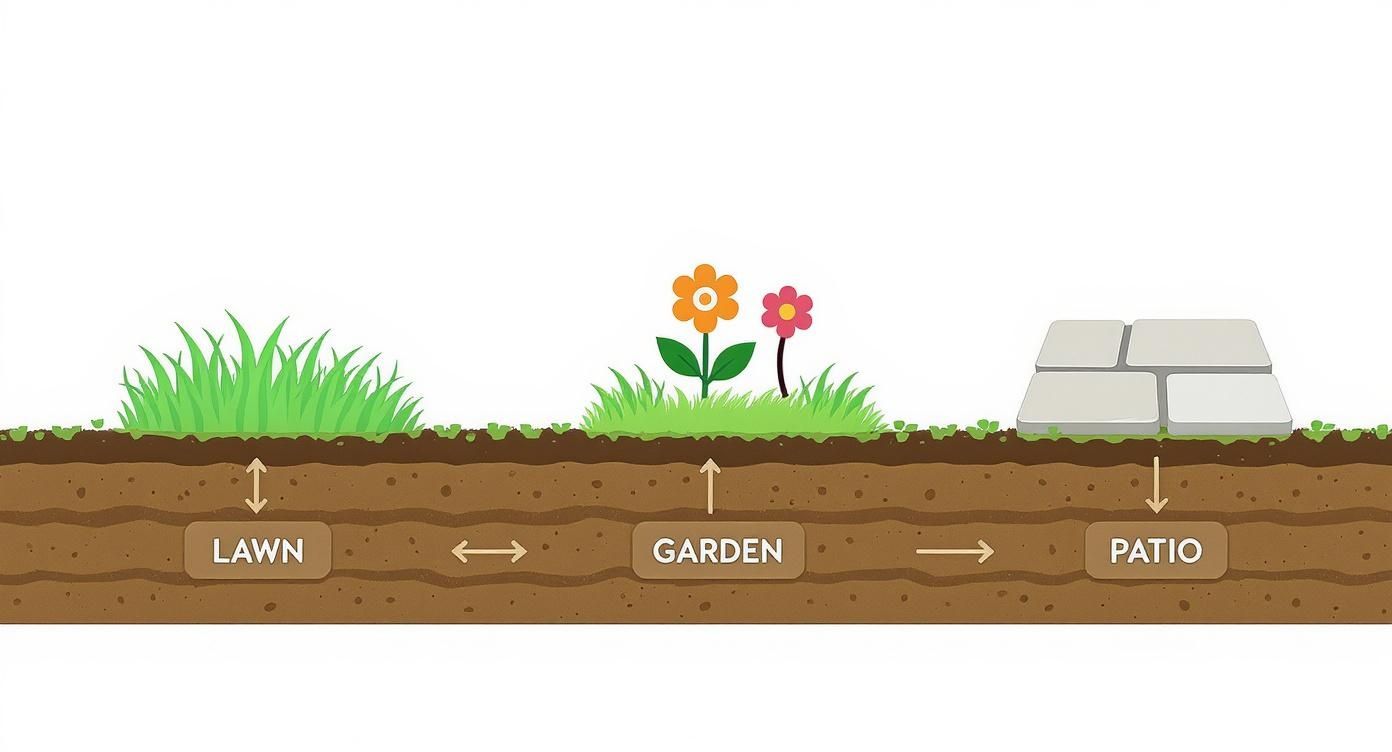
As you can see, the purpose of your project—growing grass versus building a hardscape—is what really dictates how deep your soil base needs to be. For larger-scale jobs where every dollar counts, some professionals are even turning to advanced methods like precision agriculture with drones to fine-tune their soil planning.
An Insider Tip: Always Account for Compaction
Here’s a piece of advice we give every single client: always order 5-10% more soil than you think you need.
Why? Because freshly delivered soil is loose and full of air. As soon as you start spreading it, watering it, and just letting it settle over time, it will compact and shrink in volume.
That extra 10% is your project insurance. It's what saves you from the headache and extra cost of making a last-minute trip back to the supplier just to finish a tiny corner of your yard.
This is especially critical for projects that need a solid, stable base, like a new lawn. For instance, our professional hydroseeding services depend on a precise soil depth to ensure seeds germinate properly and establish strong roots. Factoring in that inevitable compaction from the start gives your new lawn the foundation it truly needs to flourish.
Choosing the Right Type of Soil for Your Project
Figuring out how much soil you need is only half the battle. The next, and arguably more important, decision is picking the right kind of soil. Here in South Texas, this choice can make or break your project. Using the wrong material can lead to drainage nightmares, struggling plants, and a lot of wasted effort.
Not all dirt is the same. The soil you pick has a massive impact on whether you're laying down a new lawn in Harlingen or planting a flower bed in Corpus Christi. Let's break down the common types and what they're actually for.
Topsoil vs. Garden Mix
- Topsoil is your go-to general-purpose material. It's the top layer of earth, screened to get rid of big rocks and clumps. This makes it perfect for establishing a new lawn, giving the roots a stable, fertile base to dig into. It's a non-negotiable part of a professional sod or turf installation.
- Enriched Garden Mix is a whole different level. It’s essentially topsoil that’s been blended with nutrient-rich organic matter like compost. This is the material you want for vegetable patches and flower beds—anywhere you need serious nutrients to fuel vigorous growth and big blooms.
Fill Dirt and Compost
- Fill Dirt is the unsung hero of many projects, but it's not for planting. Sourced from deep below the topsoil layer, it’s a dense, heavy subsoil with almost no organic material. Its job is structural. Use it to level a sloped yard, fill in a hole, or build up a solid base for a patio or walkway.
- Compost isn't typically used on its own, but it's a powerhouse when mixed into your existing soil. Adding compost improves everything: drainage, water retention, and nutrient levels. It’s the perfect way to breathe new life into tired garden beds across the Rio Grande Valley.
Choosing the right soil isn't about finding some mythical "perfect dirt." It's about matching the material to the job at hand. This single choice is what separates a thriving landscape from a constant headache.
Once you have the right soil picked out, the last step is prepping the area. To make sure you get it right from the start, I highly recommend this expert guide on how to prepare soil for planting.
Common Mistakes to Avoid When Ordering and Spreading Soil
Knowing how much soil you need is a great start, but we've seen even the best-laid plans go sideways. After years of handling landscaping projects across South Texas, you learn what pitfalls to look out for. Avoiding these common mistakes will save you time, money, and a whole lot of physical strain.
The single biggest oversight we see is underestimating the sheer weight and labor involved. A cubic yard of topsoil isn't just a "pile of dirt"—it can easily weigh over 2,000 pounds. That’s more than a ton. Trying to move that much material with just a shovel and a wheelbarrow is a truly back-breaking job that many weekend warriors just aren't prepared for.
Getting the Quantity Wrong
Even with a calculator, it’s easy to misjudge the amount you need, and both mistakes are costly.
- Under-ordering is the classic one. You run out of material right in the middle of the project, leaving your yard a mess while you scramble to get more. This almost always means paying a second, often expensive, delivery fee for a small top-off.
- Over-ordering creates a totally different headache. Suddenly you’re left with a massive pile of dirt in your driveway. Now you have to figure out where to put it or, worse, pay someone to haul it away.
Proper planning is about more than just measurements; it's also about respecting the material itself. Globally, soil erosion is a major concern, with an average loss of about 2.4 tons per hectare each year. This directly impacts the availability of good-quality soil for projects like yours. You can learn more about the global rate of soil erosion and see why conservation matters so much.
Skipping the Prep Work
Another frequent misstep is failing to prepare the site before the soil delivery truck even shows up. You can't just dump fresh topsoil over a patch of weeds or hard-packed ground and expect great results. You absolutely have to clear the area of all existing vegetation, rocks, and debris first.
Equally important is thinking about grading. If you spread new soil without considering drainage, you can accidentally create a situation where water pools right up against your foundation. That's a nightmare for any property owner, especially here in Corpus Christi or San Antonio. Taking the time to grade the area so water flows away from structures is non-negotiable for a professional result and is a core part of our hardscaping services.
Let the Professionals Handle Your Soil Project
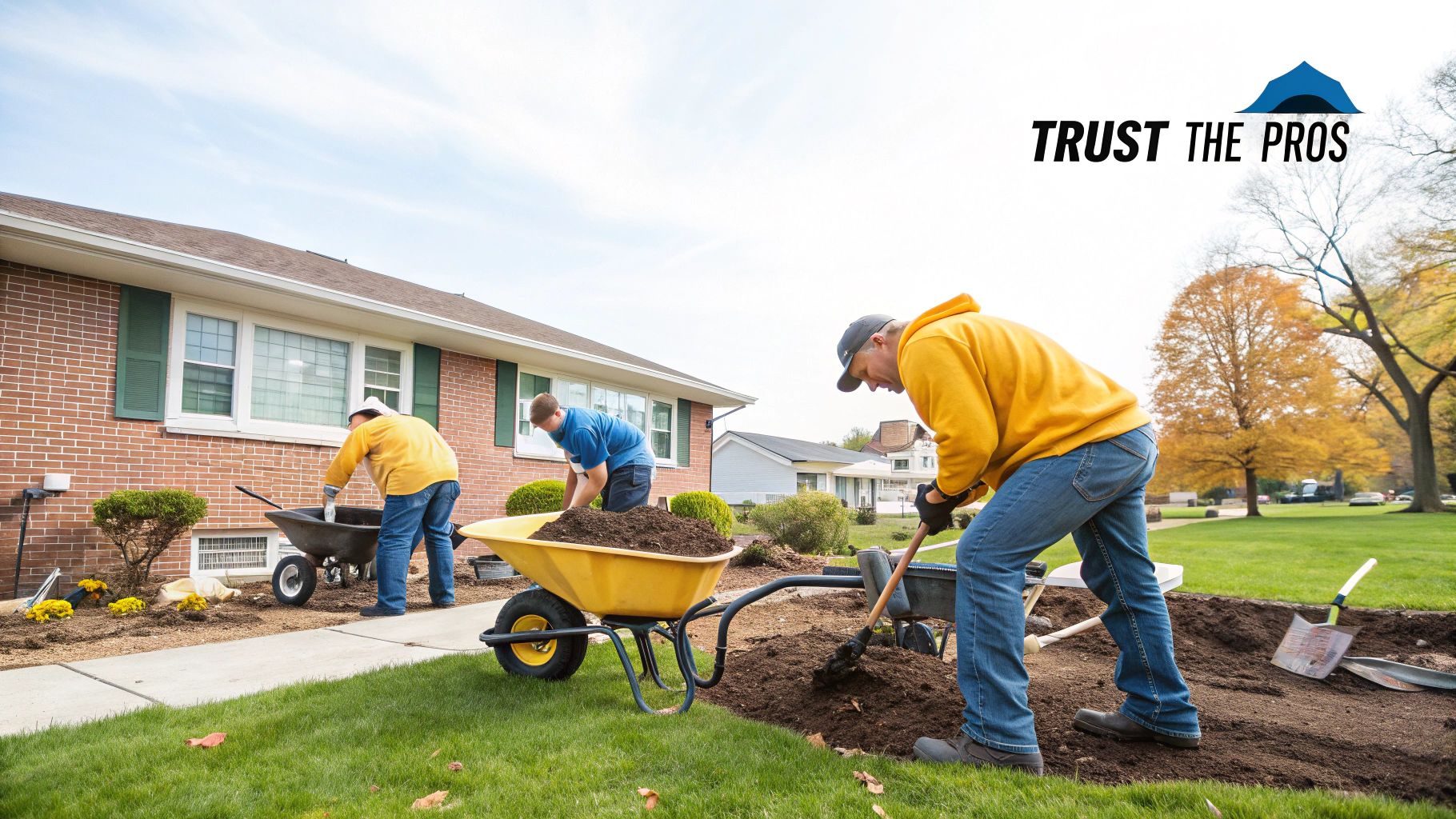
You've crunched the numbers and you know exactly how much soil you need. That's the easy part. Now comes the real work: moving, spreading, and grading what often amounts to tons of heavy material. It's a massive physical task that can quickly overwhelm even the most ambitious DIYer.
This is where calling in an experienced crew from Fischer Landscaping makes all the difference.
Time, Safety, and a Flawless Finish
At Fischer Landscaping, we do more than just deliver dirt. Our team saves you the back-breaking labor and ensures your project has a truly professional finish from the start. For homeowners and property managers throughout Corpus Christi, San Antonio, and the Rio Grande Valley, we’re the trusted partners who get the job done right.
Proper soil management is also more critical than ever. A growing concern in urban development is soil sealing, where construction hardens the ground, making it impermeable. This impacts drainage and reduces usable green space—a trend that underscores the need for expert handling of landscaping resources. For those interested in the broader environmental context, the European Environment Agency has published extensive research on soil sealing trends.
A beautiful, healthy landscape starts with a perfect foundation. Let us handle the logistics, labor, and precision grading so you can step back and just enjoy the stunning results. Our residential landscaping services are designed to bring your vision to life, completely hassle-free.
Answering Your Top Soil Questions
When you're planning a project, a few questions always pop up. Here are the answers to some of the most common ones we get from homeowners across South Texas.
How Much Weight Are We Talking About With a Cubic Yard of Soil?
A cubic yard of soil is heavier than most people think! The exact weight depends on its moisture content and composition.
A good rule of thumb is that a yard of dry topsoil will weigh somewhere between 2,000 to 2,200 pounds. But if that soil is wet, which it often is, the weight can easily jump to over 2,700 pounds. That’s a serious amount of weight, which is why having it professionally delivered by a team like ours is often the smartest, safest way to go.
What’s the Real Difference Between Topsoil and Fill Dirt?
Getting this right is absolutely crucial for your project's success. Think of it this way:
- Topsoil is the nutrient-rich layer from the surface that’s full of organic matter. This is what you need for planting, as it's the foundation for healthy growth.
- Fill dirt comes from deeper down and is basically subsoil. It lacks organic matter and nutrients, making it terrible for growing things. Its job is structural—it’s perfect for leveling a yard or building up a solid, compact base for a new patio.
Using one for the other’s purpose is a recipe for a landscaping headache.
For Raised Beds, Is Topsoil or Garden Soil Better?
For raised garden beds, especially in places like Corpus Christi, we almost always steer people toward a quality garden soil mix.
While you can use topsoil as a base, a dedicated garden soil is specifically blended with compost and other essential amendments. This creates a much richer, nutrient-packed environment that gives your vegetables and flowers the best possible start to flourish in our local climate.
Ready to get your project moving with the right materials and a professional touch? The team at Fischer Landscaping can handle everything from calculating your soil needs to delivery and expert installation. Contact us today for a free quote and let's build a beautiful landscape together.