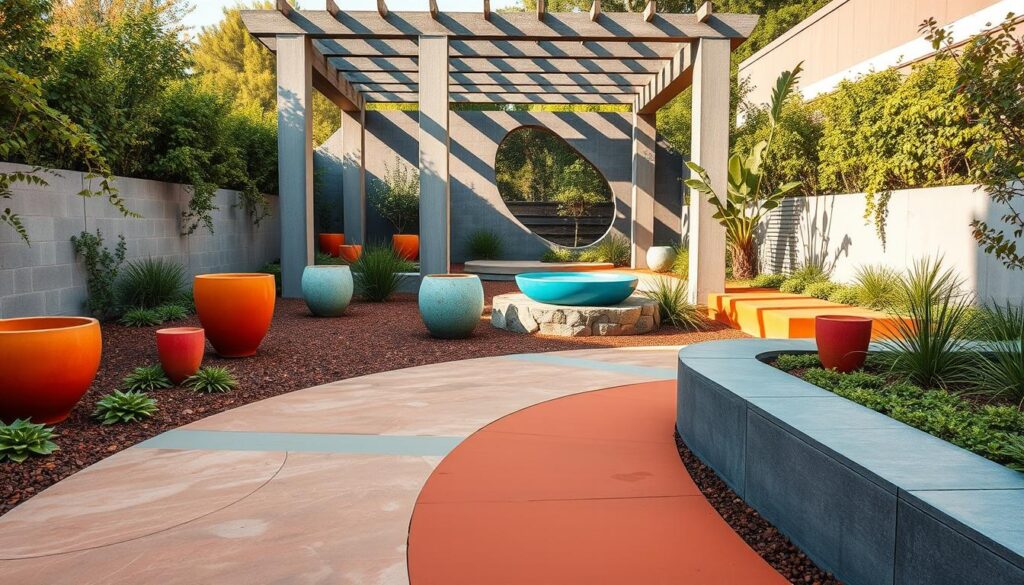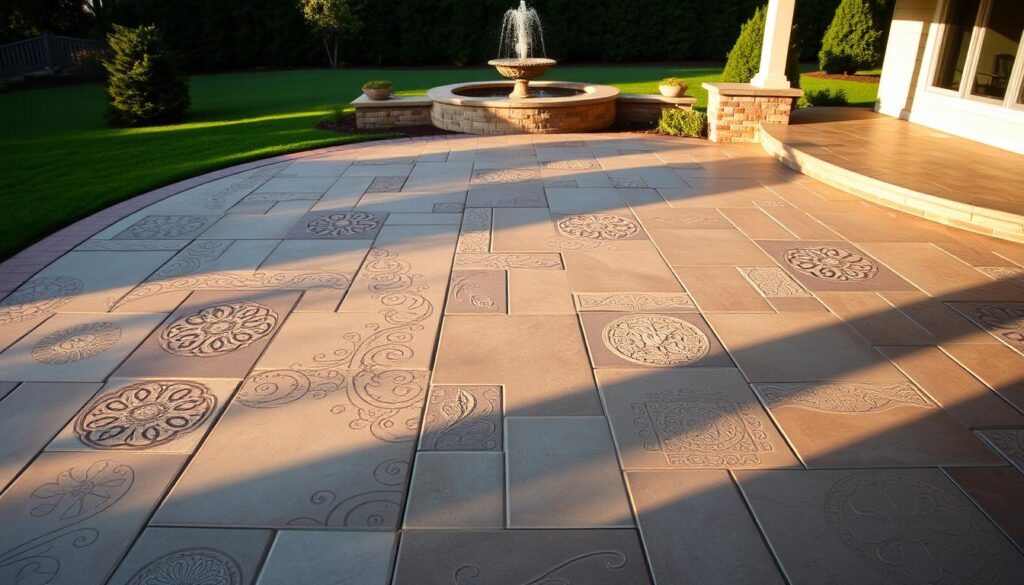
In South Texas, heavy downpours and dense clay soil often create a perfect storm for backyard flooding. From Corpus Christi's coastal showers to San Antonio's sudden storms, standing water can quickly turn a beautiful lawn into a muddy swamp, damage your home's foundation, and become a breeding ground for pests. You don't have to live with a waterlogged yard. Effective water management is the key to protecting your property and creating a lush, usable outdoor space that thrives year-round.
This comprehensive guide explores eight professional backyard drainage solutions specifically suited for our unique regional challenges. We'll break down the pros, cons, and best applications for everything from French drains to rain gardens, helping you understand how to permanently solve your drainage issues. You'll gain actionable insights into how these systems work and which ones are right for your property.
While some minor fixes can be tackled over a weekend, a lasting solution often requires professional design and installation to ensure it's done right the first time. Fischer Landscaping specializes in creating custom drainage systems that integrate seamlessly with your landscape design, protecting your investment for years to come. Let’s explore the options that will reclaim your yard for good.
1. French Drain System
A French drain is one of the most reliable and popular backyard drainage solutions, designed to collect and redirect excess surface and groundwater away from critical areas. This system consists of a perforated pipe surrounded by gravel, all housed within a sloped trench lined with landscape fabric. It effectively intercepts water that would otherwise saturate your lawn or threaten your home’s foundation, making it an essential tool for managing the heavy rainfall common in South Texas.
This method is ideal for properties in Corpus Christi and surrounding areas that experience persistent soggy spots, lawn erosion, or water pooling near a foundation. By creating an underground channel, a French drain provides a hidden yet powerful defense against water damage, protecting both your landscape and structural integrity.
Key Design Specifications for Optimal Performance
Proper installation is critical for the long-term success of a French drain. The dimensions and slope must be precise to ensure water flows away efficiently rather than pooling within the trench. Key specifications include the trench width, depth, and the diameter of the perforated pipe, all of which contribute to the system's capacity and effectiveness.
The following infographic highlights the core specifications for a standard residential French drain system.
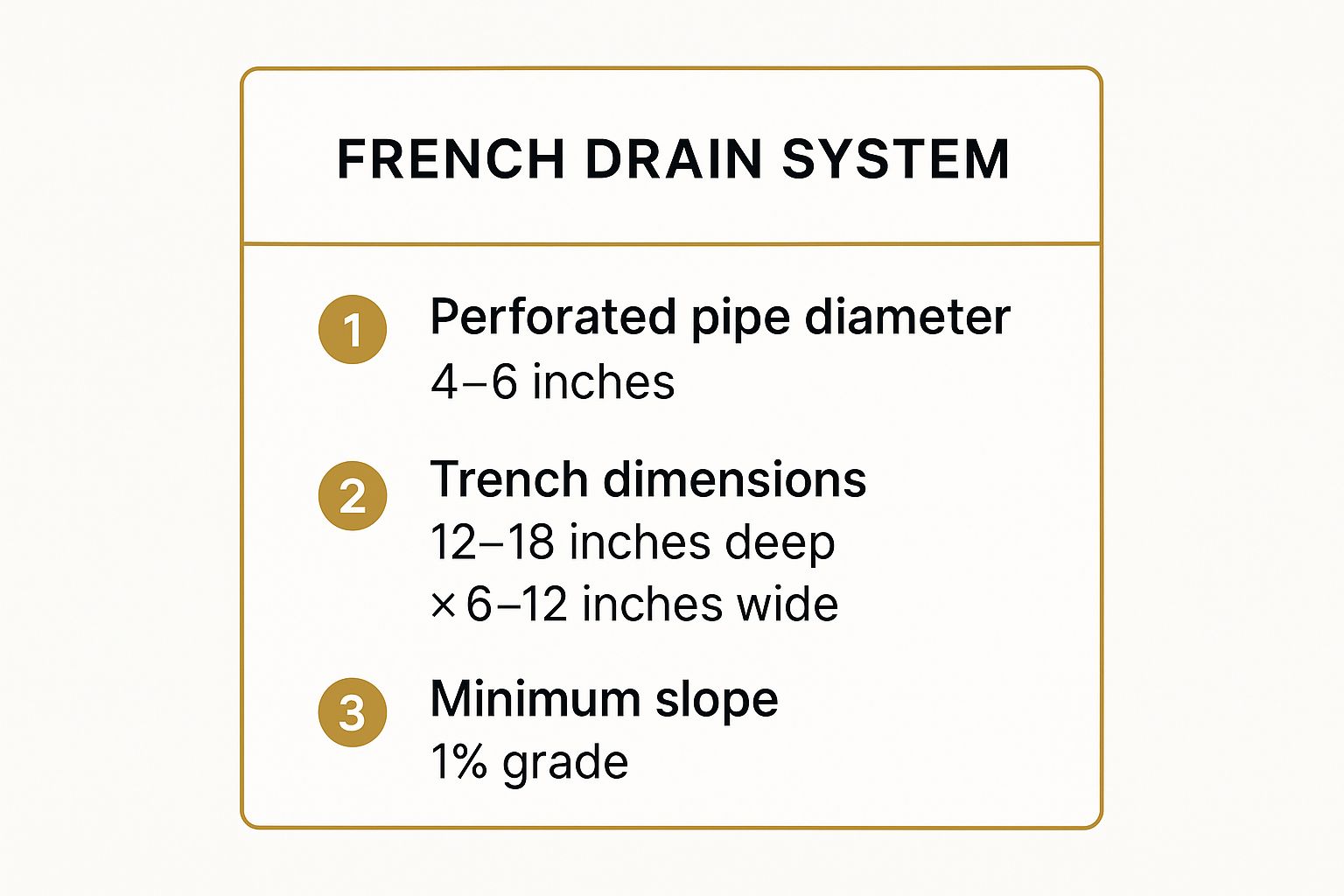
These technical details are crucial; even a slight miscalculation in the slope can render the entire system ineffective, underscoring the value of professional installation by a team like Fischer Landscaping.
Implementation and Maintenance Tips
To maximize your French drain’s performance, consider these actionable tips:
- Protect the Pipe: Always wrap the trench and gravel with a high-quality, non-woven geotextile fabric. This barrier prevents soil and silt from infiltrating the system and clogging the perforated pipe over time.
- Ensure a Safe Discharge Point: The drain must terminate at a lower elevation, at least 10 feet away from any structure. Common discharge points include a street curb, a dry well, or a swale.
- Plan for Maintenance: Incorporate cleanout access points, which are vertical pipes extending to the surface, every 50-75 feet. This allows for easy flushing and removal of debris without major excavation.
- Combine with Catch Basins: For areas with significant surface water runoff, integrating catch basins at the lowest points can dramatically improve water collection efficiency before it even enters the ground.
2. Dry Creek Bed (Drainage Swale)
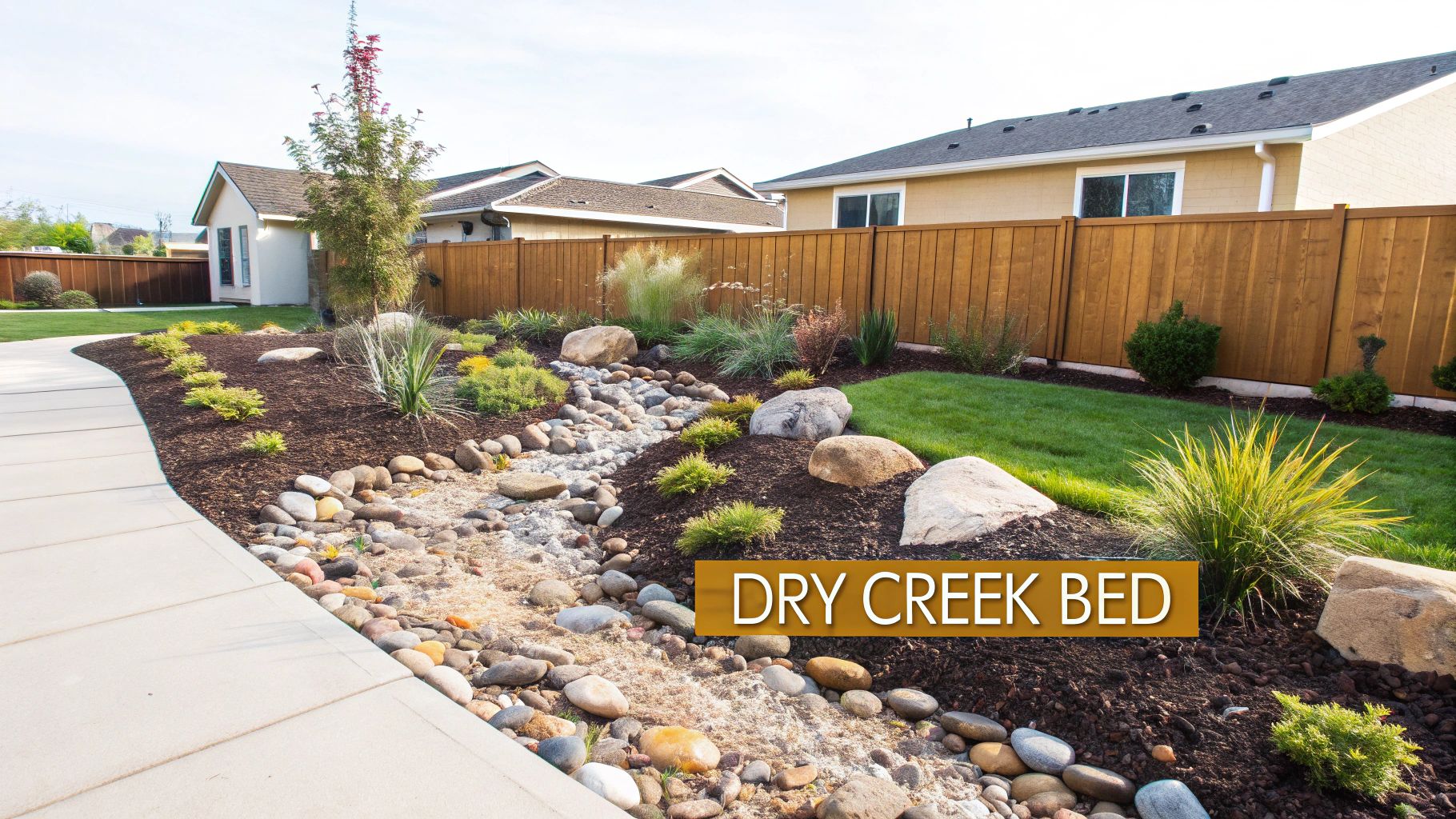
A dry creek bed, also known as a drainage swale, is an innovative and aesthetically pleasing backyard drainage solution that combines form and function. This feature mimics a natural, meandering stream bed using a combination of decorative rocks, boulders, and sometimes water-loving plants. It serves as a beautiful landscape element during dry weather and transforms into a functional channel that directs stormwater away from your property during heavy rainfall, a common challenge in South Texas.
This method is perfect for homeowners in Corpus Christi and the Rio Grande Valley who want to solve drainage problems without sacrificing their yard's visual appeal. Instead of a purely utilitarian drain, a dry creek bed enhances the landscape, turning a potential problem area into a stunning focal point while effectively managing surface water runoff and preventing erosion.
Implementation and Maintenance Tips
To create a dry creek bed that is both beautiful and effective, careful planning and execution are essential. Consider these actionable tips for a successful installation:
- Establish a Solid Foundation: Always begin by lining the excavated channel with high-quality landscape fabric. This crucial step prevents weeds from growing through the rocks and stops soil from mixing with the stones, preserving the system's drainage capacity.
- Vary Rock Sizes for a Natural Look: Use larger boulders to define the edges and smaller river rocks to fill the center of the swale. This mimics the appearance of a natural stream and helps slow down fast-moving water, reducing the risk of erosion.
- Follow the Natural Flow: Design the path of the creek bed to follow your yard's natural slope and the existing path of water flow. This ensures the most efficient drainage and creates a more organic, integrated look.
- Incorporate Strategic Plantings: Add drought-tolerant and water-loving plants like ornamental grasses or irises along the banks of the creek bed. This not only enhances its beauty but also helps stabilize the soil around the feature.
3. Catch Basin and Storm Drain System
A catch basin and storm drain system is a targeted backyard drainage solution designed to rapidly collect and remove surface water from specific problem areas. The system features an underground collection box with a grated top, strategically placed at low points where water naturally accumulates. This setup is highly effective at managing runoff from downspouts, driveways, and patios, preventing pooling and potential water damage to your property.
This approach is particularly beneficial for homeowners in South Texas, where intense rainfall can quickly overwhelm flat or improperly graded landscapes. By capturing water at its source, a catch basin system prevents it from saturating your lawn or flowing toward your home’s foundation. It serves as a frontline defense against standing water, making it a powerful tool for maintaining a dry and usable outdoor space in areas like Corpus Christi and Harlingen.
Key Design Specifications for Optimal Performance
The effectiveness of a catch basin hinges on its precise placement and connection to a properly sloped drainage network. The size of the basin, the type of grate, and the diameter of the connected pipes must be chosen to handle the expected volume of water runoff. A key design feature is the basin's sump, a space below the outlet pipe that traps sediment and debris, preventing clogs downstream.
Proper installation requires careful grading around the basin to ensure water flows directly into it. The outlet pipe must then carry the water away to a safe discharge point, relying on a consistent downward slope to maintain flow. These technical considerations are vital for creating a reliable, long-lasting drainage solution.
Implementation and Maintenance Tips
To ensure your catch basin system functions at its best, consider these practical tips for implementation and upkeep:
- Install at the Lowest Point: Place the catch basin in the exact location where water naturally pools. The surrounding area should be graded with a slight 1-2% slope toward the grate to facilitate efficient water capture.
- Ensure a Safe Discharge: Connect the basin’s outlet pipe to a suitable discharge point, such as a pop-up emitter, a larger storm drain, or the street curb, ensuring it is at least 10 feet from any building foundation.
- Clean the Sump Regularly: Debris like leaves, silt, and grass clippings will accumulate in the sump. Clean it out at least twice a year, especially after heavy rains or in the fall, to prevent clogs and maintain optimal flow.
- Choose the Right Grate: In areas with heavy tree coverage, use a grate with smaller openings or install an additional leaf guard to block larger debris from entering the system and causing blockages.
4. Rain Garden (Bioretention Basin)
A rain garden is an innovative and sustainable backyard drainage solution that functions as a shallow, landscaped depression designed to collect and absorb rainwater runoff from impervious surfaces like roofs and driveways. This bioretention basin is engineered with specialized soil mixes and planted with native, water-tolerant vegetation that can thrive in both wet and dry conditions. It effectively filters pollutants and allows water to slowly percolate into the ground, reducing strain on municipal storm drains and recharging local groundwater.
This ecological approach is perfect for homeowners in areas like Corpus Christi and Harlingen who want to manage stormwater naturally while creating a beautiful, low-maintenance garden feature. By transforming a soggy problem area into a vibrant habitat for pollinators, a rain garden adds both functional and aesthetic value, turning excess rainfall into a landscape asset. It stands out as one of the most environmentally friendly backyard drainage solutions available.
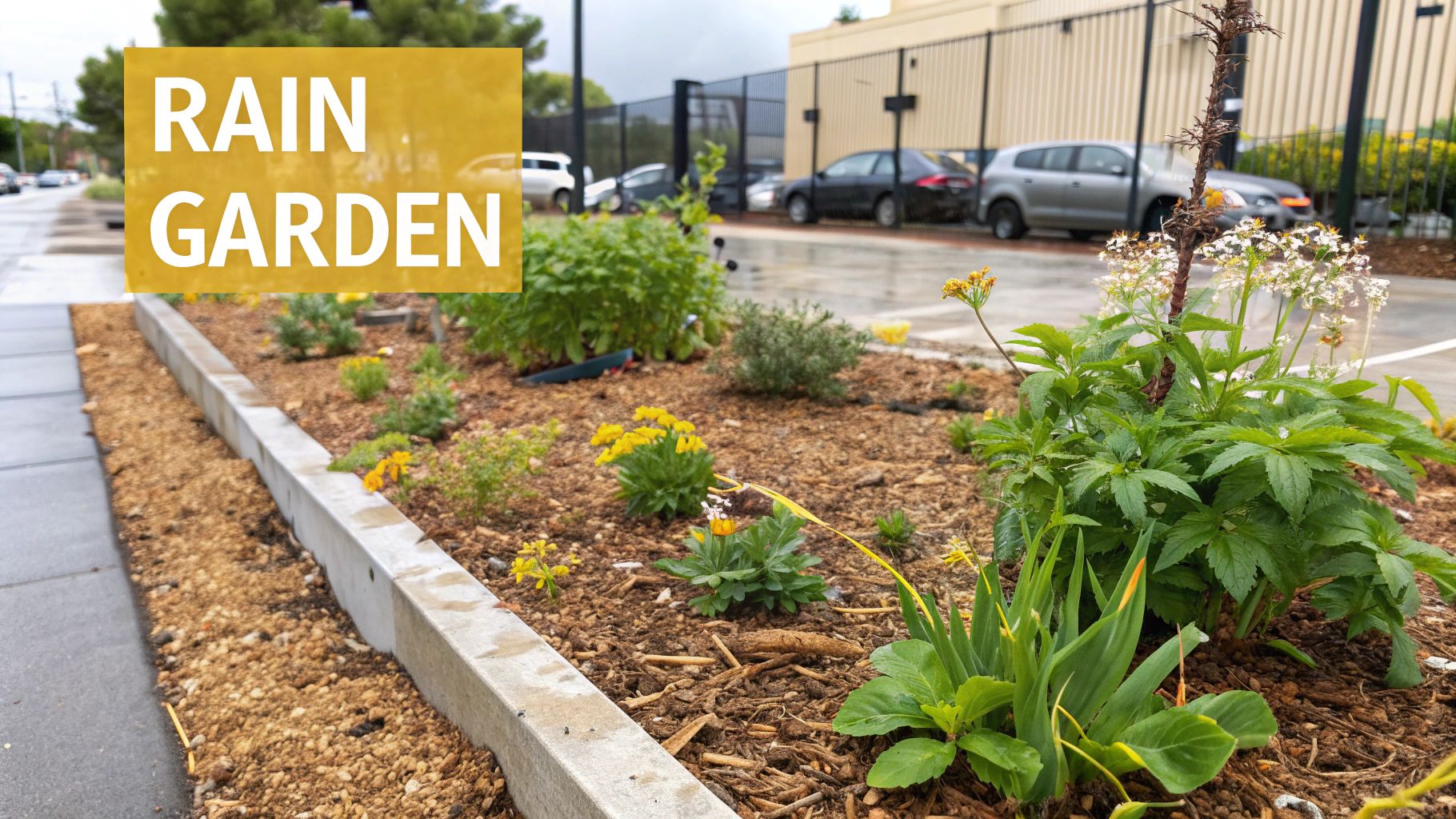
Key Design Specifications for Optimal Performance
The success of a rain garden hinges on proper site selection, sizing, and plant choice. The garden must be positioned to intercept runoff effectively without endangering your home's foundation. Its size and depth are calculated based on the roof or pavement area it drains and the soil's percolation rate, ensuring it can handle a typical South Texas downpour without overflowing.
The selection of native plants is equally critical. Hardy, deep-rooted species are chosen for their ability to absorb water, stabilize soil, and endure periods of both inundation and drought. This careful planning ensures the garden functions efficiently as a self-sustaining ecosystem.
Implementation and Maintenance Tips
To ensure your rain garden performs as a reliable drainage feature, consider these essential tips:
- Test Your Soil: Before digging, conduct a percolation test to ensure the soil drains adequately (within 12 to 48 hours). If drainage is poor, the soil may need to be amended with sand and compost.
- Position It Strategically: Locate the garden at least 10 feet downslope from your home’s foundation to prevent water from seeping into your basement or crawlspace.
- Choose Appropriate Native Plants: Select a mix of native Texas plants suited for wet and dry conditions. Taller, more water-tolerant species should be in the center, with shorter, drought-tolerant plants along the edges.
- Create an Overflow Path: Design a stable overflow area, such as a rock-lined channel, to safely direct excess water away from the garden during exceptionally heavy storms.
- Add Mulch: Apply a 2 to 3-inch layer of shredded hardwood mulch after planting to retain moisture, suppress weeds, and prevent erosion.
These beautiful and functional systems can be designed to complement any landscape. For more inspiration on integrating these features, you can explore water features on fischerlandscapingusa.com.
5. Channel Drain (Trench Drain)
A channel drain, also known as a trench drain, is a linear drainage solution designed to intercept and remove sheet flow from hard surfaces. This system features a long, narrow U-shaped channel covered by a removable grate, which captures water along its entire length. It is an excellent choice for preventing water from entering garages, pooling on patios, or flooding walkways.
This method is particularly effective for properties in South Texas that have large paved areas like driveways or pool decks. By collecting surface water before it has a chance to accumulate, a channel drain provides immediate and efficient protection against water intrusion and damage to your home and hardscapes. It is one of the most effective backyard drainage solutions for managing runoff on non-porous surfaces.
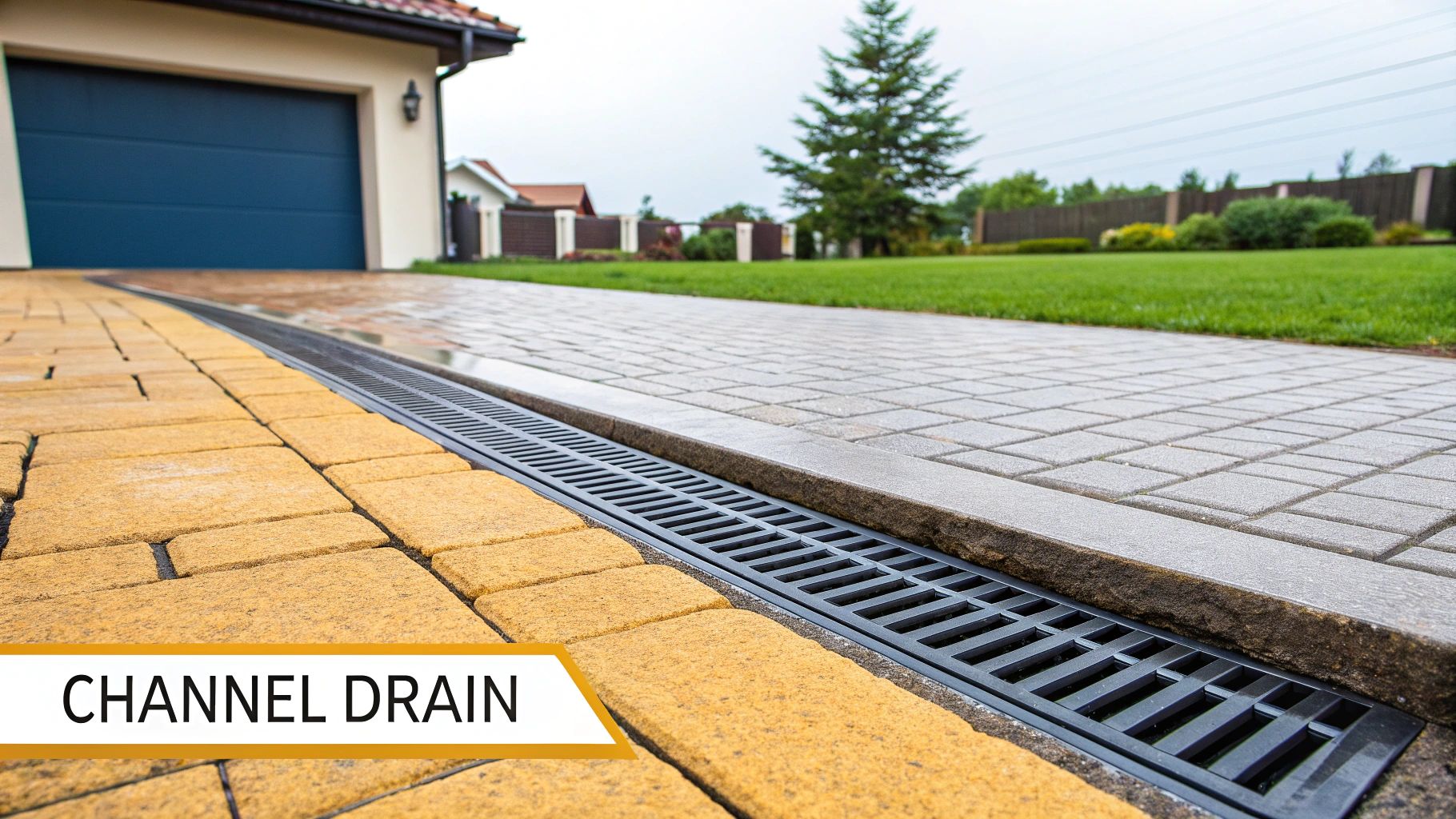
Key Design Specifications for Optimal Performance
The success of a channel drain hinges on its proper sizing, slope, and placement. The channel must have a consistent slope to ensure water flows efficiently to the designated discharge point, preventing stagnant water and sediment buildup. The grate's load rating is also a critical factor, as it must be able to withstand the expected traffic, whether from pedestrians or vehicles.
The integration of these drains into concrete or paver surfaces requires precision to ensure they sit just below the finished grade for optimal water capture. A professional installation ensures these specifications are met, creating a seamless and functional drainage system that complements your hardscaping features.
Implementation and Maintenance Tips
To ensure your channel drain operates effectively for years, consider these essential tips:
- Strategic Placement: Install channel drains at critical entry points, such as in front of garage doors, at the edge of a sloped driveway, or around a pool deck to intercept water before it reaches vulnerable areas.
- Ensure Proper Slope: A minimum slope of 0.5% (a half-inch drop for every 100 inches) is essential to maintain flow and prevent debris from settling in the channel.
- Select the Right Grate: Choose a grate with an appropriate load rating for the location. Pedestrian-only areas can use lighter-duty grates, while driveways require heavy-duty, vehicle-rated options.
- Regular Cleaning: Keep the grates free of leaves, dirt, and other debris. During heavy rainfall seasons in areas like Corpus Christi, check and clean them monthly to prevent clogs and ensure unimpeded water flow.
6. Dry Well (Infiltration System)
A dry well is an effective, environmentally friendly backyard drainage solution that manages excess water by collecting it in an underground chamber and allowing it to slowly percolate back into the soil. This infiltration system typically consists of a large, perforated basin or a gravel-filled pit lined with geotextile fabric. It acts as a holding tank during heavy rainfall, preventing runoff from overwhelming your property or storm drains.
This method is particularly well-suited for properties in South Texas with sandy or loamy soils that can absorb water efficiently. By managing stormwater on-site, a dry well helps replenish local groundwater tables and reduces the strain on municipal drainage infrastructure, making it a sustainable choice for homeowners in Corpus Christi and surrounding communities.
Key Design Specifications for Optimal Performance
The success of a dry well hinges on proper sizing and placement to ensure it can handle the expected water volume without overflowing. Its capacity must be calculated based on the size of the contributing area (like a roof or patio) and the local soil's percolation rate. A poorly sized or located dry well can become overwhelmed quickly or fail to drain, negating its purpose.
Before installation, a percolation test is essential to confirm the soil can absorb water at an adequate rate. The infographic below outlines the critical specifications for designing a residential dry well.
These details are vital for creating a functional system that provides long-term, low-maintenance water management. Professional installation ensures these factors are correctly calculated for your specific property.
Implementation and Maintenance Tips
To ensure your dry well functions effectively for years to come, consider these expert tips:
- Conduct a Percolation Test: Before you dig, test your soil's drainage capacity. Dig a one-foot-deep hole, fill it with water, and ensure it drains completely within 24 hours. If it doesn't, the location is unsuitable.
- Prioritize Proper Sizing: The dry well should be large enough to handle at least the first one to two inches of rainfall from the connected impervious surface (roof, driveway, etc.).
- Maintain Safe Distances: Install the dry well at least 10 feet away from your home's foundation to prevent water from seeping into your basement or crawl space and at least 25 feet from any septic systems.
- Protect the Inlet: Use a solid, non-perforated pipe to carry water from the source (e.g., a downspout) to the dry well. This prevents soil and debris from clogging the system before the water even reaches the infiltration chamber.
- Incorporate an Inspection Port: Adding a capped vertical pipe that extends to the surface allows for easy visual inspection and occasional flushing to remove any accumulated sediment.
7. Grading and Re-Sloping
Grading and re-sloping is a foundational backyard drainage solution that reshapes your land’s surface to ensure water flows away from your home and other critical structures. This method harnesses gravity by creating a gentle, consistent slope, preventing water from pooling in low spots and saturating your soil. While it may seem straightforward, proper grading is often the most effective and essential first step in resolving persistent drainage issues, especially in the flat terrains common to South Texas.
This technique is the go-to solution for properties in Corpus Christi and the surrounding areas where standing water threatens foundations, patios, and plant life. By physically altering the landscape, grading provides a permanent fix that corrects the root cause of many drainage problems. Integral to effective drainage, grading and re-sloping are key elements of initial site preparation, ensuring a solid foundation and proper water runoff. For a deeper understanding of this process, a comprehensive guide to site preparation for building construction can be a valuable resource.
Key Design Specifications for Optimal Performance
The success of grading hinges on achieving the correct slope. The universally accepted standard is a minimum 2% grade, which translates to a drop of at least two feet for every 100 feet of horizontal distance away from a structure. This seemingly slight incline is powerful enough to guide water effectively without causing noticeable changes to your yard's appearance or usability.
Precision is non-negotiable; an incorrect slope can worsen existing problems or create new ones, such as directing runoff toward a neighbor's property. Professional assessment is key to establishing the ideal grade and ensuring the project complies with local building codes, which often mandate specific foundation drainage requirements.
Implementation and Maintenance Tips
To ensure your grading and re-sloping project is successful and long-lasting, consider these expert tips:
- Maintain Foundation Exposure: Always ensure that the final grade leaves at least 6-8 inches of your home's foundation exposed. Piling soil against the siding can trap moisture and lead to rot or pest infestations.
- Use Proper Fill Material: When adding soil to build up low areas, use high-quality topsoil rather than heavy clay. Topsoil promotes better water absorption and supports healthy lawn growth.
- Compact Soil in Layers: To prevent the ground from settling and creating new low spots, add and compact soil in thin, 6-inch layers until you reach the desired height.
- Prevent Erosion Immediately: As soon as the final grade is established, cover the bare soil with seed, sod, or erosion control blankets. This prevents rain from washing away your work and causing sediment runoff.
Correctly implemented grading is a core component of effective residential landscaping that protects your property value.
8. Downspout Extensions and Pop-Up Emitters
Downspout extensions and pop-up emitters are a simple yet highly effective backyard drainage solution designed to redirect damaging roof water away from your home’s foundation. Standard downspouts often deposit large volumes of water directly at the base of your house, leading to soil saturation, foundation issues, and moisture problems. This system extends that discharge point safely away from the structure, preventing costly water-related damage.
This method is ideal for nearly any property in South Texas, from Corpus Christi to San Antonio, where intense rainfall can quickly overwhelm the soil around a foundation. By moving roof runoff to a more suitable location, you protect your home’s structural integrity and prevent landscape erosion, making it a fundamental component of a comprehensive water management plan.
Key Design Specifications for Optimal Performance
The success of a downspout extension system hinges on proper length, slope, and placement. The primary goal is to move water far enough away that it cannot seep back toward the foundation. Key specifications include extending the discharge point a minimum distance and ensuring buried lines have adequate slope to maintain flow and prevent blockages.
When installed correctly, these systems provide a discreet and reliable way to manage a significant source of water. They seamlessly integrate into your landscape while offering powerful protection.
Implementation and Maintenance Tips
To maximize the effectiveness of your downspout extensions and pop-up emitters, consider these practical tips:
- Extend to a Safe Distance: Ensure your downspout extensions carry water at least 10 feet away from the foundation, though 15-20 feet is even better for maximum protection.
- Maintain Proper Slope: If burying the extension pipe, maintain a minimum 1% grade (about one inch of drop for every eight feet of pipe) to ensure gravity effectively moves the water.
- Prevent Clogs at the Source: Install leaf guards or strainers at the top of your downspouts. This simple step prevents leaves, twigs, and other debris from entering the system and causing blockages.
- Use Solid Piping Underground: When routing extensions below the surface, always use a solid, non-perforated pipe. This ensures water is carried directly to the discharge point without leaking into the surrounding soil along the way.
- Position Emitters Strategically: Place pop-up emitters in low-visibility areas of your lawn where they will not interfere with foot traffic or mowing. They should be installed flush with the ground to remain unobtrusive when not in use.
Backyard Drainage Solutions Comparison Matrix
| Item | Implementation Complexity | Resource Requirements | Expected Outcomes | Ideal Use Cases | Key Advantages |
|---|---|---|---|---|---|
| French Drain System | High – requires excavation, slope calculation | Gravel, perforated pipe, filter fabric, labor | Effective large-volume water redirection, long-lasting | Properties with standing water or foundation issues | Highly effective, long-lasting, invisible after install |
| Dry Creek Bed (Drainage Swale) | Medium – landscape design and rock placement | Decorative rocks, plants, landscape fabric | Moderate drainage with aesthetic enhancement | Moderate drainage needs, visible water flow, landscaping | Attractive, natural look, reduces erosion naturally |
| Catch Basin and Storm Drain | Medium – excavation and pipe connection | Grated basins, pipes, sediment traps | Captures runoff at low points, prevents pooling | Low spots, driveways, patios, pooling problem areas | Effective at problem points, easy maintenance |
| Rain Garden (Bioretention Basin) | Medium – soil amendment and planting | Native plants, amended soil, mulch | Filters runoff, recharges groundwater, ecological benefits | Moderate drainage, eco-conscious homeowners | Sustainable, pollutant filtering, wildlife habitat |
| Channel Drain (Trench Drain) | High – precise slope, concrete work | Grated channels, pipes, concrete | Captures sheet flow over long surfaces | Driveway entrances, patios, pool decks | Linear water capture, high capacity, aesthetic options |
| Dry Well (Infiltration System) | Medium – excavation, soil tests | Perforated chambers, gravel, landscape fabric | Invisible groundwater recharge | Well-draining soils, downspout runoff | Invisible, recharges groundwater, minimal maintenance |
| Grading and Re-Sloping | Medium to high – earth moving and contouring | Soil, heavy equipment (sometimes) | Correct water slope away from structures | Foundation drainage, new construction, yard renovation | Cost-effective, permanent, solves root drainage issues |
| Downspout Extensions & Pop-Up Emitters | Low – simple installation, some burying | Pipes, pop-up emitters, connectors | Direct roof water away from foundation | Any property with gutters | Cost-effective, DIY-friendly, prevents foundation issues |
Partner with the Experts for a Permanently Dry Backyard
Navigating the world of backyard drainage solutions can feel overwhelming, but reclaiming your outdoor space from standing water is an achievable and worthwhile investment. Throughout this guide, we've explored a range of powerful techniques, from the subterranean efficiency of a French drain system to the natural beauty of a rain garden. We've seen how simple adjustments like downspout extensions can prevent foundation issues and how engineered solutions like catch basins and channel drains can handle significant water flow from hardscapes.
The key takeaway is that no single solution fits every property. The ideal approach often involves a combination of strategies tailored to your specific landscape, soil conditions, and the unique challenges posed by South Texas weather. Whether it's the subtle, landscape-altering power of re-grading your yard or the aesthetic functionality of a dry creek bed, the goal is always the same: to manage water effectively and protect your property's value.
From Diagnosis to Lasting Solution
Understanding the "why" behind your water problem is just as important as choosing the "what" for the solution. A comprehensive site assessment is the critical first step. An expert can identify the root causes of pooling water, whether it's compacted clay soil common in the Corpus Christi area, a negative grade sloping toward your foundation, or overwhelming runoff from a neighbor's property in San Antonio.
For comprehensive and permanent solutions, consider partnering with experts who offer professional drainage services. A professional evaluation ensures that you are not just treating a symptom but implementing a permanent fix. Investing in a properly designed system means you can move forward with other landscaping projects, like a new patio or outdoor kitchen, with complete confidence. A dry, stable foundation is the bedrock of any beautiful and functional outdoor living space.
Take the Next Step Toward a Drier, Healthier Yard
Don't let drainage issues dictate how you use your property or put your home's structural integrity at risk. The right backyard drainage solutions not only solve water problems but also enhance your landscape's usability and aesthetic appeal. By taking decisive action, you protect your investment, prevent costly future repairs, and create a resilient outdoor environment that you and your family can enjoy for years to come, no matter what the South Texas skies bring.
Ready to solve your water problems for good? The experienced team at Fischer Landscaping specializes in designing and installing custom backyard drainage solutions across South Texas. Contact us today for a professional consultation and quote to build a landscape that is as resilient as it is beautiful.