The intense South Texas sun can make enjoying your outdoor space a challenge, driving up cooling costs and limiting your property's potential. For homeowners and businesses in Corpus Christi, San Antonio, and the Rio Grande Valley, establishing a mature landscape quickly is a top priority. The solution? Planting fast-growing shade trees that are well-adapted to our unique climate. These trees not only provide rapid relief from the heat but also enhance curb appeal, increase property value, and create a more inviting environment for clients and family alike.
However, selecting the right species is crucial. A poor choice can lead to weak, disease-prone trees that create more problems than they solve, requiring costly maintenance or removal down the line. This guide provides actionable solutions, highlighting the top fast growing shade trees Texas property owners can count on to thrive in local conditions from Brownsville to Harlingen.
We'll explore options that offer a perfect blend of speed, resilience, and beauty, helping you make a smart, long-term investment in your landscape. While this guide focuses on rapid growth, it's also helpful to explore common types of trees for your landscape to understand the broader context of landscape design. At Fischer Landscaping, we specialize in helping clients select and professionally install the ideal trees that will flourish for decades, ensuring your vision for a cool, shaded oasis becomes a reality.
1. Desert Willow (Chilopsis linearis)
The Desert Willow (Chilopsis linearis) is a superb choice for those seeking a fast-growing, resilient, and visually stunning tree for the South Texas climate. Despite its name, it is not a true willow. Instead, it’s a native Texas gem prized for its rapid growth, exceptional drought tolerance, and beautiful, orchid-like flowers that bloom from spring through fall, attracting hummingbirds and other pollinators.
An Ideal Tree for Texas Landscapes
This deciduous tree thrives in the harsh conditions of South Texas, from the heat of San Antonio to the coastal environment of Corpus Christi. It typically grows at a rate of two to three feet per year, reaching a mature size that is perfect for smaller residential yards or specific commercial applications where a massive canopy is not desired. Its airy, open structure provides dappled shade, which cools the ground without creating overly dense, dark areas. This makes it an excellent addition to xeriscape designs, rock gardens, or as a standalone specimen tree.
The following infographic provides a quick reference for the Desert Willow's key growth characteristics.
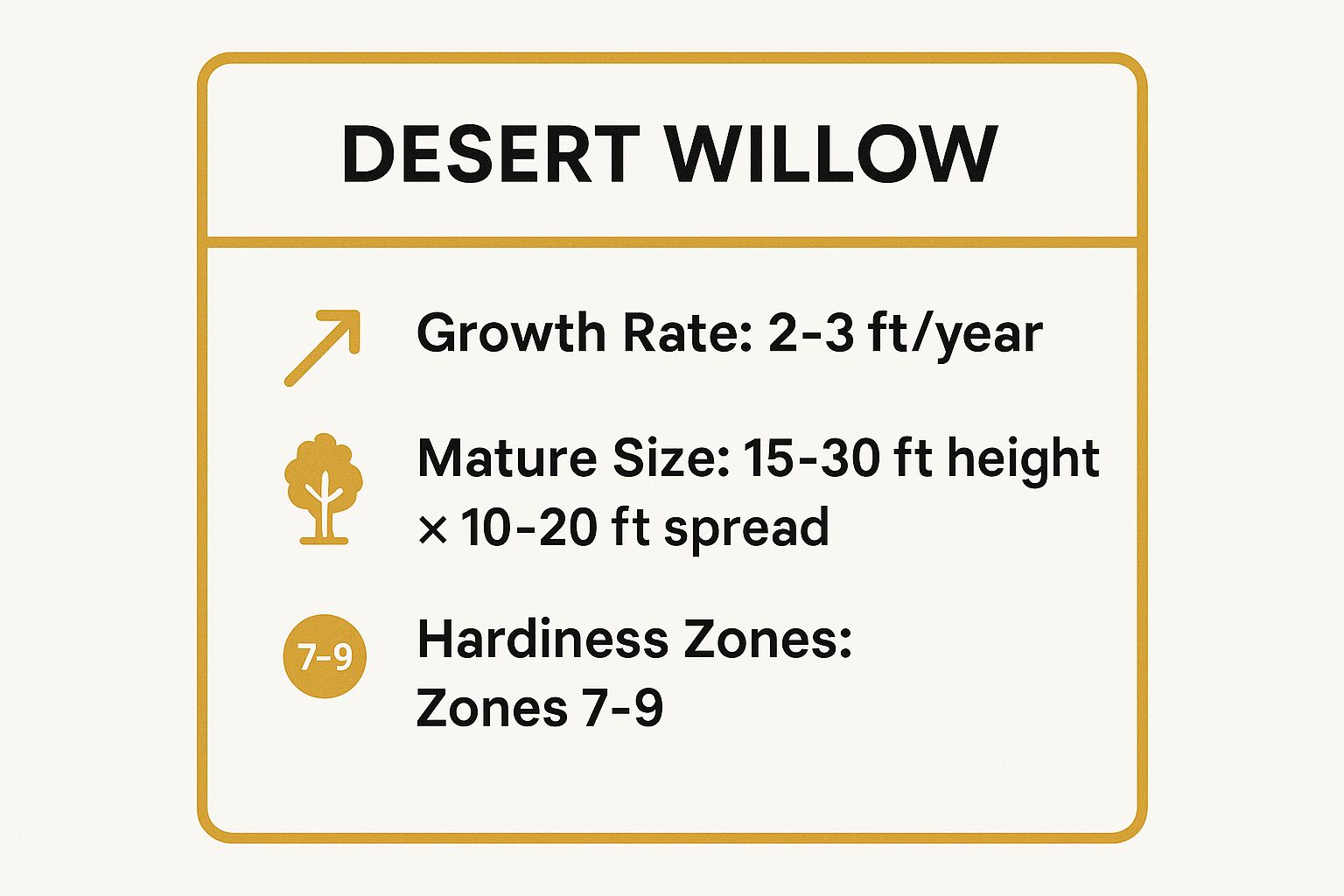
As the data shows, the Desert Willow's moderate size and fast growth rate make it a highly practical option among fast-growing shade trees in Texas for quick landscape impact.
Planting and Care Pointers
To ensure your Desert Willow flourishes, proper site selection and care are crucial. This tree demands full sun to maximize its growth and flowering potential. Professional landscaping installation is key to success, as the most critical factor is soil drainage.
- Sunlight: Plant in a location that receives at least six to eight hours of direct sunlight daily.
- Soil: It requires well-draining soil and will not tolerate "wet feet" or heavy clay. If your property in Corpus Christi has heavy soil, amending the area or creating a raised berm is essential for success.
- Watering: Water deeply but infrequently during its first two years to establish a strong root system. Once established, it is extremely drought-tolerant.
- Pruning: The best time to prune is late winter. This helps maintain a desirable shape, removes any dead or crossing branches, and encourages vigorous new growth in the spring.
- Fertilizer: Avoid fertilizing. The Desert Willow thrives in lean soil, and excess nutrients can lead to more foliage growth at the expense of its spectacular flowers.
2. Bald Cypress (Taxodium distichum)
The Bald Cypress (Taxodium distichum) is a majestic and highly adaptable choice for anyone seeking one of the most iconic fast growing shade trees in Texas. This native deciduous conifer is famed for its rapid growth, impressive stature, and unique, feathery foliage that turns a stunning bronze-copper in the fall. Despite its common association with swamps, the Bald Cypress demonstrates remarkable resilience in various soil types, making it a valuable asset for diverse landscapes across South Texas.
An Ideal Tree for Texas Landscapes
This iconic tree is perfectly suited for larger properties in areas from San Antonio to Harlingen, providing substantial shade and a strong vertical element. Growing up to 24 inches per year, it develops a classic pyramidal shape when young that gradually broadens with age, ultimately reaching a height of 50 to 70 feet. Its fine-textured needles provide a soft, filtered shade during the summer, which is ideal for cooling patios and outdoor living spaces without creating overly dense, dark zones. Its adaptability and longevity make it a cornerstone of both residential estates and large-scale commercial projects.
Planting and Care Pointers
Proper planting and early care are essential for establishing a healthy Bald Cypress that will thrive for generations. This tree performs best with ample sunlight and consistent moisture during its formative years. Engaging Fischer Landscaping for professional tree installation ensures the tree is sited correctly and planted to promote a deep, strong root system from the start.
- Sunlight: Plant in a location that receives full sun to partial shade for optimal growth and foliage density.
- Soil: While it tolerates a wide range of soils, including heavy clay and periods of standing water, it thrives in moist, well-drained conditions.
- Watering: Water regularly and deeply during its first three years to establish a robust root system. Once established, it is surprisingly drought-tolerant.
- Spacing: Due to its potential size, plant it at least 20 to 25 feet away from homes, driveways, and other structures to prevent future conflicts.
- Pruning: This tree requires minimal pruning. Simply remove any dead, damaged, or poorly placed branches during the dormant winter season.
3. Chinese Pistache (Pistacia chinensis)
The Chinese Pistache (Pistacia chinensis) is a highly adaptable and celebrated choice among fast-growing shade trees in Texas, renowned for its reliability and stunning seasonal beauty. Promoted as a 'Texas Superstar' by Texas A&M AgriLife, this medium-sized tree offers a dense, rounded canopy perfect for providing substantial summer shade. Its most impressive feature is the spectacular fall foliage, which erupts in a brilliant display of orange, red, and crimson, adding incredible value to any landscape.
An Ideal Tree for Texas Landscapes
This deciduous tree is a workhorse, thriving in the challenging heat and variable soils found from San Antonio to Brownsville. Growing at a rate of two to three feet per year, it reaches a mature height of 25 to 35 feet, making it an excellent fit for residential yards, street plantings, and parks. Its uniform, umbrella-like shape provides consistent, cooling shade that can significantly lower under-canopy temperatures. The Chinese Pistache's resilience makes it a prime candidate for large-scale commercial landscaping projects, where durability and low maintenance are paramount.
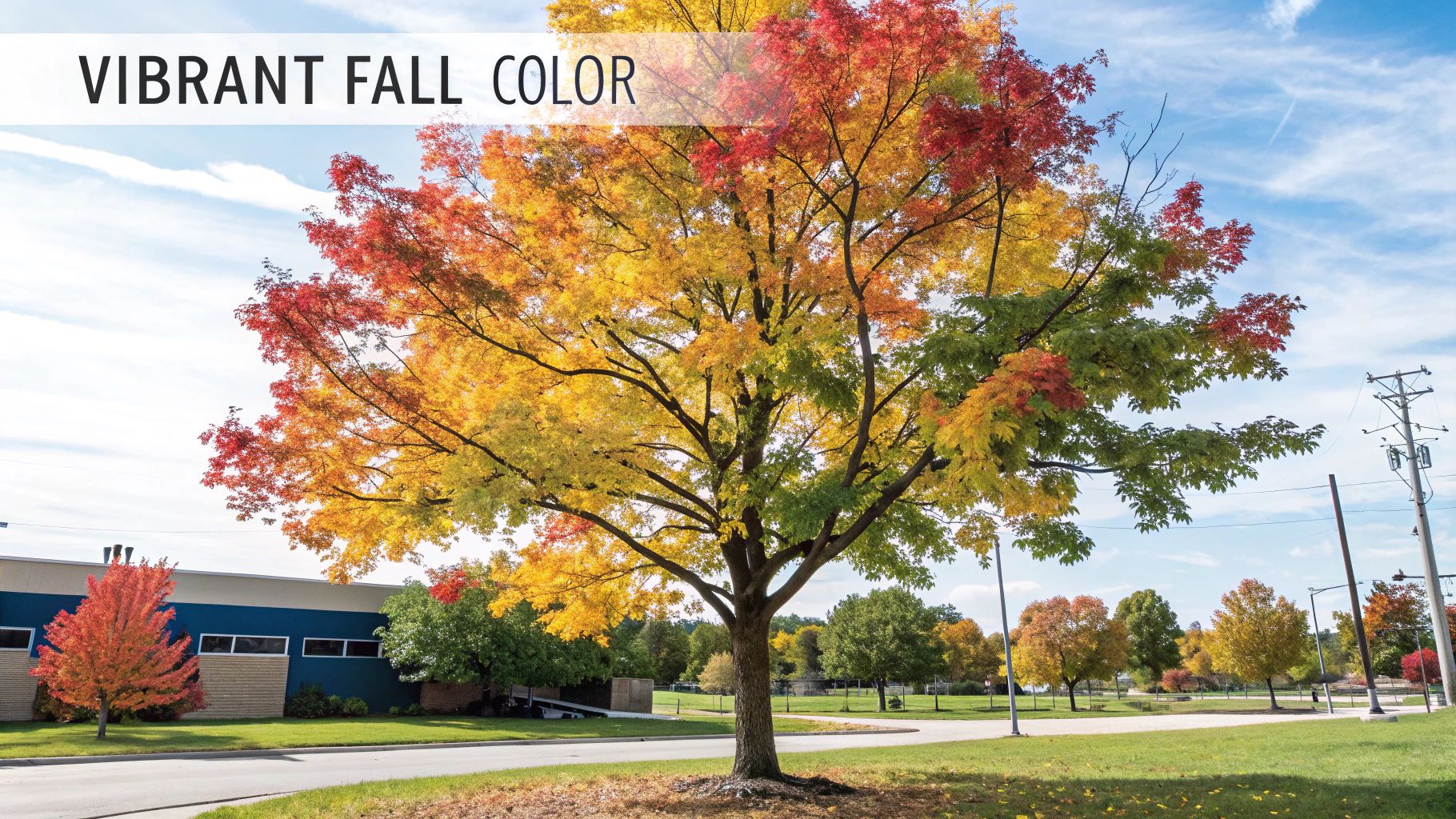
The Chinese Pistache is a testament to how a single tree can define a landscape, offering both practical summer shade and breathtaking autumn color.
Planting and Care Pointers
To ensure your Chinese Pistache establishes a strong structure and delivers its famous fall color, proper planting and early care are vital. While adaptable, giving it the right start will pay dividends for decades.
- Sunlight: Plant in a location that receives full sun. At least six to eight hours of direct sunlight is necessary for vigorous growth and the best fall color.
- Soil: It requires well-drained soil. While tolerant of various soil types, it performs poorly in consistently wet or compacted clay. Amending heavy soils is recommended.
- Watering: Water deeply and regularly during the first few growing seasons to establish a robust root system. Once mature, it is remarkably drought-tolerant.
- Pruning: Stake and prune young trees in the winter to develop a strong central leader and a well-formed canopy. An aesthetically unpleasing form in youth almost always matures into a beautifully shaped tree with proper guidance.
- Selection: Purchase container-grown specimens to ensure a straight trunk. Opt for male trees if you wish to avoid the small, inedible (and sometimes messy) berries produced by females.
4. Cedar Elm (Ulmus crassifolia)
The Cedar Elm (Ulmus crassifolia) is a Texas native powerhouse, renowned for its toughness, rapid growth, and ability to create a massive canopy of dense shade. As one of the most common and largest native shade trees in the state, it is an exceptional choice for spacious properties throughout South Texas. It grows at an impressive rate of two to three feet per year and is incredibly well-adapted to the local climate, showcasing superior tolerance for heat, drought, and the alkaline soils common from San Antonio to the Rio Grande Valley.
An Ideal Tree for Texas Landscapes
This large deciduous tree is a cornerstone of Texas urban forestry, capable of reaching a majestic 50 to 70 feet tall with a 40 to 60-foot spread. Its dense, rounded canopy provides significant cooling, making it ideal for shading large residential yards, public parks, or commercial properties. Unlike most elms, the Cedar Elm blooms in late summer and fall, producing inconspicuous flowers that later develop into small, papery seeds. Its adaptability and stately presence have made it a favorite for generations, standing as a testament to native resilience.
Planting and Care Pointers
Proper care ensures the Cedar Elm becomes a long-lasting, valuable asset to your landscape. This tree requires full sun to achieve its best growth and classic, symmetrical form. Given its potential size and extensive root system, professional site selection and planting are vital to prevent future issues with foundations or infrastructure.
- Sunlight: Plant in an area that receives at least six to eight hours of direct sunlight per day.
- Soil: It is highly adaptable but performs best in well-drained soils. It is one of the best fast-growing shade trees in Texas for tolerating heavy clay and alkaline conditions.
- Watering: Provide deep, consistent watering during the first few years to establish a robust root system. Once mature, it is extremely drought-tolerant.
- Pruning: The ideal time for structural pruning is during the winter dormancy period. This helps develop a strong framework and removes any dead or damaged wood.
- Pest Management: Monitor for elm leaf beetles or mistletoe. While generally hardy, addressing these issues promptly will maintain the tree's health and vigor. Proper tree installation and care from the start can help prevent many common problems.
5. Mexican Sycamore (Platanus mexicana)
The Mexican Sycamore (Platanus mexicana) is a champion among fast-growing shade trees in Texas, revered for its remarkable growth rate and superior adaptation to the state's challenging climate. Growing an astonishing three to five feet per year, this tree is a fantastic alternative to the more common American Sycamore, as it boasts greater resistance to common diseases and better tolerance for Texas's alkaline soils and intense heat. It is celebrated for its beautiful, exfoliating bark that peels away to reveal a mosaic of cream, gray, and olive-green patches, adding year-round visual interest to any landscape.
An Ideal Tree for Texas Landscapes
This majestic deciduous tree is an excellent choice for creating significant shade quickly across South Texas. The Mexican Sycamore can reach a commanding height of 40-80 feet with a 30-50 foot spread, making it ideal for large residential properties, commercial spaces, and public parks in cities like Corpus Christi. Its large, maple-like leaves cast dense, cooling shade, providing substantial relief from the summer sun. The underside of the leaves has a fuzzy, white texture, which creates a striking contrast when the wind blows.
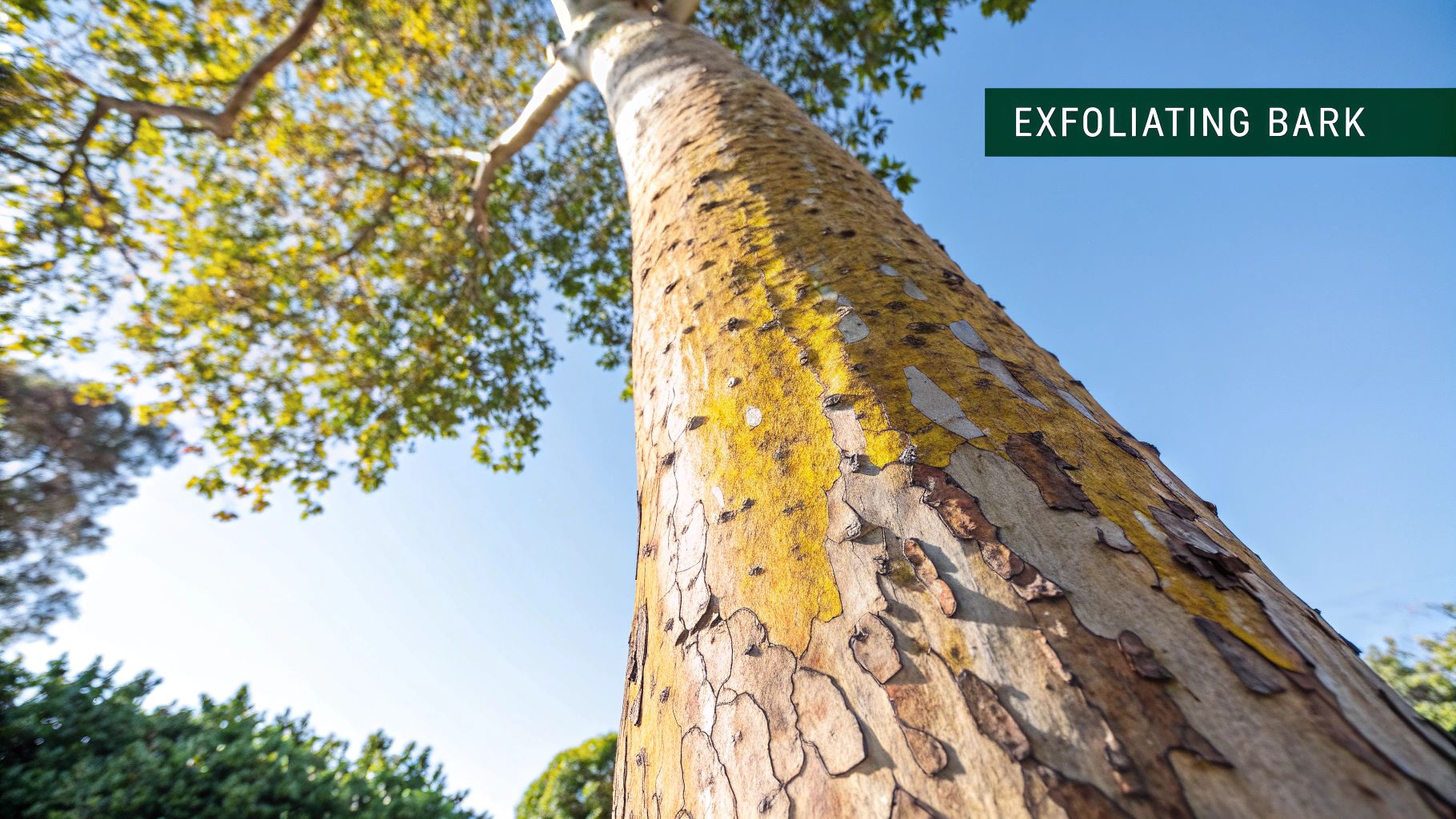
This tree's rapid growth makes it a top contender for property owners needing a quick canopy to reduce energy costs and enhance outdoor living areas.
Planting and Care Pointers
To ensure your Mexican Sycamore achieves its full potential, strategic placement and early care are vital. This tree requires ample space to accommodate its mature size, and professional landscaping installation can ensure it has the best start.
- Sunlight: Plant in a location that receives full sun for most of the day.
- Soil: While adaptable, it performs best in well-drained soil but can tolerate heavier soils better than many other species.
- Watering: Provide supplemental water for the first two to three years to establish a deep, robust root system. Once mature, it is quite drought-tolerant but will benefit from deep watering during extended droughts.
- Spacing: Plant at least 40-50 feet away from structures, power lines, and pools to prevent future issues with roots or leaf litter.
- Pruning: Prune young trees in the winter to establish a strong central leader and a well-spaced branching structure. This minimizes the need for major pruning later on.
6. Thornless Honey Locust (Gleditsia triacanthos var. inermis)
The Thornless Honey Locust (Gleditsia triacanthos var. inermis) is an outstanding choice for those seeking an adaptable, fast-growing shade tree that won't overwhelm a landscape. This popular cultivar offers all the resilience of the native species without the formidable thorns, making it a safe and elegant addition to Texas properties. It is prized for its delicate, fern-like foliage that creates a light, dappled shade, allowing sunlight to filter through and support grass growth beneath its canopy.
An Ideal Tree for Texas Landscapes
This deciduous tree demonstrates impressive adaptability, flourishing in a wide range of Texas conditions. It typically grows at a rapid pace of two to three feet per year, reaching a mature height of 30 to 70 feet. Its fine-textured leaves turn a brilliant yellow in the fall, providing beautiful seasonal interest. The filtered shade it provides is ideal for patios, lawns, and understory plantings, making it one of the most versatile fast-growing shade trees in Texas for both residential and commercial use.
The Thornless Honey Locust is a common sight in well-planned urban landscapes. You can find beautiful specimens enhancing public spaces, from parks in San Antonio to commercial campuses, proving its suitability for high-traffic, managed environments.
Planting and Care Pointers
To ensure your Thornless Honey Locust establishes quickly and thrives, proper planting and early care are essential. This tree prefers full sun to achieve its best growth rate and form. Partnering with a professional for tree installation can help guarantee your tree is positioned and planted for long-term health and structural integrity.
- Sunlight: Plant in a location that receives at least six to eight hours of direct sunlight per day.
- Soil: It adapts to various soil types but performs best in well-drained soil. Avoid planting in areas with standing water.
- Watering: Provide deep, regular watering during the first couple of seasons to establish a robust root system. Once mature, it is quite drought-tolerant.
- Pruning: Prune young trees in the winter to develop a strong central leader and well-spaced branches. This foundational pruning prevents structural issues later on.
- Cultivar Selection: Choose proven, superior cultivars like 'Shademaster' for its upright form or 'Skyline' for its excellent branch structure. The 'Sunburst' variety offers unique golden-yellow new foliage.
7. Arizona Ash (Fraxinus velutina)
The Arizona Ash (Fraxinus velutina) is one of the most rapidly growing shade trees available in Texas, often selected when the primary goal is to establish a large canopy in the shortest time possible. This deciduous tree is known for its impressive growth rate of three to four feet per year, quickly reaching a mature height of 30 to 50 feet. Its rapid growth makes it a popular choice for new construction and homeowners who need immediate cooling effects.
A Practical Solution for Rapid Shade
The Arizona Ash provides a dense, rounded canopy that creates significant shade, offering quick relief from the intense Texas sun. While its speed is a major advantage, this tree is often considered a temporary solution due to its shorter lifespan (around 30-50 years) and susceptibility to certain issues. However, it can serve as an excellent "nurse tree," providing shade for slower-growing, more permanent trees like Live Oaks to establish themselves underneath, making it a strategic part of a long-term landscape plan.
Planting and Care Pointers
Proper care is essential to maximize the health and longevity of an Arizona Ash, especially given its fast growth, which can lead to weaker wood. Engaging professional tree care and trimming services can help manage its structure and mitigate potential risks.
- Sunlight: Full sun is required for optimal growth and a dense canopy.
- Soil: It is adaptable to various soil types but performs best in well-draining soil. It can tolerate the alkaline soils common in South Texas.
- Watering: Water deeply and regularly during the first few years. Once established, it is moderately drought-tolerant but appreciates deep, infrequent watering during prolonged dry spells.
- Pruning: Regular pruning is critical to develop a strong central leader and remove weak, crossing branches. Prune in late winter to shape the tree and improve its structural integrity.
- Pest and Disease: Monitor for pests like the ash borer. If the Emerald Ash Borer is confirmed in your area, avoid planting this tree. Choosing improved cultivars like 'Rio Grande' or 'Modesto' can offer better structure and disease resistance.
8. Live Oak (Quercus virginiana)
The Live Oak (Quercus virginiana) is the quintessential Texas shade tree, an iconic evergreen celebrated for its majestic, spreading canopy and incredible longevity. While its initial growth is more moderate than some trees on this list, it establishes faster than most other oaks and provides invaluable year-round shade. This inclusion among fast growing shade trees in Texas is for those who value long-term investment, as its growth rate often accelerates as it matures, creating a timeless living landmark.
An Ideal Tree for Texas Landscapes
This magnificent, long-lived tree is a cornerstone of classic Southern landscapes, from San Antonio to the Gulf Coast. A young Live Oak typically grows one to two feet per year, but its value compounds over time, eventually forming a massive canopy that can span 100 feet or more. This dense, evergreen shade provides significant cooling benefits, reducing energy costs and creating comfortable outdoor living spaces. Its strong, wind-resistant structure also makes it a durable choice for the Texas climate.
Planting and Care Pointers
Proper planting and early care are vital for establishing a Live Oak that will thrive for generations. It demands full sun to develop its classic, sprawling form and requires significant space to accommodate its future size. Thoughtful placement is a key part of successful residential landscaping, ensuring the tree has room to grow without interfering with structures.
- Sunlight: Plant in a location that receives at least six to eight hours of direct sun daily.
- Soil: It adapts to various soil types but performs best in well-draining soil.
- Watering: Provide deep, consistent watering for the first three to five years to establish a robust root system. Once established, it is very drought-tolerant.
- Pruning: Avoid pruning from February through June to prevent the spread of oak wilt, a deadly fungal disease. If you must prune during this time, immediately paint all cuts with a wound dressing.
- Spacing: Plant at least 50-60 feet away from homes, driveways, and other permanent structures to avoid future conflicts with roots and branches.
- Root Protection: Never pile soil over the root zone or against the trunk, as this can lead to decay. Protect the area from soil compaction during any construction projects.
Fast-Growing Shade Trees in Texas Comparison
| Tree Name | Implementation Complexity | Resource Requirements | Expected Outcomes | Ideal Use Cases | Key Advantages |
|---|---|---|---|---|---|
| Desert Willow | Low – fast growth, low maintenance | Low water, well-drained soils | Medium-sized shade, extended flowers | Xeriscapes, drought-prone areas | Extremely drought-tolerant, long blooming, native |
| Bald Cypress | Medium – space and time for growth | Medium water, adaptable soils | Tall, dense shade, fall color | Large landscapes, wet or dry sites | Highly adaptable, long-lived, pest resistant |
| Chinese Pistache | Medium – staking pruned young trees | Low-medium water, adaptable soils | Medium-large shade, vibrant fall color | Urban and suburban shade tree | Drought tolerant, spectacular fall color, disease resistant |
| Cedar Elm | Medium – pest monitoring needed | Low-medium water, adaptable soils | Large shade, dense canopy | Urban forestry, street trees | Drought tolerant, disease resistant, native |
| Mexican Sycamore | High – requires space and maintenance | Medium water, prefers well-drained | Very fast growth, large dense shade | Large yards, rapid shade needs | Fast-growing, drought tolerant, ornamental bark |
| Thornless Honey Locust | Medium – pest monitoring and pruning | Low-medium water, highly adaptable | Filtered shade, moderate size | Urban areas, parks, street trees | Drought tolerant, allows turf growth, nitrogen fixing |
| Arizona Ash | Medium – regular pruning and pest control | Medium water, adaptable soils | Very fast growth, dense shade | Quick shade, temporary plantings | Fast-growing, inexpensive, dense shade |
| Live Oak | High – long establishment, large space | Low water once established, extensive space | Very large, year-round shade, long-lived | Large properties, iconic shade tree | Evergreen, extremely long-lived, storm resistant |
From Sapling to Shade: Partner with Fischer Landscaping for Lasting Results
Selecting the right fast-growing shade tree is a significant step toward transforming your South Texas property. We've explored a variety of robust options, from the drought-tolerant Desert Willow and the vibrant Chinese Pistache to the stately Bald Cypress and iconic Live Oak. Each tree offers a unique combination of rapid growth, cooling shade, and aesthetic appeal, perfectly suited for the diverse conditions found from Corpus Christi to San Antonio.
The journey, however, doesn't end with choosing a species. The ultimate success of your new tree hinges on strategic planning and professional execution. Proper site selection, soil analysis, and expert installation are the foundational pillars that support vigorous growth and long-term health. A poorly planted tree can struggle for years, becoming susceptible to pests, diseases, and storm damage, ultimately failing to deliver the shade and value you anticipated.
The Professional Advantage in Tree Installation
Investing in professional landscaping services is not just about convenience; it's about safeguarding your investment and ensuring your tree thrives for decades. The initial stages are the most critical for establishing a strong, resilient root system and a well-structured canopy.
Here’s what professional installation guarantees:
- Optimal Site Selection: We analyze your property's specific microclimate, soil type, and sun exposure to place your tree where it will flourish, avoiding future conflicts with structures, power lines, or underground utilities.
- Correct Planting Depth: One of the most common DIY mistakes is planting a tree too deep or too shallow. Our team ensures the root flare is positioned perfectly, which is crucial for oxygen exchange and preventing root rot.
- Soil Amendment & Preparation: South Texas soils can be challenging. We amend the soil with the right organic matter and nutrients, creating an ideal environment for rapid root establishment and healthy growth.
- Structural Pruning and Staking: Initial pruning helps develop a strong central leader and a balanced canopy. Proper staking, when necessary, provides support against strong winds without damaging the trunk, allowing the tree to develop natural strength.
For property managers in Brownsville or homeowners in Harlingen, choosing from the best fast growing shade trees Texas has to offer is just the first part of the equation. Partnering with a skilled team ensures these magnificent trees reach their full potential, enhancing your curb appeal and providing a lasting legacy of shade and beauty. At Fischer Landscaping, we don’t just plant trees; we cultivate thriving landscapes. Our comprehensive approach, from design and installation to long-term care, guarantees that your vision for a cooler, greener property becomes a stunning reality.
Ready to bring lasting shade and value to your property? Let the experts at Fischer Landscaping handle the entire process, from selecting the perfect tree to professional installation. Contact us today to schedule a consultation and ensure your new shade tree gets the best possible start for a long, healthy life.