Permeable paving is an advanced hardscaping solution designed to allow rainwater to pass through its surface and soak into the ground, rather than running off into storm drains. Think of it as a smart, functional sponge for your driveway, patio, or parking lot. Traditional concrete and asphalt act like a sealed lid, creating runoff problems. This simple difference is a game-changer for managing water on properties here in South Texas, from Corpus Christi to San Antonio.
How Does Permeable Paving Work?
Picture a heavy South Texas downpour. With a standard concrete driveway, all that water has nowhere to go but sideways, overwhelming your landscaping and gushing into the street's storm drains. Permeable paving completely flips this scenario. It’s an engineered system that manages stormwater right where it falls.
Instead of a solid, non-porous slab, this method uses materials with tiny voids or pavers with small gaps between them. This design allows rain to trickle through the surface and into a deep, specially prepared gravel base underneath. This base acts as a natural reservoir, holding the water temporarily while it slowly and safely absorbs back into the soil.
The Core Concept of Permeable Surfaces
The real magic isn't just in the pavers you see on top but in the entire layered system installed by a professional. This sub-base is carefully engineered to handle significant volumes of water, turning a runoff problem into a major asset for your property. It’s a direct solution to the standing water and flash flooding issues we frequently see in areas from San Antonio to Brownsville.
By promoting natural groundwater recharge, a professionally installed permeable system helps maintain healthy water tables and prevents pollutants from washing into our local waterways.
To give you a clearer picture, let's break down the key features and benefits for South Texas property owners.
Permeable Paving at a Glance
This table provides a quick summary of the key features and immediate benefits of installing permeable surfaces on your property.
| Feature | Benefit for South Texas Properties |
|---|---|
| Porous Surface | Immediately reduces standing water on driveways and patios, preventing slips and mosquito breeding. |
| Gravel Reservoir Base | Acts like a sponge during heavy downpours, minimizing flash flooding and soil erosion in your yard. |
| Groundwater Recharge | Helps replenish local aquifers, a critical benefit in our often drought-prone region. |
| Natural Filtration | The layers of aggregate naturally filter out pollutants like oil and chemicals from runoff. |
| Heat Island Reduction | The lighter colors and void spaces help keep the surface cooler than traditional dark asphalt. |
As you can see, the benefits go far beyond just managing water. It’s a comprehensive upgrade to your property’s functionality and environmental footprint.
Key Components of a Permeable System
This approach is about much more than just letting water pass through; it’s a complete hardscaping system. Here’s a closer look at what makes it work so effectively:
- Porous Surface Layer: This is the top layer you walk or drive on. It could be interlocking pavers, pervious concrete, or porous asphalt, all designed with gaps or voids for water to enter.
- Engineered Aggregate Base: Right beneath the surface is a deep bed of specific-sized, clean-washed stone. This layer provides all the structural support for the hardscape while also creating a massive underground holding tank for rainwater.
- Geotextile Fabric: This special, durable fabric is often laid between the aggregate base and the native soil. Its job is to prevent soil from mixing with the stone, which would clog the system and stop it from working over time.
By expertly integrating these elements, our hardscaping services create surfaces that aren't just beautiful and built to last, but also solve some of the most pressing drainage challenges we face in our region.
Why Permeable Paving is a Smart Investment for Your Property
We've covered what permeable paving is, but let's talk about why it truly matters for your property in South Texas. Think about what happens during a classic downpour in San Antonio or Harlingen. Traditional concrete and asphalt essentially turn into giant, slick water slides, sending a torrent of runoff straight into our already strained storm drains. This isn't just an inconvenience; it contributes to flash floods and can put your home or business at risk.
Permeable systems flip that script entirely. They deal with stormwater right where it lands. Instead of creating a flood, your driveway or patio simply drinks in the rain. This keeps water from pooling against your foundation, preventing the kind of slow, costly damage that gives property owners nightmares. It’s a proactive solution and a smart investment in the resilience of your property.
Safeguarding Your Investment and Our Environment
Beyond simply preventing floods on your property, this absorption process does something incredible for our whole region. As rainwater slowly filters through the layers of aggregate beneath the pavers, it naturally recharges local aquifers. In a place like South Texas, where water is a precious resource for communities from Corpus Christi to Brownsville, that’s a huge benefit.
It also acts as a built-in water purifier. The sub-base layers trap pollutants—think oil drips from a car or chemicals from lawn treatments—that would otherwise get washed directly into our local rivers and streams. You’re not just protecting your own property; you’re actively contributing to a healthier ecosystem for everyone.
By making your hardscape a functional part of the local water cycle, you’re making a direct investment in the environmental health and sustainability of your community.
Beating the South Texas Heat
Here’s another benefit you can literally feel. Ever walk across a dark asphalt parking lot in the middle of a July afternoon? That intense, radiating heat is what’s known as the "urban heat island" effect. Impermeable surfaces soak up the sun's energy and bake the air around them.
Permeable surfaces, on the other hand, stay much cooler, especially when you use lighter-colored pavers. The gaps and voids in the system allow air to circulate and moisture to evaporate, which creates a natural cooling effect. This translates into more comfortable, usable outdoor spaces for your family, customers, or tenants. In fact, the U.S. Environmental Protection Agency found that permeable pavements can slash runoff volume by as much as 75% compared to conventional asphalt, highlighting their environmental power. You can discover more insights about the large-scale benefits cities are embracing.
Adding Real, Lasting Value
A professionally installed permeable paver system is a premium upgrade that boosts both the function and the curb appeal of your property. It delivers a sophisticated, elegant aesthetic that plain concrete just can't touch. For potential buyers, this modern, eco-friendly feature is a massive selling point, signaling smart design and superior drainage.
When you install a permeable surface, you’re making a strategic investment that delivers returns in several ways:
- Increased Property Value: A beautiful, well-drained landscape is a feature that commands attention.
- Reduced Risk of Water Damage: Proactively protect your foundation and stop landscape erosion before it starts.
- Enhanced Usability: Your outdoor areas become cooler, puddle-free spaces you can enjoy all year long.
Ready to see what a smart hardscaping investment could do for your property? The team at Fischer Landscaping is here to design a solution that solves your drainage problems for good. Contact us for a professional demolition and site preparation consultation.
Exploring Your Permeable Paving Options
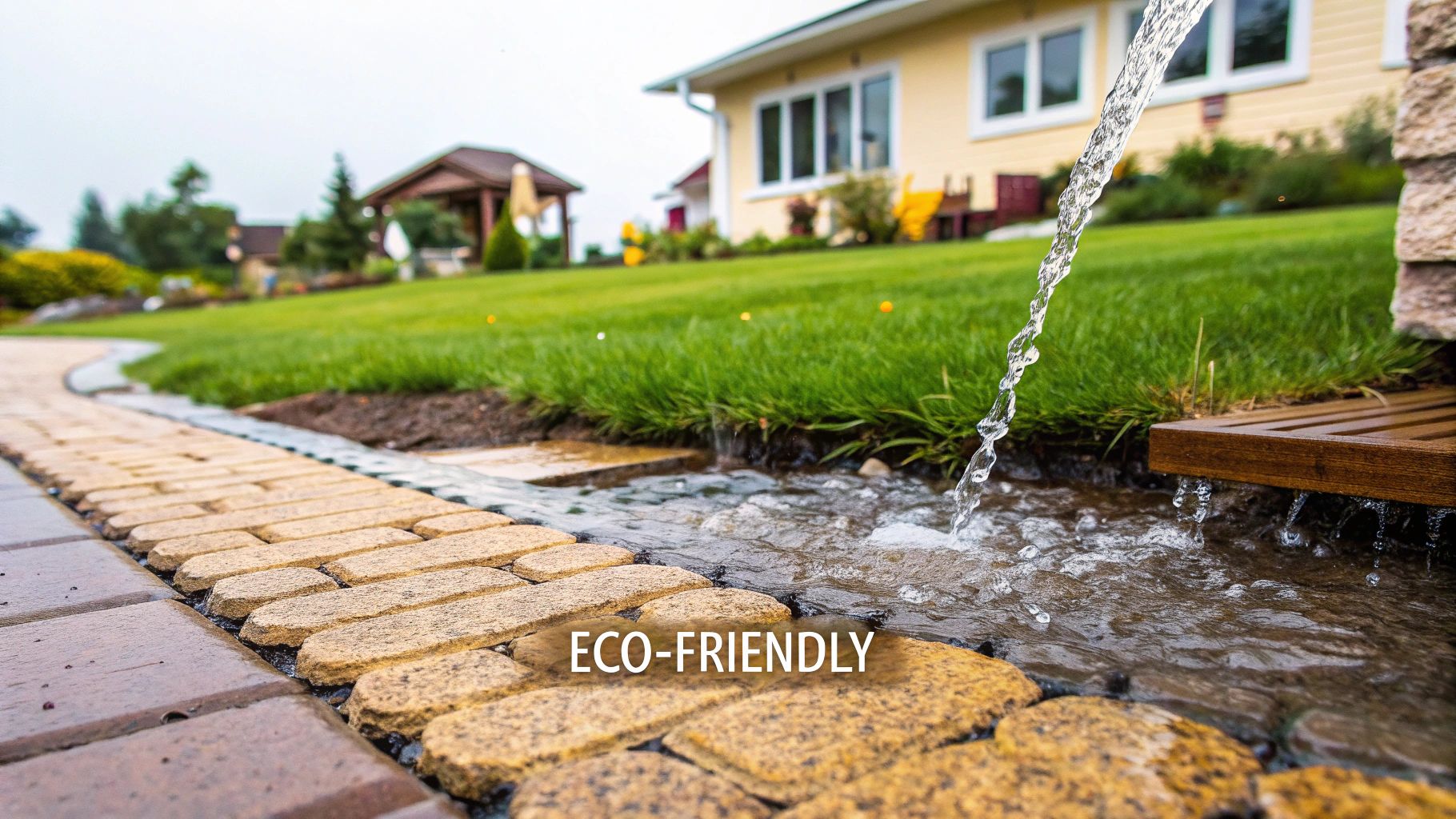
Once you understand the benefits of permeable paving, the exciting part begins: choosing the right material for your project. This isn't a one-size-fits-all situation. The perfect choice for a sunny patio in Brownsville will likely differ from the demands of a bustling commercial parking lot in Corpus Christi.
Each material brings its own unique blend of style, performance, and durability. Making the right call from the start ensures your new surface doesn't just look incredible but also works as intended for years to come. Let's walk through the most common permeable paving types we install for clients across South Texas.
Permeable Interlocking Concrete Pavers (PICP)
For driveways, garden paths, and patios, Permeable Interlocking Concrete Pavers (PICP) are almost always a top contender. Unlike a solid slab of concrete, a PICP system is made up of individual, high-strength pavers designed with small, engineered gaps between them.
These gaps are filled with a special type of clean, fine gravel that lets water pass straight through into the layered aggregate base underneath. It’s a simple, elegant solution.
The real beauty of PICP lies in the sheer design freedom they offer. Pavers are available in a massive range of shapes, colors, and textures, giving you the power to create a look that perfectly matches your home's character. They’re a fantastic way to boost curb appeal while solving drainage problems. This popularity helps explain why the global paver blocks market was valued at $4.6 billion in 2024. You can discover more about this market growth and what's driving it.
Pervious Concrete
Imagine regular concrete, but with a network of tiny, interconnected pores running all the way through it. That’s pervious concrete. It’s made using a special mix of cement, water, and coarse aggregate, but intentionally leaves out most of the sand. This creates a strong, rigid pavement with a unique, open-pored texture that water flows right through.
Because of its incredible strength and drainage capacity, pervious concrete is the go-to for larger, high-traffic areas. It's a true workhorse material, perfect for parking lots and commercial driveways where performance is the number one priority.
While it may not have the same decorative flair as individual pavers, its clean, modern aesthetic and robust performance make it a smart investment for businesses in San Antonio or Harlingen needing an efficient, low-maintenance surface.
Porous Asphalt
At a glance, porous asphalt looks just like the traditional blacktop you see on roads everywhere, but its inner workings are completely different. Much like pervious concrete, it’s made by removing the fine particles from the standard asphalt mix. This process leaves a web of air pockets that allow rainwater to drain through the surface into the sub-base below.
It delivers that classic, smooth blacktop appearance, making it a great fit for parking areas and driveways where a traditional look is preferred. Ultimately, the choice between these materials comes down to your property’s specific needs and your personal style. Each is a fantastic tool in our hardscaping toolkit for building beautiful, resilient outdoor spaces.
Comparing Permeable Paving Options
To help you visualize the best fit for your South Texas property, we've broken down the key differences between these popular materials. This table compares them based on where they shine, what they look like, and what it takes to keep them in top shape.
| Material Type | Best For | Aesthetic Appeal | Typical Maintenance |
|---|---|---|---|
| PICP | Driveways, patios, walkways, pool decks. Excellent for residential projects. | High. Huge variety of colors, shapes, and textures for custom designs. | Regular sweeping. Occasional deep cleaning to remove fine sediment from joints. |
| Pervious Concrete | Parking lots, access roads, large commercial driveways. Ideal for heavy use. | Moderate. Clean, utilitarian look with a unique, open-pored texture. | Periodic vacuuming or pressure washing to keep pores from clogging with debris. |
| Porous Asphalt | Parking lots, driveways, bike paths. Great for a traditional blacktop look. | Moderate. Smooth, uniform, and dark surface similar to conventional asphalt. | Sweeping and gentle washing. Avoid sand or sealant applications that would block pores. |
Each option offers a fantastic way to manage stormwater, but as you can see, they are tailored for different applications and visual goals. Choosing the right one is the first step toward a successful, long-lasting installation.
Why Professional Installation is Non-Negotiable
A permeable paving system is a significant investment in your property, but its success depends entirely on what’s happening beneath the surface. This isn't like pouring a simple concrete slab. It's a sophisticated, multi-layered drainage system where every detail, from the dirt up, has a job to do. Cutting corners or using the wrong materials can cause the entire system to fail, turning a beautiful new driveway or patio into an expensive problem.
The path to a durable permeable surface starts with a thorough site assessment. An experienced crew will analyze your property’s unique soil type, the grade of the land, and the local water table—all crucial factors here in South Texas. This initial analysis dictates exactly how deep to excavate, ensuring the system is built to handle our region’s notorious downpours.
The Foundation of Performance: The Sub-Base
With the site prepped, the most critical phase begins: constructing the sub-base. This isn't just a pile of gravel. It's an engineered reservoir built with specific layers of clean, angular aggregate rock. Each layer is carefully graded and compacted to create a rock-solid foundation that provides structural support and maximizes water storage.
A poorly built sub-base is the number one reason these systems fail. If the wrong type of rock is used, or if it isn't compacted correctly, the surface above can shift, sink, or clog. This is where professional expertise isn't just a good idea—it's essential for a reliable, long-lasting result.
This diagram shows how a properly installed system works to manage stormwater on-site.
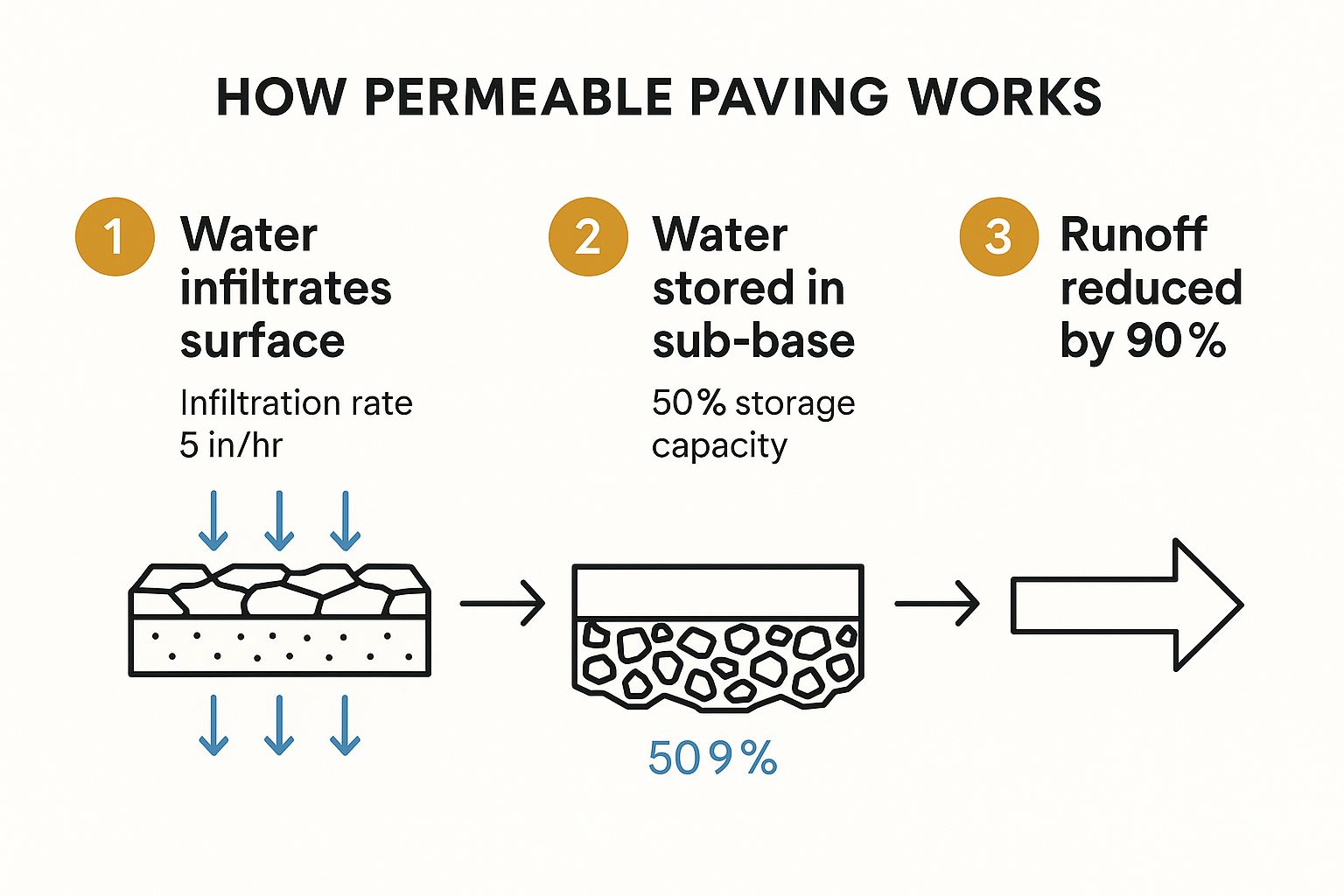
As you can see, a well-designed system can reduce stormwater runoff by up to 90%, capturing and holding rainwater right where it falls to prevent flooding and erosion.
Precision from Start to Finish
Once the sub-base is perfect, the surface material is installed with painstaking care. This involves precise alignment, consistent joint spacing, and heavy-duty edge restraints to lock the entire grid of pavers together and prevent spreading under the weight of vehicles.
To finish the job, the joints between pavers are filled with a specific type of small, clean aggregate. This material allows water to seep through while providing final interlocking strength. Using regular sand will clog the system in no time.
A permeable paving system is a perfect example of the whole being greater than the sum of its parts. Every single layer, from the excavated soil to the final joint filler, must work in harmony to deliver the performance you expect.
Getting these results demands specialized machinery and skilled operators. For any landscaping company tackling these complex jobs, understanding options for construction equipment financing is key to being properly equipped. Before we lay a single paver, our team handles the initial site clearing and prep work. You can explore our professional demolition and site preparation services to see how we manage these projects from the ground up.
Simple Maintenance for Long-Lasting Results
One of the first questions we get from property owners in Corpus Christi and San Antonio is, "What kind of upkeep does permeable paving need?" The answer is a welcome surprise: maintaining permeable pavement is incredibly simple.
These surfaces are built to last, but just a bit of routine care will keep them working at peak performance for decades, ensuring you get the most out of your investment. The main goal of maintenance is to keep the pores open. If leaves, fine sediment, or other debris clogs the gaps, water can't drain through. Luckily, keeping things clear is easy.
Simple Steps for Long-Term Performance
Think of it like tending a garden. A little attention now and then prevents much bigger problems later. A professionally installed system is exceptionally tough.
Here’s what you need to do to keep your hardscape in prime condition:
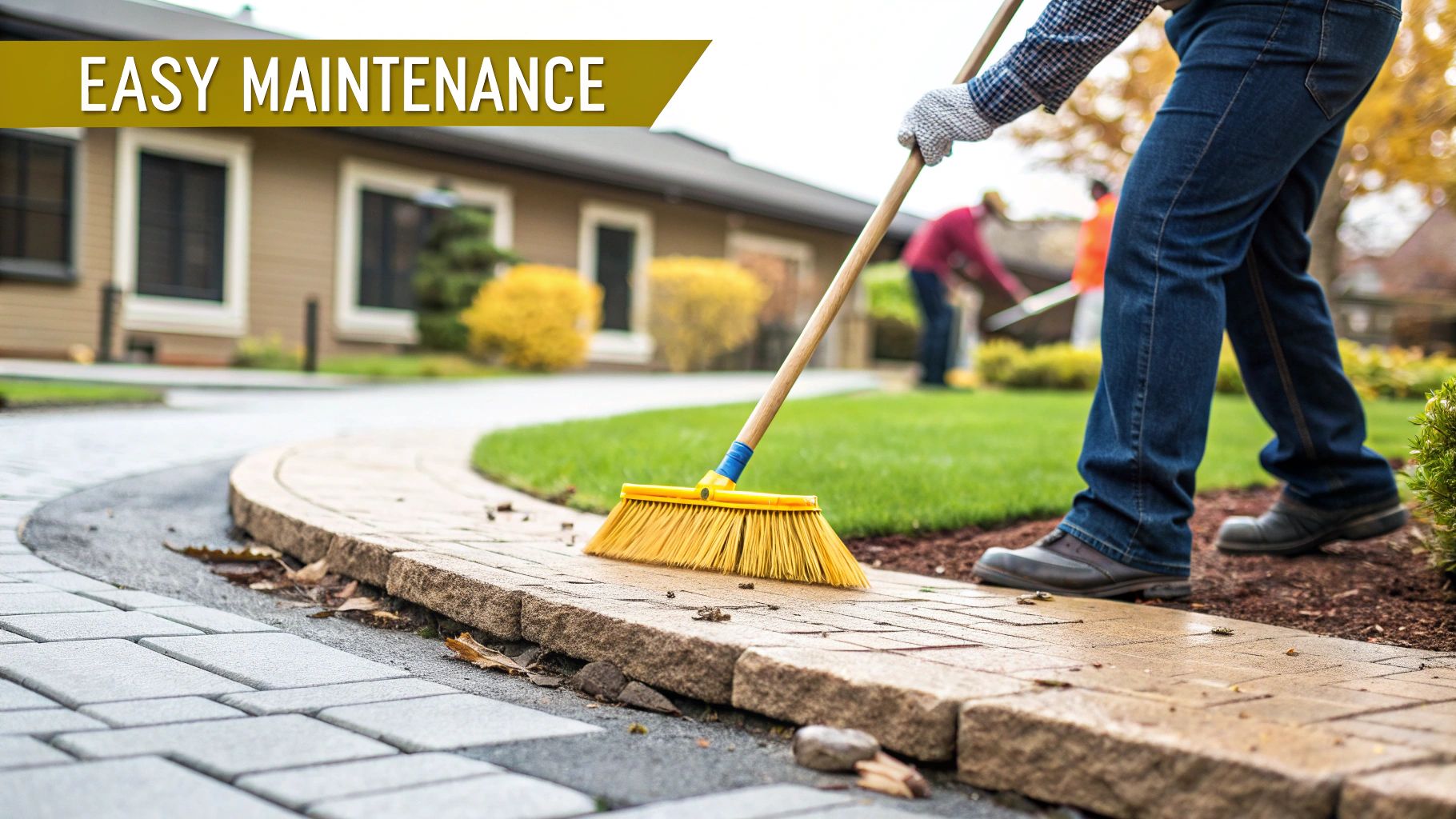
- Regular Sweeping: The single most effective task is to sweep the surface with a stiff-bristled broom to clear away leaves, grass clippings, and other debris.
- Occasional Rinsing: A light spray with a garden hose can wash away fine dust and dirt that settles into the joints over time.
- Weed Prevention: If you spot a rogue weed, pull it by hand. A properly installed system with the right joint material makes it very difficult for weeds to grow in the first place.
- Avoid Contaminants: Never use regular sand or apply sealants to a permeable surface. These materials will instantly clog the pores and stop the system from draining.
When to Call in the Professionals
While your day-to-day care is straightforward, there are times when a deeper clean is needed, especially for high-traffic commercial lots. Over a few years, very fine sediment can work its way deep into the joints.
For a true restorative cleaning, professional pressure washing services are the way to go. Specialists use equipment that can gently lift out compacted sediment without damaging the joint material, restoring your pavement’s drainage capacity.
The rising interest in permeable paving is part of a global move toward smarter, more sustainable infrastructure. In 2024, the global market for permeable pavement was valued at $19.23 billion and is projected to climb to nearly $30.59 billion by 2032. You can read the full research about these market trends to see how fast these solutions are being adopted. At Fischer Landscaping, we provide the expert care needed to ensure your South Texas property remains a beautiful and functional part of this positive shift.
Ready to Transform Your Property with a Smarter Drainage Solution?
It’s time to stop fighting with puddles, worrying about runoff after every storm, and dealing with a perpetually soggy lawn. Permeable paving isn’t just a trend; it's a proven, beautiful, and environmentally sound solution perfectly suited for the unique water challenges we face right here in South Texas.
When you invest in a professionally installed permeable system from Fischer Landscaping, you’re not just upgrading your driveway or patio. You're actively protecting your property's value, boosting its curb appeal, and making a real contribution to a healthier local watershed.
A thoughtfully designed hardscape does more than just look good—it solves problems. It turns a drainage liability into a functional and elegant asset for your home or business in Corpus Christi or San Antonio.
If you’re ready to put your drainage issues behind you for good, the next step is simple. Reach out to Fischer Landscaping for a complimentary consultation. Our experts are ready to design a hardscape that is as smart as it is stunning.
And for homeowners looking to take water conservation even further, it’s worth it to explore grey water recycle systems to maximize on-site water efficiency. Our goal is to provide you with lasting solutions that not only enhance your property but also protect the South Texas environment we all call home.
Your Top Questions About Permeable Paving Answered
As property owners across South Texas look into permeable paving, a few key questions always come up. Here are the honest, straightforward answers from our team of experts.
Isn't Permeable Paving More Expensive Than Regular Concrete?
It’s true that the initial installation cost for a permeable system can be higher than a simple concrete slab. However, it is crucial to look at the total value.
A traditional concrete driveway often requires expensive additions like French drains or other complex drainage systems to manage water runoff. A permeable surface has stormwater management built right in, so you often avoid those extra costs. This is an investment that prevents future headaches like erosion and foundation damage, saving you significant money down the road.
Can It Really Handle Heavy Vehicles?
Absolutely. A common misconception is that "permeable" means weak, but that couldn't be further from the truth. The real strength of these systems is the engineered sub-base of layered, compacted aggregate underneath the pavers.
This foundation does the heavy lifting. When designed and installed by an experienced team like Fischer Landscaping, it can easily support:
- Everyday cars and pickup trucks
- Heavy RVs or boat trailers
- Commercial delivery trucks
Whether it's a driveway in Brownsville or a parking area in Corpus Christi, a properly installed permeable system is built to withstand serious weight and constant use.
How Long Will a Permeable Surface Last?
With professional installation and simple routine care, a permeable paver system is built for the long haul. You can realistically expect it to last 25 to 50 years, which often surpasses the lifespan of a typical asphalt or concrete installation.
Plus, if one paver ever gets damaged, it can be easily replaced individually. This ability to make simple spot repairs means the system's life can be extended for decades.
Will Weeds Grow Through the Pavers?
This is a common worry we hear from homeowners, but it’s one that a professional installation completely solves. The secret lies in using the correct joint compound—typically a polymeric sand or fine aggregate that resists weed growth.
When installed correctly, this material hardens to form a solid, durable barrier that locks the pavers together and makes it incredibly difficult for weeds to sprout. This keeps your surface looking clean and beautiful with minimal effort.
Ready to see how a modern, durable hardscape can solve your drainage issues for good? The expert team at Fischer Landscaping is here to design and install the perfect permeable solution for your South Texas property.