Installing a French drain is a classic, time-tested solution for serious water problems. The process involves digging a carefully sloped trench, lining it with a special filter fabric, and then laying a perforated pipe inside. After that, you fill the trench with gravel and run the pipe's outlet to a safe runoff area, like the street or a dry well.
This system is brilliant in its simplicity. It intercepts and collects groundwater before it can cause trouble, protecting your home's foundation and keeping your yard from turning into a swamp. For anyone dealing with the persistent water issues common in South Texas, a French drain is a game-changer for protecting your property value.
Why Your South Texas Property Needs a French Drain
If you live anywhere from Corpus Christi to San Antonio, you know the challenge: heavy rains and dense, clay-rich soil. It’s a combination that almost guarantees drainage problems, leaving you with standing water that can kill your lawn, damage plant roots, and even threaten your home’s foundation.
A French drain is an underground drainage system built specifically to handle these conditions. Instead of letting water sit on the surface, a French drain creates an easy path for it to follow. The perforated pipe, nestled in a bed of gravel, collects the excess groundwater and channels it safely away from your property. It’s a powerful, long-term solution for preventing water from pooling where it shouldn’t.
Common Signs of a Drainage Problem
Not sure if you have a serious drainage issue? Your property will give you clues. Keep an eye out for these tell-tale signs:
- A Soggy Lawn: Do you have patches of your yard that stay wet and spongy for days after a storm?
- Water Pooling: Are puddles forming near your home’s foundation, on patios, or in low-lying areas?
- Foundation Issues: Have you noticed water seeping into your basement or crawl space? Look for white, chalky mineral deposits on the foundation walls.
- Eroding Soil: Is soil washing away, especially on sloped sections of your yard?
The Value of a Professional Drainage Solution
While installing a French drain might sound like a straightforward landscaping project, its success hinges on getting the details exactly right. A mistake in the slope, the wrong materials, or poor placement can make the entire system useless—or worse, create new problems.
For homeowners and property managers in the Rio Grande Valley, this is where professional Brownsville landscaping services are invaluable. An experienced team has the right equipment and, more importantly, the local knowledge to handle our challenging soil conditions efficiently and correctly the first time.
A properly installed French drain isn’t just about drying out a soggy yard. Think of it as a crucial investment in protecting the structural integrity of your home. By relieving the hydrostatic pressure that builds up against your foundation, you're preventing cracks and costly future repairs.
Putting in a French drain is a big step, but it's part of a larger picture of smart water management and home maintenance. For a broader perspective on taking care of your property, a guide like Your Ultimate Yearly House Maintenance Checklist can help you identify other potential issues before they become expensive problems.
Your Pre-Installation Project Plan
A successful French drain is built on a solid plan, not just a strong back. Homeowners often jump into digging without any prep work, and that’s one of the biggest mistakes you can make. This planning stage is where you set your project up for success, ensuring the system works exactly how you need it to. Before you ever put a shovel in your South Texas yard, take the time to map out the entire project. Think of it as your blueprint—it’ll save you from costly headaches and wasted weekends down the road.
Mapping The Water Flow And Drain Path
First, you need to become a water detective on your own property. The next time you get a heavy rain in Corpus Christi or Harlingen, grab a notepad and watch how the water moves. See where it pools, where it flows fastest, and find the lowest spots in your yard. You're basically creating a natural drainage map.
Your goal is to intercept that water at the source and give it a much better place to go. The ideal path for your French drain starts at the highest point of the problem area and runs downhill, letting gravity do all the heavy lifting. We recommend using marking paint or stakes to outline this proposed route to help visualize how the drain will capture and redirect that flow away from your foundation or that perpetually soggy part of the lawn.
The Most Important Phone Call You Will Make
Before any digging starts—and this is a critical, non-negotiable step—you must call 811. This is the free, federally designated "Call Before You Dig" number, and it connects you with all the local utility companies. They’ll send a locator out to your property to mark the exact position of underground lines for gas, water, electricity, and communications.
Hitting a utility line isn't just an inconvenience; it can be incredibly dangerous and lead to thousands of dollars in fines and repair costs. That one phone call protects you, your family, and your neighbors. Sometimes, a project might also require clearing out old concrete paths or other obstructions. That's a job best left to the pros who offer demolition services to ensure the site is prepped safely and correctly.
Safety First: The 811 service is absolutely essential. The average cost to repair a damaged utility line can easily run into thousands of dollars. Planning a few days ahead for this service is a small investment that prevents a catastrophic mistake.
Calculating Slope And Trench Depth
For a French drain to function properly, it needs a consistent downward slope. The rule of thumb in the industry is a minimum 1% grade. This means your trench should drop at least one inch for every eight feet of length. This slight, steady decline is all gravity needs to pull water through the pipe and away from your home.
To check your slope as you plan (and later, as you dig), a simple string line tied between two stakes with a line level works perfectly. Don't assume a deeper trench is always better. For most residential jobs, a trench that's about 8-12 inches wide and 18-24 inches deep is more than enough to house the pipe and the necessary gravel. For some extra tips from the pros, this new drain installation guide is a great resource to look at during your planning stage.
Excavating the Trench with Precision
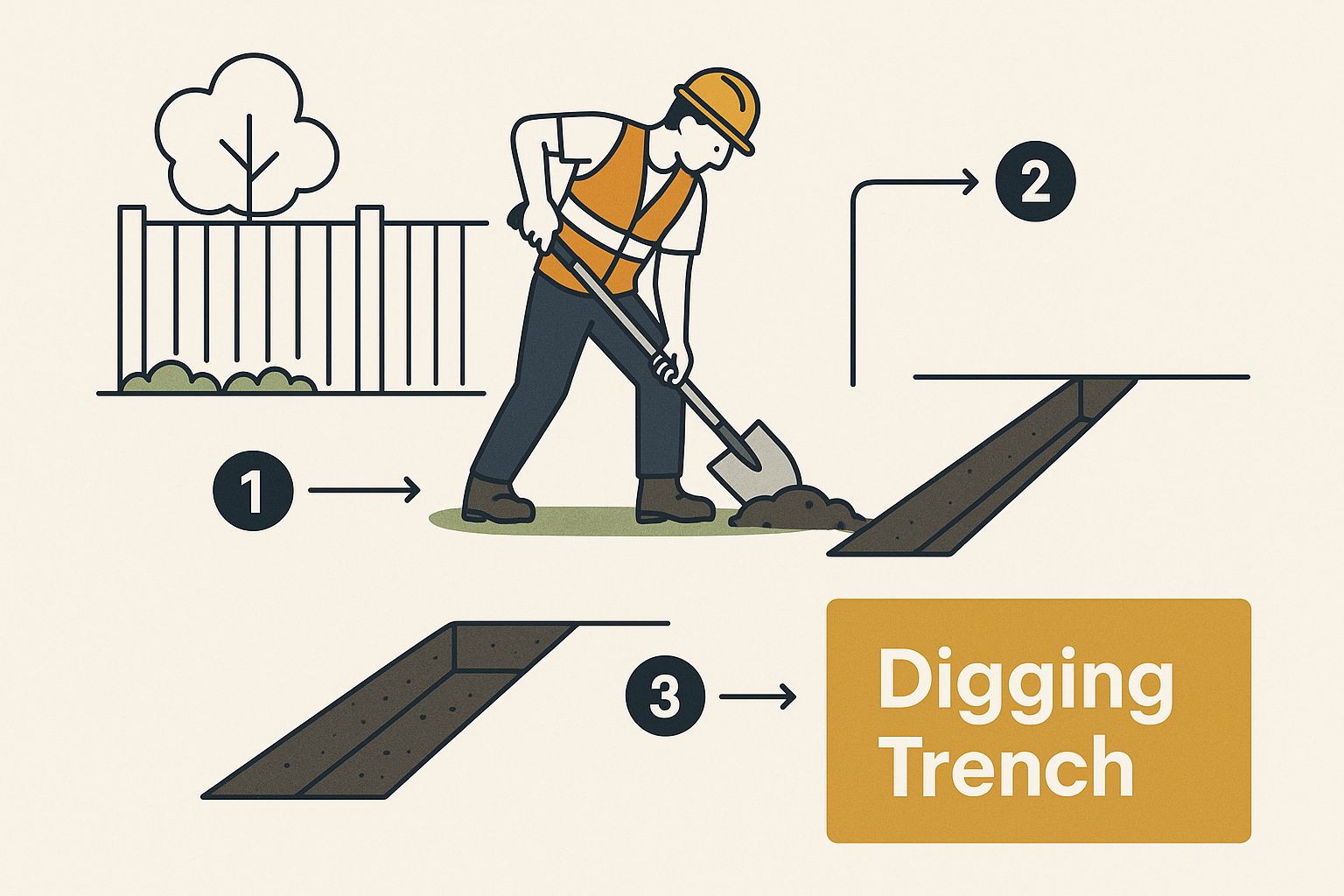
With your plan in hand, it's time for the most physically demanding part of any French drain installation. How well you dig this trench will make or break the entire project. Precision here is everything; it’s the difference between water flowing away smoothly and a stagnant, muddy mess that defeats the whole purpose.
Your first move is to bring your plan to life. Those stakes and string you put down earlier? That's your guide. This isn't just a line to follow; it's your critical reference for maintaining that 1% slope from start to finish.
Shovel or Trencher: Which Is Right for You?
So, how are you going to dig this thing? Your choice really boils down to the size of the job, your budget, and what kind of soil you're dealing with, especially here in South Texas. For most folks, it's a choice between good old-fashioned muscle and renting some machinery.
- Digging by Hand: If you're only putting in a short drain—say, under 50 feet—and your soil is relatively soft, a solid trenching shovel will do the trick. The advantage is total control over the depth and slope. The downside? It's back-breaking work. In the dense clay we often see around San Antonio, digging by hand can take a full weekend of hard labor.
- Renting a Trencher: For longer runs or if you're up against compacted, rocky soil, do yourself a favor and rent a walk-behind trencher. These machines will carve out a perfect trench in a fraction of the time, saving your back and a lot of sweat. They do require some careful handling, though, and might be overkill for a tiny project.
Whether you go with a shovel or a machine, the goal is the same: create a clean, consistent channel for water to follow.
Maintaining the Perfect Slope
I can't stress this enough: a flat or improperly sloped trench is the number one reason DIY French drains fail. Even one small dip or hump can create a low point where water just sits. This is where your string line and a line level become your best friends.
You have to be disciplined about this. Every few feet, stop what you're doing and check your depth against the string. Get your tape measure in there and confirm that the bottom of the trench is holding that consistent grade. Yes, it's tedious, but it's absolutely non-negotiable. This is what ensures gravity does the work for you.
For our clients in Corpus Christi and the Coastal Bend, this is where professional installation really shines. The Fischer Landscaping team uses laser levels to guarantee a perfectly graded trench every single time. We can get done in a few hours what might take a homeowner an entire weekend, and with far greater accuracy.
Managing the Excavated Soil
You'll be shocked at how much dirt comes out of the ground. A 100-foot-long trench can easily produce over 70 cubic feet of dirt. You absolutely need a plan for it.
Here’s a simple pro tip: lay a large tarp down right next to where you’ll be digging. As you excavate, toss the soil directly onto the tarp. This keeps the dirt off your grass, making cleanup a thousand times easier and saving your lawn.
Once the drain is in, you'll only use a small portion of this soil to backfill the very top layer. The rest is excess. Think ahead about what to do with it. You could fill low spots elsewhere in the yard or build up a garden bed. Planning for this upfront keeps you from being stuck with an ugly mountain of dirt. For bigger jobs, professional landscaping services typically include soil removal, which is a huge relief for property owners in Harlingen and Brownsville.
Assembling the Core Drainage System
Alright, you've dug your trench and nailed the slope. Now comes the part that really separates a pro-level French drain from one that's going to clog up in a few years: assembling the core drainage system.
This isn't just about dropping a pipe in a ditch. We're building a multi-layered system designed to filter water and keep it flowing smoothly for the long haul. This is where the techniques we use for clients in Brownsville and San Antonio really pay off.
Laying the Geotextile Fabric Foundation
First thing in is the geotextile fabric, often called filter fabric. Its whole job is to let water in but keep out all the fine silt and clay that will inevitably try to clog the system.
You'll want to carefully unroll the fabric and press it into the trench, making sure it lines the bottom and runs up both sides. Be generous here—leave plenty of extra fabric on either side. You’ll need enough to fold completely over the top of the entire system later. Don't skimp on this step; it's absolutely crucial for the longevity of your drain.
Creating the Gravel Base
With the fabric in place, it's time for the first layer of gravel. Shovel in about a 2-3 inch layer of clean drainage gravel to create a solid bed at the bottom of the trench.
This initial layer does two things. It gives the pipe a stable, even surface to sit on, and it creates the first open channel for water to enter the system. A quick pass with a garden rake will help you spread it out evenly while preserving that all-important slope you graded earlier.
Positioning the Perforated Pipe
Now for the main event: the perforated pipe. This is where many DIY projects go wrong. For the drain to work effectively, you must lay the pipe with the small drainage holes facing down.
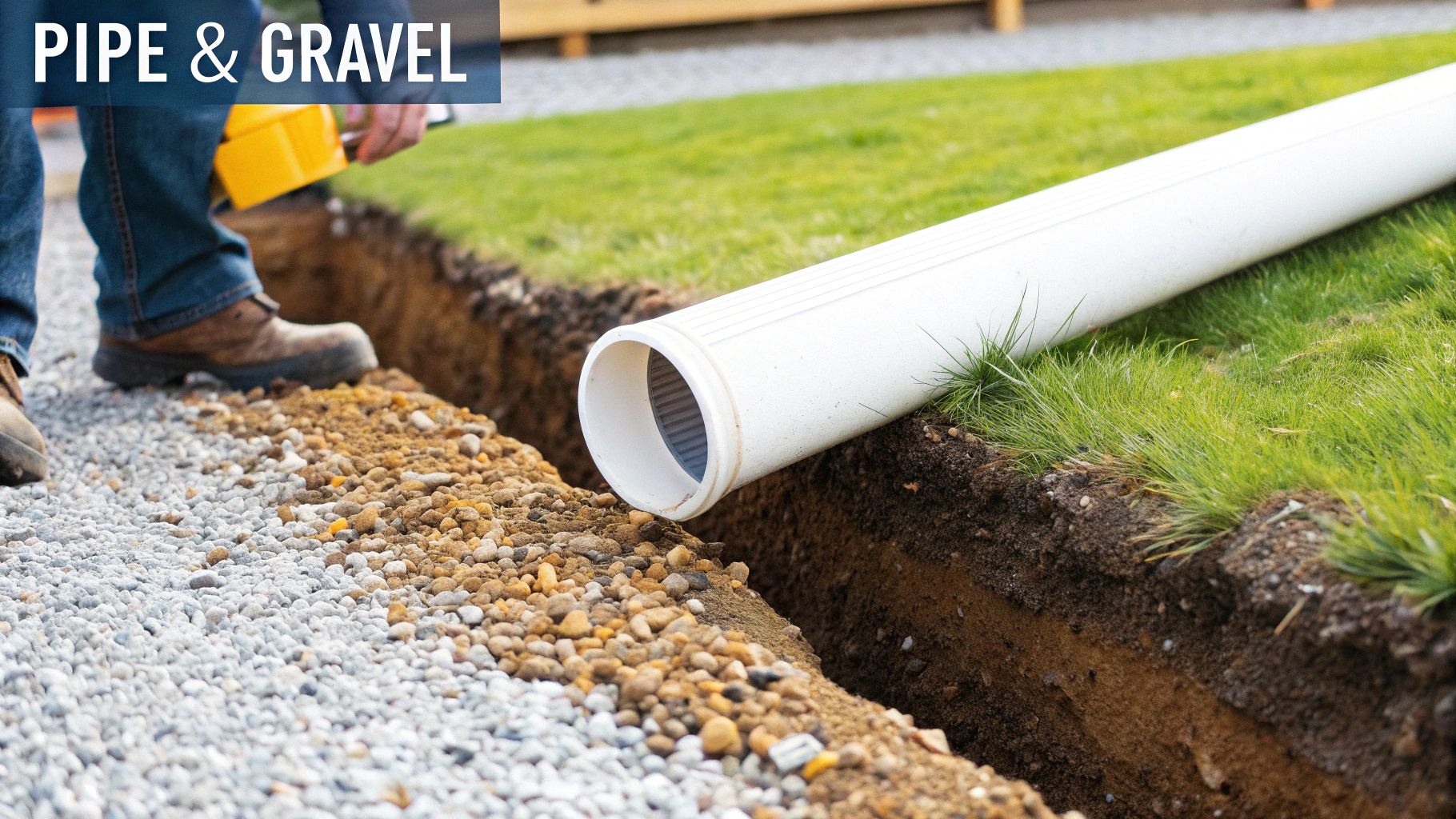
It seems counterintuitive to some, but here’s why it’s non-negotiable: groundwater rises from below. With the holes facing down, the pipe starts collecting and draining that water as soon as it enters the gravel bed. If you install it with the holes facing up, the trench has to nearly fill with water before it can even begin to drain. The system just won't be as responsive or effective.
Pro Tip: When you connect sections of pipe, make sure the joints are tight. For rigid PVC, use PVC cement. For flexible corrugated pipe, use the proper snap-in connectors. The last thing you want is for sections to separate over time as the ground settles.
Backfilling With More Gravel
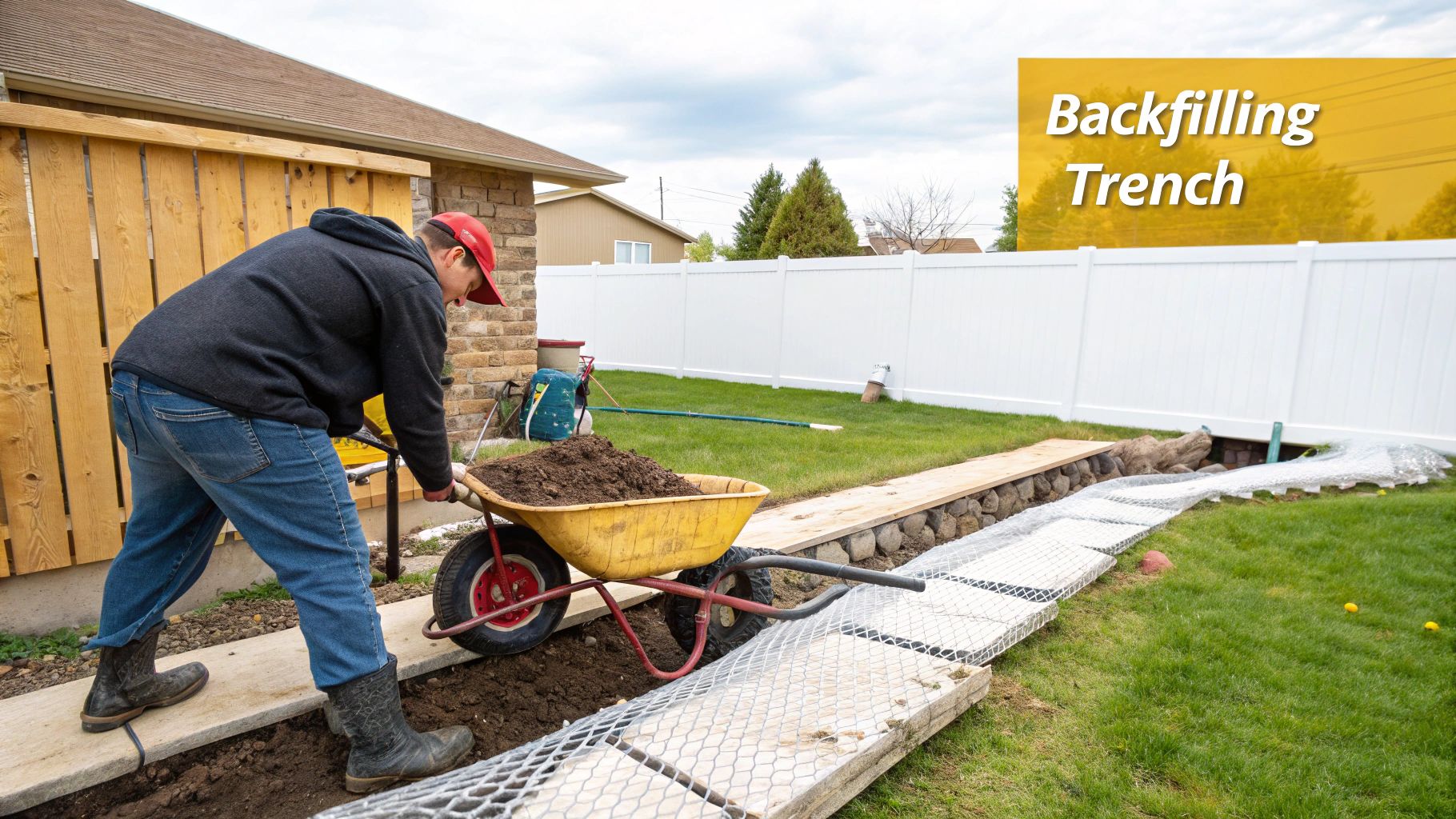
Once the pipe is sitting snugly on its gravel bed, you can start backfilling the trench. Carefully add more drainage gravel, making sure to surround the pipe on all sides. Keep going until the gravel is about 3-4 inches from the top of the ground.
Try not to just dump the gravel in, as a heavy load can knock the pipe out of alignment. A good trick is to gently shake the pipe as you fill around it, which helps the gravel settle into all the voids and eliminates air pockets. This gravel blanket is what creates that large, permeable zone for water to easily find its way to the pipe.
Building a system that will stand the test of time is a core part of our professional hardscaping solutions. It's all about getting these layers right.
The Final Fabric Wrap
The last step in assembling the core system is to close everything up. Take that extra fabric you left on the sides and fold it over the top layer of gravel. You want the two sides to overlap in the middle, creating a protective "burrito" that seals the pipe and gravel off from the outside world.
This wrap is your best defense against dirt and roots invading from above. If you have to use multiple pieces of fabric, make sure they overlap by at least 12 inches to maintain that protective barrier.
With the core system built and wrapped, you're ready for the finishing touches.
Finishing the Project and Managing Runoff
You've done the heavy lifting and assembled the core of your French drain. Now for the crucial final steps: managing the water runoff and making the whole system disappear into your landscape. After all, a drain is only as good as its exit strategy.
Simply letting water pool at the end of the pipe would defeat the entire purpose. The goal is to get that water completely off your property or direct it to a spot where it won't cause any more trouble for your lawn or your neighbors. This is where a functional solution becomes a polished, professional feature.
Choosing the Right Water Outlet
Where the water ends up is just as important as how it gets there. We’ve seen a few effective options work really well for properties all over South Texas, from Corpus Christi up to San Antonio.
- Daylighting to a Curb: This is the go-to solution for most properties. You simply run the pipe out to the street curb so water can flow into the municipal storm drain. I always recommend finishing it with a pop-up emitter or a grate to keep leaves, critters, and other debris from clogging the line.
- Creating a Dry Well: What if a curb isn't an option? A dry well is an excellent alternative. It's really just a buried pit filled with gravel that collects the water and lets it slowly soak back into the ground, far away from your home’s foundation.
- Integrating a Rain Garden: If you're looking for an eco-friendly and beautiful option, direct the runoff into a rain garden. These are shallow, planted depressions filled with native, water-loving plants that drink up the excess moisture. It turns a drainage problem into a lovely landscape feature.
Finalizing the Surface
With the outlet sorted, it’s time to finish the trench. You basically have two choices here, and it comes down to aesthetics and maintenance.
One popular approach is to cover the gravel with a layer of topsoil and then lay down sod or plant grass seed. This makes the drain completely invisible. For this to work seamlessly, we highly recommend professional turf installation to ensure the new grass establishes properly without compromising the drain's function.
Your other option is to create a zero-maintenance, decorative finish. Just fill the last few inches of the trench with attractive river rock or gravel. This creates a clean, dry creek bed look that fits beautifully into many landscape designs and, best of all, you'll never have to mow over it.
A well-finished drain should enhance your property's look, not detract from it. At Fischer Landscaping, our commercial landscaping projects often incorporate drainage as a design element, proving that practical solutions can also be beautiful.
Long-Term Upkeep and Professional Insights
A French drain is designed to be low-maintenance, but that doesn't mean "no-maintenance." A little bit of attention goes a long way.
Every so often, take a walk and check the outlet. Make sure it’s clear of leaves, grass clippings, or anything else that could block the flow. If you ever see water backing up or the ground getting soggy again, it’s a red flag that you might have a clog that needs clearing.
The reality is, the quality of the initial installation determines everything. While a DIY project can be tempting, the cost of a professional installation is an investment in peace of mind. Getting it done right the first time protects your property and ensures your drain will work effectively for years to come.
Got Questions About French Drains? We've Got Answers.
When you're dealing with a serious water problem, you're bound to have questions. Over the years helping homeowners and businesses across South Texas, we’ve heard just about all of them. Let’s clear up some of the most common ones so you can move forward with confidence.
How Do I Know If I Really Need a French Drain?
This is the big one. A French drain is a fantastic tool, but only for the right problem: persistent groundwater. It's not for surface runoff from a quick downpour; it's for water that's already soaked into the soil and has nowhere to go.
You'll know it's time to consider a French drain if you're seeing these tell-tale signs long after the rain has stopped:
- The Never-Ending Puddle: You have spots in your lawn that stay mushy and waterlogged for days, no matter what. That’s a classic sign of oversaturated soil from below.
- Water Creeping Up on Your Foundation: Seeing water pool right against the base of your house is a major red flag. This creates what's called hydrostatic pressure, which is just a fancy way of saying water is pushing hard on your foundation, looking for a way in.
- That Musty Basement Smell: If your crawl space or basement has a damp, earthy smell that won't go away, it often means moisture is seeping through the concrete. A French drain is designed to stop that water before it ever reaches the wall.
Here in the San Antonio area, our heavy clay soil makes these issues incredibly common. That dense soil acts like a bowl, preventing water from draining down. Instead, it moves sideways, underground, usually straight toward your foundation.
What's the Difference Between a French Drain and a Swale?
Great question. It really gets to the heart of choosing the right fix. Both manage water, but they work in completely different ways and solve different problems.
A swale is basically a broad, shallow, landscaped ditch. It's on the surface, often covered in grass, and you can see it. Its only job is to catch surface water—rain flowing across your yard—and gently guide it somewhere else.
A French drain, on the other hand, is an underground system. It’s a hidden trench with a perforated pipe and gravel that intercepts groundwater—the water that’s already soaked into the soil. Once it’s installed, you won’t even know it's there. For some properties in Corpus Christi or Brownsville, the ultimate solution is actually a combination of both.
Should I Install This Myself or Hire a Pro?
A DIY French drain is possible. If you’re in good shape, have a couple of free weekends you’re willing to sacrifice to hard labor, and can get your hands on the right rental equipment, you can tackle it.
But let's be realistic about the risks. We've seen a lot of DIY projects go sideways. The most common mistakes are:
- Getting the Slope Wrong: This is the most critical part. If your trench doesn't have a consistent, correct slope, you’ll just create a new underground pond. Even a small miscalculation renders the whole thing useless.
- Hitting a Utility Line: This is dangerous and expensive. Forgetting to call 811 before you dig is a rookie mistake you can't afford to make.
- Causing a Neighbor War: You can't just dump all your excess water onto your neighbor's property. It's a quick way to create a serious dispute and potentially a legal headache.
Professional installation isn't just about paying for labor; it's an investment in getting it right the first time. It’s about a perfectly calculated slope, commercial-grade materials, and a system built to work flawlessly for decades. It’s about safety, efficiency, and peace of mind.
What Does a Professional Installation Cost in South Texas?
Every yard is different, so a flat price is impossible. However, we can give you a solid ballpark figure to work with. For a professionally installed French drain in South Texas, you should budget for somewhere between $25 and $50 per linear foot.
What pushes the price to one end of that range or the other?
- Trench Size: A deeper or longer trench simply means more digging, more pipe, and more gravel.
- Soil Conditions: Digging through our region’s dense, sticky clay is a whole different ballgame than working with sandy loam. It takes more time and tougher equipment.
- Site Access: If your yard has tight corners, steep hills, or lots of obstacles, getting machinery in can be tricky and adds to the labor cost.
- The Exit Point: Running the water out to the curb (a "daylight" exit) is straightforward. Installing a more complex solution like a dry well or a sump pump system will increase the cost.
Knowing these variables helps you understand what goes into a quote. The only way to get a firm number is to have an expert come out and see the property for themselves.
If you're dealing with drainage headaches in Corpus Christi, Harlingen, or anywhere in South Texas, don’t wait for water to cause real damage. The team at Fischer Landscaping can design and install a custom French drain that puts a permanent end to your water woes.
Ready to reclaim your yard? Contact us today for a free, no-obligation quote!