When fleas invade your yard, it can feel like your personal slice of paradise has been taken over. For homeowners and property managers in South Texas, especially in areas like Corpus Christi and San Antonio, our warm, humid climate is a year-round welcome mat for these pests. It’s a perfect breeding ground, which is why taking decisive action isn't just a good idea—it's essential for protecting your family and property. Waiting for them to disappear on their own is a surefire way to end up with a full-blown infestation that quickly makes its way inside.
Reclaiming Your Yard from Fleas
To win the war against fleas, you have to understand your enemy. Their life cycle has four stages: egg, larva, pupa, and adult. Here's the critical part: the adult fleas you see hopping around? That's only about 5% of the total flea population in your yard.
The other 95% are lurking in the soil, grass, and leaf litter as eggs, larvae, and pupae, just waiting for the right moment to emerge. This is exactly why a single spray-and-pray treatment rarely works. You might kill the adults, but a new generation is already lined up to take their place. To achieve lasting results, you have to break the entire cycle.
A Proactive Flea Control Strategy
Getting rid of fleas for good requires a methodical, step-by-step plan that focuses on proactive solutions, not just reactive sprays. This process outlines how to approach the problem from start to finish for maximum impact.
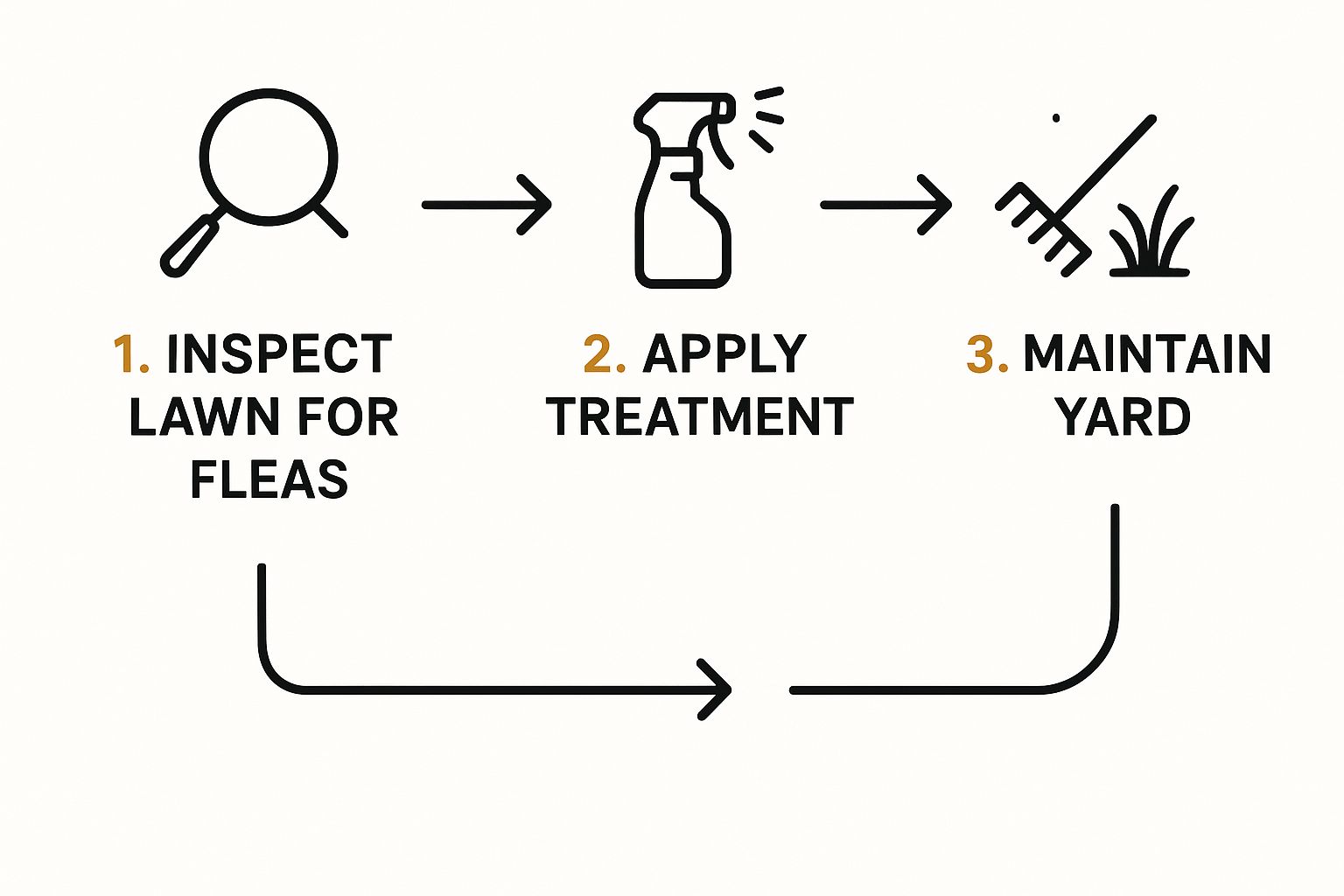
As this image illustrates, effective flea control is a continuous loop of inspection, treatment, and smart maintenance—not a one-and-done task. It’s no surprise that homeowners are taking this more seriously. The global market for flea products hit an estimated USD 7.85 billion in 2024 and is expected to more than double by 2032. This trend reflects a growing understanding of the health risks fleas pose, as you can see in industry research on the growing flea products market.
To put it all together, here's a quick overview of what a comprehensive flea treatment plan looks like.
Your Flea Treatment Strategy At A Glance
This table breaks down the four key stages of tackling a flea problem in your yard, from the initial investigation to keeping them gone for good.
| Phase | Objective | Key Actions |
|---|---|---|
| 1. Landscape Prep | Remove flea habitats | Mow lawn, trim shrubs, clear debris, and de-thatch to expose soil. |
| 2. Initial Treatment | Target all life cycle stages | Apply a combination of an adulticide and an Insect Growth Regulator (IGR). |
| 3. Follow-Up Treatment | Break the cycle completely | Re-apply treatment after 2-3 weeks to catch newly hatched fleas. |
| 4. Long-Term Prevention | Make the yard inhospitable | Maintain landscaping, manage moisture, and use natural deterrents. |
This systematic approach is the only way to ensure you're not just fighting the same battle over and over again.
Lasting flea control isn't just about killing pests; it's about transforming your landscape into an environment where they simply can't thrive. It’s a combination of smart landscaping and targeted solutions.
Ultimately, winning the battle against fleas requires a more thoughtful approach than just grabbing a bottle of insecticide. It starts with creating a yard that's inhospitable to them through strategic landscape maintenance, which is the true foundation of any successful pest management plan.
Here at Fischer Landscaping, we specialize in designing and maintaining beautiful, resilient landscapes that naturally keep pests at bay. If you’re tired of the endless cycle of flea infestations, it might be time for a professional solution. Request a quote today, and let's work together to build a flea-resistant yard you can enjoy again.
Pinpointing Flea Hotspots in Your Landscape
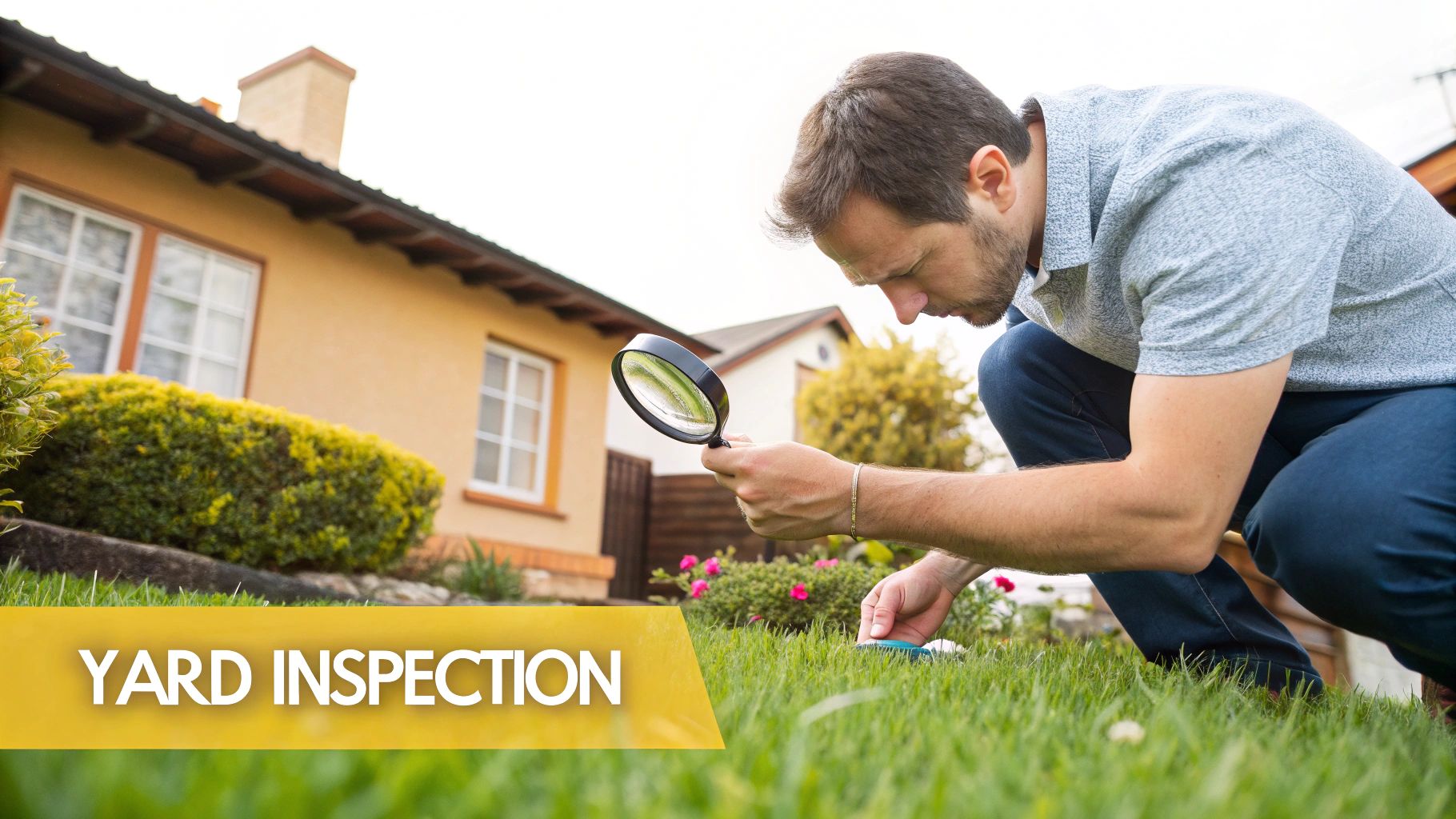
Before you can treat your yard for fleas, you have to learn to think like one. These pests don't set up shop anywhere; they are strategic about surviving the brutal South Texas sun. Fleas need environments that are shady, moist, and protected, which means just spraying your entire lawn is a waste of time and money.
To win this fight, you need to become a bit of a detective. The goal is to create a "flea map" of your yard, marking the exact spots where they're hiding out and breeding. This is the first thing our professionals at Fischer Landscaping do when we arrive at a property, whether it’s in Corpus Christi or Brownsville. It’s the secret to making sure our treatments hit the mark every time.
Where Fleas Love to Hide in South Texas Yards
Fleas aren't fans of open, sun-baked lawns. They stick to the shadows, gathering in sheltered spots where the humidity is high and the temperatures are bearable. When you start your inspection, zero in on these prime locations first:
- Beneath Decks and Porches: The cool, dark, and often damp soil under elevated structures is a five-star resort for fleas.
- Under Dense Shrubbery: Overgrown bushes and the ground beneath low-hanging branches create a perfect, shady umbrella that traps moisture.
- In Tall Grass and Weeds: Think about the areas your mower can't quite reach—along fence lines, behind the AC unit, or in corners. That's where fleas find the cover they need.
- Within Leaf Litter and Pine Straw: Those piles of organic debris are more than just yard waste; they hold moisture and provide a safe haven for flea larvae and pupae to develop.
- Around Pet Resting Areas: If your dog or cat has a favorite shady spot to nap, you can bet that area is a potential hotspot where flea eggs have dropped and are waiting to hatch.
Here's a core principle of flea control I always share with clients: sunlight is nature’s best disinfectant. Flea larvae simply can't survive in hot, dry conditions. That's why you'll almost always find the root of an infestation in those damp, shaded zones.
The "White Sock Test": Confirming Flea Activity
Once you’ve scouted out the likely hiding spots, it's time to confirm if you're dealing with live, jumping adult fleas. The easiest and surprisingly effective way to do this is with the old-school "white sock test." It's simple, but it gives you a real-time look at the scale of your problem.
Just pull a pair of tall white socks up over your pants, all the way to your knees. Then, take a slow walk through the areas you identified as potential hotspots. As you walk, shuffle your feet a bit. The warmth and vibrations mimic a host, encouraging any nearby fleas to jump on for a ride.
After a minute or two, stop and closely inspect your socks. Any adult fleas will show up as tiny, dark specks against the white fabric. This quick test instantly tells you which areas need your immediate attention.
Nailing down these problem areas is the foundation of any successful flea treatment plan. Without this crucial intel, you’re just spraying and praying. For a more comprehensive assessment and a professional strategy built for your yard's unique layout, it's often best to bring in landscaping experts. At Fischer Landscaping, we design detailed landscape maintenance plans that specifically target these pest-prone zones. If you’re in the Harlingen or San Antonio area and need a hand creating a flea-free yard, request a quote and we'll get started.
Preparing Your Yard for Maximum Treatment Efficacy
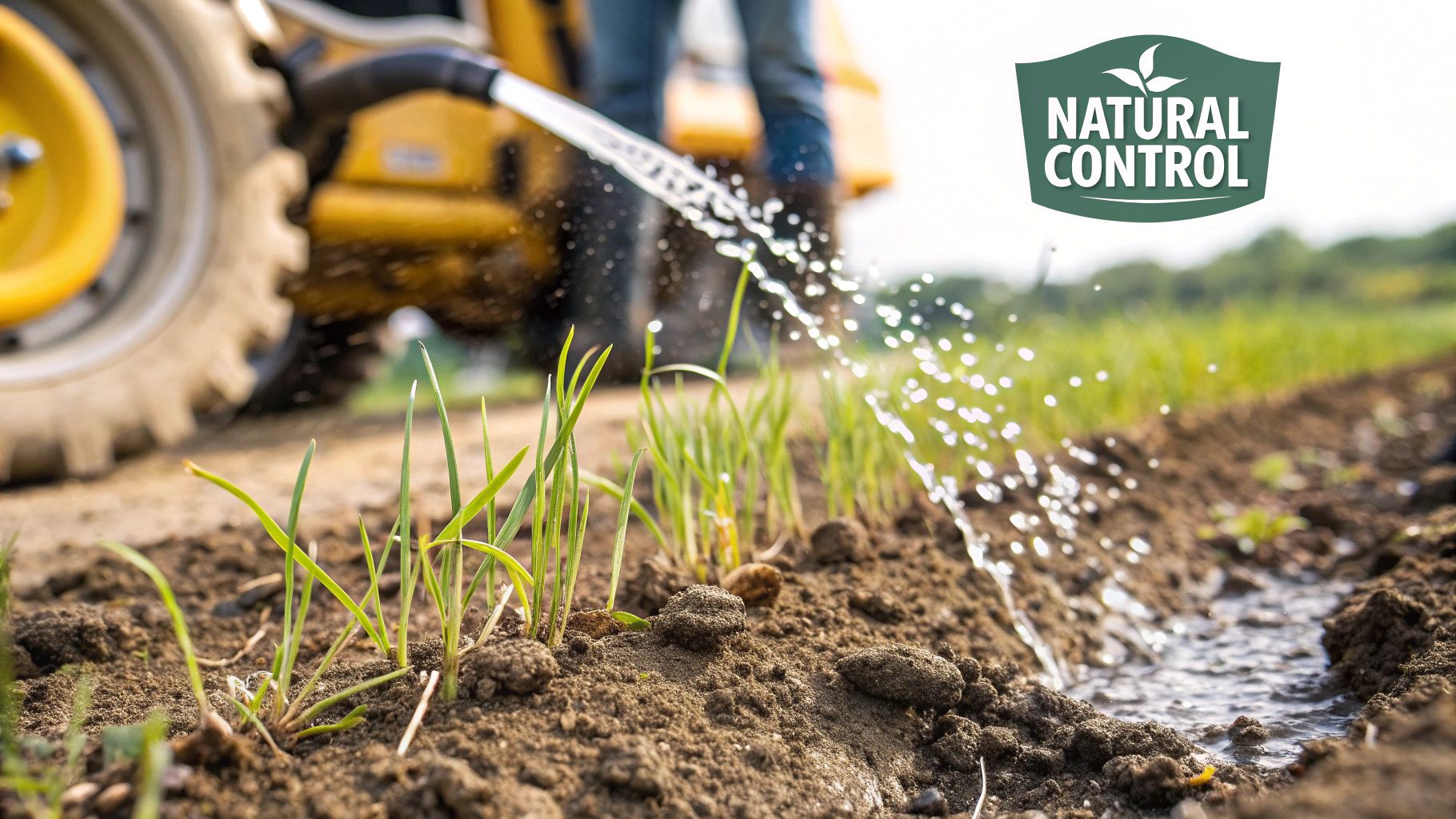
Spraying a flea treatment across an unprepared yard is like trying to paint a dirty wall—it just won’t stick. To get real, lasting results, you have to create an environment where the treatment can actually reach its targets. That means rolling up your sleeves and doing some essential landscape prep work first.
Think of it from the flea's perspective. Their larvae and pupae are hiding in the shadows, tucked away in moist, protected areas. Your mission is to systematically take away those hiding spots, exposing them to sunlight, air, and ultimately, the treatment. For anyone in Corpus Christi or San Antonio battling fleas, this foundational step is absolutely non-negotiable.
Mow Low and Remove Debris
First things first, give your lawn a short haircut. Mowing the grass low strips away that top layer of shady cover that fleas adore. More importantly, it lets sunlight and air get down to the soil, creating a drier, hotter environment that is lethal to flea larvae.
After you mow, be thorough. Rake up and bag all the grass clippings, fallen leaves, and other organic debris. A thick layer of thatch—that dense mat of dead grass and roots between the soil and green blades—is a five-star resort for fleas. It acts like a sponge, trapping moisture and providing a safe, dark place for their life cycle to continue uninterrupted.
The goal of yard preparation is simple: eliminate every possible hiding spot. Fleas are survivors, and they will exploit any overgrown shrub, pile of leaves, or patch of damp soil to keep their population thriving.
This initial cleanup is easily the single most impactful thing you can do before applying any treatment. A clean, exposed landscape makes fleas vulnerable.
Prune and Thin Overgrown Vegetation
Fleas thrive in the humid, stagnant air found under dense shrubs and low-hanging tree branches. We often overlook these areas, but they serve as major flea breeding grounds. By strategically pruning and thinning out this overgrown vegetation, you accomplish two critical things.
First, you allow more sunlight to hit the ground, which helps dry out the soil. Second, you dramatically improve air circulation, which reduces the very humidity fleas need to survive. This step turns what was a prime flea habitat into a hostile environment. Your focus should be on trimming back any foliage that touches the ground or creates deep, permanent shadows.
Address Moisture and Drainage Issues
Moisture is a flea's best friend. Puddles, soggy patches of lawn, and areas with poor drainage aren't just landscaping problems—they're flea nurseries. If your yard in Brownsville or Harlingen consistently holds water after it rains, you're unintentionally rolling out the welcome mat for them.
Ensuring your property has proper drainage is a cornerstone of long-term pest prevention. Improving your yard’s grading or installing a drainage system can make a world of difference. To learn more about tackling these foundational issues, take a look at our guide on how to fix common yard drainage problems.
Taking these preparation steps seriously is crucial. In fact, awareness of parasite-related health risks is driving significant growth in the pest control market. One report shows the global market for flea, tick, and heartworm products is projected to grow from USD 7.21 billion in 2024 to USD 12.75 billion by 2033. This trend highlights just how important effective, year-round strategies have become.
Don't have the time or equipment for this level of prep? Fischer Landscaping offers comprehensive maintenance services to get your yard ready for treatment. Contact us today for a quote and let our team lay the groundwork for a flea-free property.
Choosing and Applying the Right Yard Treatments
Now that your South Texas yard is prepped and ready for action, it’s time to select your treatment. You’ll find a huge range of options, from potent chemical solutions to surprisingly effective natural alternatives. The best choice for you really comes down to the severity of your flea problem, your family’s needs, and your personal comfort level with the ingredients.
It's easy to get overwhelmed by DIY products, but it’s critical to understand their limitations. From our professional experience, the most successful strategies always hit the problem from two sides, targeting different stages of the flea life cycle.
Chemical Treatments and IGRs
When you're facing a serious infestation, chemical insecticides are often the first line of defense. The most effective products combine an adulticide—a chemical that kills adult fleas—with an Insect Growth Regulator (IGR). This one-two punch is what truly breaks the flea life cycle.
The adulticide gives you that immediate satisfaction of knocking down the active, biting fleas. But the IGR is the real long-term game-changer. It works behind the scenes, preventing eggs and larvae from ever growing into adults. Without an IGR, you'll be stuck in a frustrating loop, re-treating your yard every few weeks as a new generation hatches.
A classic DIY mistake is going after adult fleas only. But here’s the reality: adult fleas make up just 5% of the total population. If you ignore the other 95%—the eggs, larvae, and pupae hiding in your yard—you're guaranteeing the problem comes right back.
Natural and Organic Alternatives
If you'd rather take a gentler route, there are several powerful natural methods that get the job done. These are fantastic options for families in places like Corpus Christi and Brownsville, where kids and pets are always enjoying the outdoors. We're big believers in sustainable solutions, which you can see in our approach to organic lawn products.
One of the most impressive natural tools in our arsenal is beneficial nematodes. These are microscopic worms that live in the soil and are the natural enemy of flea larvae and pupae. You apply them to those shady, moist areas fleas love, and they actively hunt down and destroy the developing fleas before they can ever become a threat. Studies have shown these tiny allies can stop 70% to 100% of fleas from reaching adulthood.
Other reliable natural options include:
- Diatomaceous Earth (DE): This is a fine powder made from fossilized algae. It’s not a poison; it works physically by scratching the flea’s exoskeleton, which causes them to dehydrate. The key is to apply it to dry areas and remember to reapply it if it rains.
- Cedar Chips: Fleas hate the smell of cedar. Spreading a layer of cedar mulch in their favorite hangouts, like under decks or in flower beds, makes those spots far less inviting.
Safety First: Application and Professional Expertise
No matter what treatment you pick, safety has to be your top priority. Always read and follow the product label's instructions down to the letter. That means wearing the right protective gear and keeping children and pets out of the treated area for the recommended time.
When thinking about your pet's overall health during a flea infestation, knowing about resources like using an online vet pharmacy can also be a big help for getting preventative medications and professional advice.
Honestly, getting the application right is harder than it looks. You need even coverage, and you have to hit every single hotspot. A sloppy application not only fails to solve the problem but can also create safety risks. This is where calling in a professional makes a huge difference. At Fischer Landscaping, we use commercial-grade equipment and products to ensure every inch of your yard is treated thoroughly and safely, giving your family peace of mind and results that last.
Creating a Flea-Resistant Yard for Long-Term Prevention
Getting rid of a flea infestation is a huge relief, but the job isn't done. To prevent a comeback tour, you need to shift your mindset from reactive treatments to proactive prevention. The best long-term strategy is to transform your landscape into an environment where fleas just can't thrive. It's the single most effective way to protect your property here in South Texas.
This defensive approach hinges on smart, consistent landscape management. Simple, routine maintenance isn't just about curb appeal; these tasks are your best weapons against fleas. By eliminating the shady, damp spots they love, you’re creating a beautiful yard that also serves as a natural barrier against future infestations.
Adopt Flea-Repelling Landscaping Practices
Strategic landscaping choices can make a massive difference. You can literally design a yard that discourages fleas by choosing the right plants and materials. This is a core principle we follow at Fischer Landscaping when we create sustainable, low-maintenance outdoor spaces for our clients in San Antonio and Corpus Christi.
Think about weaving these elements into your yard:
- Plant Flea-Repelling Flora: Certain plants are natural pest deterrents thanks to the oils and compounds they produce. Planting lavender, rosemary, sage, or chrysanthemums around patios, walkways, and your pet’s favorite hangouts can create a wonderfully fragrant, flea-repelling border. For some beautiful and resilient options, check out our guide to native Texas landscaping plants that are built for our climate.
- Use Cedar Mulch Strategically: Fleas absolutely hate the smell of cedar. Spreading cedar chip mulch in your flower beds, under shrubs, and around the perimeter of your home makes these typical flea hotspots far less inviting.
- Maintain a Clean and Tidy Space: Don't underestimate the power of a good cleanup. Piles of leaves, grass clippings, and other organic debris are five-star hotels for fleas. Consistent debris removal is essential for long-term prevention; for practical tips on managing this, you might find this ultimate guide to compostable bags for yard waste pretty useful.
Manage Wildlife and Pet Activity
Even a perfectly manicured yard can become re-infested if local wildlife keeps bringing fleas back to the party. Animals like raccoons, opossums, squirrels, and even stray cats are often covered in them. Making your yard less attractive to these furry visitors is a critical piece of the puzzle.
Make sure your trash can lids are always secure. Bring any outdoor pet food bowls inside at night. Most importantly, block off access to spaces under your deck, porch, or shed where animals might try to make a home. By making your yard a less appealing stop for them, you cut off a major supply line for new fleas.
The most resilient flea prevention strategy is one that is consistent. It’s the small, ongoing actions—regular mowing, quick debris cleanup, and smart planting—that create a truly flea-resistant environment.
This proactive mindset has to include your pets, too. It's shocking, but surveys show many pet owners don't keep their animals on flea prevention year-round, which completely undermines any yard treatment efforts. Here in Texas, parasites are a 365-day-a-year problem, making consistent protection non-negotiable. You can dig into the data in this flea control market report.
Creating a flea-proof yard is an ongoing commitment, but the peace of mind it brings is priceless. For homeowners in Brownsville and Harlingen who want a beautiful, pest-resistant landscape without all the work, our professional maintenance services offer the perfect solution. Request a quote from Fischer Landscaping today, and let us build a lasting defense for your outdoor space.
Common Questions About Treating Your Yard for Fleas
Even with the best game plan, you're bound to have questions when tackling a flea problem in your yard. It’s a common issue, and we get asked about it all the time by clients. Here are some answers to the most frequent questions we hear from homeowners across South Texas, straight from our team of experts.
How Often Do I Need to Treat My Yard for Fleas in South Texas?
Here in Corpus Christi and Harlingen, our warm and humid weather is a paradise for fleas, making them a potential year-round headache. You really have to stay on top of it.
For a serious infestation, we always start with a comprehensive initial treatment designed to break their life cycle. After that, keeping them gone requires maintenance treatments every 30 to 90 days. The exact timing depends on how bad the problem was to begin with and the specific products we're using.
But spraying alone isn't the whole story. The real secret to long-term success is consistent landscape maintenance. A clean, well-kept yard is naturally less inviting to fleas and other pests. Working with a pro means you get a treatment schedule built specifically for your yard's unique challenges.
Are These Flea Treatments Safe for My Kids and Pets?
This is the most important question, and the answer is yes—when done correctly. The professional-grade products we use, and many you can buy yourself, are perfectly safe for your family and four-legged friends after they have fully dried. The key is to meticulously read and follow the product label's instructions, especially regarding the waiting period before letting kids and pets back into the treated area.
If you're looking for a completely non-toxic approach, there are fantastic options out there. Beneficial nematodes, for instance, are microscopic organisms that hunt down flea larvae in the soil and are completely harmless to people, pets, and plants.
When you bring in a professional landscaping company, part of our job is to remove the risk and guesswork. We choose the right products and apply them in a way that puts your family’s safety first, every single time.
We specialize in selecting effective and safe organic lawn products that get the job done without compromising peace of mind.
Why Didn't My DIY Flea Treatment Work?
It’s a frustratingly common story. You spend a weekend spraying, and a few weeks later, they're back. DIY treatments often fall short for a few predictable reasons.
First, many people skip the prep work. If you don't mow your lawn and clear away leaves or thatch first, the treatment can't penetrate down to where the fleas are actually living.
Another big issue is that most store-bought sprays only kill adult fleas. That leaves behind a whole generation of eggs, larvae, and pupae just waiting to hatch and start the cycle all over again. You might get a week of relief before they're back with a vengeance. Finally, missing even one key hotspot—like under a deck or in a shady garden bed—can be enough for the infestation to rebound.
Professionals use commercial-grade products that include powerful insect growth regulators (IGRs). This is the crucial element that stops the flea life cycle in its tracks, ensuring the results actually last.
Don't let fleas chase you and your family out of your own backyard. The team at Fischer Landscaping has the experience and know-how to create a gorgeous, healthy landscape that stays flea-free for good.