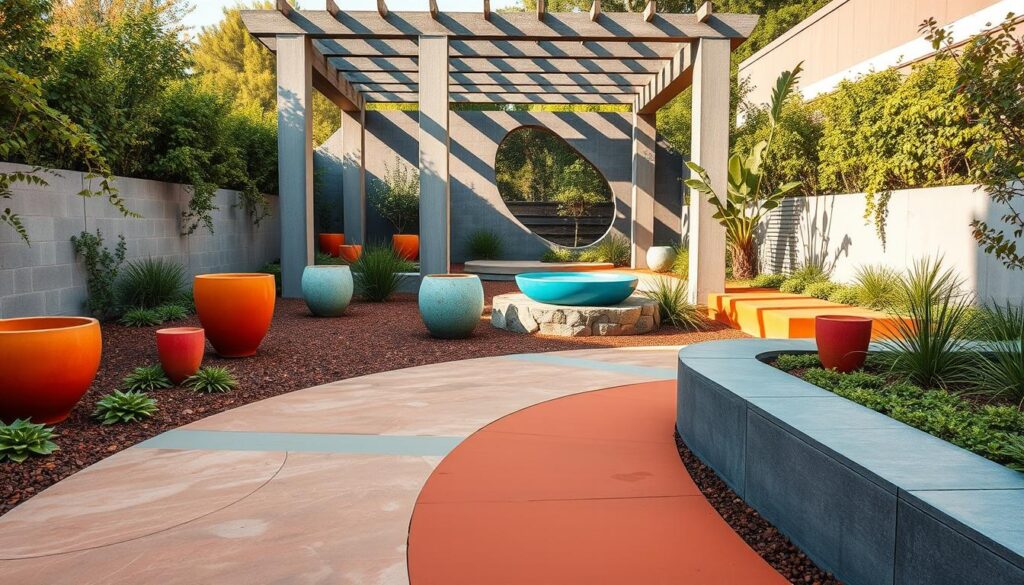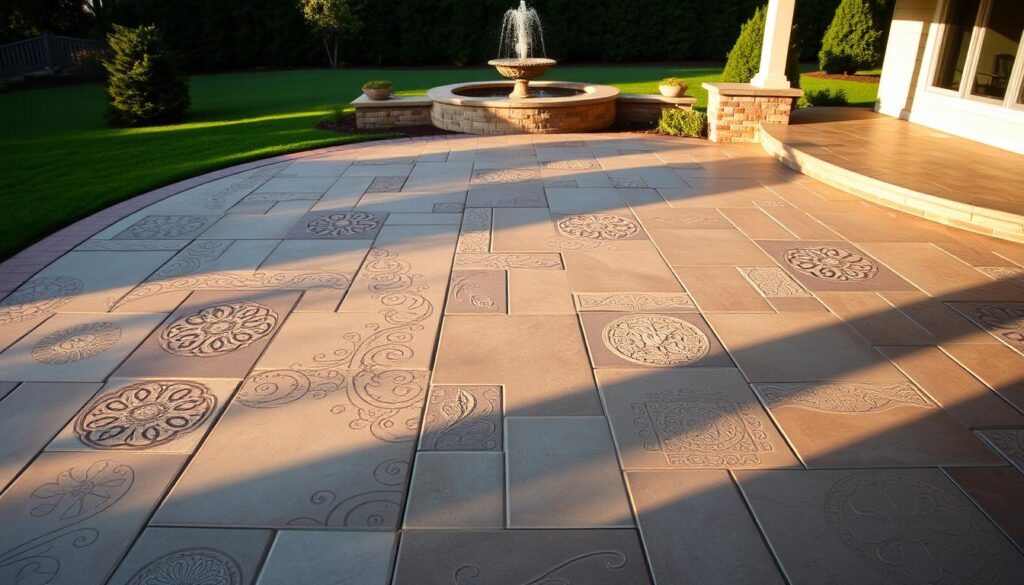
Creating a stunning and resilient landscape in South Texas, from Corpus Christi to the Rio Grande Valley, means working with our unique climate, not against it. The key to a thriving, low-maintenance, and eco-friendly outdoor space lies in using native Texas landscaping plants. These hardy species are perfectly adapted to our hot summers and local soils, requiring less water, fewer chemicals, and less overall maintenance, all while providing critical habitats for local wildlife.
For homeowners and commercial property managers in areas like San Antonio, Harlingen, and Brownsville, choosing native plants is a smart investment. It reduces long-term maintenance costs, conserves precious water resources, and creates a landscape with an authentic sense of place. While many assume this means only desert-like options, the diversity is vast. To explore succulents further, you can delve into the common and unique types of cactus in Texas.
This practical guide introduces seven exceptional native plants perfect for transforming your property into a sustainable South Texas oasis. We'll explore their benefits and show how professional planning from Fischer Landscaping can help you achieve a beautiful, functional, and resilient landscape.
1. Bluebonnet (Lupinus texensis)
No list of native Texas landscaping plants is complete without the iconic state flower. More than just a pretty face, the Bluebonnet is a hardy and beneficial addition to any South Texas landscape, renowned for creating breathtaking carpets of vibrant blue each spring.
As a legume, the bluebonnet enriches the ground by fixing nitrogen in the soil, which benefits other plants. This makes it an excellent choice for revitalizing poor soils often found in new developments from Corpus Christi to San Antonio. Its deep taproot also helps break up compacted soil, improving drainage and aeration naturally.
Landscape Implementation & Care
Successfully establishing bluebonnets means mimicking their natural lifecycle. They are best planted in the fall to allow for root development over the winter, leading to a spectacular spring bloom.
- Planting Time: Sow seeds from September to mid-November.
- Soil Requirements: They thrive in poor, well-draining soil. Avoid rich garden beds and never fertilize, as this encourages weed competition.
- Sunlight: Full sun is essential for robust blooms.
- Watering: Water lightly after planting; once established, they are extremely drought-tolerant.
Professional Tip: For better germination rates, scarify the seeds before planting. Gently nicking the hard seed coat with sandpaper allows water to penetrate, a crucial step for a dense, vibrant display.
Design & Long-Term Management
Bluebonnets are ideal for creating naturalized meadows or wildflower gardens. After blooming, allow the plants to form seed pods and dry out before mowing. Mowing too early prevents the plants from self-sowing for the following year. For homeowners and property managers seeking a sustainable wildflower area, understanding this cycle is key to long-term success. Learn more about how the Bluebonnet (Lupinus texensis) thrives in our unique regional climate.
2. Texas Sage (Leucophyllum species)
Often called the "Barometer Bush," Texas Sage is a quintessential shrub for low-water landscapes, famous for bursting into a spectacular display of purple flowers after summer rains. This incredibly hardy evergreen provides year-round silvery-green foliage, making it a cornerstone of native Texas landscaping plants. Its resilience and striking beauty make it an indispensable asset for durable, water-wise gardens across South Texas.
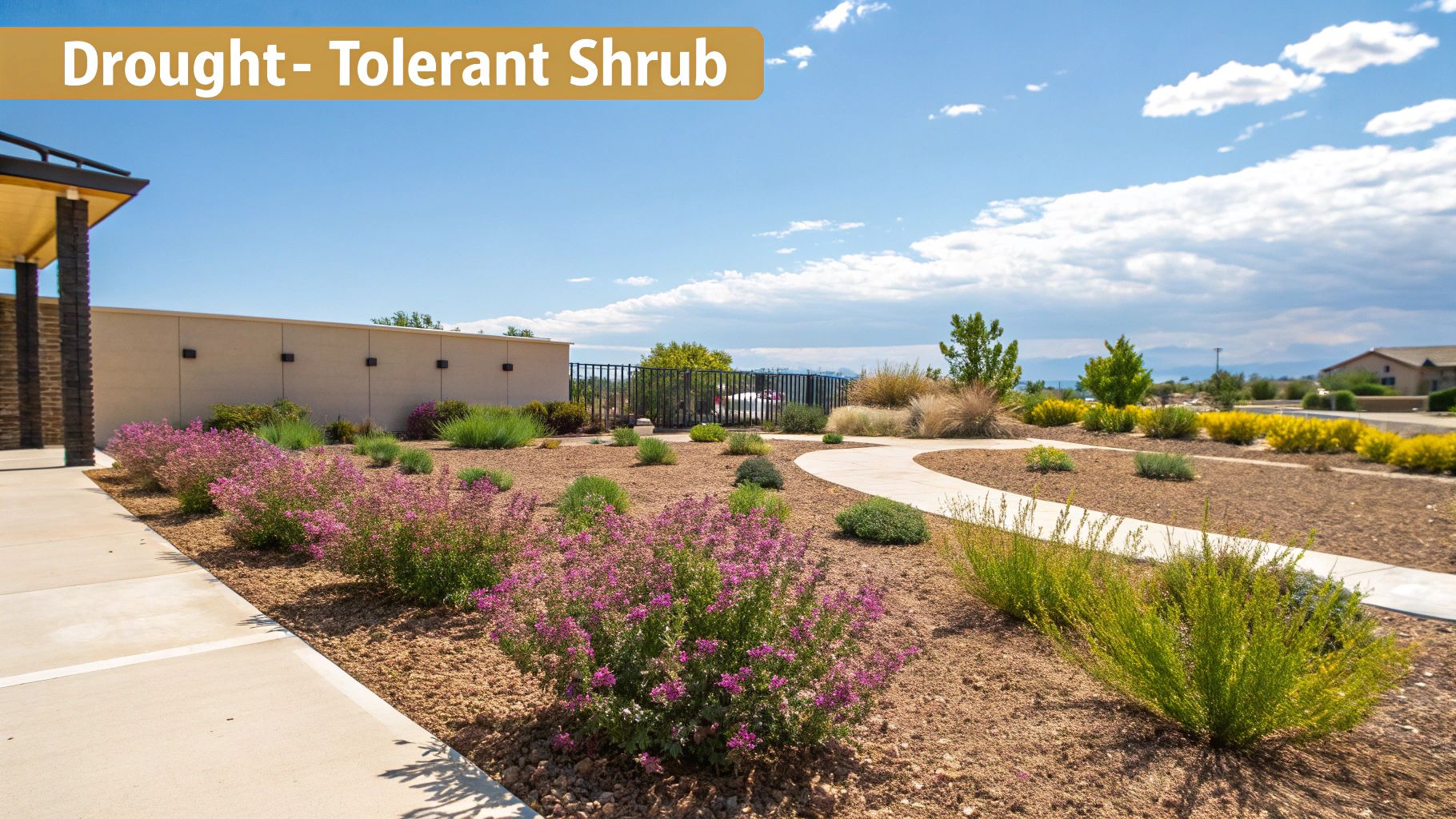
Beyond its stunning floral displays, Texas Sage thrives in intense heat and sun, requiring minimal intervention once established. This makes it an ideal choice for commercial properties in cities like Corpus Christi and Brownsville that need to maintain curb appeal without high maintenance costs. Its dense structure also provides excellent cover for native birds.
Landscape Implementation & Care
Proper placement is crucial for Texas Sage to flourish. The key is to replicate its native arid environment by prioritizing drainage.
- Planting Time: Best planted in fall or spring to allow roots to establish before summer heat.
- Soil Requirements: Excellent drainage is paramount. It thrives in rocky or alkaline soils. Consider planting on a berm if your soil is heavy clay.
- Sunlight: Full, direct sun is essential for dense growth and prolific blooming.
- Watering: Water deeply but infrequently to establish. Mature plants are extremely drought-tolerant.
Professional Tip: The most common mistake with Texas Sage is overwatering and over-pruning. Allow the soil to dry out completely between waterings and prune only lightly to shape after a bloom. Never shear it into a formal hedge, as this destroys its natural form and reduces flowering.
Design & Long-Term Management
Texas Sage works well as a standalone specimen, an informal screen, or grouped for a mass planting effect. It pairs beautifully with other xeriscape plants like agave and yucca. For a low-maintenance, high-impact landscape, grouping several sages creates a dramatic visual anchor. This is an effective strategy for large-scale landscaping projects, delivering both aesthetic appeal and sustainability. Learn more about incorporating these plants into a drought-tolerant landscape design.
3. Turk's Cap (Malvaviscus arboreus var. drummondii)
For shady spots where other native Texas landscaping plants might struggle, Turk's Cap is an invaluable perennial that offers a reliable splash of color from summer through fall. Its distinctive bright red, pinwheel-like flowers are a magnet for hummingbirds and butterflies, while the resulting red fruit provides a food source for birds, making it a cornerstone of wildlife-friendly gardens from San Antonio to Brownsville.
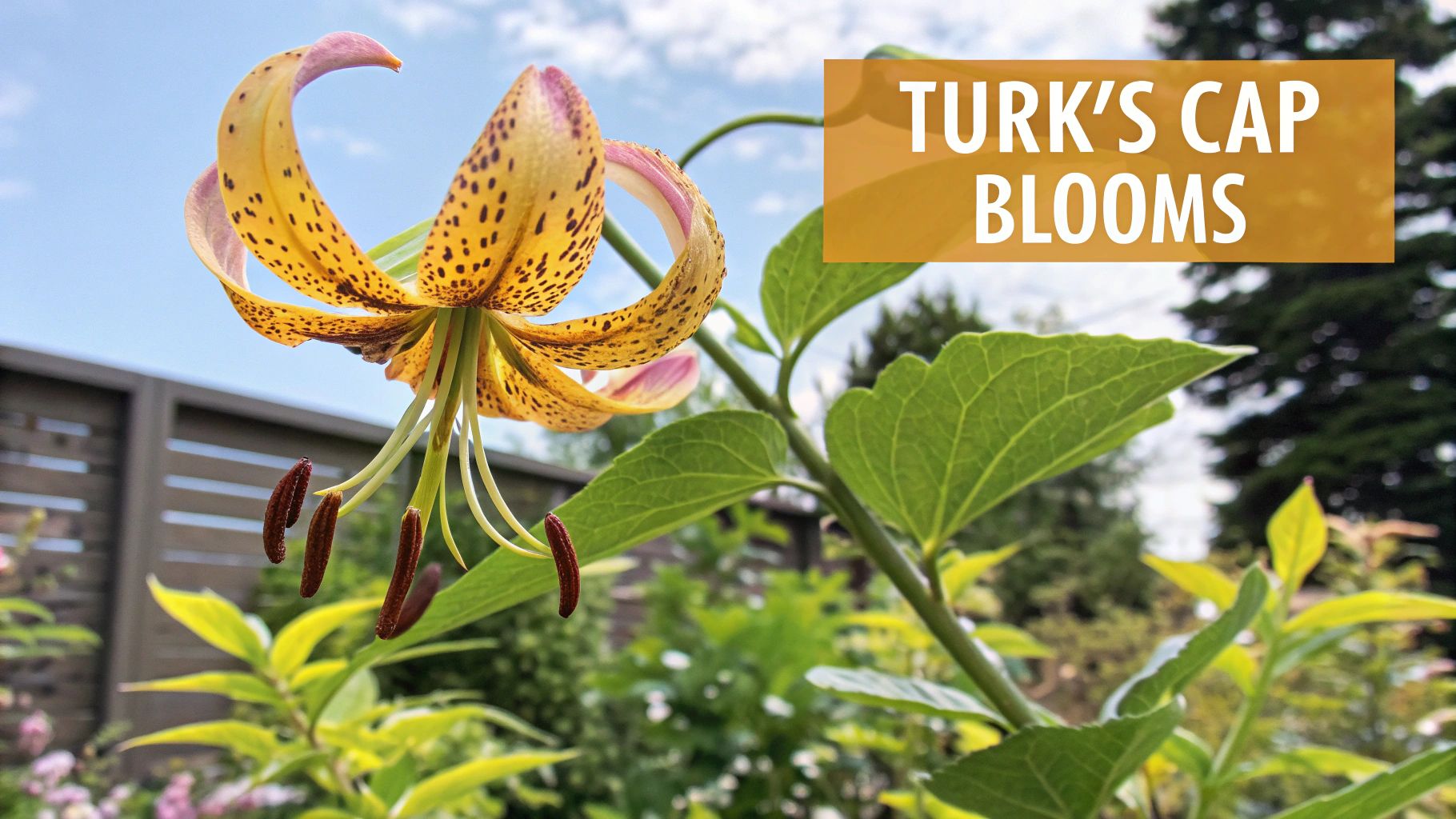
Unlike many sun-loving natives, Turk's Cap thrives in the understory, making it an exceptional choice for planting beneath established trees. This shade tolerance allows property managers and homeowners to bring life and color to difficult, low-light areas that would otherwise remain bare. It is a resilient, fast-growing shrub that establishes quickly.
Landscape Implementation & Care
Successfully integrating Turk's Cap involves leveraging its adaptability to shade. It performs best when its natural woodland habitat is emulated.
- Planting Time: Best planted in the spring or fall.
- Soil Requirements: Adaptable to various soil types but prefers well-draining soil with organic matter.
- Sunlight: Thrives in part shade to full shade. It can tolerate full sun but will require more water.
- Watering: Water regularly during its first year. Once established, it is moderately drought-tolerant but performs best with supplemental water during dry spells.
Professional Tip: To maintain a compact shape and encourage vigorous flowering, prune Turk's Cap back hard in late winter to about 6-12 inches from the ground.
Design & Long-Term Management
Turk's Cap is perfect for informal hedges, foundation plantings, or as a backdrop in a layered shade garden. After the first frost, the plant will die back to the ground but returns reliably each spring. For commercial properties in San Antonio or residential gardens in Corpus Christi, this low-maintenance cycle makes it a predictable and valuable asset. Its ability to attract pollinators is a must-have for any habitat garden. You can learn more about how Turk's Cap fits into a pollinator-focused landscape by exploring how to start creating a butterfly garden.
4. Flame Leaf Sumac (Rhus lanceolata)
For a truly show-stopping autumn display, few native Texas landscaping plants can compete with the Flame Leaf Sumac. This versatile large shrub or small tree is one of Texas's most reliable sources of spectacular fall color, transforming its foliage into a brilliant blaze of orange and red. Beyond its seasonal beauty, Rhus lanceolata is an incredibly tough and adaptable plant, thriving in the challenging soils of South Texas.

Flame Leaf Sumac’s benefits extend into the winter, as female plants produce fuzzy, deep-red berry clusters that persist on the branches. These berries are a crucial food source for birds and other wildlife when other resources are scarce, making this plant a smart choice for ecologically-minded property owners.
Landscape Implementation & Care
To unlock the most vibrant fall color, Flame Leaf Sumac requires specific placement and minimal intervention. It is an excellent choice for a dramatic yet low-maintenance focal point.
- Planting Time: Fall is the ideal time to plant.
- Soil Requirements: It is highly adaptable but demands good drainage. It thrives in rocky or clay soils.
- Sunlight: Full sun is essential for developing the most intense red and orange fall foliage.
- Watering: Water regularly after planting to establish. Once mature, it is extremely drought-tolerant, making it perfect for water-wise landscapes in areas like San Antonio.
Professional Tip: Flame Leaf Sumac naturally spreads through suckers to form thickets. To maintain it as a single-trunk tree or control its size, regularly prune these suckers from the base. This simple task is key to managing its form.
Design & Long-Term Management
Flame Leaf Sumac is a flexible design element, serving as a stunning specimen tree or grouped together for a naturalized, woodland edge. Its ability to form colonies makes it ideal for creating privacy screens or stabilizing slopes. For homeowners looking to create a sustainable, high-impact backyard, integrating plants like the Flame Leaf Sumac is a cornerstone of professional landscape design and installation.
5. Mexican Buckeye (Ungnadia speciosa)
One of the first signs of spring in Texas, the Mexican Buckeye is a superb small tree that bursts into a profusion of fragrant, vibrant pink flowers before its leaves appear. This early bloom provides a critical nectar source for awakening pollinators. Far from a delicate ornamental, Ungnadia speciosa is a tough, adaptable, and beautiful choice among native Texas landscaping plants, perfectly suited for the challenging limestone soils from San Antonio to the Hill Country.
This deciduous tree offers year-round interest, starting with its spectacular floral display, followed by lush leaves that provide dappled shade. In the fall, the foliage turns a brilliant golden-yellow, and distinctive three-lobed seed pods appear, adding texture to the winter landscape. Its multi-trunked form makes it an excellent specimen plant.
Landscape Implementation & Care
Establishing a Mexican Buckeye is straightforward, as it is naturally adapted to the alkaline, well-draining soils common throughout South Texas.
- Planting Time: Plant container-grown trees in the fall or early spring.
- Soil Requirements: It thrives in rocky, sandy, or clay-loam soils with good drainage.
- Sunlight: Full sun to partial shade. More sun encourages a denser floral display.
- Watering: Water regularly during the first year. Once mature, it is extremely drought-tolerant.
Professional Tip: The seeds of the Mexican Buckeye are poisonous if ingested, so it's wise to plant it away from areas frequented by pets or small children. This trait, however, also makes it highly deer-resistant—a major benefit for many Texas properties.
Design & Long-Term Management
The Mexican Buckeye is a versatile plant perfect for various landscape designs. Use it as a focal point near a patio to enjoy its spring fragrance, or incorporate it into a mixed border with other native perennials. Pruning should be minimal and focused only on removing dead or crossing branches. This plant is a cornerstone of any low-maintenance landscaping strategy, providing significant seasonal impact with very little input. Find more ideas for low maintenance landscaping with hardy native plants.
6. Coral Honeysuckle (Lonicera sempervirens)
For those seeking vertical interest and a magnet for hummingbirds, Coral Honeysuckle is an exceptional choice among native Texas landscaping plants. Unlike its highly invasive non-native cousin, Lonicera sempervirens is a well-behaved, non-aggressive vine that offers stunning clusters of tubular, reddish-orange flowers from spring through fall. It provides vibrant color and nectar for pollinators without overtaking your landscape.
This perennial vine is not only beautiful but also highly functional. Its flowers feed hummingbirds while its fall berries feed songbirds like cardinals. Its adaptability to various Texas climates, from the humidity of Corpus Christi to the drier heat of San Antonio, makes it a reliable addition for adding height and wildlife value to garden designs.
Landscape Implementation & Care
Coral Honeysuckle is low-maintenance once established, but providing the right initial conditions is key. It excels at covering structures when given proper support.
- Planting Time: Best planted in spring or fall.
- Soil Requirements: Adaptable but performs best in well-drained soil amended with compost.
- Sunlight: Full sun is ideal for maximum flower production.
- Watering: Water regularly during its first growing season. Once mature, it is quite drought-tolerant.
Professional Tip: Mulch the root zone heavily to keep the roots cool and conserve soil moisture. This simple step reduces water stress and encourages more vigorous growth and flowering during hot Texas summers.
Design & Long-Term Management
This versatile vine is perfect for training up trellises, arbors, pergolas, or fences. It is an excellent choice for creating a "green wall" for privacy or softening a stark fence. Pruning is minimal and should be done in late winter primarily to shape the plant. For property managers looking to create attractive, low-maintenance green spaces, this native vine offers a sustainable solution. Our professional landscaping services can create the perfect structure for your climbing plants.
7. Texas Mountain Laurel (Dermatophyllum secundiflorum)
A true gem of South Texas, the Texas Mountain Laurel is an evergreen shrub or small tree celebrated for its spectacular, drooping clusters of vibrant purple flowers. These blooms appear in early spring and emit a powerful, sweet fragrance often compared to grape Kool-Aid, making it an unforgettable sensory addition to any landscape. Prized for its dense, glossy foliage and remarkable resilience, this slow-growing specimen offers year-round beauty.
This plant's extreme drought and heat tolerance make it one of the most reliable native Texas landscaping plants for xeriscaping. Its ability to thrive in the alkaline, rocky soils common from San Antonio to the Rio Grande Valley makes it a foundational plant for creating a sustainable, regionally appropriate landscape. Its dense structure also provides excellent habitat for native birds.
Landscape Implementation & Care
Establishing a Texas Mountain Laurel requires patience, but the rewards are well worth it. Its slow growth rate means that a well-chosen spot is critical for its long-term success.
- Planting Time: Fall is the ideal time for planting.
- Soil Requirements: Excellent drainage is the most critical factor. It thrives in rocky, alkaline soils and is susceptible to root rot in heavy clay.
- Sunlight: Full sun is best for maximum flower production.
- Watering: Water deeply but infrequently after planting. Once established, it is exceptionally drought-tolerant.
Professional Tip: The bright red seeds produced in its fuzzy pods are highly toxic if ingested. For landscapes in areas with children or pets, it's wise to remove the seed pods after the flowering season concludes.
Design & Long-Term Management
Texas Mountain Laurel is versatile, serving as a stunning specimen tree, an informal screen, or a foundational shrub. It can be trained into a single-trunk tree or left as a multi-trunked shrub. Its slow growth makes it a very low-maintenance plant that requires minimal pruning. For property owners in Corpus Christi looking to install a resilient, high-impact plant, the Texas Mountain Laurel is an exceptional choice. Learn how we can integrate iconic native plants like this into a customized landscape design for your property.
Native Texas Plants Feature Comparison
| Plant | Implementation Complexity | Resource Requirements | Expected Outcomes | Ideal Use Cases | Key Advantages |
|---|---|---|---|---|---|
| Bluebonnet | Moderate (annual reseeding needed) | Low (thrives in poor soils) | Spring blue blooms, soil improvement | Wildflower meadows, naturalized areas | Drought tolerant, nitrogen-fixing, iconic Texas symbol |
| Texas Sage | Moderate (pruning required) | Low (needs full sun, drainage) | Summer-fall flowers after rain | Xeriscaping, low-maintenance landscapes | Extremely drought tolerant, deer resistant, year-round color |
| Turk's Cap | Moderate (pruning to control spread) | Moderate (consistent moisture) | Summer-frost blooms, attracts wildlife | Shade gardens, understory plantings | Excellent shade tolerance, continuous blooms, edible berries |
| Flame Leaf Sumac | Moderate (sucker removal needed) | Low (adaptable to soils) | Brilliant fall color, wildlife food | Fall color displays, naturalized areas | Outstanding fall color, drought tolerant, fast growing |
| Mexican Buckeye | Moderate to high (slow establishment) | Moderate (needs rocky, well-drained soil) | Early spring fragrant blooms | Early pollinator gardens, rocky soils | Very early nectar source, drought tolerant, unique winter form |
| Coral Honeysuckle | Moderate (support and training) | Moderate (needs support structure) | Long bloom season attracting hummingbirds | Pollinator gardens, vertical accents | Non-invasive, attracts hummingbirds, deer resistant |
| Texas Mountain Laurel | High (slow growing, difficult transplant) | Low once established (needs good drainage) | Showy fragrant spring blooms | Specimen tree, xerophytic gardens | Strong fragrance, drought tolerant, long-lived specimen |
Bring Your Native Texas Landscape to Life with Professional Design
Selecting the right native Texas landscaping plants is the first step, but designing a cohesive, functional, and beautiful landscape requires professional expertise. A thriving native garden is far more than a random assortment of plants; it is a meticulously planned ecosystem designed to flourish in the South Texas climate.
A successful design considers how each element works in harmony. This involves strategic placement based on sun exposure, grouping plants with similar water needs for efficient irrigation, and integrating these natural elements with functional hardscaping features like patios or walkways. The goal is to build a landscape that enhances your property's value and your enjoyment for years to come.
From Plant Selection to a Cohesive Masterpiece
Bringing this vision to life requires a deep understanding of local ecology and landscape architecture. While individual plants like the fragrant Texas Mountain Laurel are beautiful, their true potential is unlocked as part of a thoughtful design.
Key considerations in a professional native landscape design include:
- Layering and Composition: Arranging plants by height, texture, and color to create visual interest throughout the seasons.
- Water-Wise Grouping (Hydrozoning): Placing plants with similar water requirements together to maximize irrigation efficiency.
- Seasonal Interest: Selecting a diverse palette of plants that ensures your garden has something to offer year-round.
- Functional Integration: Seamlessly blending plant beds with patios, pathways, and outdoor lighting to create a space that is both beautiful and practical.
At Fischer Landscaping, we specialize in transforming these concepts into stunning realities for properties across South Texas, from Corpus Christi to San Antonio and the Rio Grande Valley. Our expert team understands the unique challenges of our local climate. We don't just install plants; we design and build comprehensive outdoor environments that reflect your vision. From initial consultation to final installation, our commitment to craftsmanship ensures a result you will enjoy for years.
Let us help you create a sustainable, breathtaking native landscape that brings the authentic beauty of Texas to your doorstep.
Ready to transform your vision into a professionally designed reality? The team at Fischer Landscaping has the expertise to create a stunning, low-maintenance native landscape tailored to your property. Contact us today to request a quote and let us build the outdoor oasis you've been dreaming of.