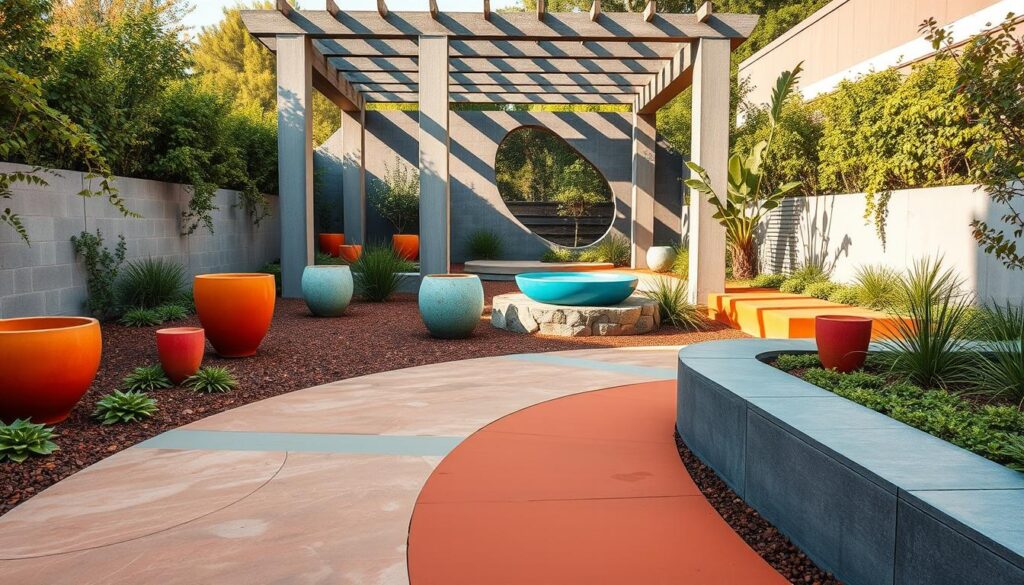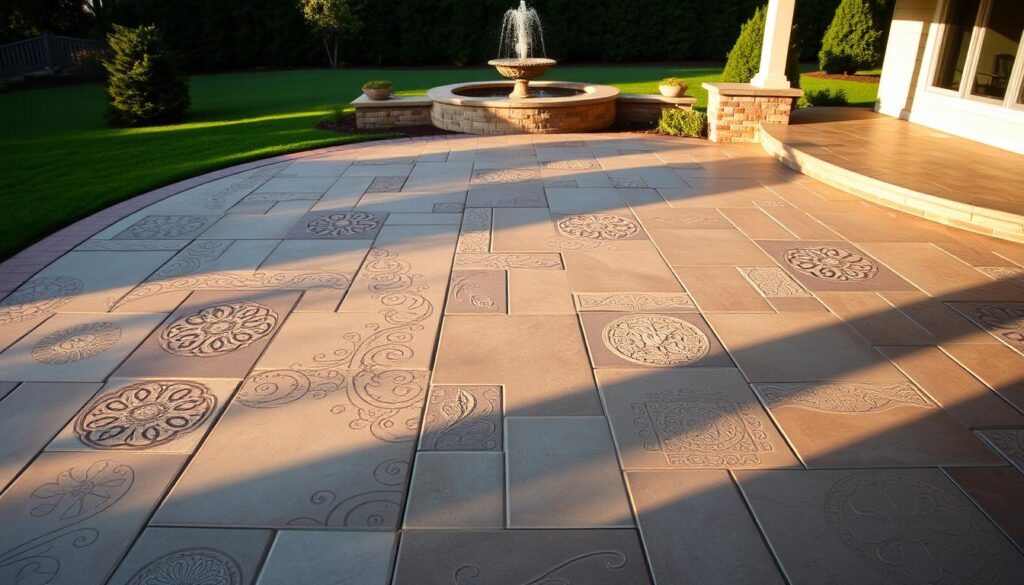
A well-designed commercial landscape does more than just enhance curb appeal; it creates a welcoming environment, reflects your brand's professionalism, and can even improve your bottom line. For property managers and business owners in South Texas cities like Corpus Christi and San Antonio, choosing the right design is crucial for combating our unique climate challenges while attracting clients and tenants. A professional landscape is not an expense—it's a strategic investment in your property's value and identity.
This guide moves beyond generic advice to provide specific, actionable commercial landscaping design ideas that deliver real results. We will explore ten innovative concepts, from sustainable native plant installations to smart-technology integration, each tailored to meet the demands of modern commercial properties. Whether you manage a retail center in Brownsville or an office park in Harlingen, these solutions are designed to boost functionality, reduce maintenance costs, and create a memorable visitor experience.
At Fischer Landscaping, we specialize in transforming commercial properties into functional, sustainable, and visually stunning outdoor spaces. To further explore innovative ways to enhance your outdoor spaces, delve into these additional inspiring landscaping ideas that can complement your vision. Let's begin exploring the designs that can elevate your property from ordinary to exceptional.
1. Sustainable Native Plant Landscapes
Among the most impactful commercial landscaping design ideas is the shift toward sustainable native plant landscapes. This approach prioritizes indigenous plant species that are naturally adapted to the local South Texas climate and soil conditions. By selecting plants that thrive in areas like Corpus Christi or San Antonio, businesses can create beautiful, resilient landscapes that require significantly less water, fertilizer, and maintenance compared to traditional turf grass or exotic ornamentals.
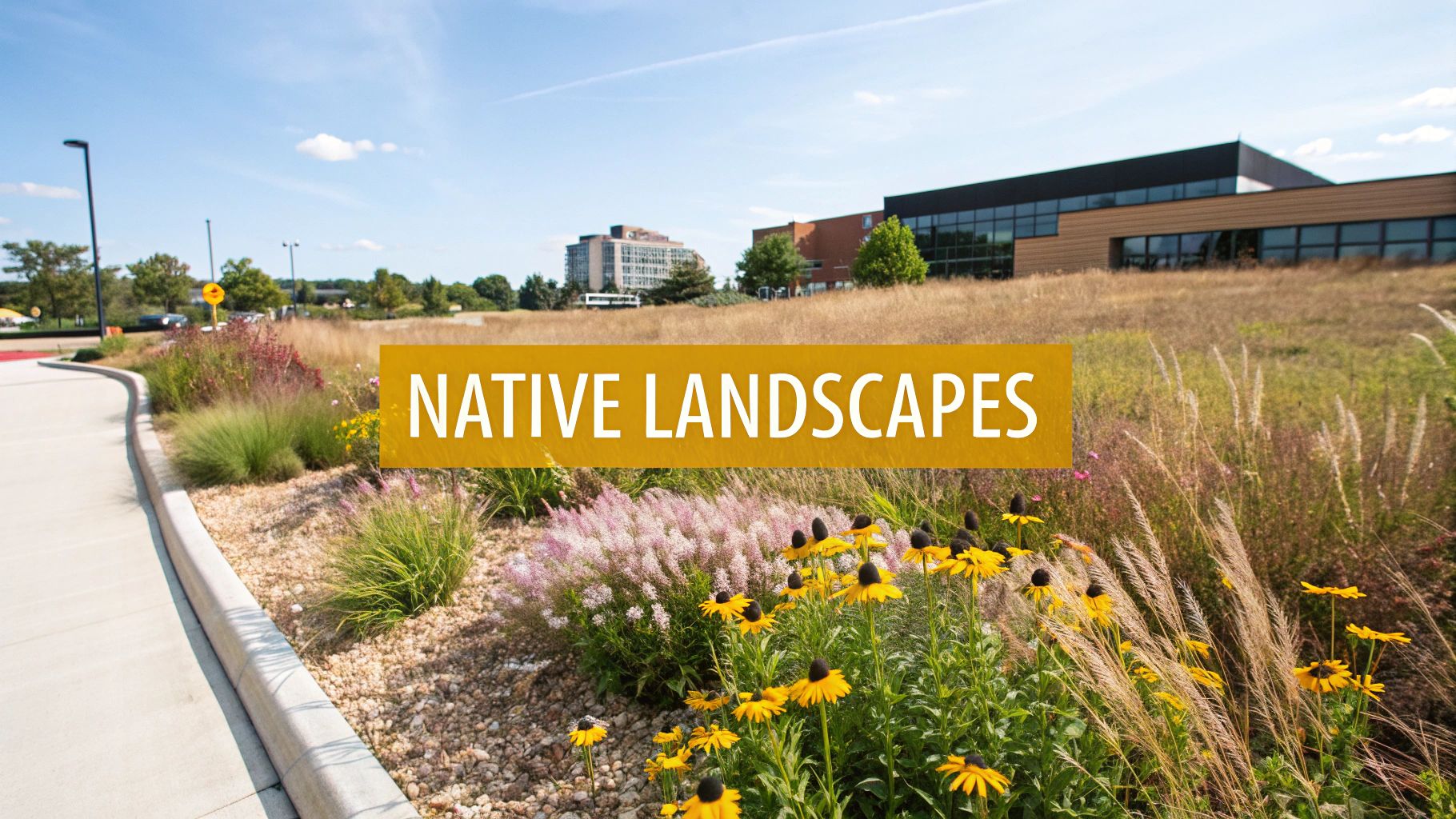
This method not only reduces long-term operational costs but also supports local ecosystems by providing vital habitats for pollinators and other wildlife. For commercial properties, this translates into a powerful statement about corporate responsibility and environmental stewardship, enhancing brand image while saving money. A professionally designed native landscape offers year-round visual interest and creates a unique sense of place that connects the property to its regional identity.
Key Benefits & Implementation
- Cost Savings: Drastically lowers water bills and reduces the need for pesticides, fertilizers, and frequent mowing.
- Enhanced Curb Appeal: Creates a unique, authentic aesthetic that stands out, with varied textures and seasonal blooms.
- Environmental Support: Fosters local biodiversity and contributes to a healthier ecosystem.
To implement this design, start with a professional site analysis to understand soil type and sun exposure. A professional team can group plants with similar water needs (a practice known as hydrozoning) to maximize irrigation efficiency. By incorporating Texas natives like Black-eyed Susans, Texas Sage, or Gulf Muhly, your property can achieve a stunning look that is both beautiful and practical. Explore the benefits of native plant landscaping for commercial properties to see how Fischer Landscaping can transform your space.
2. Xeriscaping and Drought-Resistant Design
Xeriscaping is a water-conscious landscaping philosophy that creates stunning and sustainable outdoor spaces by minimizing the need for supplemental irrigation. This approach is one of the most practical commercial landscaping design ideas for our hot and often dry South Texas climate. It involves grouping plants with similar water needs, utilizing efficient irrigation, and incorporating materials like mulch and hardscaping to create a landscape that is both beautiful and resilient in cities from Corpus Christi to San Antonio.
This design strategy goes beyond just using cacti and rocks; it's a holistic system for developing a visually appealing landscape that conserves a precious resource. For commercial properties, xeriscaping significantly lowers utility costs and maintenance demands while demonstrating a strong commitment to environmental sustainability. A well-executed xeriscape design from a professional firm like Fischer Landscaping can transform a high-maintenance, water-intensive lawn into a dynamic, textured, and colorful landscape that enhances curb appeal year-round.
Key Benefits & Implementation
- Water Conservation: Dramatically reduces water consumption and associated utility expenses, a key benefit in water-restricted areas.
- Reduced Maintenance: Requires less mowing, fertilizing, and overall upkeep compared to traditional turf-heavy landscapes.
- Year-Round Appeal: Utilizes a diverse palette of drought-tolerant plants that offer unique colors, forms, and textures throughout the seasons.
To implement xeriscaping, begin with a professional landscape design that zones areas based on water requirements. Install a smart irrigation system with weather sensors to deliver water precisely where and when it's needed. Incorporate organic mulch to help soil retain moisture and suppress weeds. Choosing the right drought-resistant plants, such as agaves, yuccas, and ornamental grasses, is crucial for creating a thriving, low-water environment that is perfectly suited for your commercial property.
3. Green Roof and Living Wall Systems
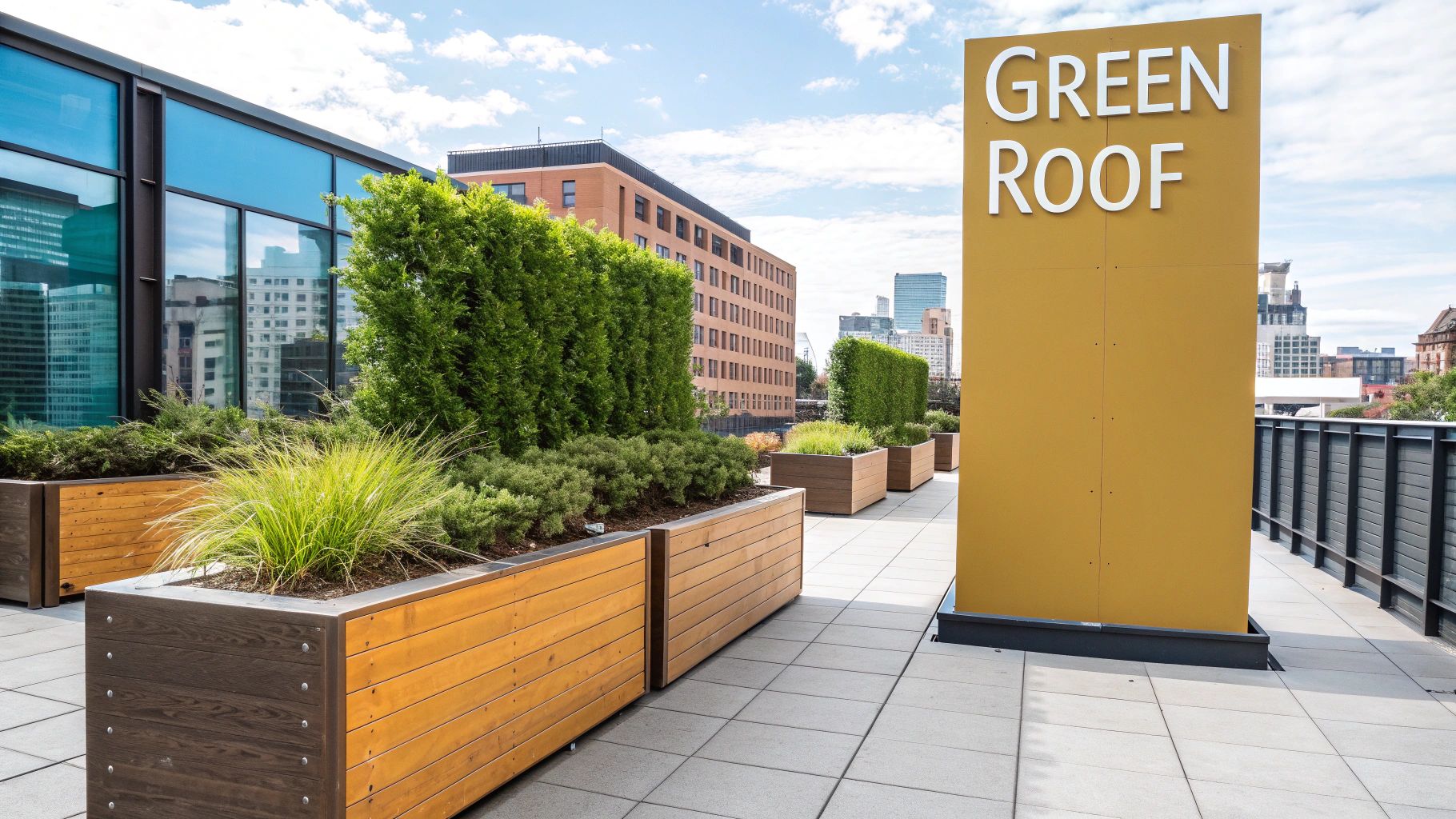
One of the most innovative commercial landscaping design ideas for urban environments is the integration of green roof and living wall systems. These solutions maximize limited space by transforming rooftops and vertical surfaces into vibrant, functional gardens. For commercial properties in dense areas like downtown San Antonio or growing business districts, this approach provides insulation, improves air quality, and offers a stunning visual centerpiece that traditional landscaping cannot achieve.
This method effectively addresses the urban heat island effect, where concrete and asphalt absorb and retain heat. By covering non-traditional surfaces with vegetation, businesses can make a powerful eco-friendly statement, significantly reduce energy costs, and manage stormwater runoff. A professionally installed green roof or living wall turns an unused space into an ecological asset and a powerful branding tool that sets your property apart.
Key Benefits & Implementation
- Energy Efficiency: Provides natural insulation, lowering heating and cooling costs throughout the year.
- Space Optimization: Utilizes vertical and rooftop areas, making it ideal for properties with a small ground-level footprint.
- Improved Air & Water Quality: Plants filter airborne pollutants and absorb rainwater, reducing strain on municipal drainage systems.
Implementation requires careful planning and professional expertise. A structural engineering consultation is essential to ensure the building can support the added weight. It's critical to install professional-grade waterproofing and drainage systems to protect the building's integrity. Plant selection should favor resilient species suited for vertical or rooftop conditions, such as succulents and hardy perennials. Due to their complexity, a professional maintenance contract is crucial for the long-term health and success of these installations.
4. Rain Gardens and Stormwater Management
An increasingly vital commercial landscaping design idea is the integration of rain gardens for effective stormwater management. This innovative approach involves creating strategically placed, planted depressions designed to collect, absorb, and filter rainwater runoff from impervious surfaces like rooftops, parking lots, and walkways. By capturing stormwater on-site, businesses in areas like Corpus Christi and Brownsville can mitigate flooding, prevent erosion, and reduce pollutants entering local waterways.
This functional solution doubles as an attractive landscape feature, transforming problematic drainage areas into beautiful, thriving gardens. For commercial properties, this showcases a commitment to environmental responsibility and smart water use. A professionally designed rain garden not only solves practical stormwater issues but also enhances the property’s aesthetic with lush, resilient plantings that add color and texture, turning a liability into an asset.
Key Benefits & Implementation
- Improved Drainage: Effectively manages runoff to prevent pooling water and property damage, crucial during South Texas downpours.
- Environmental Protection: Filters pollutants like oil and fertilizers from stormwater, protecting local water quality.
- Enhanced Aesthetics: Turns functional drainage solutions into beautiful garden features that boost curb appeal.
Implementing a rain garden starts with a professional site evaluation to identify runoff patterns and test soil percolation. The garden must be sized appropriately for local rainfall intensity and the property's specific drainage needs. Selecting hardy, water-tolerant plants that can withstand both periods of inundation and dry spells is critical for long-term success. Properly planned overflow routes are also necessary to manage extreme weather events safely.
5. Edible and Herb Gardens
Integrating edible and herb gardens into your property is one of the most innovative commercial landscaping design ideas, transforming passive green spaces into productive, engaging environments. This approach involves planting vegetables, fruits, and herbs that can be used by on-site restaurants, offered to employees, or donated to the community. For businesses in South Texas, this concept aligns perfectly with a growing interest in farm-to-table dining and corporate wellness.
From hotel rooftop gardens in San Antonio supplying their kitchens with fresh mint and basil to corporate campuses in Corpus Christi offering employee harvest programs, edible landscapes create a unique amenity. They serve as a powerful marketing tool, demonstrating a commitment to sustainability and health. Beyond the practical benefits, these gardens offer a multi-sensory experience with appealing textures, colors, and aromas, significantly enhancing the appeal and functionality of your outdoor space.
Key Benefits & Implementation
- Fresh, Local Produce: Provides a sustainable source of ingredients for on-site cafes or restaurants, reducing food supply costs.
- Enhanced Employee/Tenant Experience: Creates a unique, interactive amenity that promotes wellness and community engagement.
- Positive Brand Image: Showcases a commitment to sustainability and corporate responsibility, setting your property apart.
To implement this design, start with a well-planned layout in a sunny location, incorporating raised beds or containers for easy management. An efficient drip irrigation system is essential to conserve water and ensure consistent plant health. A professional landscaper can help you begin with low-maintenance options like rosemary, mint, and select perennial vegetables suited for the South Texas climate. Establishing clear harvesting protocols and a regular maintenance schedule from a team like Fischer Landscaping is crucial for a thriving, attractive garden.
6. Modern Minimalist Landscapes
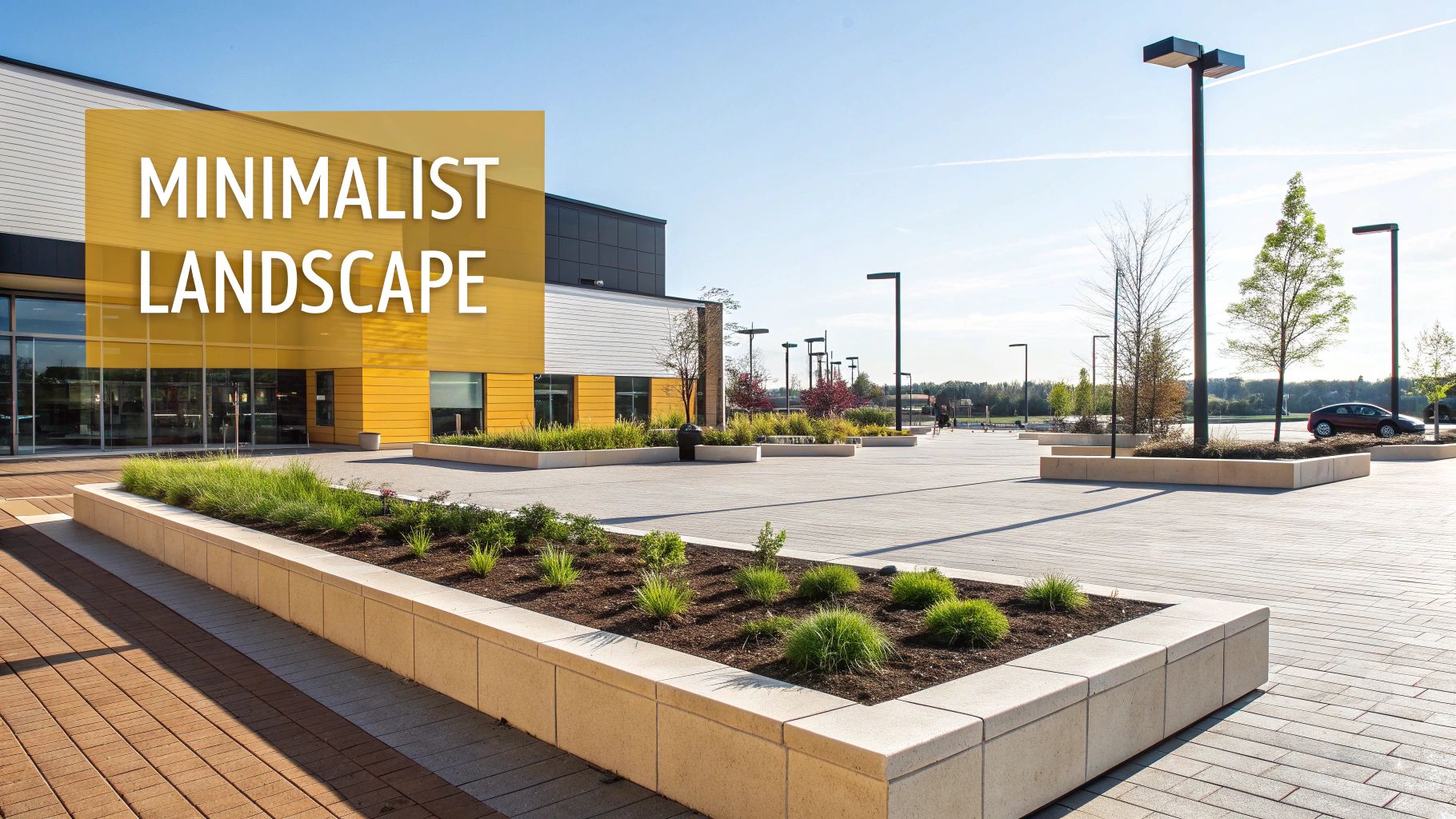
For commercial properties aiming for a sleek, sophisticated aesthetic, modern minimalist landscapes offer a powerful design solution. This approach emphasizes clean lines, geometric forms, and a restrained plant palette, creating a sense of order and intentionality. Rather than abundant floral displays, minimalism focuses on the interplay of texture, form, and space, often using architectural elements like concrete planters, steel edging, and monochromatic hardscapes. This is one of the most effective commercial landscaping design ideas for tech campuses, high-end retail centers, and corporate headquarters.
This "less is more" philosophy translates into a high-impact, low-clutter environment that feels both luxurious and professional. The strategic use of negative space directs attention to key features, while the repetition of specific plants or materials creates a strong sense of rhythm and cohesion. This curated simplicity projects an image of precision and modernity, enhancing the property's brand identity and creating an uncluttered, welcoming atmosphere for clients and employees.
Key Benefits & Implementation
- Sophisticated Curb Appeal: Creates a sharp, high-end look that elevates the property's perceived value.
- Lower Maintenance: A limited and carefully chosen plant palette simplifies long-term care and pruning needs.
- Architectural Harmony: The design directly complements and enhances modern architectural styles.
To implement a minimalist design, begin by selecting a few structural plant species with interesting forms, such as agaves or ornamental grasses. Use repetition by planting them in neat rows or geometric grids. Invest in high-quality hardscape materials like large-format pavers or poured concrete, ensuring all edges are crisp and precise. Strategic outdoor lighting can be used to accentuate key forms and textures, making the landscape a dramatic feature after dark.
7. Pollinator and Wildlife-Friendly Gardens
Integrating pollinator and wildlife-friendly gardens is a forward-thinking commercial landscaping design idea that transforms properties into thriving ecological havens. This approach involves selecting specific plants and creating habitats to attract and support bees, butterflies, birds, and other beneficial wildlife. By establishing these micro-ecosystems, businesses in areas like Corpus Christi and Brownsville can contribute positively to local biodiversity while creating a dynamic and engaging landscape that captivates visitors.
Beyond the environmental benefits, these gardens offer unique educational and aesthetic value. Corporate campuses and retail centers can achieve certifications from organizations like the National Wildlife Federation, showcasing a tangible commitment to sustainability. These living landscapes create a powerful narrative about corporate responsibility, reduce reliance on chemical pesticides, and provide ever-changing seasonal beauty that sterile, conventional landscapes simply cannot match. It’s a smart investment in both nature and your brand identity.
Key Benefits & Implementation
- Boosts Corporate Image: Demonstrates a commitment to environmental stewardship, which resonates strongly with modern consumers.
- Creates a Living Landscape: Adds dynamic visual interest with the movement and color of visiting wildlife.
- Reduces Chemical Use: Fosters a balanced ecosystem where natural predators help manage pests, lowering maintenance costs.
To implement this, focus on planting in large, dense groups to create a strong visual and olfactory signal for pollinators. Ensure a continuous bloom cycle from spring through fall by selecting a diverse plant palette, including both nectar sources and host plants for butterfly larvae. Adding a simple water source and avoiding all pesticides are crucial steps. For expert guidance on plant selection and design, you can learn more about creating a butterfly garden that will flourish in the South Texas climate.
8. Interactive and Therapeutic Landscapes
One of the most human-centric commercial landscaping design ideas is the creation of interactive and therapeutic landscapes. This approach focuses on designing outdoor spaces that actively engage the senses and promote mental and physical well-being. By incorporating elements that encourage interaction, reflection, and sensory stimulation, businesses can transform a standard courtyard or green space into a restorative environment that reduces stress and enhances the visitor experience.
This design philosophy is especially impactful for healthcare facilities, corporate campuses, and senior living communities. A therapeutic garden can offer a peaceful escape for employees or a healing environment for patients, directly contributing to a positive brand perception. These landscapes demonstrate a deep commitment to the well-being of staff, clients, and visitors, making the property a more desirable place to work and visit.
Key Benefits & Implementation
- Improved Well-being: Actively reduces stress and promotes positive emotional responses for employees, patients, or residents.
- Enhanced Property Value: Adds a unique, high-value amenity that differentiates the property from competitors.
- Positive Community Impact: Creates welcoming public or private spaces that foster connection and mental respite.
To implement this design, focus on sensory diversity by including plants with varied textures and fragrances, such as rosemary or fragrant jasmine. Incorporate features like bubbling water fountains to mask urban noise and provide comfortable, accessible seating in both social and secluded areas. Ensuring pathways are wide and smooth for all ability levels is crucial. A professional team can help create a multi-faceted environment so your commercial property can offer a meaningful and restorative outdoor experience.
9. Smart Technology-Integrated Landscapes
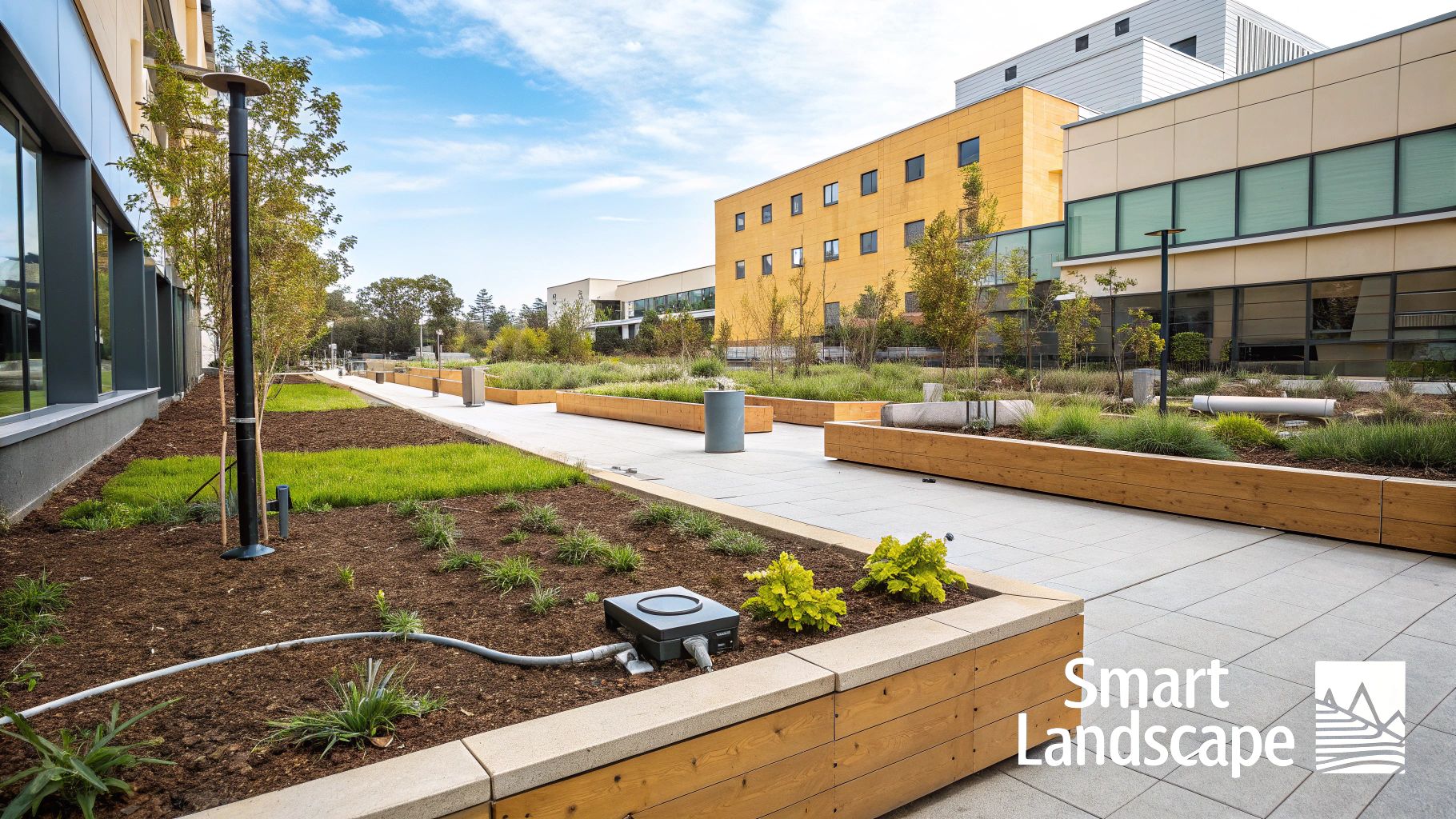
Integrating smart technology is one of the most forward-thinking commercial landscaping design ideas, transforming how properties are managed and experienced. This approach uses advanced systems like IoT sensors, automated irrigation, and responsive LED lighting to optimize resource use. For instance, smart irrigation controllers adjust watering schedules based on real-time weather data from local sources in Corpus Christi, preventing water waste and ensuring plant health during Texas's unpredictable weather.
This data-driven landscape management not only yields significant cost savings on water and energy but also enhances the safety and appeal of a commercial property. Automated systems can alert maintenance teams to potential issues like leaks or system malfunctions before they become costly problems. For detailed visual representations of proposed designs, designers frequently consider specialized software for architectural rendering to help clients visualize these tech integrations. Ultimately, a smart landscape is a highly efficient, responsive, and modern environment that reflects a company’s commitment to innovation and sustainability.
Key Benefits & Implementation
- Resource Optimization: Drastically reduces water consumption by up to 50% and lowers energy costs through smart lighting schedules.
- Proactive Maintenance: Provides real-time data and automated alerts, enabling predictive maintenance and rapid issue resolution.
- Enhanced User Experience: Creates a safer, more welcoming environment with adaptive lighting and perfectly maintained green spaces.
To implement this design, start by conducting an audit of your current resource usage to identify key areas for improvement. Begin with a pilot program in one section of your property, such as installing a weather-based irrigation controller. It is crucial to partner with professionals who can integrate these systems with your existing building management infrastructure and provide proper training for your staff to ensure long-term success.
10. Seasonal Color and Theme Gardens
One of the most dynamic commercial landscaping design ideas involves creating seasonal color and theme gardens. This strategy focuses on providing year-round visual interest through meticulously planned, rotating plant displays. By swapping out annuals, perennials, and even decorative elements with the changing seasons, businesses in Corpus Christi or Harlingen can maintain a fresh, vibrant, and engaging outdoor environment that continually captivates visitors.
This approach turns a static landscape into a living, evolving showcase. A shopping center can welcome spring with vibrant tulips, celebrate summer with bold hibiscus, transition to fall with rich marigolds, and feature festive poinsettias in winter. This constant renewal enhances curb appeal and creates memorable experiences that encourage repeat visits and demonstrate a high level of property care. Themed gardens, such as a butterfly garden or a Zen-inspired space, can further define a property's brand.
Key Benefits & Implementation
- Year-Round Appeal: Ensures the property looks its best in every season, preventing a dull or neglected appearance during off-peak months.
- Enhanced Visitor Experience: Creates a dynamic and engaging environment that draws attention and leaves a lasting positive impression.
- Brand Reinforcement: Allows businesses to align their landscape with marketing campaigns, holidays, or corporate colors.
Implementation requires careful planning and a professional touch. Working with a commercial landscaping company ensures a seamless transition between seasons and selects plant varieties best suited for the South Texas climate. It's crucial to document successful plant combinations and to establish relationships with reliable local nurseries. To see how a professional service can transform your property, you can explore our seasonal landscaping services.
Top 10 Commercial Landscaping Design Ideas Comparison
| Landscaping Approach | Implementation Complexity | Resource Requirements | Expected Outcomes | Ideal Use Cases | Key Advantages |
|---|---|---|---|---|---|
| Sustainable Native Plant Landscapes | Moderate to High | Specialized design, local plants | Reduced water use, biodiversity support | Eco-conscious commercial campuses | Low maintenance, supports local ecosystems |
| Xeriscaping and Drought-Resistant Design | Moderate | Drought-tolerant plants, irrigation systems | Significant water savings, drought resilience | Arid and drought-prone areas | Water-efficient, compliance with regulations |
| Green Roof and Living Wall Systems | High | Structural support, irrigation | Energy savings, improved air quality | Urban buildings, limited ground space | Insulation, urban heat reduction, aesthetics |
| Rain Gardens and Stormwater Management | High | Engineered soil, bioswales | Reduced flooding, improved water quality | Areas needing stormwater management | Cost savings on drainage, habitat creation |
| Edible and Herb Gardens | Moderate | Regular maintenance, irrigation | Fresh produce, visitor engagement | Cafeterias, wellness-focused campuses | Educational and marketing benefits |
| Modern Minimalist Landscapes | Moderate | High-quality materials, precise installation | Sophisticated, low-maintenance aesthetics | Contemporary commercial architecture | Timeless design, cost-effective maintenance |
| Pollinator and Wildlife-Friendly Gardens | Moderate | Native plants, pesticide-free care | Supports wildlife, urban biodiversity | Environmental branding, conservation efforts | PR benefits, habitat support |
| Interactive and Therapeutic Landscapes | High | Specialized design, sensory plants | Enhanced wellbeing, stress reduction | Healthcare, wellness campuses | Employee wellness, positive brand association |
| Smart Technology-Integrated Landscapes | High | IoT devices, automated systems | Optimized resource use, real-time monitoring | Large campuses, tech-forward facilities | Labor savings, data-driven management |
| Seasonal Color and Theme Gardens | Moderate to High | Frequent replanting, skilled labor | Year-round visual interest, marketing impact | Retail centers, hotels, public spaces | Flexible design, high visitor engagement |
Bring Your Commercial Vision to Life with Fischer Landscaping
From sustainable native landscapes that thrive in the South Texas climate to technology-integrated green spaces that enhance operational efficiency, the commercial landscaping design ideas explored in this guide offer a powerful blueprint for transforming your property. The common thread connecting concepts like xeriscaping, living walls, and interactive gardens is their ability to create value far beyond simple aesthetics. A well-executed landscape design serves as a strategic asset, capable of improving brand perception and attracting tenants and customers.
The journey from a compelling idea to a thriving landscape requires careful planning, deep horticultural knowledge, and skilled execution. Your commercial landscape is a direct reflection of your business's values and commitment to quality. Whether you manage a retail center in Corpus Christi, a corporate campus in San Antonio, or a multi-family property in Harlingen, the right design can differentiate you from the competition and create a lasting positive impression.
Turning Inspiration into a Strategic Asset
Translating these ideas into reality involves more than just selecting plants. It requires a holistic approach that considers local ecology, water management, long-term maintenance, and even local regulations. For instance, implementing advanced stormwater solutions like rain gardens or undertaking significant hardscaping work may have specific compliance considerations. Before commencing any significant project, it's vital to understand the commercial building permit requirements in your municipality to ensure a smooth and compliant process. This proactive approach saves time and prevents costly delays.
Ultimately, the most successful commercial landscapes are those born from a strategic partnership between a visionary property owner and an experienced landscaping team. By focusing on designs that are not only beautiful but also functional and sustainable, you can create an outdoor environment that:
- Boosts curb appeal and property value.
- Reduces long-term maintenance and utility costs.
- Enhances employee and visitor well-being.
- Demonstrates a commitment to environmental responsibility.
Your property has the potential to become a landmark, a welcoming retreat, or a vibrant hub of activity. The first step is choosing a design direction that aligns with your goals, and the next is partnering with a team that has the expertise to bring it to life with precision and creativity.
Ready to transform your commercial property with a landscape that delivers tangible results? The experts at Fischer Landscaping specialize in designing, building, and maintaining exceptional outdoor spaces for businesses across South Texas. Contact us today for a professional consultation and discover how we can elevate your property's potential.