Tired of bare, uninspired shady areas in your landscape? The intense South Texas sun can make finding vibrant, long-lasting plants for these challenging spots seem impossible. Many homeowners and property managers from Corpus Christi to San Antonio believe that shade means sacrificing a season of beautiful blooms, leaving patios, entryways, and under-canopy areas looking drab. This common misconception leads to missed opportunities for enhancing curb appeal and creating inviting outdoor spaces.
With the right plant selection, you can transform those shaded corners into lush, colorful retreats that thrive even during the hottest months. This guide is your definitive resource for identifying seven incredible shade flowers that bloom all summer, providing continuous beauty and vitality. We will explore resilient varieties perfect for the demanding South Texas climate, offering practical planting and maintenance advice to ensure your landscape remains stunning.
Choosing the right plants not only elevates your property's aesthetic but also contributes to a more enjoyable environment for your family, clients, or tenants. Beyond these popular choices, you can also explore beautiful wild flowers that thrive in shade to add even more depth and natural beauty to your shady areas. Let's get started.
1. Impatiens: The Non-Stop Bloomers for Instant Color
Impatiens, often called 'busy Lizzies,' are the undisputed champions of shade-loving annuals for a reason. They offer a massive and reliable burst of color from spring until the first frost, making them a go-to choice for homeowners and commercial properties in areas like Brownsville and Harlingen seeking dependable, season-long performance. Thriving in partial to full shade, these versatile flowers are perfect for brightening up dark corners, filling containers, or creating lush, colorful borders under tree canopies where other plants might struggle.
One of their most significant benefits is their self-cleaning nature; the spent blooms drop off on their own, meaning you get all the beauty without the constant maintenance of deadheading. This makes them one of the best shade flowers that bloom all summer for busy property owners who want maximum impact with minimal effort.
Planting for Success
To get the most out of your Impatiens, timing and placement are key. In South Texas, it's best to plant them after all danger of frost has passed, typically in late March or early April. For a full, seamless look in a garden bed, space the plants just 6-12 inches apart. This close spacing encourages them to grow together into a dense mound of continuous color.
Key Insight: While Impatiens love moisture, they are susceptible to root rot. Amending your soil with organic compost and ensuring your containers or beds have excellent drainage is crucial for their health, especially during the humid summers in Corpus Christi.
Maintenance and Variety Selection
A slow-release fertilizer incorporated into the soil during planting will provide the nutrients needed for continuous blooming all season long. For those who have struggled with downy mildew in the past, consider modern hybrid varieties like SunPatiens®. These offer better disease resistance and can even tolerate more sun than traditional Impatiens, providing greater versatility in your landscape design.
For a quick reference on their key characteristics, here is a summary of what makes Impatiens a premier choice for shady spots.
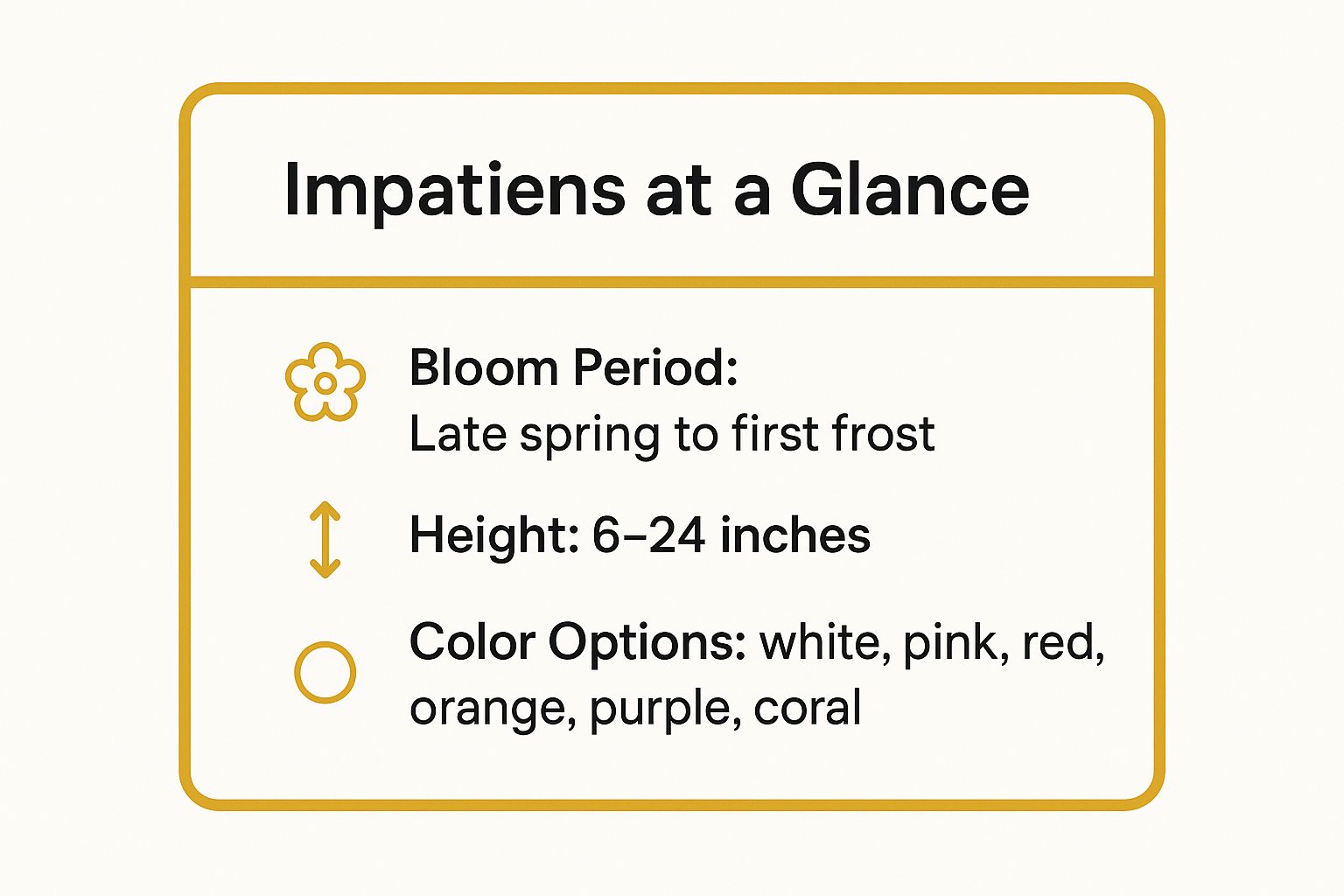
This data highlights their extended bloom period and wide range of colors, which allow our team at Fischer Landscaping to create vibrant, custom landscaping designs tailored to your property’s specific aesthetic.
2. Begonia: Versatile Elegance for Shaded Spaces
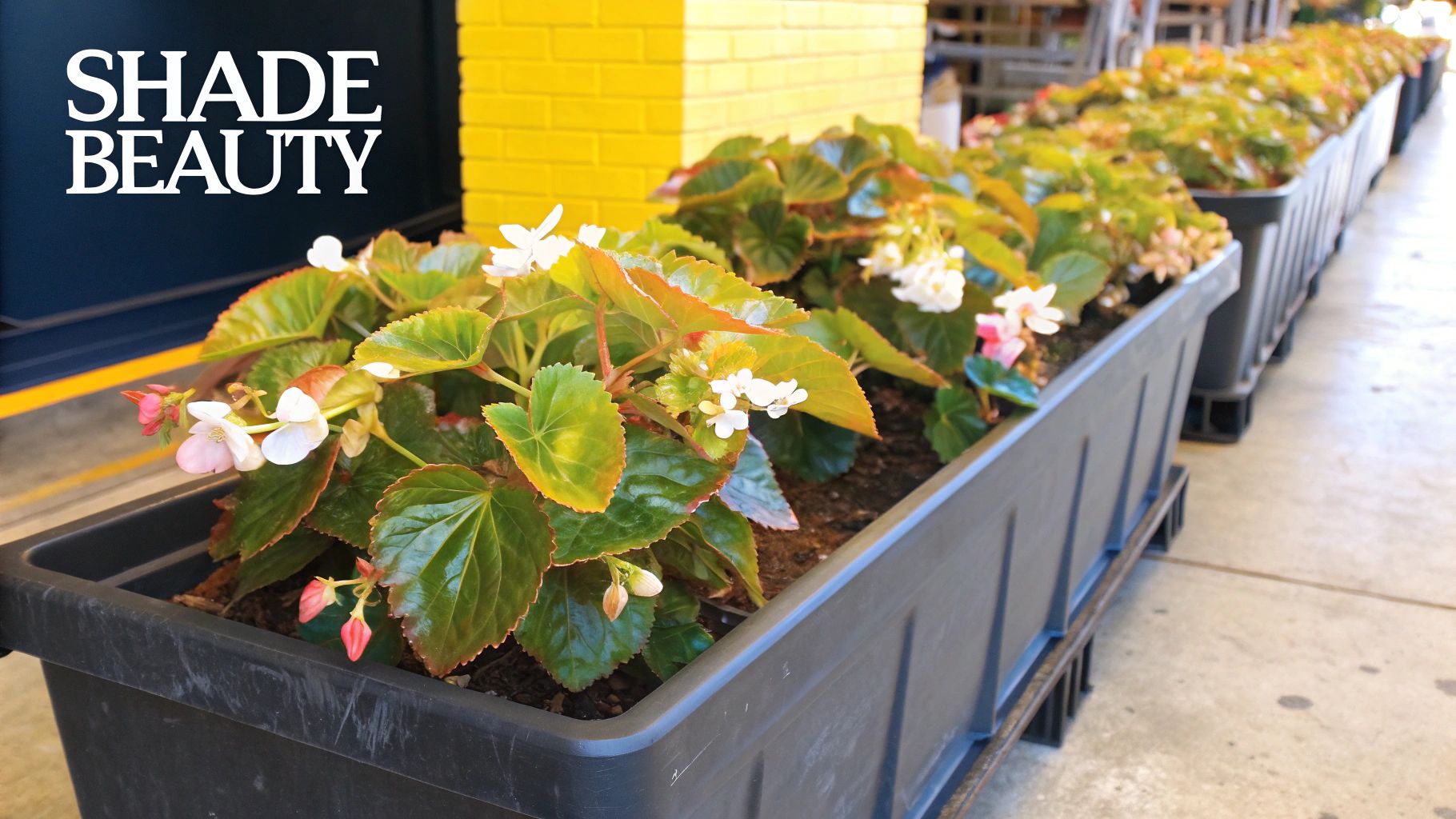
Begonias are a remarkably diverse and resilient group of plants, offering a sophisticated touch to shaded areas with their continuous blooms and striking foliage. With over 1,800 species, they provide an incredible range of options for property owners in places like San Antonio and Corpus Christi who are looking to add texture and season-long color. Excelling in conditions from partial shade to filtered sunlight, begonias are a perfect solution for containers, hanging baskets, and mass plantings under mature trees where vibrant color is desired.
Many varieties, especially the popular fibrous or "wax" begonias, are prized for their low-maintenance nature, producing a profusion of waxy flowers from spring until the first frost. This long-lasting performance makes them one of the most reliable shade flowers that bloom all summer, enhancing curb appeal for both residential homes and commercial properties.
Planting for Success
For optimal results, plant begonias in the spring after the threat of frost has passed. Fibrous begonias can be spaced 6-10 inches apart to create a thick, colorful ground cover, while tuberous varieties may require more space depending on their mature size. They perform best in well-drained, organically rich soil that remains consistently moist but never waterlogged.
Key Insight: Soil quality is paramount for begonias. Heavy clay soils, common in parts of South Texas, can lead to root rot. It is essential to amend your garden beds with compost to improve aeration and drainage, ensuring your plants thrive throughout our hot, humid summers. Understanding the right amendments is a key part of our professional planting services.
Maintenance and Variety Selection
A balanced, slow-release fertilizer applied at planting will support vigorous growth and continuous blooming. For the most dependable and easiest care, choose fibrous begonias. For more dramatic, large flowers in hanging baskets or containers, tuberous begonias are an excellent choice, though they may require more attention, such as pinching off spent blooms to encourage new growth. For those with deep shade, Rex begonias are grown primarily for their incredibly ornate and colorful foliage, adding texture even without flowers. Selecting the right variety is key to achieving the desired look and performance in your specific landscape design.
3. Coleus: Vibrant Foliage for Season-Long Drama
While often celebrated for its stunning foliage, Coleus is a must-have for shaded gardens seeking reliable summer-long interest. Many modern varieties also produce delicate flower spikes, but the real star is the spectacular diversity in leaf color, pattern, and texture. This heat-loving annual thrives in the shade, providing an incredible palette ranging from deep burgundy and lime green to electric pink and intricate mosaics, making it an essential plant for creating visual depth and excitement.
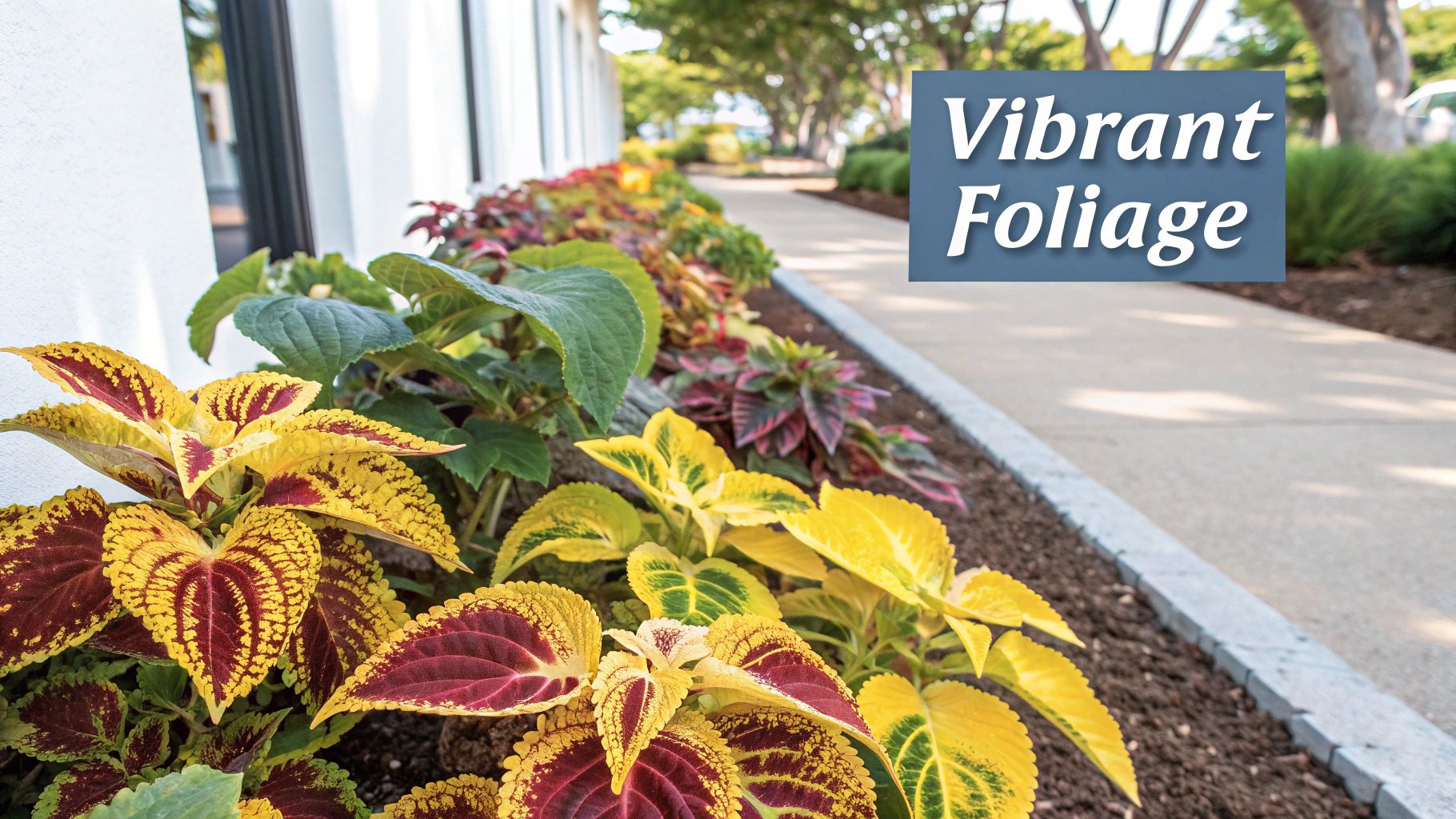
The benefit of Coleus is its ability to provide consistent color without relying solely on blooms. This makes it one of the most dependable shade flowers that bloom all summer, as its colorful leaves are present from planting until the first frost. Its versatility is seen across South Texas, from grand estate gardens to commercial properties in San Antonio creating elaborate patterns with different varieties.
Planting for Success
For the most vigorous growth, plant Coleus after the last frost date, typically late March or early April in our region. To create a full, lush appearance, space plants 8-14 inches apart, depending on the mature size of the variety you choose. This allows them to grow into a dense, uninterrupted carpet of color, perfect for borders, mass plantings, or as a "filler" in mixed containers.
Key Insight: The vibrancy of Coleus foliage can fade with too much direct sun. Planting in a location with morning sun and afternoon shade, or in dappled light under a tree canopy, will protect the leaves and ensure the richest, most brilliant color display throughout the hot Texas summer.
Maintenance and Variety Selection
Pinching off the flower spikes as they appear will redirect the plant's energy into producing more foliage, resulting in a bushier, more colorful plant. Coleus is also incredibly easy to propagate; take cuttings in late summer to overwinter indoors for the following season. When selecting varieties, consider the Proven Winners® ColorBlaze® series, which is known for its exceptional vigor, sun tolerance, and resistance to downy mildew.
Grouping different varieties together can create a stunning tapestry effect, and they are excellent choices for container gardening. For homeowners looking to maximize their outdoor living areas, using Coleus in planters is a perfect fit. Discover more inspiration for using vertical space and containers within our custom planting and garden installation services to make your patio or deck a true showpiece.
4. Caladium: Tropical Foliage for Season-Long Color
Caladiums are the artists of the shade garden, celebrated not for their flowers but for their magnificent, heart-shaped leaves that provide vibrant color all summer long. These tropical bulbs offer a stunning palette of white, pink, red, and green, often in intricate patterns and combinations. They are an exceptional choice for adding a lush, exotic feel to landscapes in humid areas like Corpus Christi and San Antonio, providing consistent visual interest from late spring until the first frost.
While technically grown for their foliage, Caladiums function as one of the best shade flowers that bloom all summer because their leaves deliver the same season-long color impact as traditional blooms. They excel in containers, as dramatic borders along shaded walkways, or in mass plantings under large trees, creating a resort-style ambiance that elevates any property. Their bold texture and rich colors make them a cornerstone of sophisticated landscaping designs.
Planting for Success
To ensure a spectacular display, planting Caladium bulbs at the right time is critical. Wait until the soil temperature reliably reaches 70°F, as planting in cold, wet soil can cause the bulbs to rot. For homeowners in South Texas, this typically means planting from late April to early May. For an even earlier start, bulbs can be pre-sprouted indoors in a warm, bright location about 4-6 weeks before moving them outside. Plant the bulbs with the knobby side up, about 1-2 inches deep and spaced 8-12 inches apart.
Key Insight: Caladiums thrive on consistent moisture but will quickly fail in waterlogged conditions. Proper soil preparation is non-negotiable. Amending garden beds with rich organic compost and ensuring excellent drainage is the key to preventing bulb rot and encouraging vigorous, healthy foliage all season.
Maintenance and Variety Selection
Once established, Caladiums require minimal care beyond regular watering. A balanced, slow-release fertilizer applied at planting will support their growth throughout the summer without the need for frequent feeding. There are hundreds of varieties available, falling into two main types: fancy-leafed, which have large, heart-shaped leaves, and strap-leafed, which have smaller, more lance-shaped leaves and tend to be more sun-tolerant. This variety allows for incredible design flexibility, from classic white and green combinations to fiery reds and deep burgundies. At the end of the season, bulbs can be dug up before the first frost and stored in a dry place to be replanted the following year.
5. Torenia (Wishbone Flower): The Whimsical Bloomer for Shady Spots
Torenia, also known as the wishbone flower, is a charming and prolific annual that thrives in the heat and humidity of South Texas. Its delicate, snapdragon-like blossoms offer continuous color from late spring until the first frost, making it a fantastic, low-maintenance choice for property owners in areas from Corpus Christi to San Antonio who need reliable performance in shaded areas. The unique name comes from the two stamens that curve and join at the anthers, forming a shape similar to a wishbone.
This plant's trailing or mounding habit makes it exceptionally versatile for a variety of landscape applications. It's an excellent choice for adding a touch of whimsy and vibrant color to container gardens, hanging baskets, and the edges of shaded garden beds. For those seeking reliable shade flowers that bloom all summer, Torenia provides consistent beauty without demanding constant attention, filling in spaces where other flowers might fade in the summer heat.
Planting for Success
For the best results, plant Torenia after the last chance of frost has passed. To create a lush, full look that quickly covers the ground, space individual plants just 6 to 8 inches apart. This close spacing encourages them to grow together, forming a dense carpet of foliage and flowers that helps suppress weeds and creates a professional, seamless appearance in border plantings.
Key Insight: Torenia performs best with consistent moisture but dislikes waterlogged soil. Before planting, especially in the dense clay soils found in parts of South Texas, amend the area with organic matter to improve drainage and aeration, ensuring the roots stay healthy and vibrant.
Maintenance and Variety Selection
Torenia is relatively self-sufficient and does not require deadheading to keep blooming. A light application of a balanced, all-purpose liquid fertilizer every 4-6 weeks will support its vigorous flowering throughout the long growing season. For standout performance, look for modern series like Proven Winners' Catalina®, which are bred for exceptional heat tolerance and a vigorous trailing habit, perfect for spilling over the edges of pots and baskets.
For a quick reference on its key characteristics, here is a summary of what makes Torenia a premier choice for shady spots.
- Bloom Season: Spring to Fall
- Light Needs: Partial Shade to Full Shade
- Water Needs: Prefers consistently moist soil
- Habit: Mounding or trailing
- Colors: Blue, purple, pink, white, yellow, and bi-color combinations
This data showcases its suitability for long-season color, making it a valuable asset in our landscaping designs for creating dynamic, multi-layered plantings that look great all summer long.
6. Browallia: The Star-Flowered Gem for Cool Tones
Browallia, also known as the amethyst flower or bush violet, is a delightful annual that brings a delicate, airy texture to shaded spaces. This South American native is a prolific bloomer, producing a cloud of charming, star-shaped flowers from late spring until the first frost. Its flowers, predominantly in cool shades of blue, purple, and white, are perfect for creating a serene and refreshing atmosphere in the summer heat of areas like San Antonio.
This plant is an excellent choice for adding fine texture and a unique color palette to container arrangements, hanging baskets, and shaded garden borders. Browallia’s continuous blooming makes it one of the most reliable shade flowers that bloom all summer, offering season-long interest without demanding constant attention. Its ability to attract pollinators like butterflies also adds a dynamic element to any landscape.
Planting for Success
To ensure a summer full of blooms, Browallia benefits from an early start. In South Texas, it's often best to plant nursery-grown starts after the last frost date, typically in late March. For a full, bushy appearance in garden beds, space the plants about 10-14 inches apart. This allows them to intermingle and form a cohesive, flowering mass that suppresses weeds and creates a lush groundcover.
Key Insight: Browallia performs best with consistent moisture but resents soggy soil. In the heavy clay soils common to South Texas, amending with expanded shale or compost is vital to improve drainage and prevent root rot, ensuring the plant remains healthy and productive.
Maintenance and Variety Selection
A light application of a balanced, water-soluble fertilizer every four to six weeks will support its vigorous blooming habit. To encourage a denser, more branched plant, pinch back the tips of young stems when they are about four inches tall. This simple step results in a much fuller plant with significantly more flowers. Trailing varieties are especially stunning in hanging baskets, where their cascading stems create a beautiful waterfall of color.
For a quick reference on its key characteristics, here is a summary of what makes Browallia an excellent choice for shady gardens. Its ability to attract beneficial insects makes it a wonderful addition to any garden design. For more ideas on attracting these beautiful pollinators, you can find valuable tips in our guide to creating a butterfly garden.
7. Fuchsia: The Elegant Earrings of the Shade Garden
Fuchsia plants are renowned for their delicate, lantern-like flowers that hang gracefully from their branches like ornate jewelry. These stunning plants are a classic choice for adding a touch of elegance and whimsy to shaded spaces. Thriving in cool, moist conditions with protection from harsh afternoon sun, fuchsias bloom profusely from spring through fall, making them a top contender for property owners in areas like San Antonio seeking unique and continuous color. Their cascading habit is perfect for hanging baskets, window boxes, and tall containers where their dramatic blooms can be fully appreciated.
One of the greatest appeals of the Fuchsia is its incredible diversity, with hundreds of varieties offering an endless combination of colors, from soft pinks and whites to vibrant purples and reds. This variety makes them one of the most versatile shade flowers that bloom all summer, allowing for customized looks that range from classic English cottage garden aesthetics to vibrant tropical displays.
Planting for Success
To ensure your Fuchsias flourish, select a location that receives gentle morning sun and full afternoon shade. The intense South Texas sun can quickly scorch their delicate foliage and flowers. Plant them in late spring after any threat of frost has passed, using a rich, well-draining potting mix or amended garden soil. For hanging baskets, choose a trailing variety and plant 2-3 starts in a 12-inch basket to create a full, cascading display.
Key Insight: Fuchsias are heavy feeders and require consistent moisture to support their prolific blooming. A regular feeding schedule with a balanced liquid fertilizer every two to four weeks during the growing season is essential for keeping them vibrant and full of flowers.
Maintenance and Variety Selection
Proper care is key to keeping Fuchsias blooming all summer. Pinching back the growing tips on young plants encourages a bushier, fuller growth habit with more flowering branches. Regularly check the soil moisture, as they dislike drying out completely, especially in the heat of a Corpus Christi summer. While many fuchsias are treated as annuals in Texas, some hardier varieties can be overwintered indoors or in a protected location.
For a quick reference on their key characteristics, here is a summary of what makes Fuchsias a premier choice for shady spots.
- Bloom Season: Spring to Fall
- Light Requirements: Partial to Full Shade
- Water Needs: High (Consistently Moist)
- Flower Colors: Pink, Purple, Red, White, Bicolor
- Growth Habit: Upright or Trailing
- Key Feature: Unique, pendulous flowers
This data highlights their long blooming period and suitability for containers, which allows our team to design sophisticated, eye-catching container gardens and arrangements that elevate the beauty of any entryway or patio.
7 Shade Flowers Blooming All Summer Comparison
| Plant | Implementation Complexity | Resource Requirements | Expected Outcomes | Ideal Use Cases | Key Advantages |
|---|---|---|---|---|---|
| Impatiens | Very easy to grow; low maintenance | Consistent moisture; well-draining soil | Continuous colorful blooms late spring to frost | Shade borders, containers, hanging baskets | Instant color in shade; fast growing |
| Begonia | Moderate; some types need winter storage | Well-draining soil; careful watering | Long summer blooms; attractive foliage | Shade gardens, containers, conservatories | Heat/humidity tolerant; attractive foliage |
| Coleus | Easy; requires pinching to prevent legginess | Moderate moisture; avoid waterlogging | Vibrant foliage color season-long | Shade beds, mixed plantings, containers | Intense foliage color; easy propagation |
| Caladium | Moderate; bulbs need warm soil & storage | Warm, moist soil; bulb storage in cold climates | Dramatic tropical foliage late spring to frost | Tropical/shade gardens, containers | Exotic look; bulbs reusable |
| Torenia | Easy; best started from transplants | Consistent moisture | Continuous blooms late spring to frost | Small spaces, containers, shade borders | No deadheading; butterfly attractant |
| Browallia | Moderate; slow to establish | Consistent moisture | Long summer blooms; delicate texture | Shade gardens, hanging baskets, conservatories | Self-cleaning flowers; cool colors |
| Fuchsia | Moderate to high; sensitive to conditions | Consistent moisture, feeding; cooler temps | Long bloom period late spring to fall | Hanging baskets, cool shade gardens | Unique flowers; hummingbird attractant |
Let Fischer Landscaping Create Your Perfect Shade Garden Oasis
Transforming a shaded, underutilized corner of your property into a vibrant oasis of continuous color is more achievable than ever. As we've explored, the key lies in selecting the right shade flowers that bloom all summer, turning a landscape challenge into a stunning design opportunity. From the reliable and prolific blooms of Impatiens and Begonias to the dramatic, tropical foliage of Caladiums and Coleus, you have a rich palette to work with.
These plants prove that a lack of direct sunlight doesn't mean a lack of beauty. By leveraging the unique qualities of Torenia, Browallia, and the elegant, trailing nature of Fuchsia, you can layer textures, heights, and colors to create a truly dynamic and engaging garden. The secret is to move beyond simply planting and to think like a designer, considering how each plant contributes to a cohesive, season-long display.
From Plant Selection to Professional Installation
Achieving a professional-grade landscape requires more than just choosing the right flowers. It involves a strategic approach to design, soil health, and long-term maintenance, especially in the demanding climate of South Texas.
- Strategic Design: A successful shade garden is meticulously planned. It considers bloom times, mature plant sizes, and color combinations to ensure visual interest from spring through fall. A professional design avoids the common pitfall of a garden that looks great in May but fades by August.
- Soil Preparation: South Texas soils can be challenging. Proper soil amendment, drainage solutions, and pH balancing are critical first steps. Our teams at Fischer Landscaping have deep expertise in preparing garden beds in areas like Corpus Christi and San Antonio, ensuring your plants have the foundation they need to thrive.
- Expert Installation: Spacing, planting depth, and initial watering are crucial for plant establishment. Professional installation guarantees that your investment in high-quality plants pays off with healthy, vigorous growth, setting the stage for a spectacular summer display.
Key Takeaway: The difference between a simple flower bed and a breathtaking garden oasis is expert planning and execution. A well-designed shade garden not only enhances your property’s curb appeal but also creates a functional and beautiful outdoor living space.
Bringing Your Vision to Life in South Texas
Whether you're a homeowner in Harlingen looking to create a peaceful backyard retreat or a commercial property manager in Brownsville aiming to enhance your storefront, the principles remain the same. A thoughtfully designed shade garden adds significant value and appeal. To successfully bring such a vision to life, exploring a wide range of comprehensive landscaping supplies is crucial for any project, big or small.
However, the most valuable resource is expertise. At Fischer Landscaping, we don't just plant flowers; we build environments. We understand how to select and combine shade flowers that bloom all summer to create low-maintenance, high-impact designs that are perfectly suited to the local climate. We integrate these softscapes with hardscaping elements like pathways, patios, and professional outdoor lighting to create a complete and functional oasis. Don't let your property's potential remain hidden in the shadows. Let's work together to unlock its full beauty.
Ready to transform your shady spots into the highlight of your landscape? Contact Fischer Landscaping for a professional consultation and quote. Our expert team will design and install a stunning shade garden that you can enjoy all summer long.